
16 Conquest of Constantinople Facts: A Piece of History


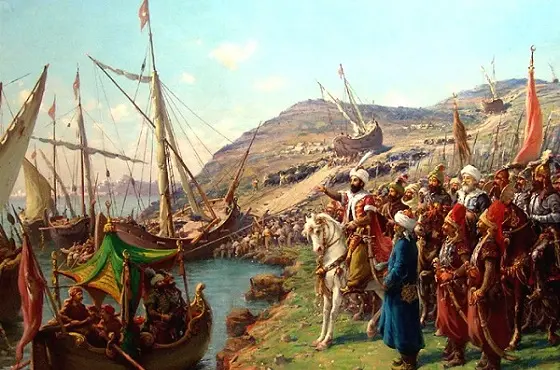
Istanbul changed hands in 1453, and the city has never looked at itself the same way since. Beyond the headline date, the siege is full of details most visitors never hear about: the walls, the cannon, and the people on both sides of them. Those conquest of Constantinople facts change how the old city looks on your next walk through it.
1. The Walls That Held the World’s Best Defense
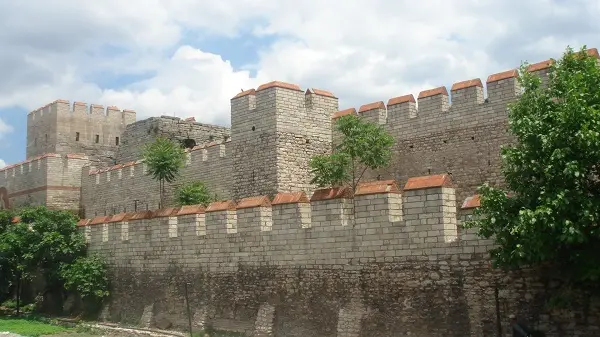
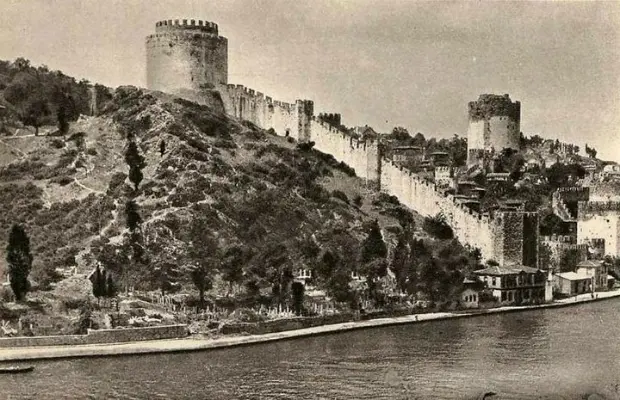
The walls ringing Byzantine Constantinople ran about 20 km (12 miles) in total. The Theodosian Walls faced the open land to the west. They stretched 5.5 km and were the thickest, best-built section of the circuit, while a lighter wall along the Golden Horn covered 7 km and the Marmara Wall, running from the sea down to Yedikule, added another 7.5 km. For their era, nothing was considered stronger. Most of the circuit had been repaired as recently as the 1440s. Historians still debate exact troop counts. The garrison numbers below are estimates, not a census.
Emperor Constantine XI didn’t spread his men evenly. He concentrated defenders on the weakest stretches: he personally held the most exposed section of the Theodosian Walls, the Genoese commander Giovanni Giustiniani covered the area near Edirnekapı, a Catalan contingent held the middle section, and Venetian troops were posted around Yedikule. One gap near Edirnekapı, an 11th-century stretch that had never been properly repaired, would prove decisive. Ottoman cannon fire found it.
2. A Cannon So Large It Needed Two Pieces
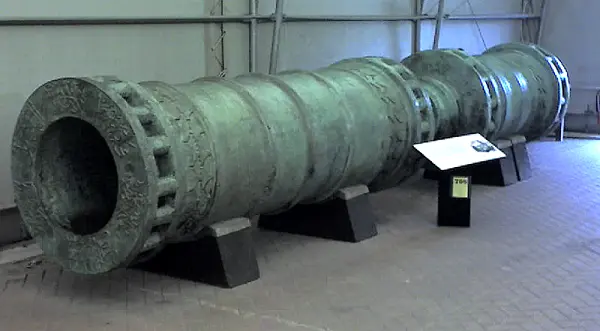
The great bombard built for Sultan Mehmed II’s siege is the stuff of legend. For good reason.
Gunpowder artillery already existed before 1453. No army, though, had used it at this scale. Byzantine defenders had their own small cannon on the walls, but recoil control was so primitive that the guns reportedly did more damage to their own ramparts than to the attackers.
The Ottoman bombard itself is said to have run about 8 meters long, with a bore near 75 cm and a stone ball weighing roughly 544 kg (figures vary by source, so treat them as period estimates). Reloading was slow. The gun could fire only five or six times a day, and once positioned it could not be aimed again. Still, a city wall doesn’t need precision. Each hit could take Byzantine stonemasons a full week to repair, working around the clock.
A later cannon of the same design had its own second act. Cast in 1464 by the Ottoman engineer Munir Ali and modeled on the original siege gun, it was fired in 1807 at a British naval squadron forcing the Dardanelles, causing casualties and helping drive the ships back. Sultan Abdülaziz later gave this gun to Britain as a gift. It survives today, disassembled, at the Royal Armouries’ Fort Nelson site in Hampshire, where it’s known as the Dardanelles Gun.
3. A City Built to Outlast a Siege
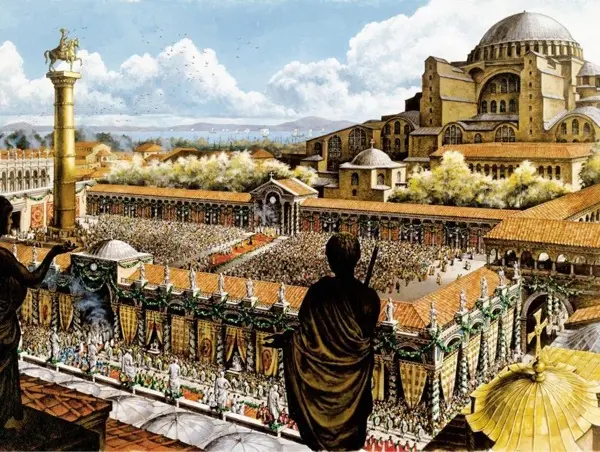
Until 1453, Constantinople was arguably the best-defended city in the medieval world. Water surrounded it on three sides. That left only one exposed land front to defend, and its walls had turned back roughly 20 sieges over the centuries. The sole prior loss came in 1204, when Latin Crusaders took the city through political maneuvering rather than a direct assault. The sea helped too. Genoese traders could slip in supplies, soldiers and reinforcements when needed, and in earlier centuries Byzantine fire-ships, using a closely guarded incendiary formula, had kept enemy fleets at bay.
By April 1453, around 7,000 soldiers, roughly 2,000 of them foreign volunteers, held walls meant for a much larger garrison. The civilian population inside is estimated at 50,000. One lesser-known detail stands out. Among the defenders was a Turkish commander known as Dorgano, leading a unit of about 600 Turkish soldiers in Byzantine service, who held a sea-facing stretch of wall until the end. Some historians believe Dorgano may have been Orhan Çelebi, an Ottoman prince who had taken refuge in Byzantium.
4. An Army Larger Than Any Single Chronicle Admits
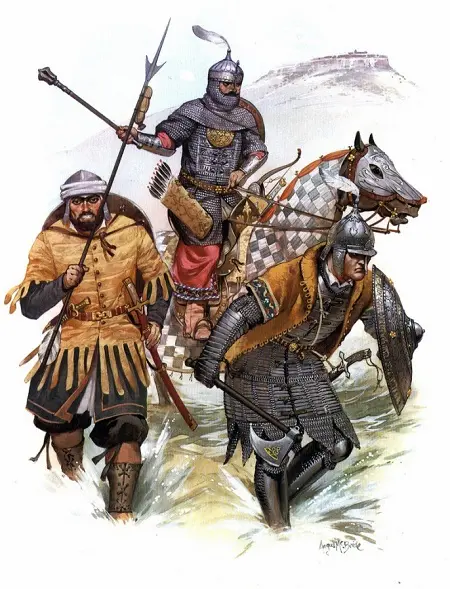
Ask four different eyewitnesses how many soldiers besieged the city and you’ll get four different numbers. A Venetian chronicler said 160,000. A cardinal present at the time said 200,000. Another cleric claimed 300,000. The real figure, according to modern historians, sits closer to 50,000-80,000, with about 10,000 elite Janissaries among them, which was still a force that outnumbered and outmatched the defenders by a wide margin.
The army was also strikingly multi-ethnic for its time. Thousands of Christian soldiers served in Ottoman ranks, including 1,500 Voynuk troops sent, or rented out, by the Serbian ruler as a form of tribute.
The tidy “Christian versus Muslim” framing the siege so often gets doesn’t survive that detail.
5. Hagia Sophia’s Last Christian Service
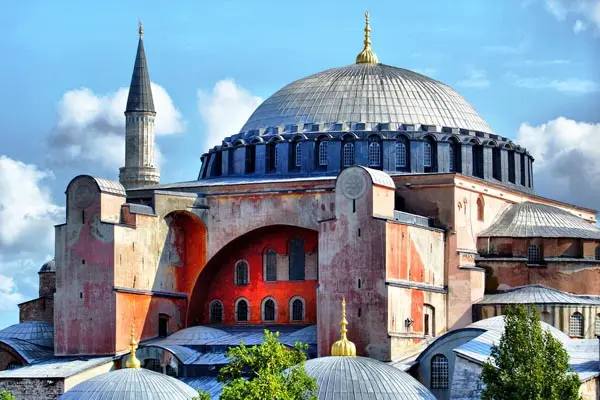
Istanbul sits on an active fault line, so a 1,500-year-old building still standing is remarkable on its own.
Hagia Sophia was more than architecture to the people inside its walls on May 29, 1453. Both sides were fighting over it. Ottoman soldiers reportedly hoped to pray inside what was then Christendom’s grandest church; the defenders who gathered inside hoped for exactly the opposite outcome. The building’s final Christian liturgy took place that morning. Emperor Constantine XI attended, and it was reportedly the first joint service between Catholic and Orthodox clergy since their churches split centuries earlier. By evening, the icons were covered. The first Muslim prayer had already been held inside. More than five and a half centuries later, Hagia Sophia’s status, church, museum or mosque, still carries enough weight to shape Greek-Turkish relations and draws protest from Greek nationalist groups around the May 29 anniversary.
6. Galata, the Neighbor That Stayed Neutral on Paper
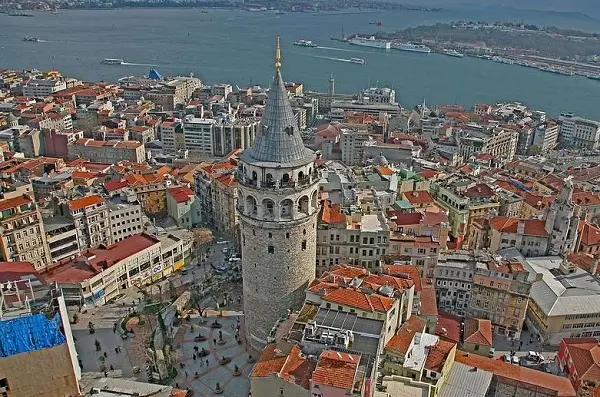
Today Galata and the old city feel like two halves of the same Istanbul, separated only by the Golden Horn. In 1453, they were politically distinct: Galata was a Genoese trading colony, a peninsula in its own right and relatively easy to defend. Officially the colony stayed neutral throughout the siege, even while most of its residents sympathized with Byzantium.
That paper-thin neutrality mattered.
Galata kept supplying Byzantium by sea along what’s now the Karaköy-Eminönü waterfront, and Sultan Mehmed, for his part, avoided attacking the colony directly, most likely to prevent a combined Italian fleet from entering the Marmara Sea on Byzantium’s side. Galata’s ships stayed docked while Mehmed’s own vessels were dragged overland around them, a decision history doesn’t record Galata objecting to very loudly.
7. Mehmed II, More Complicated Than the Legend
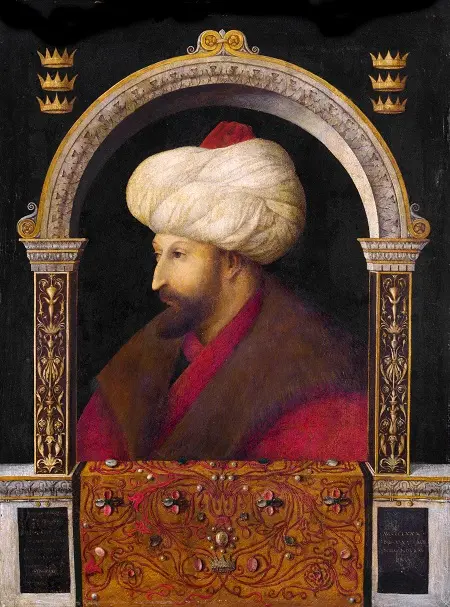
Everything written about Mehmed II tends to pull him toward one of two narratives. In the broadest version, he’s simply the sultan who conquered a Christian capital by force, a figure that still anchors Turkish national memory today.
The fuller picture is more interesting. Mehmed spoke Greek well enough that it was close to a second native language, grew up governing the Amasya province before taking the throne, and later had Byzantine Greek manuscripts in his inherited library carefully preserved, including some considered too explicit for the era. He gave the deceased Byzantine emperor’s family full funeral honors and sat for his own portrait at a time when figurative portraiture was religiously discouraged, a gesture more at home in Renaissance Italy. He also wrote poetry. Little of it was purely religious. None of that erases the siege itself, but it’s a fuller version of the man than either side’s shorthand usually allows.
8. The Emperor Who Chose to Die in the Street
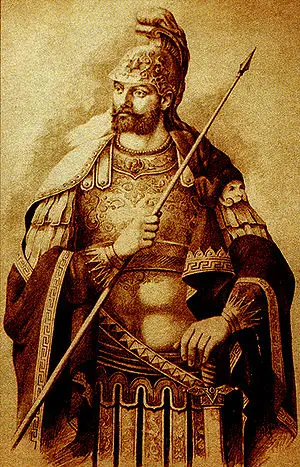
Constantine XI, the last Byzantine emperor, had an exit available. He turned it down. Eight days before the final assault, Sultan Mehmed sent an envoy offering terms: surrender the city, and the emperor and his household could leave freely with their belongings, with Constantine recognized afterward as ruler of the Peloponnese. Constantine refused the offer. His reported answer was that handing over the city “is not mine to give, nor anyone else’s who lives in it. By common consent, we will die on our own, without sparing our lives.” When the walls finally gave way and Ottoman troops entered parts of the city, Constantine removed the imperial insignia from his armor so he wouldn’t be identifiable, and died fighting as an anonymous soldier in the streets he had once ruled. Compared with more recent examples of deposed leaders caught hiding, his final choice reads, even to the side that defeated him, as a genuinely dignified one.
9. The Commander Whose Wound Changed the Battle
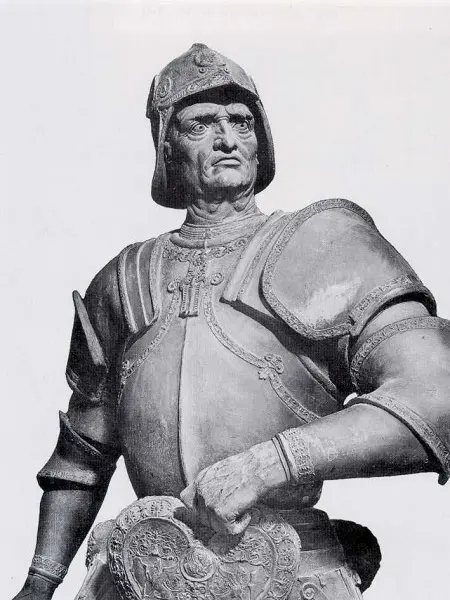
Giovanni Giustiniani Longo was a Genoese nobleman and sailor. When word of the coming siege spread, he paid for roughly 700 soldiers, mostly Greek and Genoese volunteers from Chios, out of his own pocket and sailed them to Constantinople’s defense. By nearly every surviving account, he became the single most important figure holding the walls together. Venetians, Genoese and Greeks didn’t normally get along, yet he kept all three focused on repairs instead of rivalry. On May 29, the day the city fell, Giustiniani was badly wounded. Cannon fragments or a Tatar arrow? It depends on the source. As he was carried off the wall toward the harbor, panic spread along the defense in a way the emperor’s continued presence couldn’t stop, and his 700 Genoese, the strongest unit on the walls, began to withdraw. The line broke soon after.
He escaped by ship. Two days later he died of his wounds on Chios, a death far less remembered internationally than that of the man on the other side who inflicted it.
10. The Chain That Sealed the Harbor
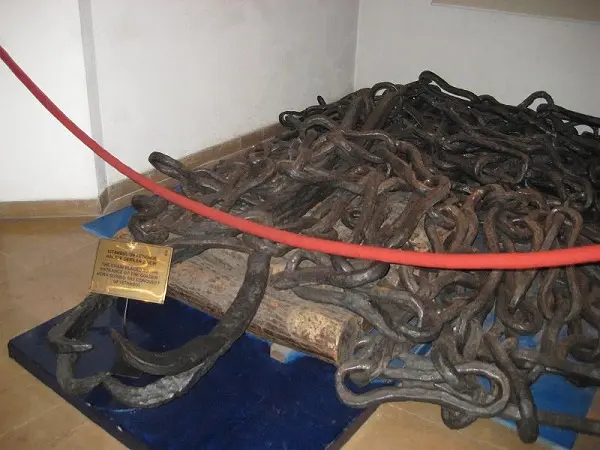
The Golden Horn was Constantinople’s soft underbelly. Any fleet that got past its mouth could land troops close to the palace itself, through walls that were lower and less defended than the land-facing ramparts. Byzantine blacksmiths solved it with a massive forged iron chain, stretched across the harbor mouth between what’s now the Sepetçiler Pavilion on one shore and the Yeraltı Mosque area on the other. It couldn’t be cut at sea. The points where it was anchored were too well guarded for ships to approach safely. It’s a large part of why Sultan Mehmed ultimately chose to move his fleet overland instead of trying to force the chain. Much of the original chain survives. Barely corroded after nearly six centuries, it’s on display today at Istanbul’s Naval Museum.
11. The Ships That Sailed Over Dry Land
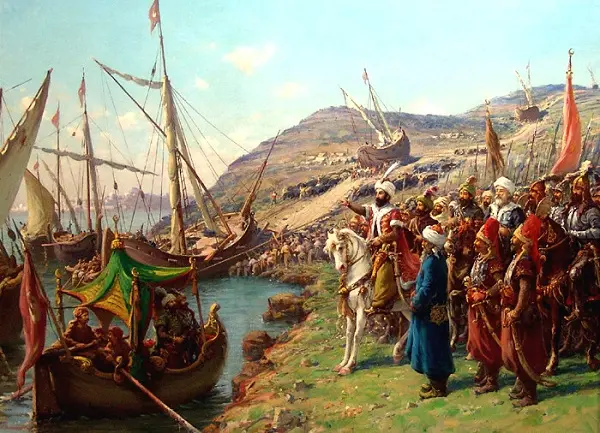
Breaking the chain’s blockade without actually breaking the chain turned out to be surprisingly achievable. Getting ships into the Golden Horn served two purposes. It would cut off Byzantium’s harbor-side supply runs between Galata and the city. It would also force defenders to pull soldiers away from the Theodosian Walls to guard a stretch of wall Mehmed had noticed was weaker than the rest.
The solution? Haul the ships overland on greased wooden rollers, launching them from the Dolmabahçe area, dragging them across what’s now Tarlabaşı and Kasımpaşa, and relaunching them into the harbor from there. It happened on April 21, a full month before the city fell, not on the day of the final assault, as the story is often compressed. The small-boat traffic between Galata and the city stopped at once. Byzantine morale took a hit. A week later, on April 28, they tried to burn the new Ottoman fleet with fire-ships. The Ottomans had been tipped off. The attempt failed, with losses. The following day, in retaliation, Byzantine defenders executed around 260 captured Ottoman prisoners on the walls in view of the besiegers. The Ottoman commander Zağanos Pasha treated it as a sign of weakness and used it to justify pressing the Golden Horn walls harder for the rest of the siege.
12. The Soldier Who Raised the Flag and Held It
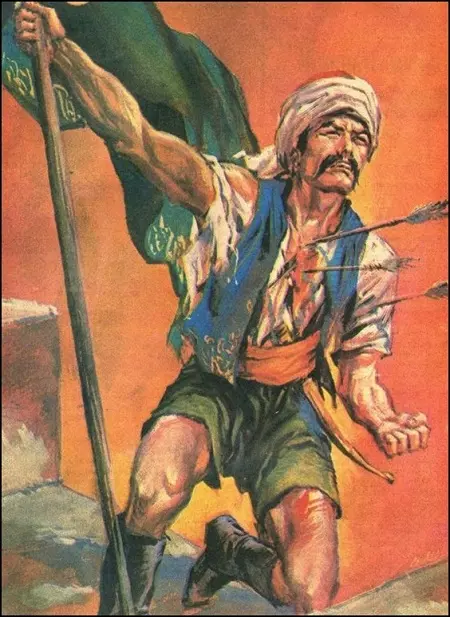
Few low-ranking soldiers in Turkish history are remembered the way Ulubatlı Hasan is. Documented details about his early life are thin. The Scottish historian Lord Kinross, though, in his book on the Ottoman centuries, describes him as a towering figure among the attackers. Accounts agree on what came next. Hasan, from a village near Bursa, climbed the wall by ladder on May 29 under a hail of arrows, stones and spears and planted a flag at the top. Armed only with a small shield and a curved sword, he held that position until roughly a dozen comrades reached him. Then he was struck down. Later, 27 wounds were counted on his body. Some foreign chroniclers say the flag itself was pulled down again and the wall briefly retaken, but by then the momentum it had given the attackers could no longer be stopped.
13. Three Days the City Would Rather Forget
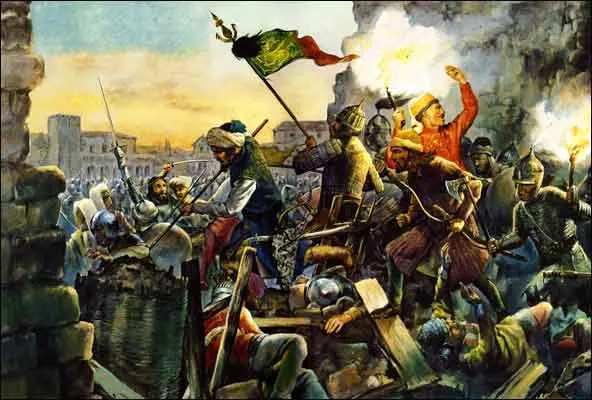
Looting a conquered city, something that would be a serious crime today, was standard practice for 15th-century armies. It was effectively a soldier’s bonus for surviving the fight. Sultan Mehmed followed the conventions of the era: since the city had refused to surrender under terms, he allowed his troops three days of plunder once the walls fell.
Judged by modern standards, those three days were brutal. Slavery was still a legal institution everywhere at the time, and residents who had hidden in churches and homes were found, sorted by status, and many from the lower classes were sent to slave markets. Foreign accounts describe serious violence and sexual assault in the days immediately after the city fell. Many stayed in hiding throughout. The end came abruptly. According to the Byzantine court historian Georgios Sphrantzes, the plundering stopped on the third day: “On the third day after our city fell, the Sultan celebrated his victory with a great, joyous triumph. He issued a proclamation: anyone discovered in hiding, regardless of social class, was to be freed and no more questions asked, and anyone who wished to return to their former home would be left in possession of it, as if nothing had happened, regardless of rank or religion.”
14. The Scholars Who Fled and Sparked a Renaissance
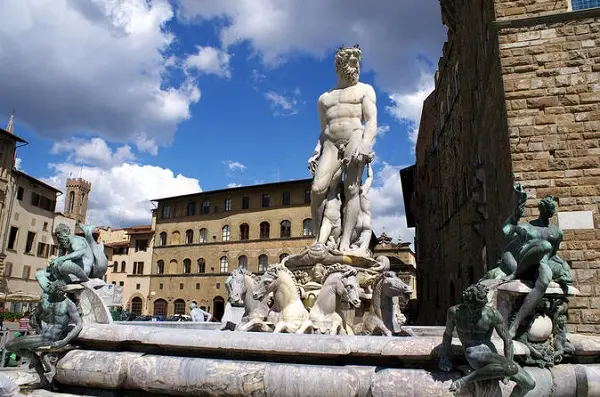
When the largest city in the Western world changed hands, a number of Greek scholars and teachers, Ioannis Argyropoulos and Constantine Lascaris among the most notable, chose not to stay and left for Latin Europe instead. They carried Greek philosophical manuscripts with them. Many settled in Florence. There, Italian intellectual life, until then dominated by religious orthodoxy, found fresh material almost overnight. How much credit does the Fall of Constantinople deserve for accelerating the Renaissance in Western Europe? Historians still debate it. The scholars who left clearly played some part.
15. The Families Who Stayed and Reshaped the City
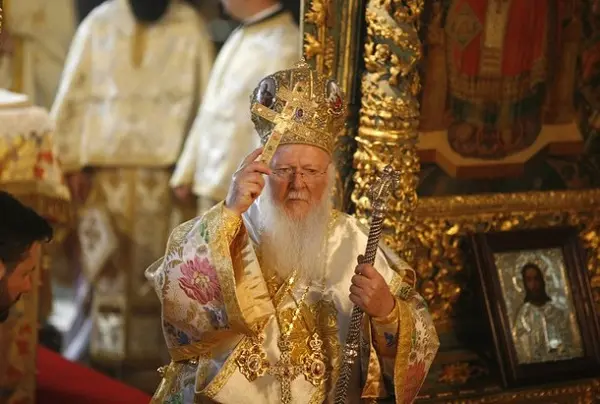
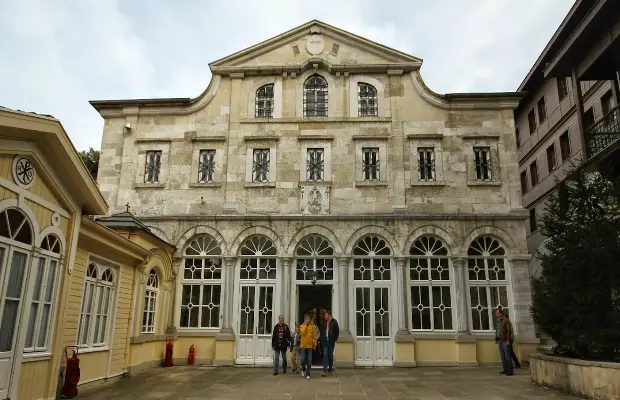
Most residents, understandably, didn’t leave. One of Mehmed’s earliest moves after taking the city was appointing Gennadios Scholarios as the new Orthodox Patriarch, placing the Eastern Church and most of its followers under Ottoman protection rather than dismantling it. That decision shaped Istanbul’s religious makeup for the next five centuries. By the early 20th century, census records showed the city’s non-Muslim and Muslim populations at nearly equal size. Greek communities, often called Phanariotes after the Fener district, continued producing Ottoman statesmen for generations. Most eventually left. The population exchanges after the Turkish War of Independence took the majority, and the events of September 1955 drove out most of those who had stayed through that. Today, a Greek Orthodox community of roughly 5,000-6,000, concentrated partly on the Princes’ Islands, represents the last visible continuity with Byzantine Constantinople still living in the city itself, rather than abroad in diaspora.
16. Conquest of Constantinople Facts Istanbul Still Argues About
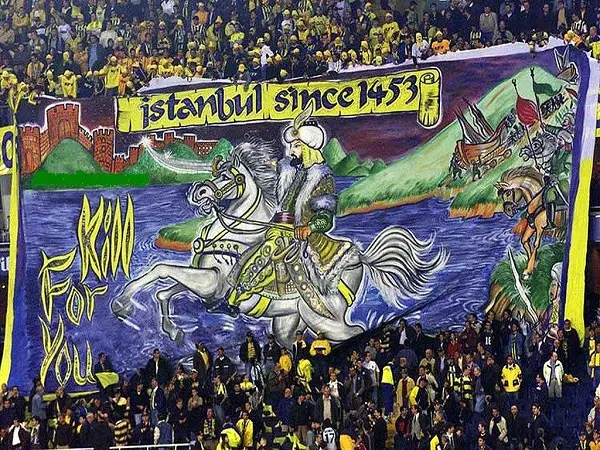
Part of today’s Greek-Turkish tension traces back to this siege. It shows up in daily life.
The “Megali Idea,” a Greek nationalist movement that resurfaced in 1919 around reclaiming Istanbul and restoring Hagia Sophia as a patriarchal church, helped drive the Greek occupation of İzmir, the opening chapter of what Türkiye remembers as its War of Independence. Nearly six centuries on, the conquest still works as cultural shorthand. Both sides use it. Turkish football crowds raise “Since 1453” banners whenever they face a club with Greek roots, while Greek commemorations each May 29 invoke Constantine XI’s memory, sometimes alongside the folk belief that he sleeps in a cave near Yedikule, waiting to wake and retake the city.
Sources: Wikipedia, “Hagia Sophia”, Royal Armouries, Dardanelles Gun collection record




Bir yanıt yazın