
Mount Nemrut: 10 Things to Know Before You Go


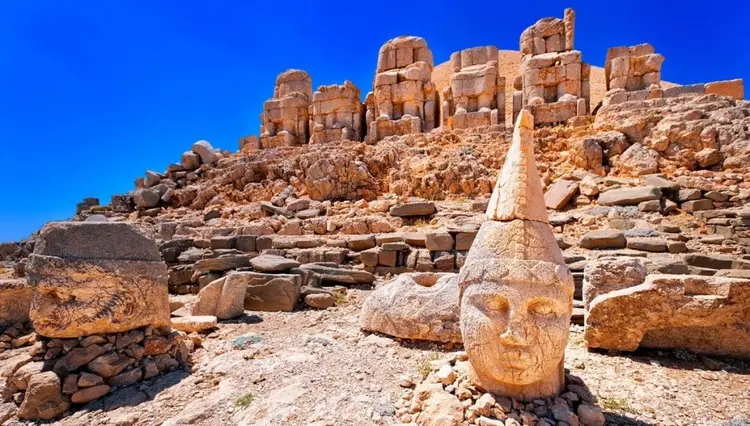
Mount Nemrut is one of the strangest summits in Türkiye: a mountaintop where a king built his own sanctuary and lined it with statues of gods that were meant to watch over him for eternity. The UNESCO-listed site in Adıyaman Province preserves the legacy of the Kingdom of Commagene, a small realm that blended Persian and Greek beliefs. These 10 facts cover the legends, the statues, the lost tomb and how to get there.
1. Where does the name Mount Nemrut come from?
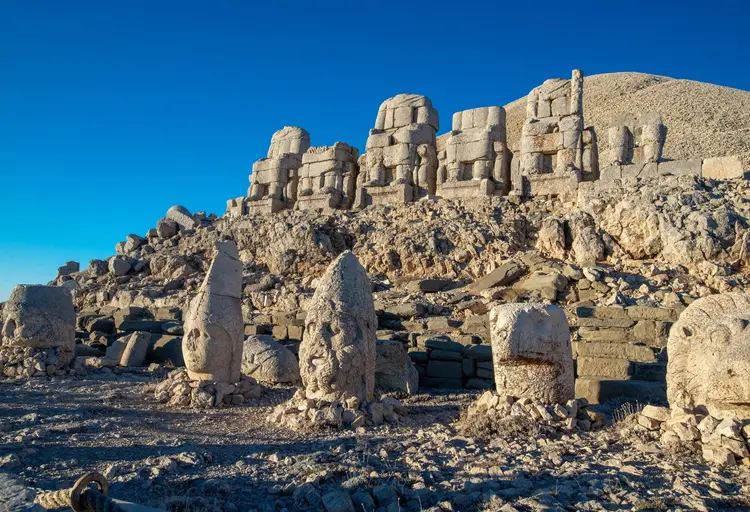
The name echoes Nimrod, the ruler of Babylon in Abrahamic tradition, and local stories have long attached his name to the peak. The history tells a different story, and Nimrod has nothing to do with it. It points to King Antiochus I of Commagene, who ruled in the 1st century BC and wanted a sacred place of his own, where Persian and Greek traditions would sit side by side.
Folklore aside, the mountain is his.
2. What makes Mount Nemrut special?
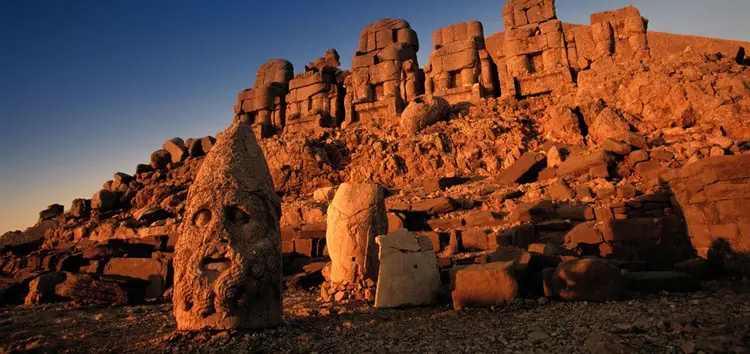
At roughly 2,100 meters, the summit is high enough that the whole scheme feels deliberate: a gigantic man-made mound of crushed stone, flanked by terraces and rows of colossal figures. The location was no accident. Antiochus I wanted his tomb-sanctuary in a high, holy spot close to the gods, and the result stands out on the horizon.
How the huge stone blocks got up there is still a puzzle. Archaeologists debate it, and there is no tidy answer yet.
3. What do the giant statues represent?
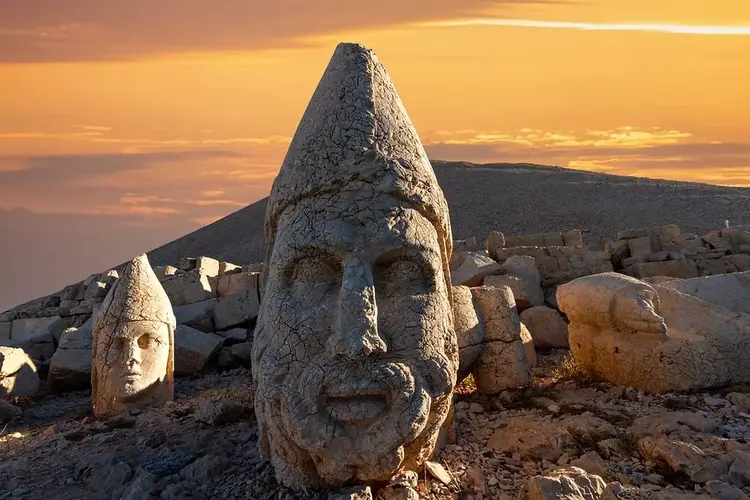
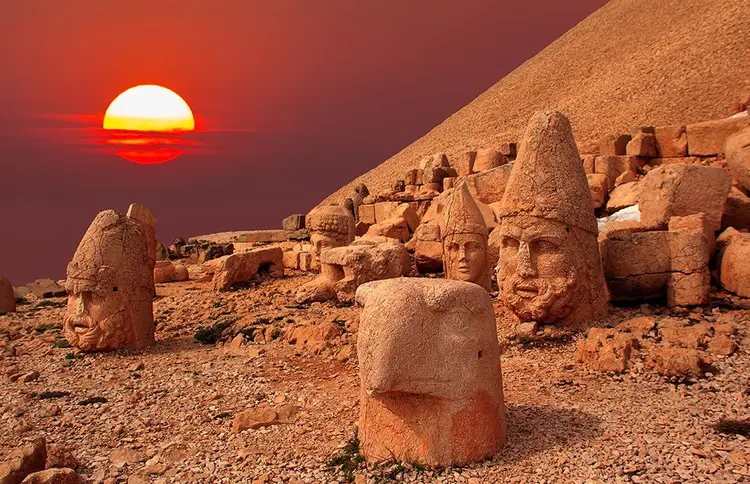
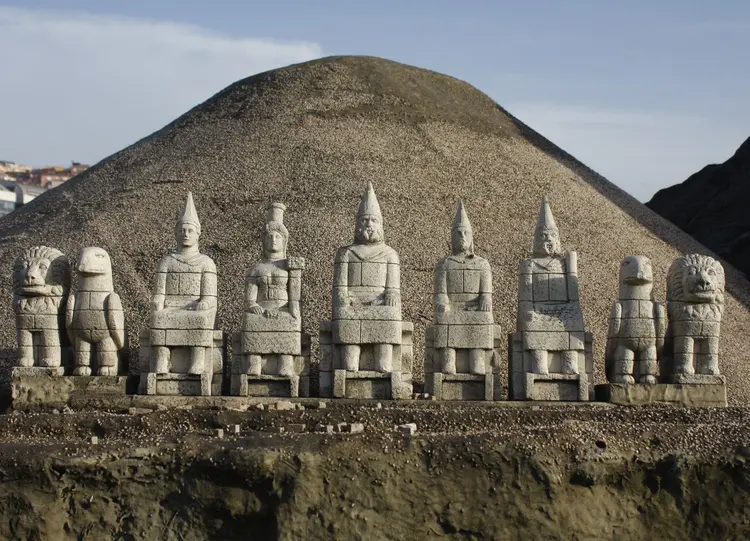
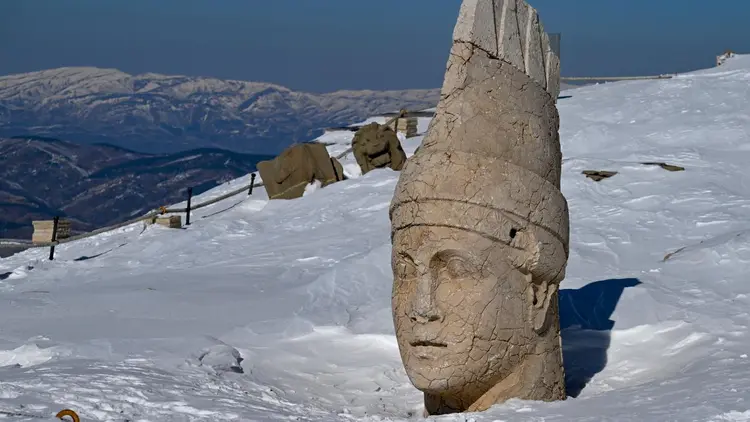
The seated figures stand roughly 8 to 9 meters tall. They show gods rather than humans—Persian in dress, Greek in the face, and each with a double name, so Zeus is also Oromasdes, Apollo is also Mithras and Heracles is also Artagnes-Ares. Antiochus placed himself among them. The statement is clear: he considered his dynasty halfway divine.
Most photos of Nemrut frame those fallen heads, not the seated bodies behind them. The heads now sit on the ground, but the lineup still reads like a family portrait.
4. What is the UNESCO status of Mount Nemrut?
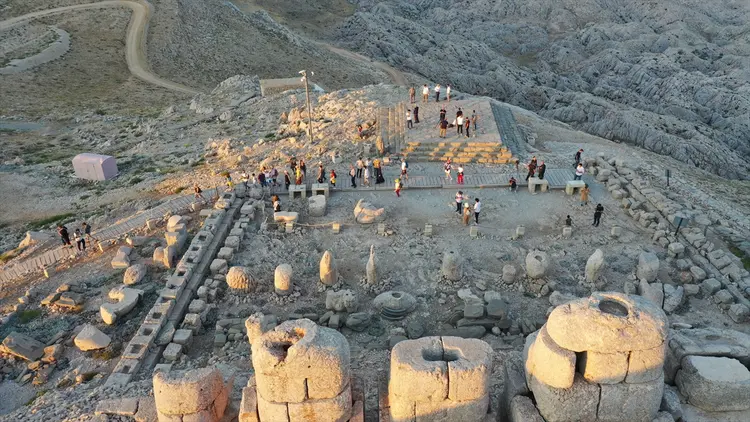
Mount Nemrut was added to the UNESCO World Heritage List in 1987 as a cultural site, and the UNESCO World Heritage Centre describes it as a hierotheseion, a temple-tomb and house of the gods that Antiochus built as a monument to himself. Why the listing? Ambition and rarity. This royal sanctuary of the 1st century BC has survived with statues, reliefs and long inscriptions, and it stands as one of the clearest examples of how a minor Hellenistic kingdom projected power through religion.
5. Where is Mount Nemrut?
The mountain is in Adıyaman Province, in southeastern Türkiye, close to the town of Kahta and the village of Kayadibi. Most people stay in Adıyaman or Kahta. Organized trips are the norm. The region holds other Commagene sites too, so a day trip to the summit can easily be extended into a longer tour.
6. How do you get to Mount Nemrut?
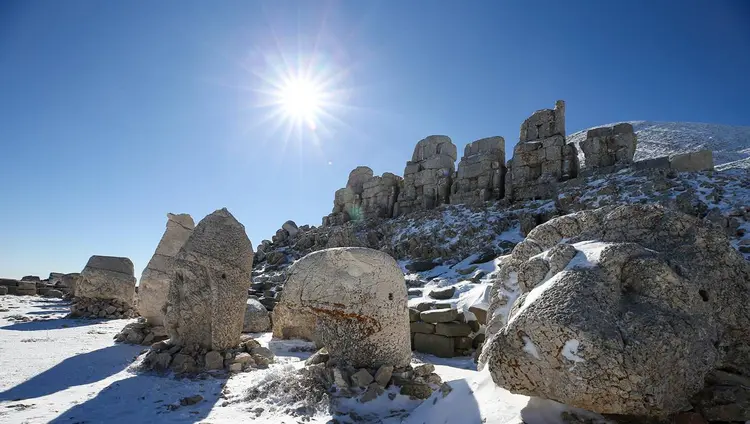
First, get to Adıyaman—by air, bus or car. From there, the usual options are a guided tour or a rental car. Frankly, the tour is the easier choice because it handles both the route and the sunrise timing, and sunrise is the moment most visitors remember. Conditions on the mountain change with the season. Check the schedule in advance.
7. How were the statues discovered?
The wider world learned of the site in 1881, when Karl Sester, a German engineer surveying transport routes for the Ottoman government, spotted the remains. Early guesses leaned Assyrian. The inscriptions said otherwise: the sanctuary was Commagenian. Excavation and study have continued ever since, with each season of fieldwork adding a little more to the picture.
8. What do the inscriptions say?
Antiochus left a long Greek text. In effect it is a royal rulebook for his own cult, setting out how the sanctuary was to be maintained, which priests were to serve it and how festivals were to be held. The king even called for monthly feasts on his coronation and birthday dates, with wine and music for everyone. The fine print was less festive. Anyone who misused the site faced divine anger.
9. Where is the king’s tomb?
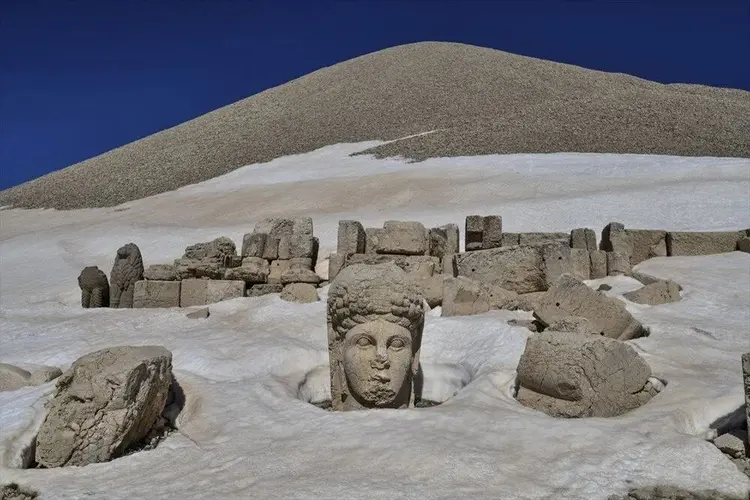
Nobody knows. The sanctuary is believed to hold the burial of Antiochus I, probably beneath the huge tumulus of loose stone, which is around 50 meters high and roughly 150 meters across. Excavations have not found the burial chamber. Digging deeper risks destroying the mound. So for now the tomb stays a mystery, which suits a king who wanted to be remembered as a god.
10. What are the names of the Mount Nemrut statues?
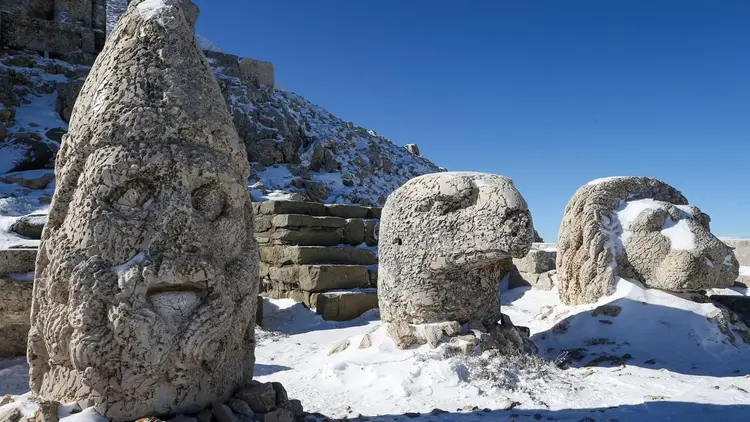
The lineup on the terraces includes Zeus-Oromasdes, Apollo-Mithras-Helios-Hermes, Heracles-Artagnes-Ares, the goddess personifying Commagene itself and Antiochus I seated among them. The east terrace faces the rising sun. It has the better-preserved arrangement of statues and an altar.
The west terrace is the reverse case: more damaged, yet its stone slabs show Antiochus shaking hands with the gods, one of the oldest such images known. East for the statues, west for the reliefs.
Sources: Wikipedia: Mount Nemrut, Wikipedia: Antiochus I of Commagene, UNESCO World Heritage Centre: Nemrut Dağ



Bir yanıt yazın