
13 Things to Do in Antalya, From Old Town to Ruins


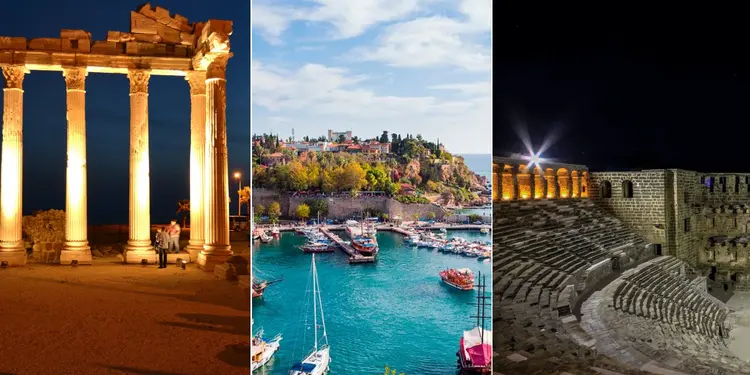
The best things to do in Antalya stretch well beyond the city. Walled quarters, Roman theaters, Lycian ruins and mountainsides that burn on their own fill the province, whose capital began as Attaleia, a harbor founded by King Attalos II of Pergamon in the 2nd century BC, before passing through Roman, Byzantine, Seljuk and Ottoman hands. The 13 stops below mix city sights with places an easy drive or boat ride away along the Mediterranean coast of Türkiye.
1. Kaleiçi
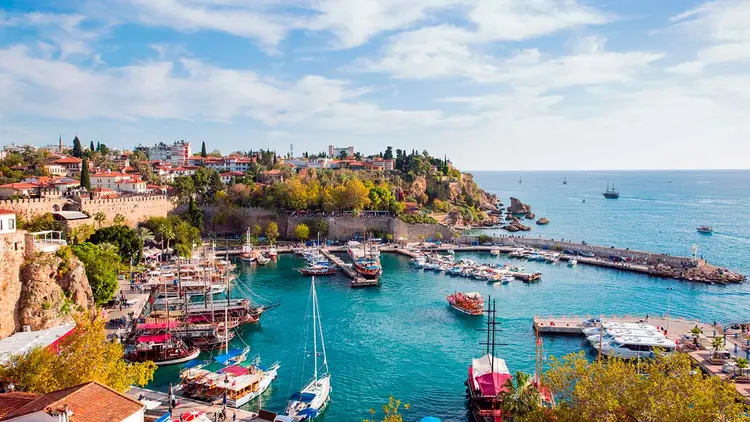
Kaleiçi means “inside the fortress.” The old walled quarter wraps around a small Roman-era harbor, and its best-known entrance, Hadrian’s Gate, is a triple-arched marble gateway marking the emperor’s visit to the city around AD 130. Behind it, the lanes hold Ottoman houses turned guesthouses and cafés. Byzantine and Seljuk traces hide between the souvenir shops, easy to miss and worth the hunt.
2. Yanartaş (the Chimaera)
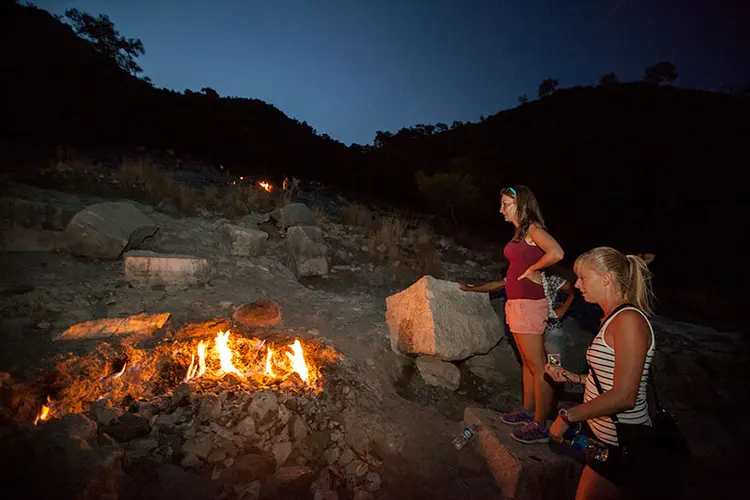
On a hillside above Çıralı beach in the Kemer district, natural gas seeps through rock vents and has burned, by some accounts, for thousands of years. Greek myth has a livelier explanation: this is the breath of the Chimaera, a lion-headed, goat-bodied, serpent-tailed monster that the hero Bellerophon trapped under the mountain from the back of the winged horse Pegasus.
The flames show best after dark. The walk up from the car park is short, but steep enough to want proper shoes.
3. Alara Castle and Alara Han
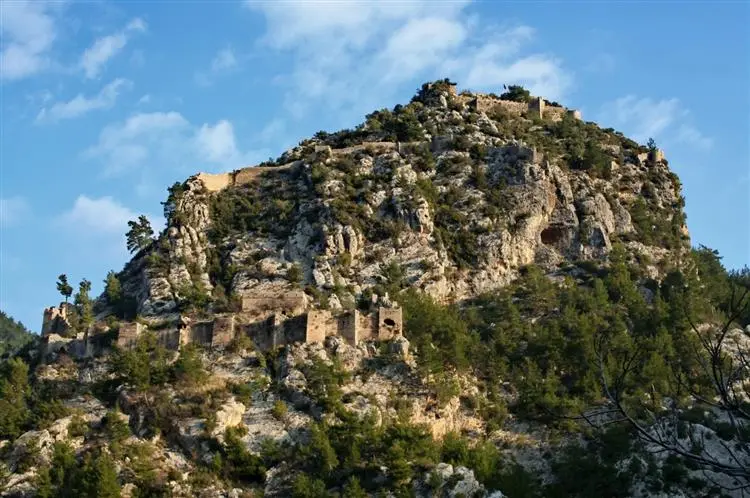
West of Alanya, a Seljuk castle crowns a hill beside the Alara stream, with the ruins of a Byzantine fortification inside it. Sultan Alaeddin Keykubad I had it repaired. Around 1231 to 1232, the caravanserai Alara Han (a roadside inn for merchants) went up on the plain about 800 meters away to protect the trade route between Alanya and Antalya. The forest walk up pays off: views over the valley and the castle’s tumbledown walls.
4. Theimussa Ancient City
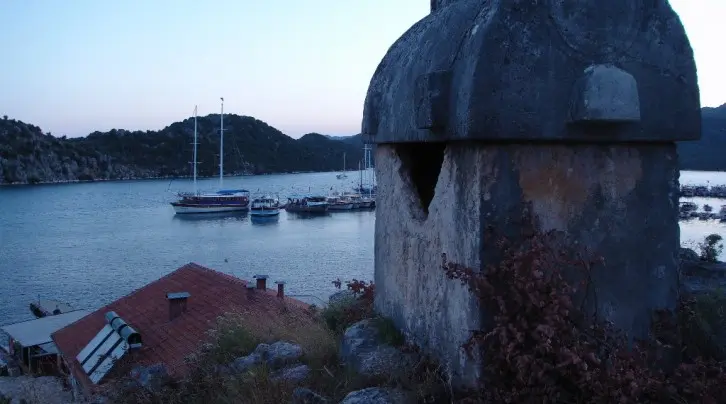
Theimussa is a Lycian settlement under the village of Üçağız near Demre, on a sheltered bay that has long served as a natural harbor and is a departure point for boat trips along the Kekova coast.
Little is known about it. A surviving inscription dates the town to at least the 4th century BC, but the site has never been systematically excavated, and tombs from the Lycian, Hellenistic and Roman periods simply sit scattered through the village, including a house-shaped tomb behind the old quay. Plenty of people come for the boats and leave talking about the tombs.
5. Antalya Clock Tower
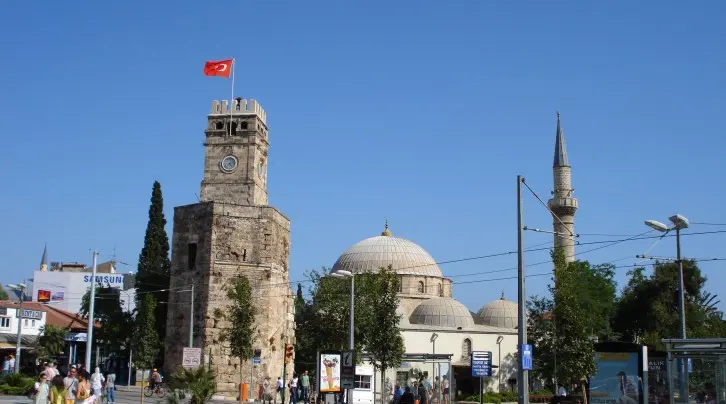
Built on top of an older tower in the city’s fortifications, the clock tower at the edge of Kaleiçi dates, by most accounts, to 1901, in the Ottoman era when towers like it were raised in many cities. Here is the catch: the clock itself is gone. Local news reports say the original mechanism disappeared years ago and only an old bell with religious reliefs remains, so the tower is a landmark for its location rather than its timekeeping.
6. Aya Yorgi Church (Hagios Georgios)
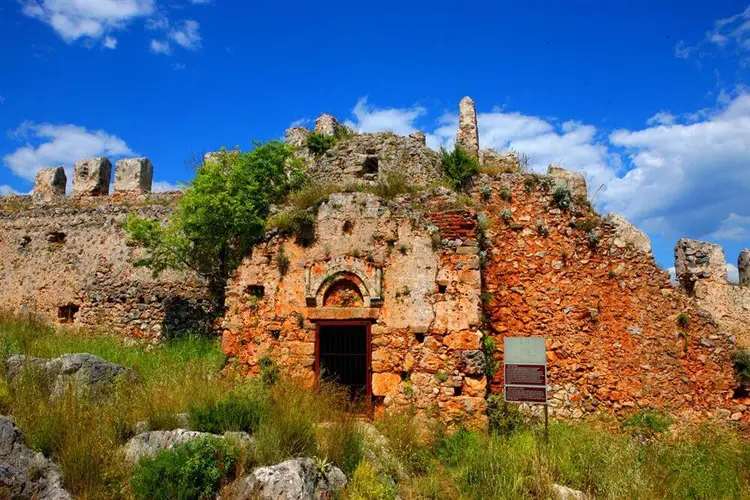
Inside Alanya Castle, roughly two hours’ drive east of Antalya, sits a small Byzantine church usually dated to the 6th century. It predates the Seljuk period, which few buildings within the castle walls can claim. Faded traces of its frescoes survive inside.
The church is protected as part of the castle site, so a visit fits neatly into a day spent exploring Alanya’s hilltop fortress.
7. Düden Waterfalls
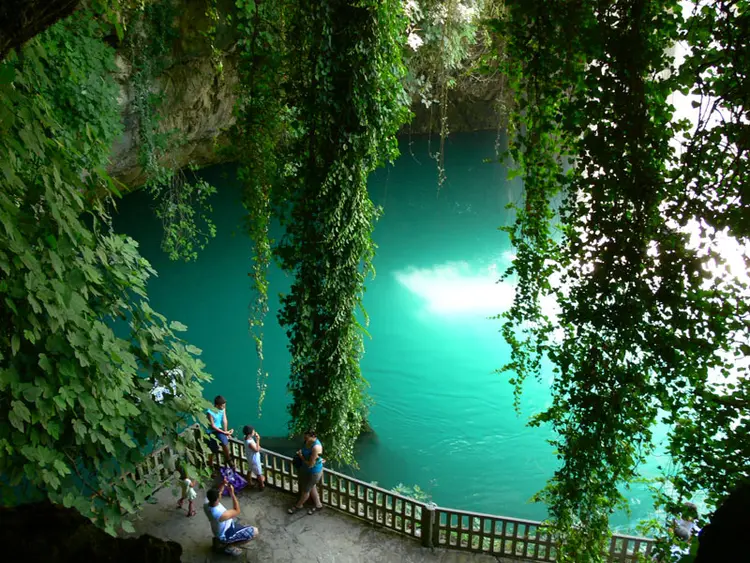
The Düden stream surfaces at Düdenbaşı and splits into two branches. The result: a pair of waterfalls. The Upper Düden Falls sit in a shady park that doubles as a picnic spot, while the Lower Düden Falls near Lara spill over a cliff straight into the sea and are best viewed from a boat or from the clifftop viewpoint. Seeing both takes half a day.
8. Olympos Ancient City
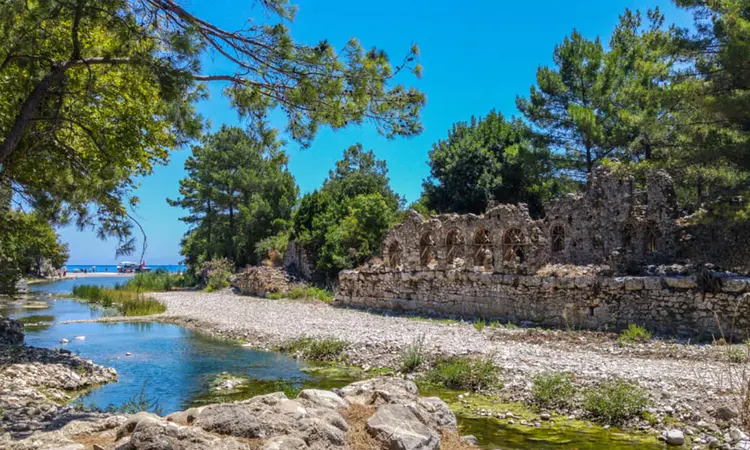
Olympos was a Lycian port, one of the six cities with three votes in the Lycian League, and it appears on league coins from the 2nd century BC.
Most of its ruins lie under trees and brush. A path winds through them to a pebbly beach where a swim slots easily into the visit, and near the river mouth the sarcophagus of Captain Eudomos, carved into a rock hollow, shows a ship in relief and an inscription naming the sea captain it was made for. Next to Patara’s long sand, Olympos is the pebbly, shaded version of a ruins-plus-beach day.
9. Side Ancient City
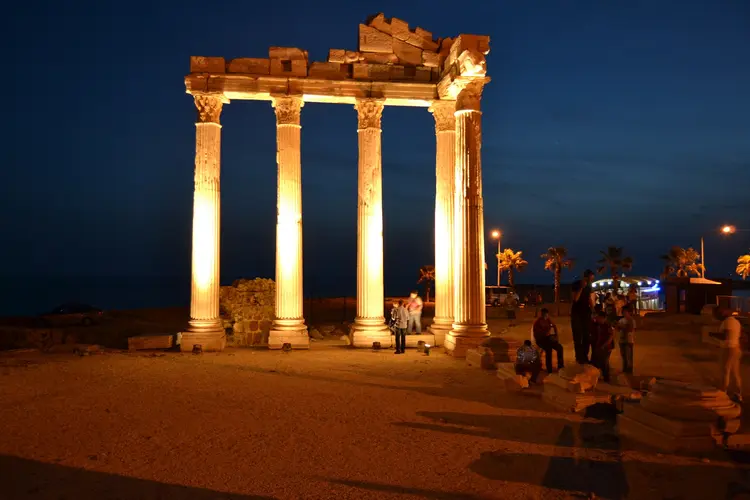
Laid out on a small peninsula, Side was the leading port of ancient Pamphylia. The name? Generally linked to a word for pomegranate. The ruins include city walls, a monumental gate, a colonnaded street, a theater, an agora and a pair of seaside temples to Apollo and Athena. Roman baths now house the Side Museum, and the village of Selimiye grew among the ruins after Cretan settlers arrived in the 1890s.
10. Xanthos Ancient City
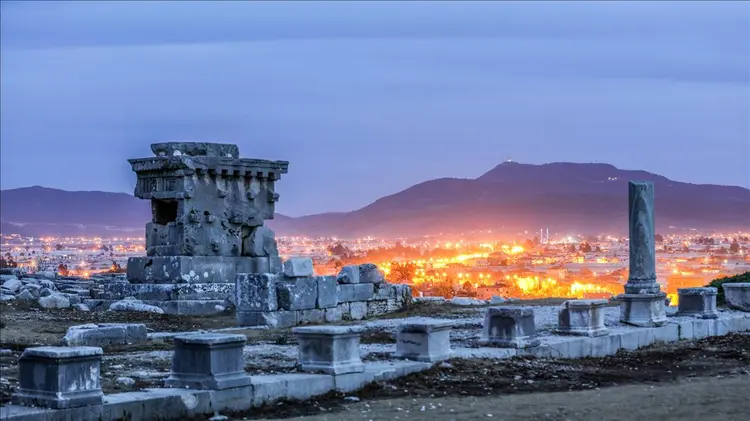
Xanthos was the capital of Lycia. Its ruins near the village of Kınık, on the Antalya side of the Muğla border, were inscribed on the UNESCO World Heritage list in 1988 together with Letoon, a sanctuary about 4 km to the south. Lycian soldiers fight on the Trojan side in the Iliad, and the city’s pillar tombs and rock tombs are its signature sight.
Famous reliefs from the Harpy Tomb and the Nereid Monument are in the British Museum, with replicas left at the site.
11. Patara Ancient City
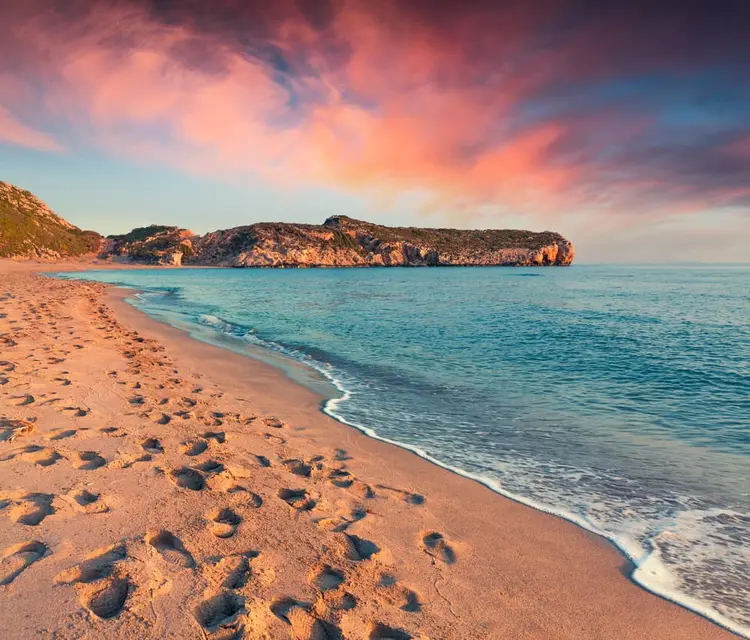
Patara, by the village of Gelemiş, combines a long sandy beach with one of Lycia’s most important cities. Excavations began in 1988 and uncovered the well-preserved Bouleuterion, the assembly hall of the Lycian League, as well as a lighthouse built around AD 60 under Nero. Saint Nicholas, the bishop behind the Santa Claus legend, was born here, not at the North Pole. In summer, loggerhead turtles nest on the beach.
12. Aspendos Ancient City
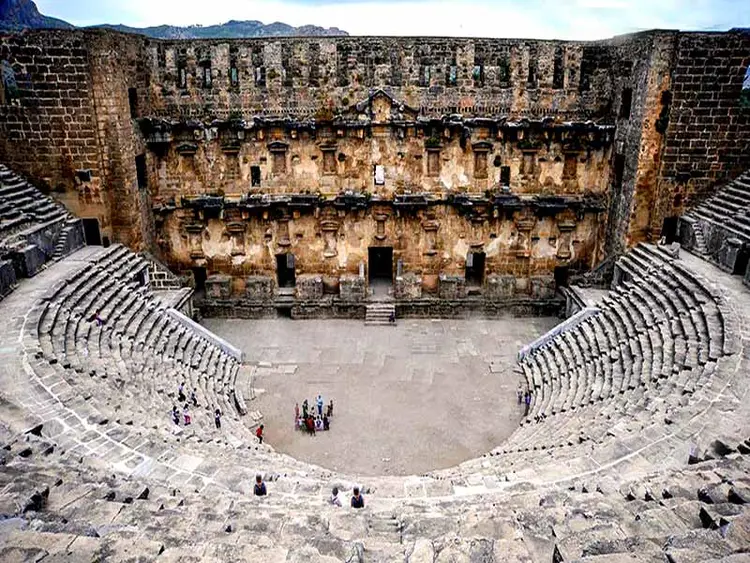
The Roman theater at Aspendos dates to the 2nd century AD and was designed by the local architect Zenon. It ranks among the best-preserved anywhere, full stop. The acoustics still work well enough for summer performances.
Nobody can say for sure how many it held, with estimates running from roughly 7,000 up to far higher figures; beyond the theater, the aqueduct that fed the city ended in an inverted siphon (a pressurized pipe running down and up a valley).
13. Karain Cave
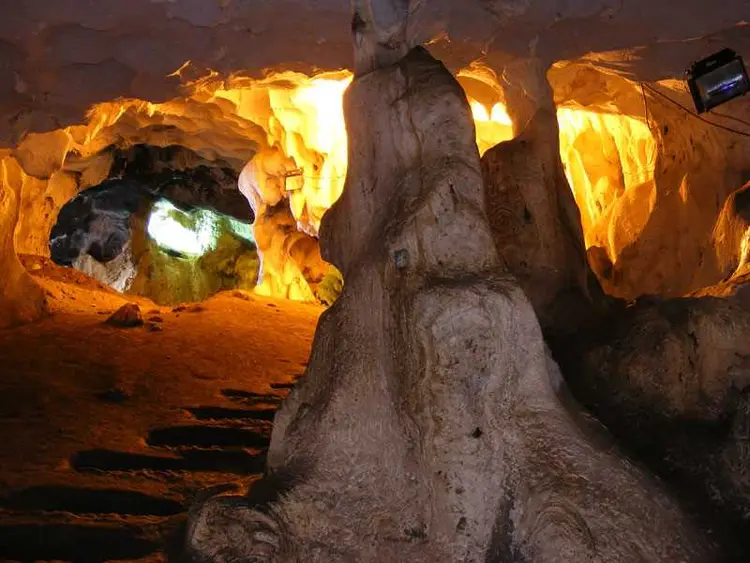
Karain Cave opens on the slope of Mount Katran, about 27 km northwest of Antalya. Its record of human presence runs from the Paleolithic to the Iron Age, and a fragment of a Neanderthal skull found here dates to roughly 150,000 to 200,000 years ago. A small museum stands near the entrance, but as with the Xanthos reliefs, the best pieces live elsewhere: most finds are at the Antalya Museum and the Museum of Anatolian Civilizations in Ankara.
Sources: Xanthos (Wikipedia), Patara (Wikipedia), Karain Cave (Wikipedia), Chimaera (Lonely Planet)

Bir yanıt yazın