
14 Things to Do in Muğla, From Hidden Bays to Ruins


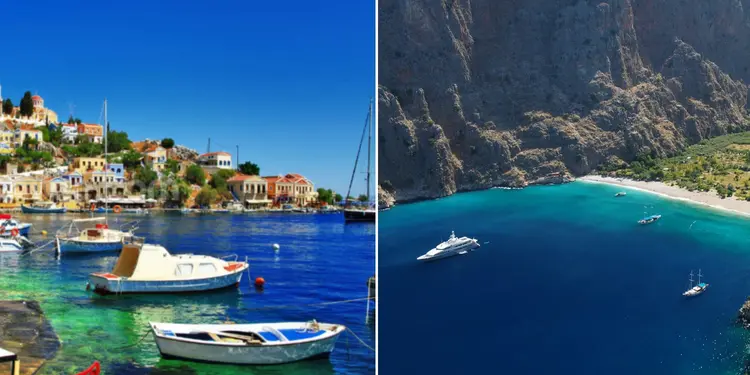
The best things to do in Muğla are scattered along a coastline where the Aegean meets the Mediterranean, and the province holds some of Türkiye’s most visited resorts, including Bodrum, Marmaris, Datça and Fethiye. Behind the beaches sit ancient Greek cities, a Crusader castle, icy mountain streams and a handful of natural oddities. Here are 14 places that show why the region keeps drawing travelers back.
1. Knidos Ancient City
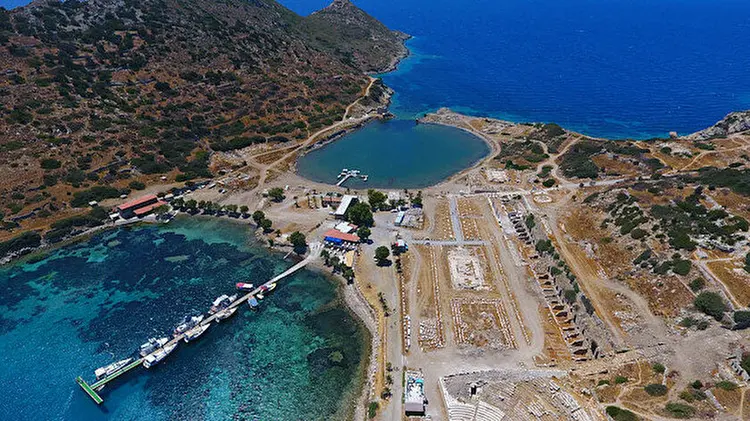
Knidos lies at the far tip of the Datça peninsula, where the two seas meet. Its ruins climb the hillside above two ancient harbors, and the remains (temples, a theater, later Byzantine churches) recall a city once famous across the ancient world for the Aphrodite of Knidos, carved by the sculptor Praxiteles in the 4th century BC. The site is remote, and getting there is half the trip: allow time for the long drive, and bring water.
2. Cleopatra Island (Sedir Island)
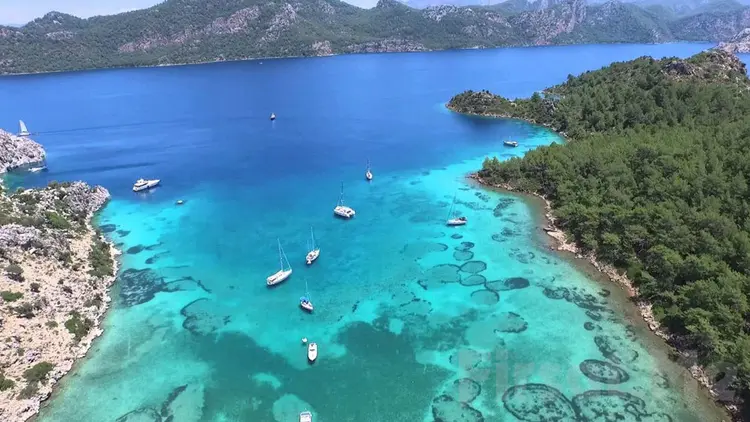
Pale sand and an old legend: that is the draw of Sedir Island. According to the story, Mark Antony had the sand shipped from Egypt to this corner of the Gulf of Gökova for Cleopatra’s swim. Nice story, but the sand is in fact a natural formation with a distinctive composition, which is why taking it off the island is forbidden.
Boats leave from Marmaris and nearby resorts.
3. Saklıkent Gorge
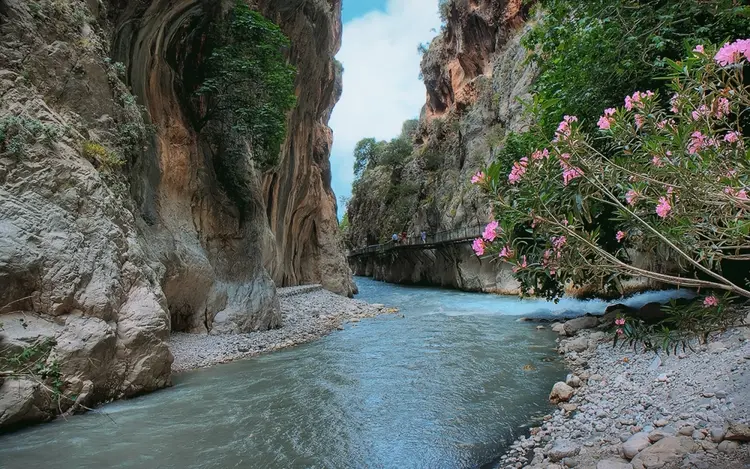
Water did the carving here. Saklıkent, a limestone gorge near Fethiye, formed along a fault line, and today a wooden walkway leads in beside the river until the boards end and visitors wade on through glacier-cold water between steep rock walls. The cold tends to register only at that first step off the boards. Water shoes are worth it. Heavy rain can close the gorge.
4. Ölüdeniz
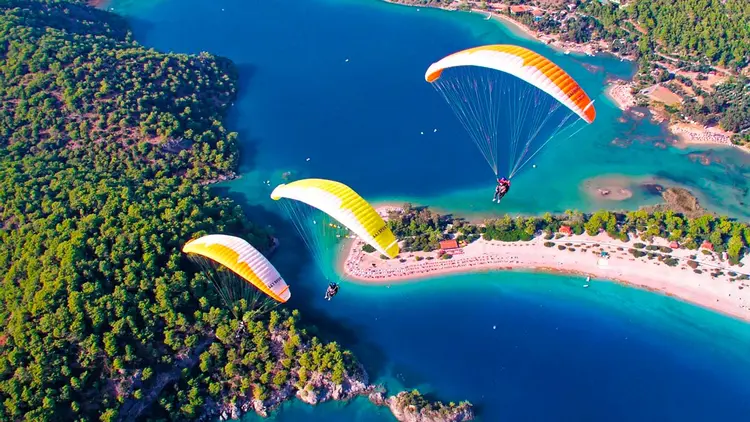
Ölüdeniz is a lagoon resort in the Fethiye district, about 14 km from town, with a calm, sheltered sea that looks almost painted on. The lagoon is a protected nature reserve. Building is banned. Up above, paragliders jump from nearby Mount Babadağ and float down to land on the main beach, a Blue Flag stretch of sand, so sunbathers get a steady show overhead.
5. Kabak Bay
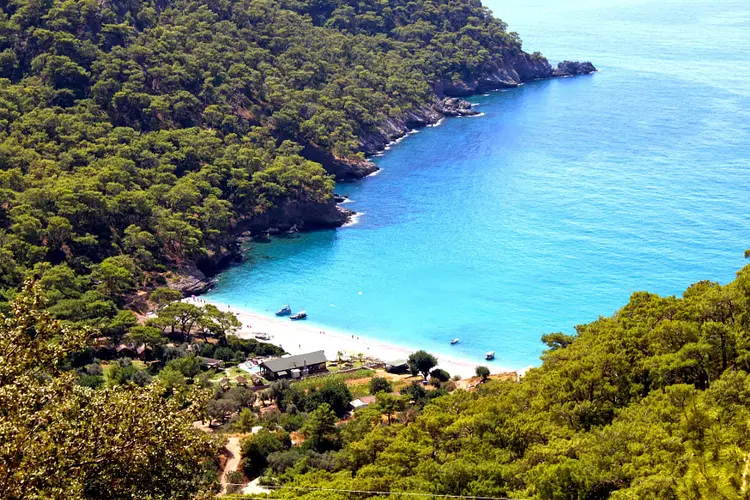
Red pine forest and steep cliffs frame Kabak Bay, a quiet cove around the village of Faralya, roughly 16 km east of Ölüdeniz.
It sits on the Lycian Way hiking route. A small pebbly beach suits swimmers. Hikers head inland instead, where paths climb past springs and streams to viewpoints some 300 meters above the water.
6. Bodrum Castle
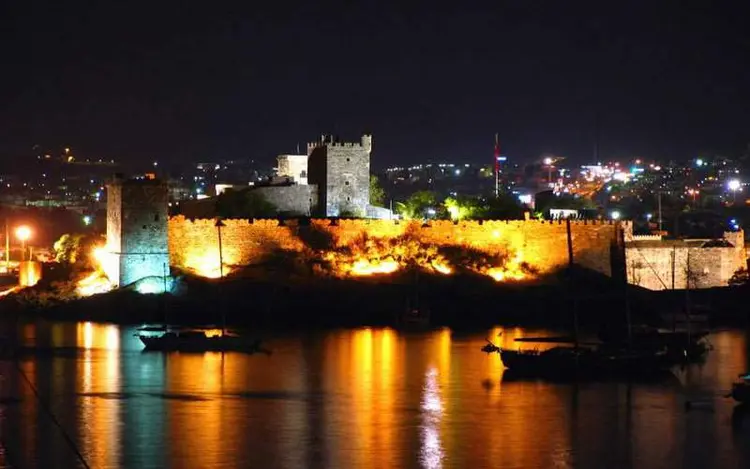
Bodrum Castle still dominates the harbor. The Knights of St John began it in the early 15th century, and four of its towers were named for the nations that helped build them: English, French, German and Italian. Today it houses the Museum of Underwater Archaeology, with finds from ancient Aegean shipwrecks. Evening light suits it best.
7. Kızlan Windmills
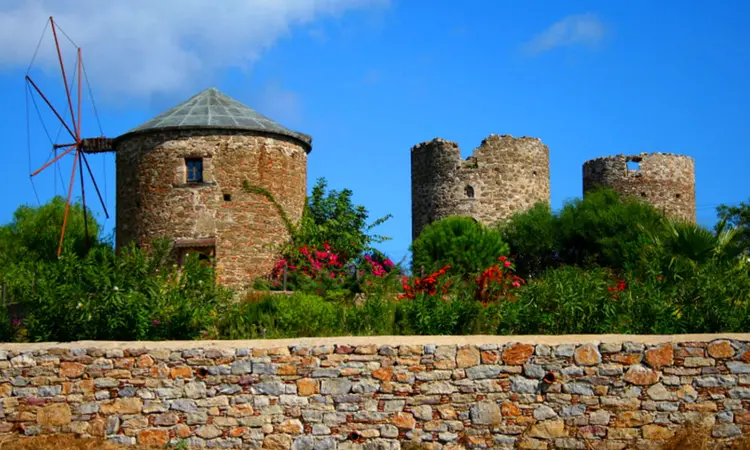
Six stone mills remain at Kızlan. They stand on a ridge about 8 km before Datça town on the approach road, surrounded by almond and olive groves, and several have been kept as village landmarks since the early 1900s. Peek inside for the original gears and sails. It makes a short, quiet stop between beaches.
8. İztuzu Beach
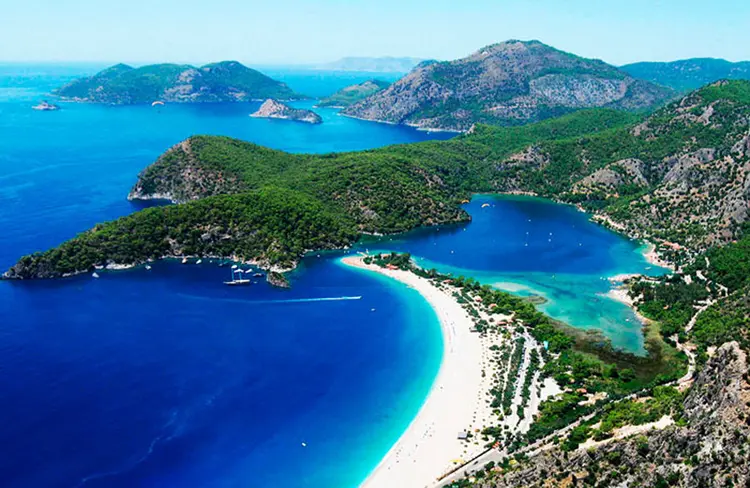
İztuzu is a 4.5 km sandbar at Dalyan. On one side runs a freshwater river; on the other, the open sea. Loggerhead sea turtles lay their eggs here in summer, which is why it is also known as Turtle Beach, and a rescue and research center treats injured turtles.
Come by day. The turtles get the night shift: parts of the beach close at night during the nesting season.
9. Yuvarlakçay
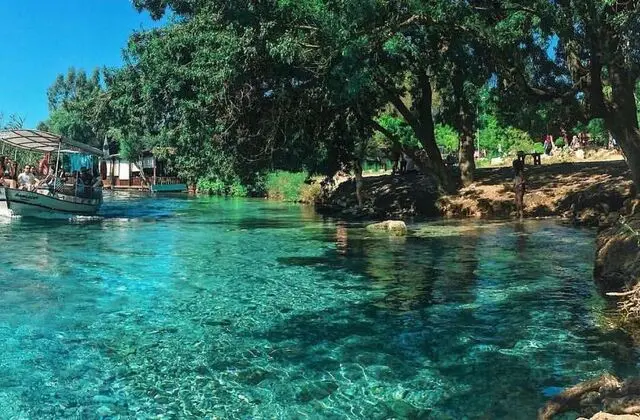
Snowmelt from the Sandras Mountains feeds Yuvarlakçay, a mountain stream near Köyceğiz. The water is icy. Even strong swimmers need several tries to get in, yet with swings hanging right over the stream, shaded riverside tables and air far cooler than the coast, it is a favorite on hot summer days.
10. Kızkumu Beach (Maiden’s Sand)
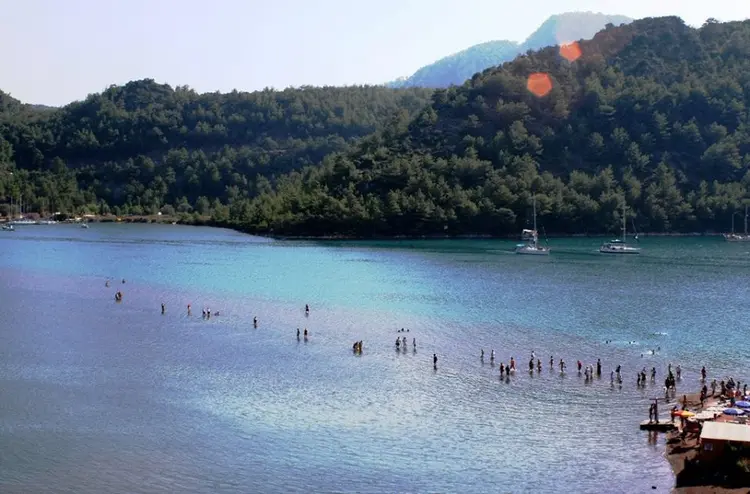
Kızkumu makes people look as if they are walking on water. The sandbar, about 600 meters long in Orhaniye near Marmaris, is a natural spit of sediment built up by currents, and the village it reaches out from was once called Kırvasil. Think of it as İztuzu’s small cousin: İztuzu runs 4.5 km between a river and the sea, while Kızkumu just reaches out into the bay and stops. The area is protected. Wet sand gets slippery, so watch your step.
11. Butterfly Valley
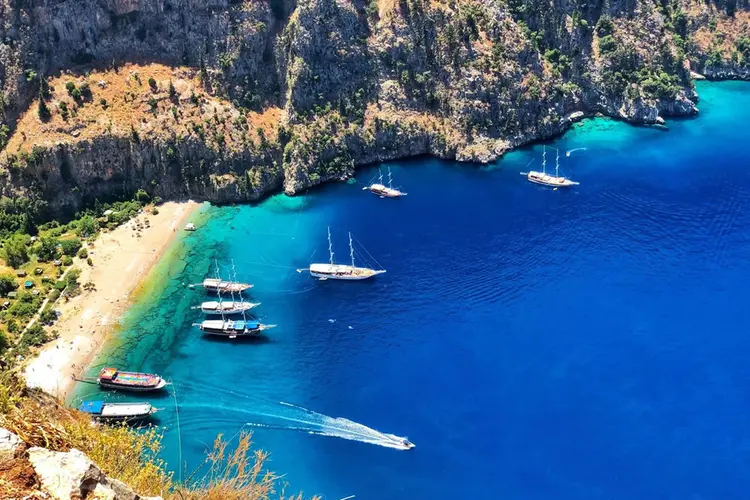
Butterfly Valley is a narrow cove in the Ölüdeniz area, enclosed by cliffs of about 350 meters and easiest to reach by boat.
A waterfall tumbles into the valley. The butterflies? Mostly not butterflies at all, but Jersey tiger moths, which cluster here in summer. Hikers can scramble up the cliff path to Faralya, though it is steep, and anyone attempting it from the beach should wear proper shoes.
12. Datça
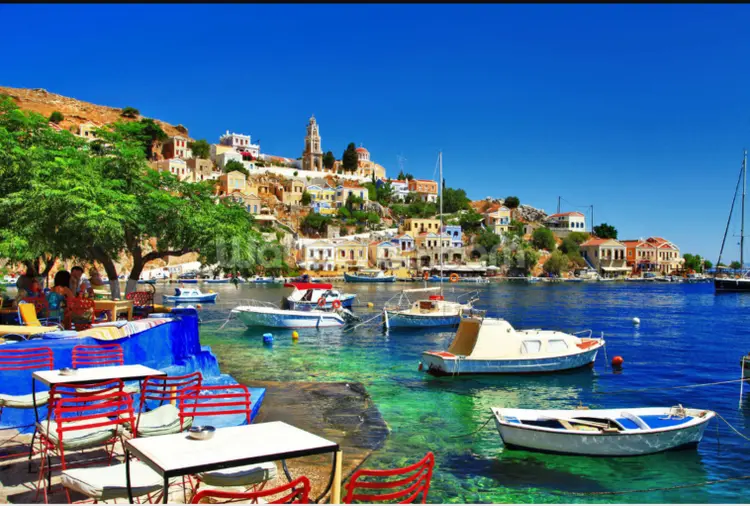
Datça is a long, narrow peninsula stretching between the Aegean and the Mediterranean, and a separate district from nearby Marmaris. Life runs slowly here. Almond and olive groves, small bays and old stone houses set the pace, and in late winter the almond trees bloom pink and white, a moment the peninsula marks with an almond blossom festival. Give it a few days, not one.
13. Zeki Müren Museum
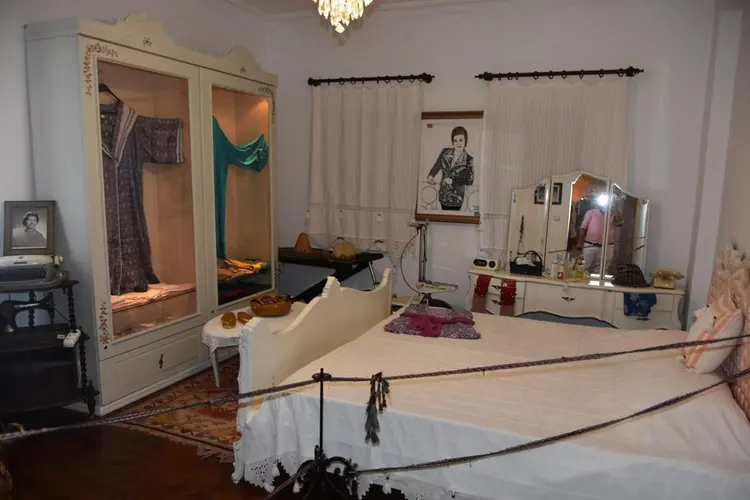
The museum is the former home of Zeki Müren (1931 to 1996), one of Türkiye’s best-known singers, nicknamed “the Sun of Art,” who spent his last years in Bodrum. The two-story house displays his stage costumes and belongings. His car sits outside.
It is closed on Mondays, so check ahead before going.
14. Mausoleum of Halicarnassus
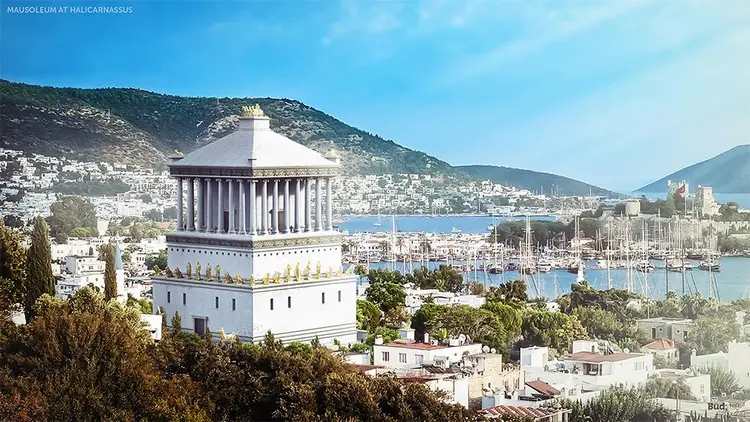
Once one of the Seven Wonders of the Ancient World, the Mausoleum at Halicarnassus was built between 353 and 351 BC as the tomb of the Carian ruler Mausolus. Expect a gap between the name and the site: little of it survives. Only the foundations and a small museum mark the site in Bodrum, while many of its sculptures now sit in the British Museum and blocks from the tomb were reused in the walls of Bodrum Castle. So a walk around the castle on the harbor is, in a small way, a visit to the Wonder too.
Sources: Bodrum Castle (Wikipedia), Mausoleum at Halicarnassus (Wikipedia), Muğla destinations (Go Türkiye, official tourism portal)

Bir yanıt yazın