
15 Photos Showing Istiklal Street Istanbul History


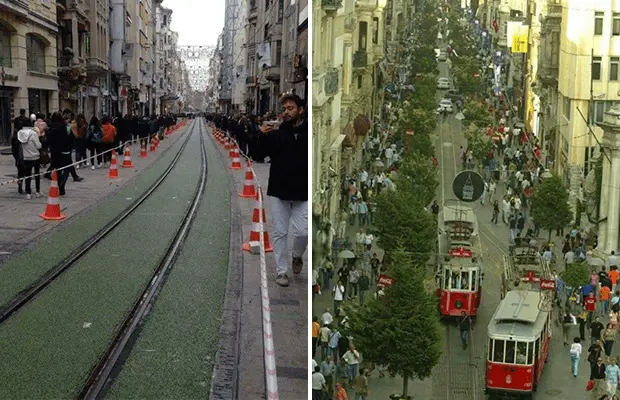
Few names come up faster in any conversation about Istanbul than Istiklal Street, and the walk from Tünel to Taksim Square is still defined by the same things it always was: endless crowds, street performers, and a good deal of faded grandeur. Older photos tell another side of Istiklal Street Istanbul history: the avenue they remember looks nothing like the one you see today.
1. Istiklal Street Runs Through Nine Neighborhoods in Beyoğlu
Istiklal Street runs from Tünel to Taksim Square through Beyoğlu, one of Istanbul’s oldest districts. Nine separate neighborhoods share it. And because the avenue sits roughly 74 meters above the Bosphorus, most of its side streets slope steeply down toward the water on either side.

2. The Street’s First Shape Formed After the Byzantine Era
It starts with Galata. During Byzantine rule it was a walled Genoese colony on the far shore of the Golden Horn, and the avenue’s layout traces back to it.
Inside those same walls, Latin communities settled, Catholic churches and monasteries took root, and the groundwork was laid for what would later become Pera.

3. Pera Was the Name for the Hill Above the Golden Horn
The hillside across the Golden Horn became known as Pera. The name stuck for centuries. Some older maps and guidebooks still use it instead of Beyoğlu. For a long time, almost all of Galata’s population lived inside its fortified walls. Then Istanbul passed into Ottoman hands, Galata’s trade links and legal protections only grew stronger, and Latin residents who had outgrown the old walls began settling the hillsides facing the Bosphorus and the Golden Horn, well beyond the original colony.

4. Fifteenth-Century Migrations Changed the Population Balance
Waves of Muslim settlement arrived with the migrations of the 15th century. Exact numbers are hard to pin down, but that community never grew as fast as the non-Muslim population already established in Pera.

So many foreign-born residents settled in Pera that the district filled up with venues and clubs built to suit their own tastes. Their customs survived here. So did their nightlife. Together they gave the area a cosmopolitan reputation that outlasted the empire itself.
5. Istiklal Street Istanbul History Turns Modern in the 19th Century
By the 19th century, Istiklal Street had taken on a layout close to what visitors still recognize today: a long, straight avenue lined with grand buildings.
Much of it survives. Embassies, theaters, and apartment blocks from this period still stand along the route.

6. Ottoman Intellectuals and Minority Communities Shaped Its Architecture
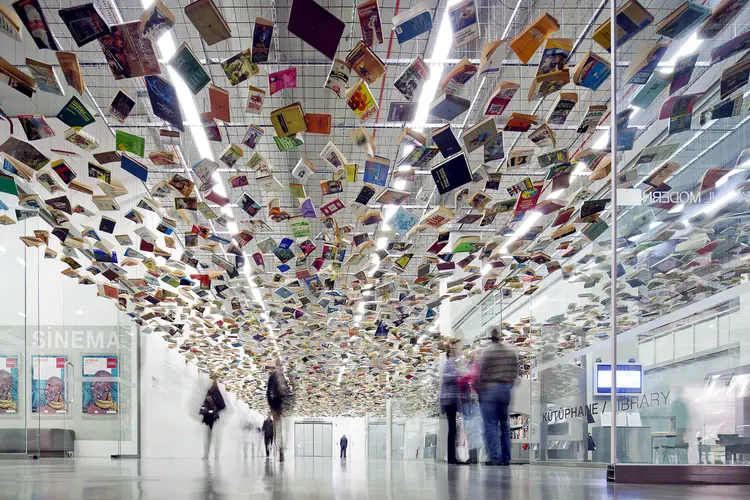
Many of the buildings that line Istiklal Street went up to serve both the Ottoman Empire’s young intellectual class and its non-Muslim residents. The result leans distinctly European. Neoclassical facades sit beside Art Nouveau details, and that mix is still one of the street’s biggest draws for visitors. Salt Beyoğlu, the cultural center that now occupies one of these buildings, traces its six-floor home to the second half of the 19th century, when it was the Siniossoglou Apartment, with shops on the ground floor and homes above.

7. The Republic Era Left the Street’s Character Largely Untouched
Then came 1923. After the Republic of Türkiye was founded and the avenue took the name “Istiklal” (Independence), its physical character kept developing for decades without major upheaval, and the street carried its Ottoman-era buildings forward largely intact.

8. Cars Once Drove Down Istiklal Street in the 1960s
Istiklal Street once had regular car traffic. It’s easy to forget now, but cars kept using the avenue through the 1960s, before pedestrianization reshaped it into the walking street visitors know today. Most first-timers, squeezed shoulder to shoulder beside the tram tracks, never picture a car fitting down the same lane.

9. The Historic Tram Is Istiklal Street’s Best-Known Symbol
The old red tramway remains one of Istiklal Street’s most recognizable features. Out of service? No, despite what some older sources claim. Istanbul reinstated it as a nostalgic line, and it still runs the length of the avenue today, now mostly as a sightseeing ride rather than daily commuter transport.

10. The 1990s and Early 2000s Are Remembered as Its Liveliest Years
Ask longtime visitors about Istiklal Street’s best years and many will point to the 1990s and early 2000s, when its trees, crowds, and street life were all at their peak. Locals who walked it then agree. The busiest and greenest the avenue has ever looked, they still say.

11. Repeated Repaving Projects Started Around 2010
Starting around 2010, the avenue’s cobblestones were replaced again and again, so often that the work turned into its own small media story at the time. The trees fared worse. Cutting them back during the same period changed the street’s look, and no amount of fresh stone was going to make up for the lost shade.

12. The 2016 Attack Left the Avenue Visibly Emptier
Istiklal Street is rarely short of people. After a string of attacks in Istanbul in 2016, though, its crowds thinned out noticeably for a time.
In November 2022 a second deadly bombing hit the same avenue, killing six people and injuring dozens more. Security and foot traffic returned only gradually.

13. A Quieter Istiklal Street Became the New Normal for a While
This photo shows how empty Istiklal Street could look for a stretch of time. Eerily still. It’s the same avenue that once buzzed nonstop, which makes the contrast with the crowds it’s known for today all the sharper.

14. A Renovation Project Added Granite and Artificial Grass
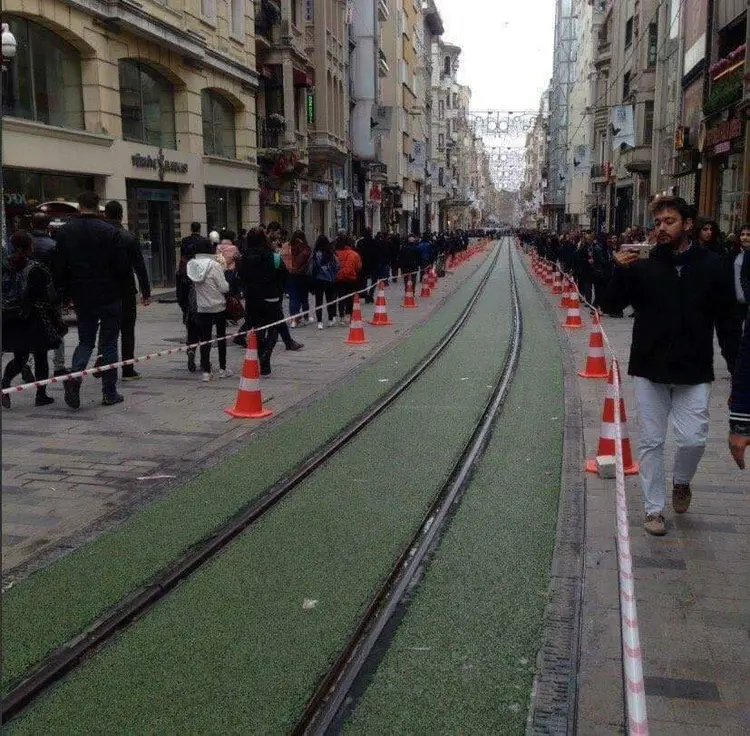
Granite and artificial turf, on a 19th-century avenue. A more recent renovation project resurfaced sections of Istiklal Street with both, part of an ongoing effort to modernize the avenue’s look.

15. Today’s Istiklal Street Is Still Finding Its Final Look
As the renovation work wound down, Istiklal Street settled into the version most visitors see now: modern paving, a working nostalgic tram, and the same nonstop crowd. Was the trade-off worth it? Every visitor can judge that for themselves.
Sources: İstiklal Avenue – Wikipedia, 2022 Istanbul bombing – Wikipedia, Salt Beyoğlu – Salt


Bir yanıt yazın