
19 Historic Landmarks in Istanbul — A Complete Guide


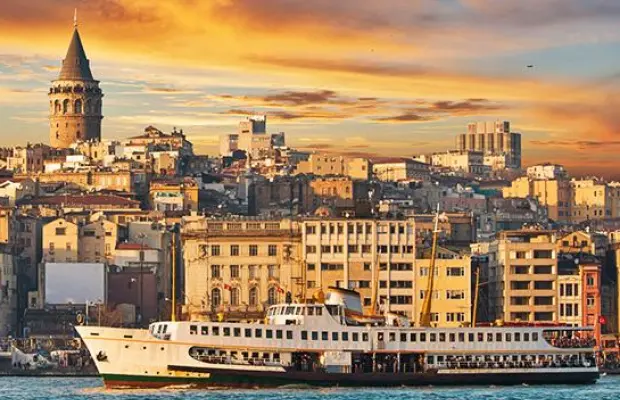
Every corner of Istanbul carries the weight of two empires. Byzantine and Ottoman rulers both built their capitals here, and what they left behind still shapes the skyline. These 19 historic landmarks in Istanbul trace that story, from imperial palaces to a market that’s been open for 500 years.
1. Topkapı Palace

Topkapı Palace housed the Ottoman sultans and ran the empire’s affairs for roughly 400 of its 623 years in power. Its courtyards, kitchens and the Imperial Treasury are now open as a museum. The Harem wing alone is worth a separate ticket. The palace is one of the monuments that make up the Historic Areas of Istanbul, the UNESCO World Heritage site inscribed in 1985, a listing that also covers Hagia Sophia and the Blue Mosque. Few single sites tell the Ottoman story this completely.
2. Basilica Cistern

The Basilica Cistern sits just steps from Hagia Sophia. Named after a long-gone Byzantine basilica that once stood above it, it’s the largest covered cistern in Istanbul, its ceiling held up by hundreds of columns rising out of shallow, still water.
Truth is, most visitors come for one detail: two column bases carved with Medusa heads, reused from older Roman buildings.
3. Hagia Sophia

Hagia Sophia began as a Byzantine cathedral built on a basilica plan. After the Ottoman conquest of the city, Fatih Sultan Mehmed converted it into a mosque, a role it kept until it became a museum for much of the 20th century and was then redesignated a mosque again in 2020. Istanbul’s skyline doesn’t make sense without it.
4. Blue Mosque

Commissioned by Ottoman Sultan Ahmed I, the Blue Mosque (Sultanahmet Mosque) earned its nickname from the blue, green and white İznik tiles covering its interior and the blue-tinted painting inside its domes. European visitors coined the name, and it stuck. The mosque remains active, so visiting hours work around prayer times.
5. Dolmabahçe Palace

Sultan Abdülmecid I built Dolmabahçe Palace to bring European-style grandeur to the Bosphorus shoreline. It’s mainly a museum now. Official state functions still happen there occasionally.
The crystal staircase and the oversized Hereke carpets inside give a sense of just how far Ottoman taste had shifted by the 1850s.
6. Yedikule Fortress

Yedikule Fortress grew up around the Golden Gate, a Byzantine triumphal gate built under Emperor Theodosius II. Later Byzantine rulers expanded it with additional towers. After the 1453 conquest, Fatih Sultan Mehmed completed the complex by adding three more towers, bringing the total to seven and giving the fortress its name. Don’t let its Turkish name, Yedikule Zindanları (“Yedikule Dungeons”), mislead you: it was built as a fortress, and only parts of it later served as a treasury and state prison.
7. Maiden’s Tower

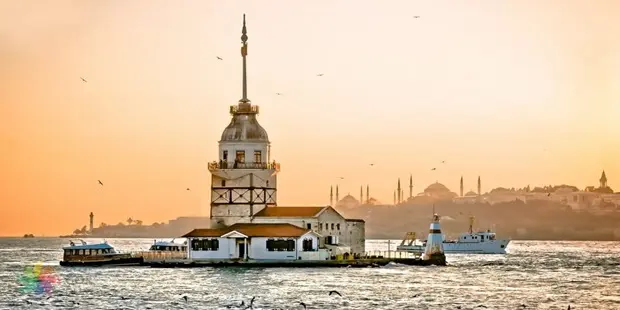
Legend traces the Maiden’s Tower back to a structure on this small islet in AD 24, making it one of the oldest sites on this list by reputation. How much of that is history, and how much is storytelling? Hard to say. The tower visible today has been rebuilt and repaired many times since, most recently as a lighthouse and now as a café and viewpoint reachable by short boat ride from Üsküdar. Its silhouette ranks among the most photographed in the city.
8. Feshane

Sultan Mahmud II founded Feshane to manufacture the fez-style caps worn by his newly reformed army, replacing the old Janissary uniforms. No textiles are made there now. The factory building in Eyüp serves as a venue for exhibitions and cultural events.
It’s a quieter stop than most on this list, but a useful reminder of the Ottoman military reforms of the 1800s.
9. Gülhane Park
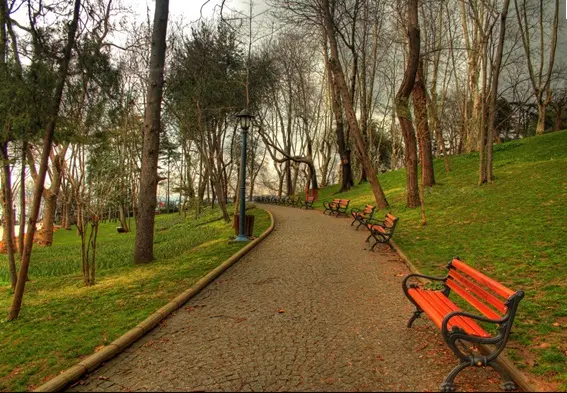
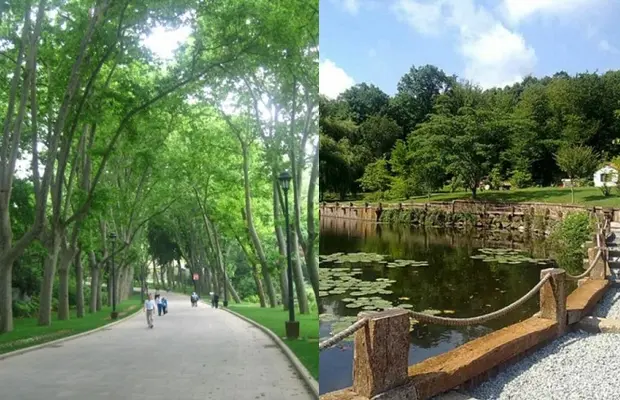
Gülhane Park sits between Topkapı Palace, the Alay Köşkü pavilion and the Sarayburnu waterfront. During the Ottoman period it functioned as the outer garden of Topkapı Palace, used by the court rather than the public. Today it’s open to everyone. It also makes a shaded, walkable break between Sultanahmet’s bigger sights.
10. Rumeli Fortress

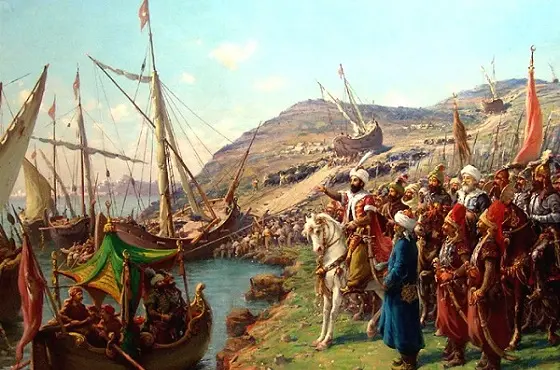
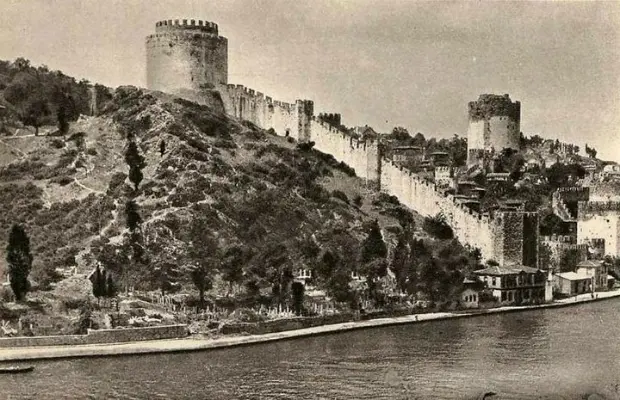
Fatih Sultan Mehmed ordered Rumeli Fortress built to cut off any seaborne reinforcements reaching Constantinople from the north, ahead of the 1453 siege. It sits on the European shore of the Bosphorus, between Beşiktaş and Sarıyer, facing its sister fortress across the water.
It now operates as a museum and occasional concert venue.
11. Anadolu Fortress

Sultan Bayezid I built Anadolu Fortress decades before Rumeli Fortress went up, as a response to Byzantine and Genoese colonies pushing into the Black Sea trade routes. Standing on the Asian shore, it’s the older and smaller of the two Bosphorus fortresses. Together they gave the Ottomans control of ship traffic through the strait.
12. Beylerbeyi Palace

Sultan Abdülaziz commissioned Beylerbeyi Palace from Armenian-Ottoman architect Sarkis Balyan, whose family designed several other palaces on this list. Standing in Üsküdar on the Asian side of the Bosphorus, it was used both as a summer residence and as a venue for hosting visiting foreign heads of state. Right on the water, it’s one of the more photogenic stops along the strait.
13. Çırağan Palace

Long before Çırağan Palace went up, its site was known in the 17th century as the “Kazancıoğlu Gardens” and stood as one of the great symbols of the Tulip Era, an age of courtly extravagance and garden parties. The palace built later on the same spot now operates as a five-star hotel. You don’t need a reservation to admire it, though: the grand facade is on full view from the Bosphorus.
14. Grand Bazaar

With close to 4,000 shops under one roof, the Grand Bazaar is often called the world’s largest and oldest covered market. Fatih Sultan Mehmed started construction, traditionally dated to 1460, and the wooden-domed layout seen today largely dates from rebuilding under Suleiman the Magnificent.
Bargaining is expected here, not optional.
15. Spice Bazaar

Turhan Hatice Sultan, wife of Sultan Ibrahim I, commissioned the Spice Bazaar near the Golden Horn. Tradition holds that tax revenue from Egypt helped fund its construction, which is where its Turkish name comes from: Mısır Çarşısı, or “Egyptian Market.” Spices, Turkish delight and tea still dominate the stalls today.
16. Yıldız Palace

Sultan Selim III first built pavilions on this site for his mother, Mihrişah Sultan. The complex grew into a full palace later. Under Sultan Abdülhamid II it became the empire’s main seat of government, a role it held for over three decades. Its scattered pavilions and gardens feel very different from the single grand building most people picture when they think “Ottoman palace.”
17. Eyüp Sultan Mosque

Fatih Sultan Mehmed built the Eyüp Sultan Mosque shortly after conquering Istanbul, on the site believed to hold the tomb of Eyüp Sultan (Abu Ayyub al-Ansari), a companion of the Prophet Muhammad. New Ottoman sultans traditionally girded their swords here as part of their accession ceremony. The surrounding district, also called Eyüp, grew up around the mosque and its cemetery.
18. Alay Köşkü
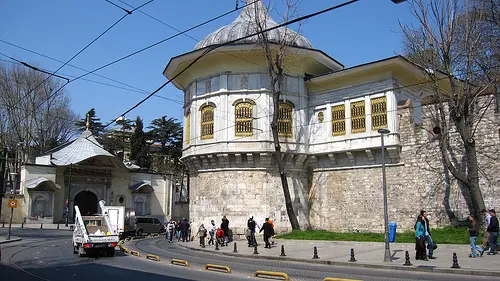
Alay Köşkü sits on the outer wall of Topkapı Palace. It was built so the sultan could watch processions and parades pass through the street below without being seen by the crowd. The name translates roughly to “procession kiosk.” It’s an easy landmark to miss on a map, but hard to miss once you’re standing in front of it on Alemdar Caddesi.
19. Khedive’s Palace

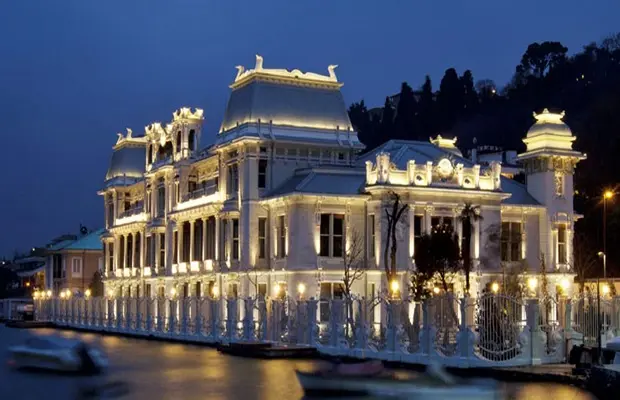
Khedive Abbas Hilmi II of Egypt had this palace built in 1907 above the Çubuklu neighborhood on the Bosphorus’s Asian shore, working with architects Antonio Lasciac and Delfo Seminati on a design that mixes Art Nouveau detail with Renaissance-villa massing. The city of Istanbul bought the property in 1937, restored it in the early 1980s and reopened it to the public in 1984. It’s now run as an event space with one of Istanbul’s largest rose gardens. Every April, it hosts the city’s tulip festival.
Sources: Wikipedia’s entry on Hagia Sophia; Wikipedia’s entry on the Khedive’s Palace; UNESCO World Heritage Centre: Historic Areas of Istanbul.



Bir yanıt yazın