
Visiting the Kamondo Stairs in Istanbul: The Full Guide


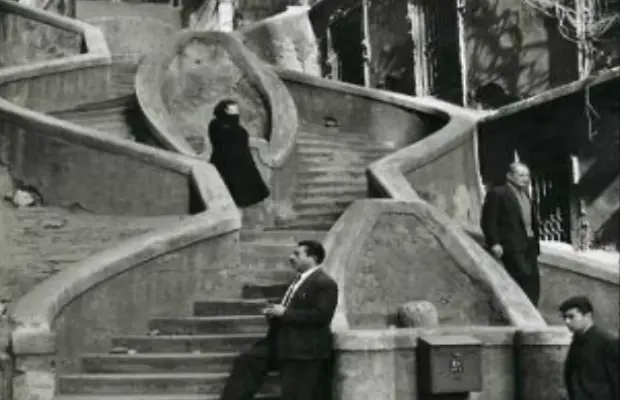
If you’ve spent any time walking between Karaköy and the Galata hillside in Istanbul, Türkiye, you’ve probably crossed paths with the Kamondo Stairs without knowing their story. The Kamondo Stairs Istanbul locals climb every day are among the city’s most photographed staircases. Fewer people know why a banking family built them. The short answer: a grandfather, not romance.
1. Kamondo Stairs Istanbul: a spiral staircase at the heart of Karaköy
The Kamondo Stairs sit where Voyvoda Street (today’s Bankalar Caddesi, “Banks Street”) meets Banker Street in Karaköy, a few minutes’ walk uphill from the waterfront. Most sources place their construction in the 1870s, during the neighborhood’s years as Istanbul’s banking and finance district. Exact dates vary. Treat any single year you read elsewhere with a little caution. The street’s banking-era past is still on show at SALT Galata, the research center housed in the former Ottoman Bank headquarters a short walk from the stairs.
2. Built by a banking dynasty, nicknamed the “Lovers’ Staircase”
Abraham Salomon Camondo commissioned the stairs. His family, the Camondos, ranked among the most prominent Jewish banking dynasties of the late Ottoman Empire, and locals eventually gave his staircase a second name: the “Lovers’ Staircase,” for the couples who have lingered on its landings for generations.
3. Why the spiral shape?
Unlike a straight run of steps, the Kamondo Stairs curve and double back on themselves in a loose spiral. Pretty, yes. But the reason may be practical, and here the answers get less certain.
One explanation passed down locally is that the zigzag was a deliberate safety feature—a shape meant to slow or stop a fall partway down rather than let it run the full length of the staircase.
4. The real story behind the nickname
“Lovers’ Staircase” is the name most visitors hear first. It’s a folk nickname, and a charming one, but it isn’t why the stairs exist. So why were they built? In the story historians and local guides tell, the reason is far more personal: a grandfather’s concern for his grandchildren’s daily commute.
5. A grandfather watching his grandchildren struggle
According to local historical accounts, Abraham Camondo noticed that his grandchildren, who studied at the Austrian high school in the neighborhood, were taking a longer, more tiring route home each day along the steep streets of Karaköy. Wikipedia’s entry on the stairs tells it slightly differently. It repeats the school link, naming St. George’s Austrian High School, but describes the students as Camondo’s children rather than his grandchildren. So treat the family detail as long-told lore.
6. A staircase built to shorten the walk home
In the family version of the story, Camondo couldn’t watch his grandchildren wear themselves out. He had the stairs built to cut a direct path from the banking district up toward home—turning an exhausting detour into a short, if winding, climb.
7. A shortcut for the whole neighborhood, not just family
The Eclectic-style staircase didn’t only serve the Camondo grandchildren. Others needed it too. Levantine merchants and residents of Galata quickly adopted it as a shortcut between their shops and the homes on the hill above. For the grandchildren it meant a shorter walk home from school; for the merchants, a quicker climb from the banks and shops below to their houses above. It’s easy to stop for a photo on the curve and walk on without realizing you’re standing on a 19th-century commuter route.
8. A James Bond cameo in 2012
Then came Bond. In 2012, when Skyfall filmed its Istanbul chase sequence, stunt rider Robbie Maddison—doubling for Bond—rode a motorcycle across the city’s rooftops and stairways, including a jump associated with the Kamondo Stairs, giving the staircase a moment of international fame alongside its 19th-century history. Not bad for a shortcut built for schoolchildren.
Bonus: if you’d rather watch than read, there’s a short video tour of the stairs linked in the original Turkish post.
Sources: SALT Galata, the research institution in the former Ottoman Bank building on Bankalar Caddesi; Wikipedia, “Camondo Stairs” on the stairs’ builder, location and the Austrian high school connection.





Bir yanıt yazın