
Rumeli Fortress Istanbul: 9 Facts Worth Knowing


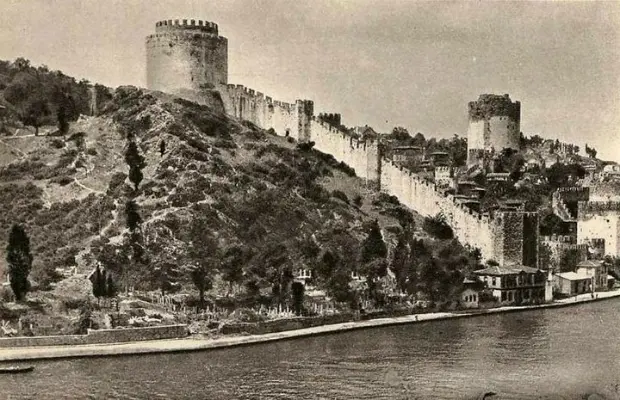
Mehmed II hadn’t even taken Constantinople yet when he ordered this fortress built on the European shore of the Bosphorus. It went up in just a few months. Today it still stands as one of Istanbul’s most striking landmarks, and Rumeli Fortress Istanbul packs a lot behind its walls, from a race-against-time construction to a legend built into the stonework itself.
1. Sultan Mehmed II ordered construction to start in 1452
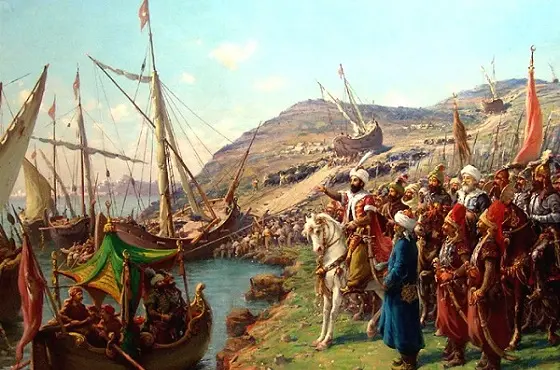
A year before he conquered Constantinople, the future “Fatih” (Conqueror) gave the order to build Rumeli Fortress on the European side of the Bosphorus. Construction began in April 1452. The siege that would make him famous was still a year away.
Subtlety was never the point. The fortress was built to be seen, and feared, from the water.

2. Rumeli Fortress Istanbul was built to choke off the Bosphorus, not just defend it
It’s tempting to file Rumeli Fortress under “defensive castle.” That’s only half the story. Working in tandem with Anadolu Fortress across the water on the Asian shore, Rumeli Fortress let Ottoman forces control, and if needed stop, every ship that tried to pass through the strait. The goal was specific. Stop reinforcements or supplies from reaching Constantinople from the north before the final siege could begin. Did it work? Historians still point to this as one of Mehmed’s more effective pre-conquest moves.

3. Tradition credits an army of around 6,000 workers
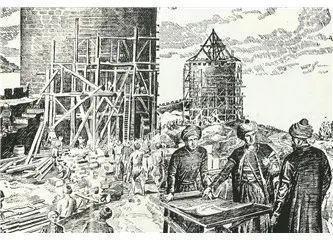
Turkish accounts name an architect called Muslihiddin Ağa as the person who oversaw the build. Other records don’t back that up. Better documented is that Mehmed split supervision of the fortress’s three main towers among three of his viziers—Çandarlı Halil Pasha, Zağanos Pasha and Sarıca Pasha—and reportedly came to inspect the site in person. The workforce, by tradition: around 6,000 people.
4. The whole thing went up in about four months
Work reportedly ran around the clock, and the fortress was finished well before the 1453 siege got underway—Turkish sources commonly cite 132 days from first stone to last. That speed wasn’t vanity. Every extra week was a week the Byzantine capital might still receive help from the north. The exact count is uncertain. Still, Rumeli Fortress remains one of the faster major fortifications of its era.

5. It doubles as proof of Mehmed’s strategic mind
Beyond the stone itself (the three towers, the four-month build), Rumeli Fortress is often cited as evidence of just how calculating Mehmed II was before he ever reached Constantinople’s gates. He wasn’t only besieging a city. He was engineering the conditions that made the siege winnable in the first place.
The fortress is as much a monument to that planning as it is to the conquest that followed.

6. Local legend ties the completion date to a numerology trick
According to popular tradition, Mehmed timed the build so that its completion, read through the old ebced numeral system, would correspond to the name “Muhammed.” Turkish guidebooks repeat it often. So do local tours. It belongs to folklore, though, rather than a verified historical record.
True or not, it fits the image of a sultan who liked his symbolism loud.

7. The fortress’s layout is said to spell out a name from above
Look down at Rumeli Fortress from a height—a hillside, a plane window, satellite imagery—and the story goes that the layout traces a signature combining Mehmed’s own initials with the word “Muhammed.” The claim has staying power. It turns up even in more serious write-ups of the site, though the exact reading of the shapes stays open to interpretation.

8. The “Muhammed” is said to appear in an old Arabic script
Tradition holds that the aerial outline reads in Hattı-Küfi, an early angular Arabic script, and that it’s clearest from several hundred meters up on the sea side. It’s the kind of detail every Rumeli Fortress tour guide seems to know. Seeing it is another matter. In practice that takes a boat or a drone, not something a ground-level visitor will manage.

9. A 15th-century court historian wrote about it
Enverî, a chronicler of Mehmed’s era, described Rumeli Fortress in his historical verse collection Düsturname, comparing it to a fortress unlike anything else the world had seen. His image for its cannons: enormous jars hurling shells across the water. Centuries later, it survives largely intact, which isn’t bad for a building rushed up in about four months. Since 1960 it has operated as a museum and occasional open-air concert venue, so today’s visitors can walk the same towers Enverî once wrote about.
Sources: Wikipedia’s entry on Rumelihisarı, cross-checked live for this article; Türkiye’s Ministry of Culture and Tourism official museums portal, where current visiting hours can be checked.




Bir yanıt yazın