
20 Hagia Sophia Facts: From Mosaics to Domes


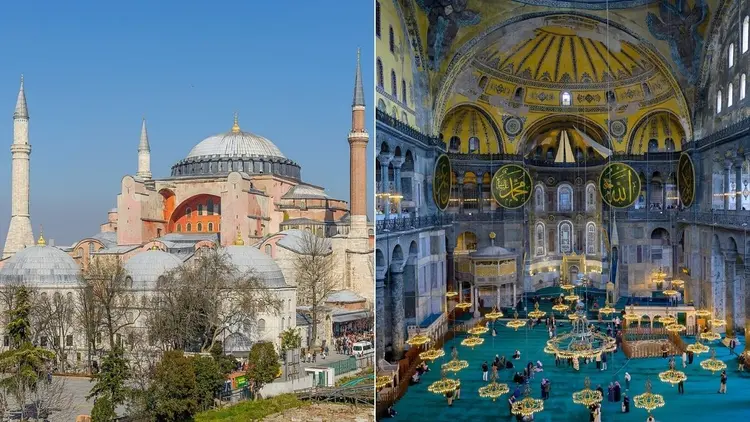
Hagia Sophia has been a cathedral, a mosque, a museum and, since 2020, a mosque again, so every visit lands on a different layer of Istanbul’s history. These 20 Hagia Sophia facts cover its name, its three lives as a building, the mosaics that survive and the odd details most visitors walk past. Current visiting rules are in the last item.
1. Hagia Sophia facts begin with the name: what does it mean?
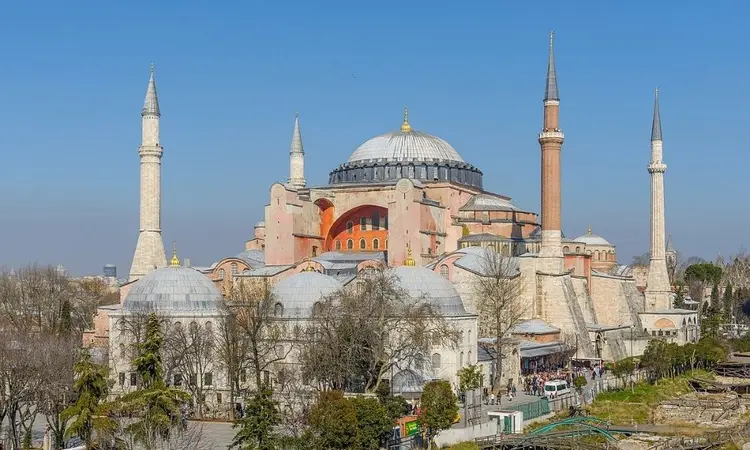
Hagia Sophia is Greek for “Holy Wisdom.” Contrary to what many visitors assume, no saint named Sophia is involved. The name refers to the Wisdom of God, a Christian concept tied to the Logos, and in its early centuries the building was usually just called the Great Church (Megale Ekklesia) before the shorter name gradually took over. Ayasofya is simply the Turkish spelling.
2. It was built three times
The first church was dedicated in 360 under Emperor Constantius II. Riots burned it down in 404. Theodosius II built a second one, which lasted until the Nika riots of 532, and at that point Emperor Justinian wanted something unlike anything before it, so he hired two architects, Isidore of Miletus and Anthemius of Tralles. The result, dedicated in 537, still stands.
3. The columns and marble came from ancient sites
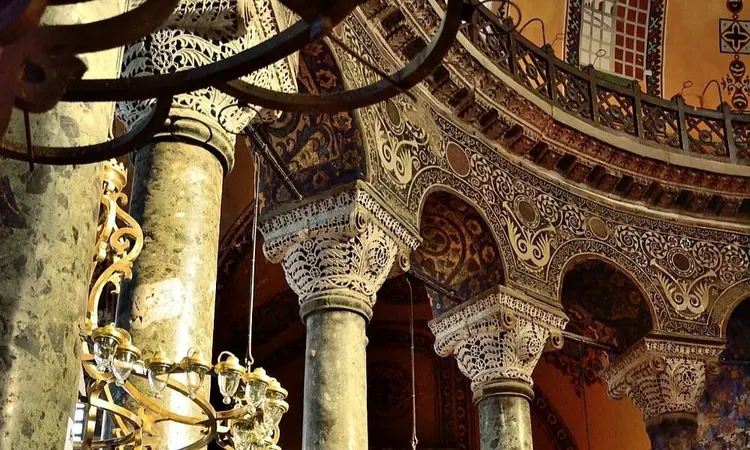
Justinian had materials gathered from across his empire. Eight Corinthian columns came from Baalbek in present-day Lebanon, other pieces came from older temples such as Ephesus, and reddish porphyry is reported to have come from Egypt. In short: a literal collage of the ancient world.
4. The dome is an engineering marvel
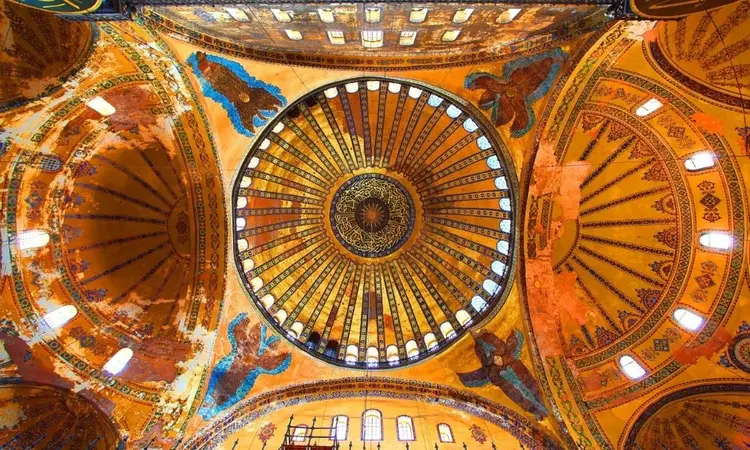
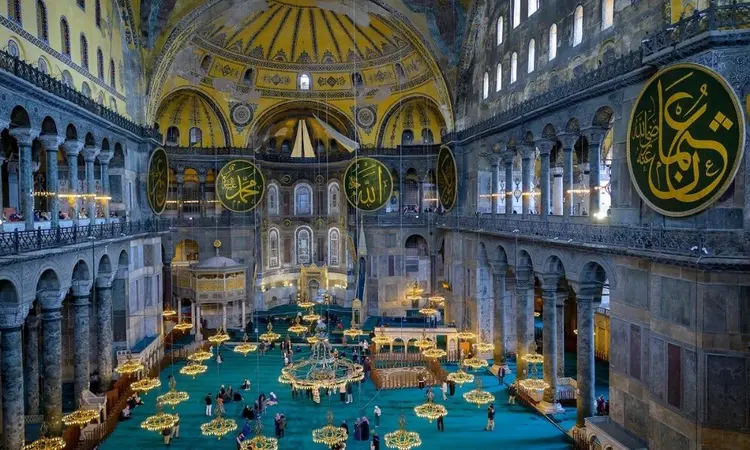
The center of the dome rises about 55.6 meters (182 feet) above the floor, and the span is roughly 32 meters across. An earthquake brought the first version down. The rebuild went higher and steeper. The builders reportedly used lightweight bricks from Rhodes to keep the weight down. Step inside and the dome seems to float on a ring of windows. That same dome is now part of a multi-phase restoration: GoTürkiye describes reinforcement against earthquakes and a steel platform about 43.5 meters tall inside, built so worship can go on during the work, so part of the view may be screened for a while.
5. The Imperial Door and the Noah’s Ark legend
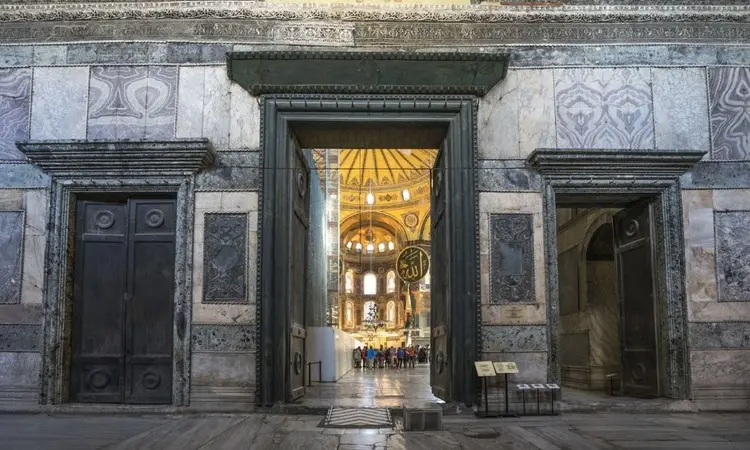
The Imperial Door, about 7 meters high, was used only by the emperor and his entourage. Its wood, Byzantine sources claimed, came from Noah’s Ark. Legend, not lab result. Dating to the 6th century, it is the largest door in the building.
6. The apse mosaic
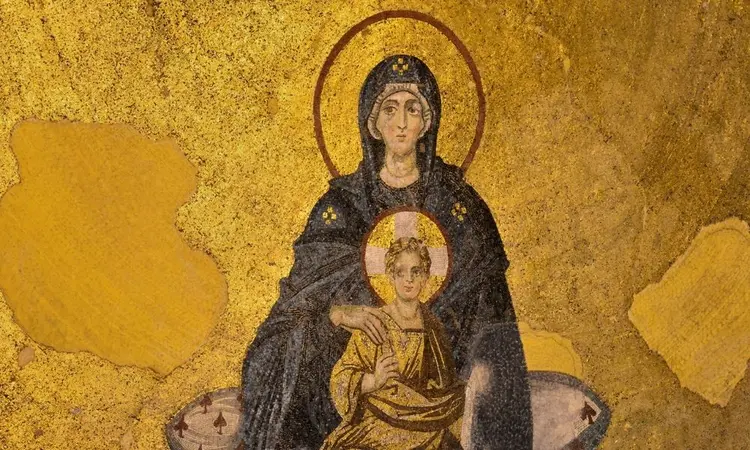
After the Byzantine ban on religious images (iconoclasm) ended, the apse got a new mosaic: the Virgin on a throne with the infant Christ. It is usually tied to a sermon of Patriarch Photius delivered on 29 March 867. The exact date is still debated.
Look for the way the gold tesserae catch the light as you move.
7. The two archangels
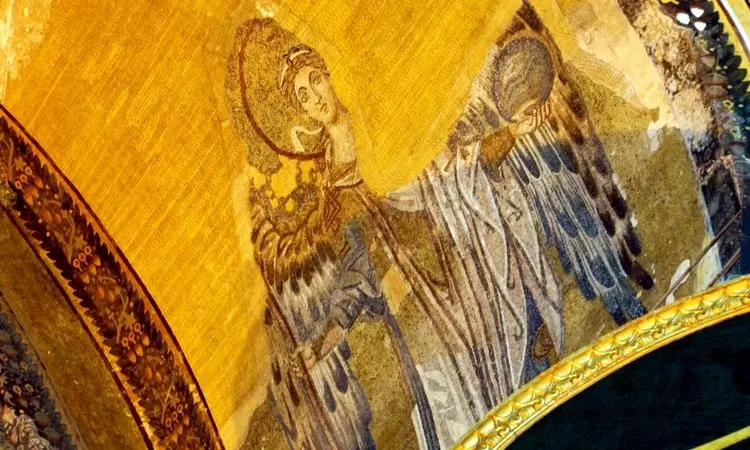
On either side of the apse are archangels. Gabriel survives in good condition. Michael was less lucky: only a wing tip and part of a foot remain, and both figures are thought to date to the second half of the 9th century.
8. A Viking message on a marble rail
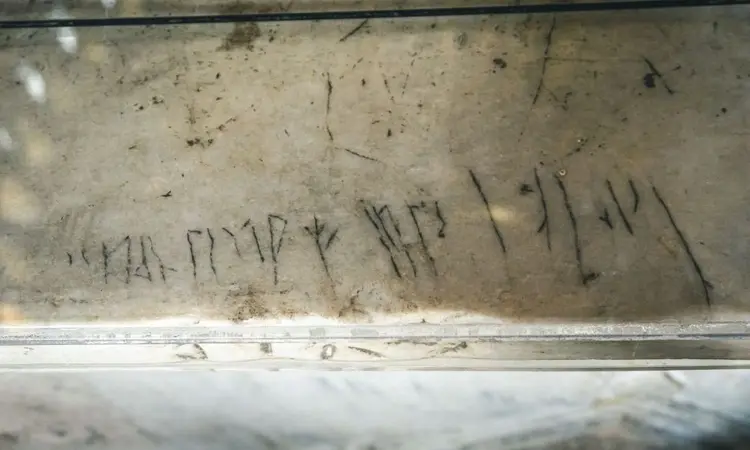
In the upper gallery, a runic inscription on a marble balustrade reads “Halvdan was here.”
It is generally attributed to a Scandinavian mercenary in the Byzantine service, probably a member of the Varangian Guard, and sources often date it to the 9th century, though that date is hard to pin down. Historic graffiti are not unusual in the building. This one just gets photographed most.
9. The Leo VI mosaic above the Imperial Door
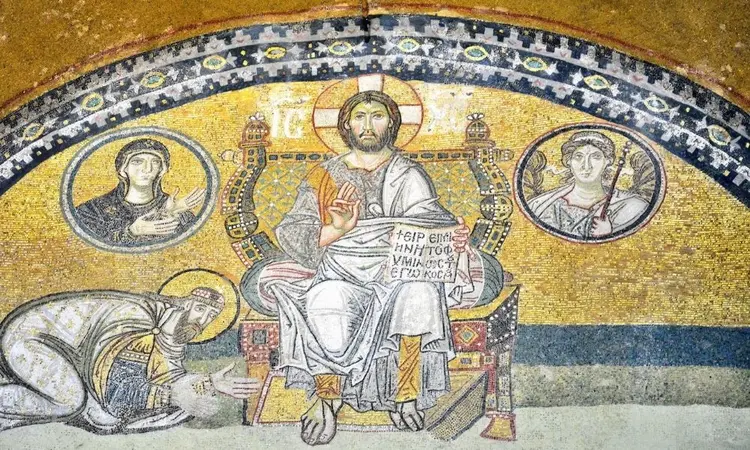
The lunette above the Imperial Door, the same one tied to the Noah’s Ark legend, shows Christ holding an open book and blessing Emperor Leo VI, who kneels at his feet. The Virgin and an archangel appear in medallions beside Christ.
The scene dates to around the turn of the 10th century and is one of the most readable pictures of Byzantine politics and faith.
10. The Virgin and Child with Constantine and Justinian
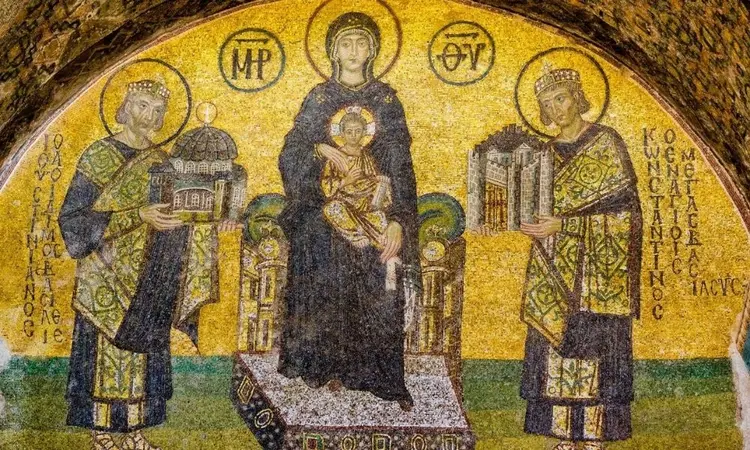
Above the southwestern entrance, the Virgin and Child sit enthroned while two emperors approach with offerings: Constantine holds a model of the city and Justinian a model of Hagia Sophia. The mosaic dates to the reign of Basil II and was rediscovered during the Fossati brothers’ restoration in 1849. The message is plain: the city and the church are under her care.
11. The seraphim in the dome
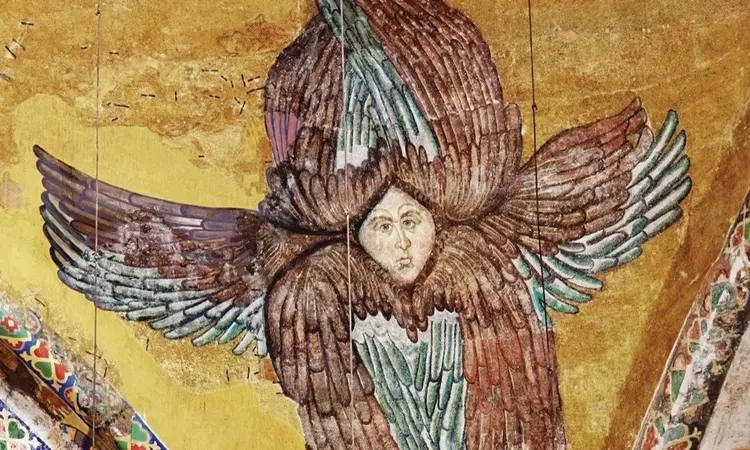
Four six-winged seraphim fill the pendentives under the dome. The Ottomans covered their faces with gold stars. In 2009, one face was uncovered again.
Whether the east pair depict seraphim or cherubim is uncertain, which gives the room a slightly mysterious edge.
12. The patriarchs in the north tympana
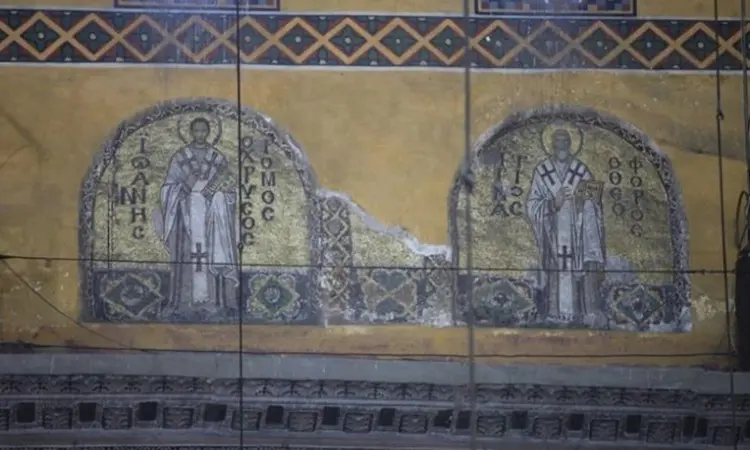
Along the north wall, arched niches hold portraits of church fathers. Only three are well preserved: Ignatius the Younger, John Chrysostom and Ignatius Theophorus. They stand quietly above visitors’ heads and are easy to miss, which is exactly why they reward a second look upward.
13. The Alexander mosaic
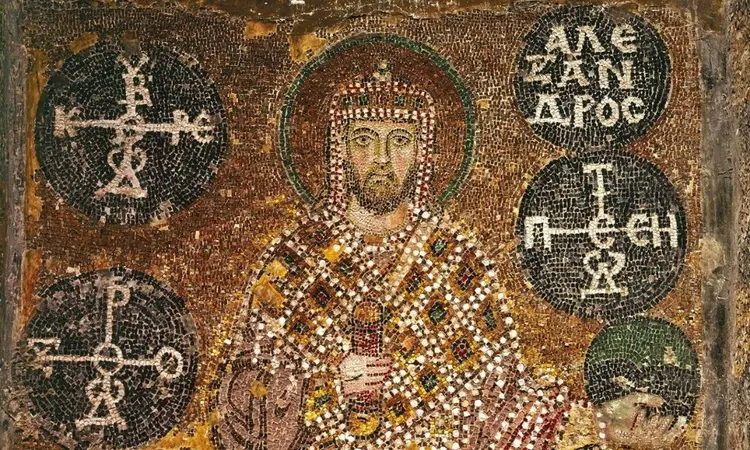
In the north gallery, a mosaic shows Emperor Alexander in full regalia.
He ruled only briefly in 912-913, after his brother Leo VI. The panel was rediscovered in 1958, a reminder that parts of the building were lost to view for long stretches.
14. The Zoe and Komnenos mosaics
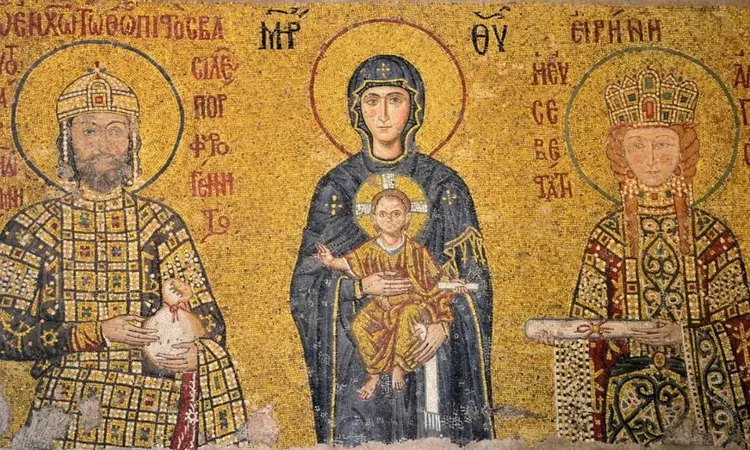
The Zoe mosaic, from the 11th century, shows Christ flanked by Empress Zoe and Constantine IX Monomachus. The catch: the heads were reportedly replaced over time as husbands changed. Palace politics, in mosaic form. Nearby, the Komnenos panel shows John II Komnenos, his wife Irene and their son holding gifts for the church.
15. The grave marker of Enrico Dandolo
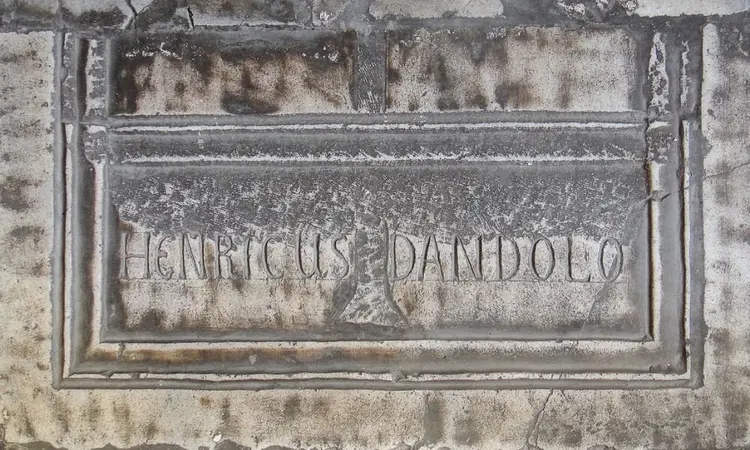
In the upper gallery lies a marble slab commemorating Enrico Dandolo, the Venetian doge who led the Fourth Crusade and the 1204 sack of Constantinople. The current monument is a 19th-century cenotaph, and his original tomb is said to have been destroyed.
Few visitors expect the man who looted the city to be remembered in one of its most sacred buildings.
16. The Deësis mosaic
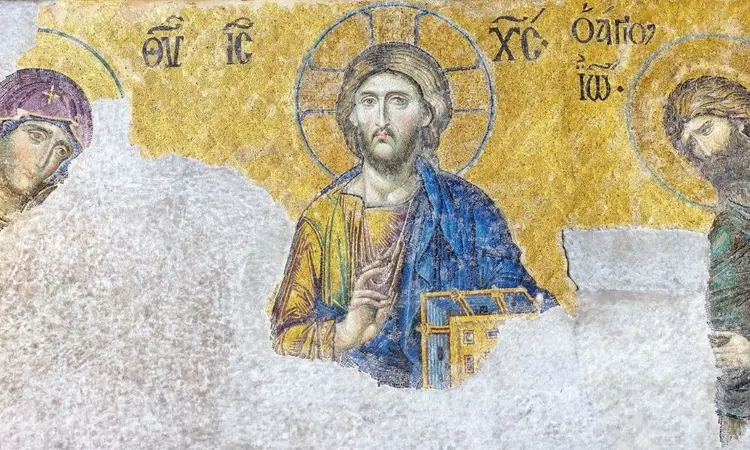
The Deësis shows Christ flanked by the Virgin Mary and John the Baptist, who intercede for humanity. Dated to around 1261, it marks the return to Orthodox use after 57 years of Latin Catholic rule. Set it against the 11th-century Zoe panel and the gap is roughly two centuries, with the 1204 sack in between. Many art historians consider it the finest mosaic in the building.
17. The Omphalion
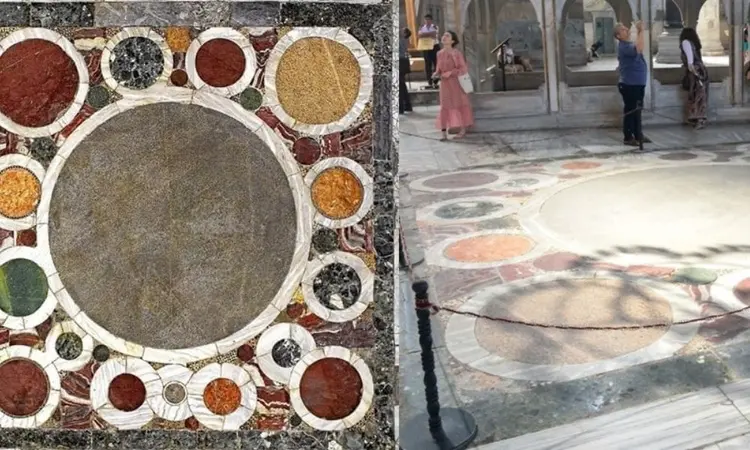
Beneath the dome, a circle of colored marble set in the floor marks the spot where Byzantine emperors were crowned. The stone floor dates to the 6th century.
A modest patch of stone, perhaps, but a very large part of the empire’s ceremonial life took place right here.
18. The weeping column
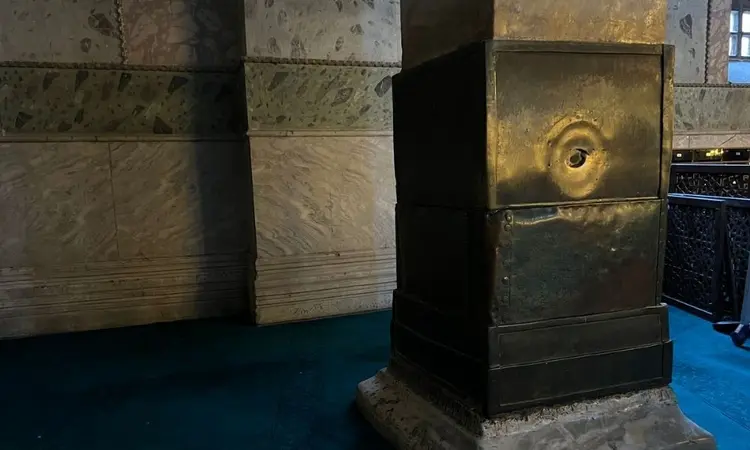
In the northwest corner stands a column with a bronze-covered hole, known as the weeping, sweating or wishing column. Legend says it has been moist since St. Gregory the Wonderworker appeared near it, and touching the dampness is believed to heal. Another story has Emperor Justinian curing a headache by leaning on it. Visitors have traditionally pressed a thumb in and turned a full circle to make a wish.
19. The minarets
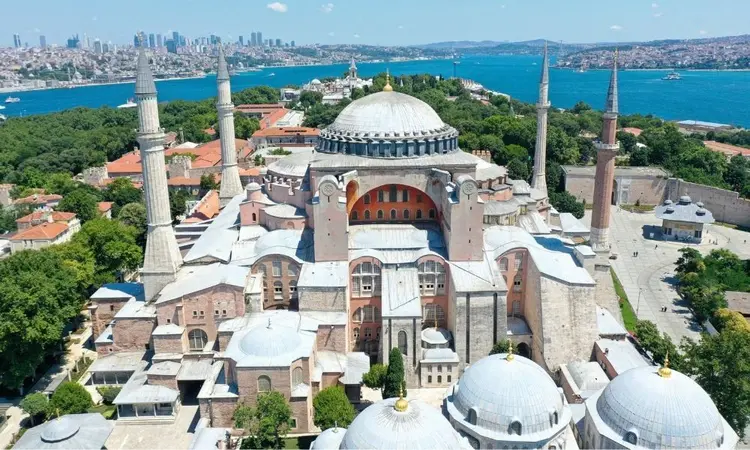
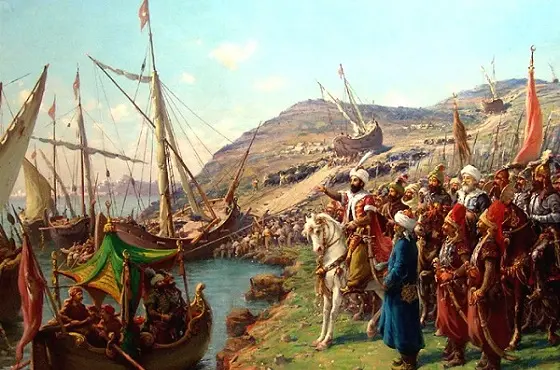
After the 1453 conquest, the church became a mosque and minarets were added over time. Mehmed II built a first, wooden one. Bayezid II raised the slender northeast minaret, and Mimar Sinan designed the two matching western ones for Selim II, each about 60 meters tall.
Four towers, added across different reigns, tell the story of several sultans.
20. The buttresses
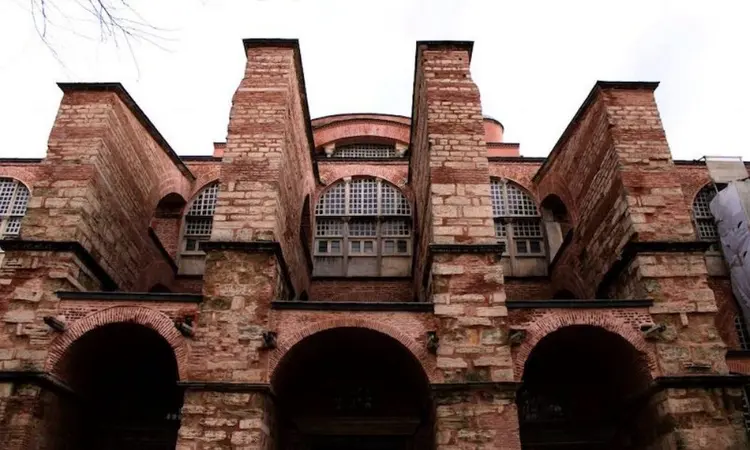
How does a dome this heavy stay up for almost 1,500 years? Its weight pushes outward, and cracks appeared in the walls over the centuries. Byzantine builders added buttresses, and the Ottomans added more under Sinan. The structure survives partly because both empires kept adding support. Hagia Sophia is a working mosque today. The main floor stays open for worshippers, while foreign visitors see the upper gallery with a ticket (25 euros, approx. $29).
Sources: Wikipedia: Hagia Sophia, Müze İstanbul: Hagia Sophia Grand Mosque, GoTürkiye: Hagia Sophia dome restoration

Bir yanıt yazın