
7 Karnak Temple Facts About Egypt’s Grandest Temple


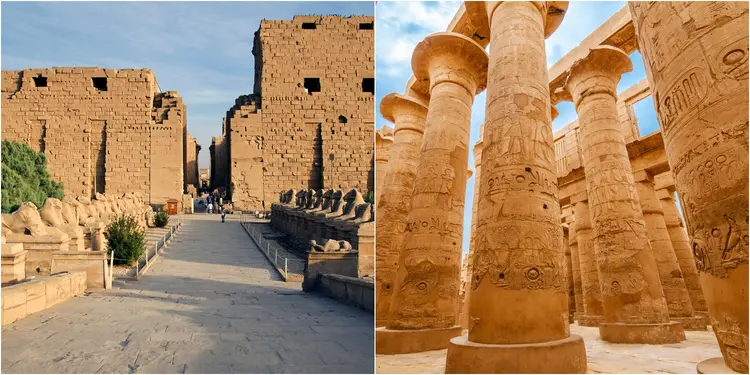
Karnak isn’t a single temple so much as a city of temples, built and rebuilt for nearly 2,000 years about 2.5 km north of the center of Luxor, Egypt. Pharaoh after pharaoh used it as a stone billboard, adding halls, obelisks, sphinxes and inscriptions to prove their own greatness. These 7 Karnak Temple facts explain how it grew into one of the largest religious sites of the ancient world, and why it’s widely believed to be Egypt’s second-most-visited historic site after the Giza pyramids.
1. Construction at Karnak began around 1970 BC

The first known building work dates to the reign of Senusret I, in Egypt’s Middle Kingdom. Its god was Amun. Originally the chief god of Thebes, he later rose to become king of the gods, and over the centuries Karnak filled up with structures raised in his name, along with shrines to his other forms, such as Amun-Kamutef and the merged sun god Amun-Ra.
2. The oldest building at Karnak is Senusret I’s White Chapel

Senusret I ruled in the early 2nd millennium BC, and his limestone White Chapel is roughly 4,000 years old. Its reliefs show the king before Amun and other gods, while the outer walls list the provinces, or nomes, of Egypt. Nobody is sure what it was for. Some experts think it held a sacred boat for Amun’s statue; others link it to the Sed festival, the jubilee that celebrated a pharaoh’s reign.
Its survival story is the best part.
In the New Kingdom, the chapel was taken apart and its blocks were used as filler inside the Third Pylon, a later monumental gateway. That hiding place kept the stones in good shape. Archaeologists found them in 1927, removed them over the next few years and reassembled the chapel, which now stands in the Karnak Open Air Museum.
3. Karnak Temple kept changing for nearly 2,000 years

The more important the temple became, the more every new ruler wanted a piece of it. About thirty pharaohs added buildings. Many also restored, rebuilt or tore down the work of their predecessors, and as statues, reliefs, inscriptions and columns kept piling up generation after generation, the complex never looked the same for long. Its most spectacular era? The New Kingdom, when most of what survives today was built.
4. Seti I built Karnak’s famous Hypostyle Hall

Seti I came to the throne at a shaky moment. His father, Ramesses I, had reigned for only a year or two and wasn’t born royal at all; he came from a military family in the Nile Delta. A new dynasty like that had to win acceptance across Egypt, and there were two classic ways to do it: win wars or build on a grand scale.
Seti did both and recorded it all at Karnak.
The Great Hypostyle Hall is his showpiece, later completed and decorated under his son Ramesses II. It holds 134 columns: 122 closed papyrus columns about 10 m tall surround 12 open papyrus columns in the center that reach about 21 m. On the northern outer wall, Seti appears smiting prisoners and riding his chariot, while his army fights Libyans, crosses a crocodile-filled river and advances on Kadesh in Syria.
5. Karnak holds a copy of the oldest known surviving peace treaty

Ramesses II inherited his father’s respect for Karnak. He restored much of what Seti had built and, like the rulers before him, covered the outer walls with scenes of his own victories. The southern wall of the Hypostyle Hall shows the Battle of Kadesh against the Hittites as a triumph. In reality, the clash was closer to a stalemate.
Easy to miss among those scenes is something more valuable: a hieroglyphic copy of the Egyptian-Hittite peace treaty, sealed around 1259 BC. It’s often called the oldest known surviving peace treaty.
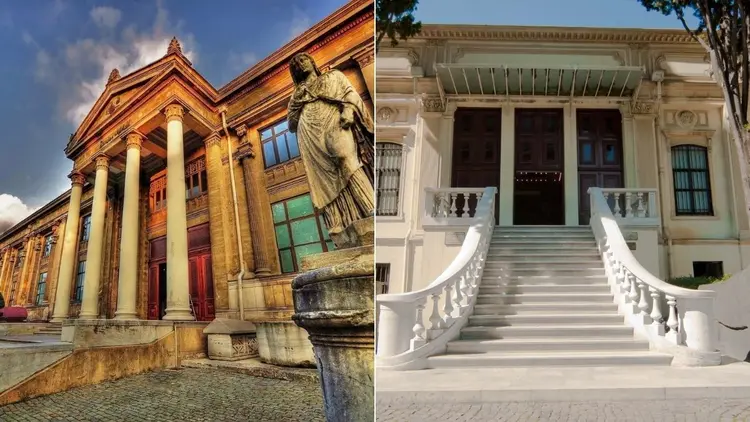
The original agreement was written on silver tablets that are now lost, but the Hittite version survives on clay tablets, two of which are kept at the Istanbul Archaeology Museums in Türkiye.
6. The outer walls of Karnak Temple were a royal billboard

The Hypostyle Hall is the clearest example. Its battle scenes weren’t pure propaganda; they had religious meaning. Placement mattered too. Only the pharaoh and the most senior priests could enter the hall, while ordinary people could walk around the outside, so the exterior walls became the one surface the public could actually see, and kings filled them with their triumphs. Seti’s chariot on the north wall and Ramesses’ Kadesh on the south both face that outside crowd. Think of it as a 3,000-year-old advertising campaign in stone.
7. Foreign rulers valued Karnak Temple too

In the 1st millennium BC, Egypt was repeatedly ruled by outsiders, including Libyan dynasties, the Persians and the Macedonians. Karnak kept its prestige under all of them. Some even built there. The Libyan-descended pharaoh Shoshenq I recorded his campaigns on the Bubastite Portal. After Alexander the Great, the granite sanctuary for Amun’s sacred boat was rebuilt in the name of Philip Arrhidaeus, Alexander’s half-brother, reusing blocks from an earlier shrine of Thutmose III. Alexander’s own dedicated room is a short drive south, at Luxor Temple. Even conquerors, it seems, wanted their names on Karnak.
Sources: History Hit, Wikipedia: Karnak, Wikipedia: Egyptian-Hittite peace treaty


Bir yanıt yazın