
11 Fascinating Facts About the Forbidden City in Beijing


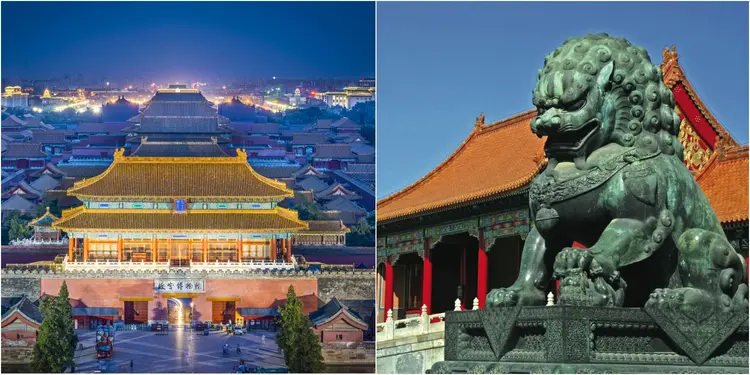
China is one of the world’s great economic powers and one of its most populous countries, but its real depth is historical, and few places show that better than the Forbidden City in the heart of Beijing. Begun in 1406 as a palace for the emperor, it grew so large, so guarded and so self-contained that it earned both halves of its name. Here’s what’s worth knowing before you walk through its gates.
1. Built in just 14 years, from 1406 to 1420

Construction started in 1406 under the Ming dynasty. It was done by 1420. Accounts of the project put the workforce at more than a million laborers, a number that’s hard to picture until you see the scale of what they built.
2. Home to 24 emperors over five centuries

Twenty-four emperors lived here in all. Fourteen were Ming, ten Qing. The palace was China’s seat of imperial power from 1420 until the last emperor abdicated in 1912, and the court stayed on inside its walls until 1924. Six centuries after the first bricks were laid, it still stands intact in central Beijing.
3. A palace the size of a city

The complex covers 72 hectares, or 720,000 square meters (about 180 acres). That’s the main reason a palace ended up being called a “city”: it was designed as a complete world of its own, and it is still often described as the largest imperial palace in the world. Inside are 980 surviving buildings. Legend says there are 9,999 rooms, one short of the 10,000 reserved for heaven. It’s a lovely story, but it isn’t true: surveys count 8,886 room bays. Gardens tucked between the halls, such as the Imperial Garden at the northern end, soften all that stone and timber.
4. Laid out according to Chinese cosmology

Nothing about the plan is accidental. The palace was conceived as the earthly counterpart of the Purple Forbidden Enclosure, the celestial home of the supreme deity, so the emperor living at its center was, symbolically, at the center of the universe.
Direction mattered too. In traditional Chinese belief, facing south was a sign of authority, so the main halls and the emperor’s quarters open toward the south.
5. Why it’s called the Forbidden City

Why “forbidden,” and why “city”? The “city” part comes from the size. The “forbidden” part comes from who was kept out. The palace was built with layer upon layer of security so the emperor could live far from any danger, and anyone without permission simply could not get in. Entering uninvited wasn’t merely difficult. It was illegal.
6. A 52 m wide moat and other defenses

A moat 52 m (171 ft) wide and 6 m deep surrounds walls almost 8 m high. Popular accounts add that the ground was laid with thick layers of stone and brick so no attacker could tunnel in. Look around the great courtyards of the Outer Court and you’ll notice something missing. Trees. One common explanation is that they would have given assassins a place to hide, while another holds that nothing should overshadow the emperor’s majesty. A well-known story also claims the emperor slept in a different room each night, with only a few trusted guards knowing which one.
The walls did not make anyone untouchable, though. The real threat came from inside. In 1542 a group of palace women tried to strangle the Jiajing Emperor in his sleep inside the palace, and he survived only because the knot in the rope was badly tied.
7. Dragons everywhere

Animal figures appear on almost every building. The dragon, symbol of the emperor, outnumbers them all. It coils across ceiling panels in the Hall of Supreme Harmony, writhes across the glazed-tile Nine-Dragon Screen, and turns up on murals, stone carvings and marble balustrades. Nobody seems to know the total.
8. Puyi, the last emperor, lived here

Puyi abdicated as a child in 1912 but was allowed to keep living in the inner palace. That ended in 1924. Republican forces expelled him.
A year later, in 1925, the complex opened as the Palace Museum.
9. More than 1.8 million artifacts

The Palace Museum’s collection numbers about 1.86 million pieces, from porcelain and paintings to bronzes and imperial clocks. It’s often said to make up a large share of China’s surviving historic relics, though the exact proportion is hard to pin down. So the buildings are only half the story. The Forbidden City, a UNESCO World Heritage Site since 1987, now draws well over 10 million visitors a year, with more than 19 million recorded in 2019.
10. Cats rule the courtyards

Women of the imperial court are known to have kept cats as pets, and a popular belief holds that some of today’s palace cats descend from those royal pets. Royal bloodline or not, plenty of cats live here now. They keep the rodents in check. Museum staff, in turn, feed them, vaccinate them and keep them warm through Beijing’s winters.
11. Some say it’s haunted

All that security protected the emperor from outsiders, not from tragedy.
Like most royal courts, this one saw its share of violent deaths and brutal executions, including those of the women behind the 1542 plot. That history feeds a steady supply of ghost stories. Locals tell them; so do foreign visitors. The most famous is a weeping woman dressed in white, and some claim to have heard crying along the narrow passages of the Inner Court after dark.
Sources: Wikipedia, Forbidden City, Wikipedia, Renyin palace rebellion, TheCollector, Forbidden City facts

Bir yanıt yazın