
Yedikule Fortress: 4 Things to Know About Its Dungeons


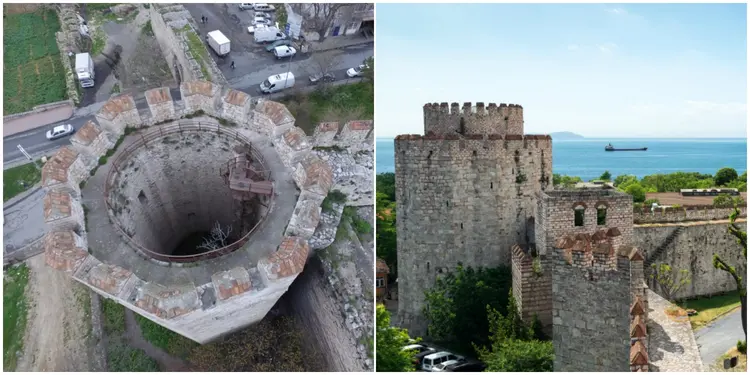
At the far southern end of Istanbul’s land walls, where they meet the Sea of Marmara, stands Yedikule Fortress, the “Fortress of Seven Towers.” It has served as a city gate, a treasury, a state prison and a museum, and few places in the city carry Roman, Byzantine and Ottoman layers so openly. Here’s what to know about Yedikule’s dungeons before you go.
1. A Byzantine gate inside an Ottoman fortress

Yedikule is often described as a Byzantine castle, but only its oldest part is. The Golden Gate, the ceremonial entrance to Constantinople, belongs to the Theodosian Walls built under Theodosius II in the 5th century, and its two marble towers still frame the site. In 1458, Mehmed II, the Ottoman sultan who had taken the city five years earlier, enclosed this stretch of wall with three new round towers and a curtain wall, creating the near-pentagonal fortress you see today. Its darkest chapter came in 1622. Sultan Osman II, only 17, was deposed by the Janissaries, the empire’s elite infantry, and executed inside these walls.
Foreign envoys from states at war with the Ottomans were locked up here too: when the Russian ambassador and his staff were imprisoned in 1768, it signaled a declaration of war. During the Napoleonic Wars, French captives followed, among them the diplomat Barthélemy de Lesseps and the physician François Pouqueville, who later described the fortress in his travel writing.
The 19th century softened the place. A small mosque and a fountain went up in the inner courtyard, the old garrison houses were cleared, and a girls’ school took their place.
In 1895 the whole complex became a museum.
2. Seven towers, each with its own job

After the Ottoman conquest, the fortress housed a garrison and guarded the state treasury, with coins, gold and silver ingots and documents stored in the towers until the treasury moved to Topkapı Palace in the 16th century. The towers also doubled as a state prison. Local tradition gives each one a name:
- The Flag Tower, one of the best preserved, where the banner flew.
- The Cannon Tower: once a prison cell, later damaged by fire.
- The Treasury Tower. The name says it all.
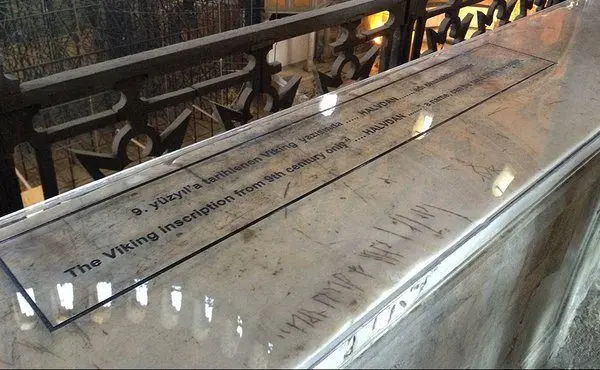
- The Dungeon Tower, also called the Tower of Inscriptions for the words prisoners scratched into its walls.
- The Armory Tower, for weapons and ammunition.
- The Tower of Ahmed III, now lost.
- The Tower of Young Osman, named for Osman II, who died here.
Compare the two halves of the site: the Golden Gate’s marble pylons were built to welcome emperors home in triumph, while the Ottoman round towers beside them were built to keep gold in and prisoners from getting out.
3. Are the screams from the dungeons real?

A fortress with this much history was always going to collect ghost stories. In the best known, a prisoner held here was mistaken for a high-ranking European official and a spy, and his jailers kept inventing new tortures for him. He endured them for a long time, trained to bear pain, but finally died, praying in a language that sounded like Latin. His body is said to have decayed unnaturally fast. Some believe he laid a curse in his last moments. Ever since, the story goes, screams can sometimes be heard rising from the dungeons.
No record backs it up. It’s folklore. Still, standing in a cold stone cell where real prisoners waited for news that might never come, it isn’t hard to see why the legend has stuck.
4. Visiting Yedikule Fortress

The fortress sits in the Yedikule neighborhood of Fatih district, near the Marmara shore. Public transport is the easiest way in: Kazlıçeşme station on the Marmaray, the commuter rail line under the Bosphorus, is close by, and city buses run from central areas such as Eminönü. Parts of the site have been under restoration in recent years, so not every tower or wall walk may be open on the day you visit. Hours and prices? Hard to pin down: they have changed several times, along with opening days, so check the latest details with the Istanbul Metropolitan Municipality’s museums before you go.
Wear sturdy shoes. The stairs and battlements are uneven, often without railings, which makes the site a poor fit for small children.
An open-air stage in the courtyard also hosts concerts and festivals in summer.
Sources: Wikipedia, Yedikule Fortress, History Hit, Yedikule Zindanları, Time Out Istanbul, Yedikule Hisarı



Bir yanıt yazın