
Pool of Sacred Fish Legend: Abraham’s Story in 18 Scenes


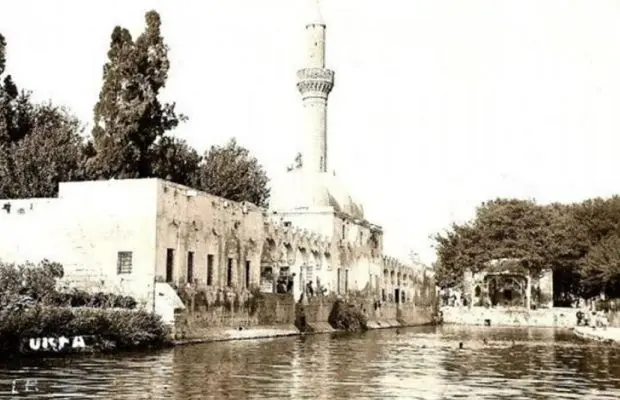
In the old city of Şanlıurfa, in southeastern Türkiye, thousands of carp circle a long stone pool that nobody is allowed to fish. Locals call it Balıklıgöl, and visitors know it as the Pool of Sacred Fish. The reason the fish are untouchable is a story that has been passed from mouth to mouth for centuries, and it begins with a king’s bad dream.
1. A king’s nightmare

Nimrod, the tyrant king of the legend, wakes from a troubling dream and calls his priests to explain it. Their answer is grim. A child about to be born will one day kill him. Nimrod reacts the way tyrants in these stories always do, ordering every baby boy born that year put to death.
2. Born in a cave

Word of the order spreads. A pregnant woman slips away to hide in a cave near the present-day pools, and there she gives birth to a boy named Abraham, known in Turkish as İbrahim. The cave is still shown to visitors as his birthplace. Some versions add that gazelles helped feed the child while he grew.
3. Found by soldiers

Years pass.
Then a group of soldiers walking by hears sounds coming from the cave and goes in to look. They find the young Abraham and bring him straight to the king.
4. A change of heart

Here the story swerves. Nimrod has no children of his own, and time has cooled his fear of the prophecy. One look at the boy and he is won over, so instead of punishing him, he decides to raise Abraham in his own palace.
5. A daughter named Zeliha

Later, Nimrod adopts a girl as well. Her name is Zeliha.
Remember her, because the second pool in Şanlıurfa carries her name.
6. Idols and an argument

Nimrod is harsh and secretive. He worships idols and forces his people to do the same, by threat if needed. Abraham, now grown, refuses to go along with it and says out loud what others only think: statues that people carve with their own hands cannot be gods.
7. A silent believer

Zeliha believes him.
But she is afraid of her father, and fear keeps her quiet, so she can do nothing to help.
8. The axe in the temple

On a festival day, while the whole city is away at the ceremony, Abraham walks into the palace’s hall of idols with an axe. He smashes every statue in the room except the biggest one. Then he hangs the axe on its shoulder and leaves.
9. Suspicion falls on Abraham

The people coming back from the ceremony are horrified by what they find, and they run to tell the king. Who could have done it? The priests already know Abraham’s views, and they point straight at him.
10. The trial

Nimrod puts him on trial before a court of his own making. Abraham’s defense is a masterpiece of deadpan logic: “You can see the axe is on the big idol’s shoulder. Whoever holds the axe must have done it.”
11. The question that sealed his fate

The furious king shouts back, “How could a piece of stone pick up an axe and do this?” That is exactly the point, Abraham replies. “You pray to stones you made with your own hands and expect them to protect you from harm. You call them gods, make vows to them, and run to them when you’re in trouble. If it really were a god, why wouldn’t it break the others?” Nimrod is stunned, then angrier than ever. He and his court turn on Abraham, and the argument is over.
12. Sentenced to burn

The verdict is fire. Nimrod and his court decide that Abraham will be burned alive.
13. A mountain of wood and two columns

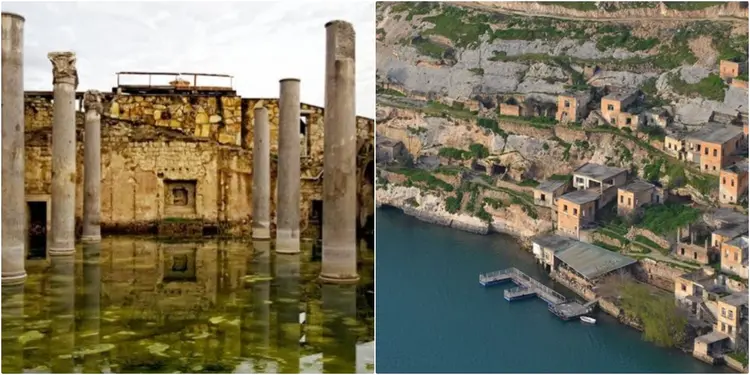
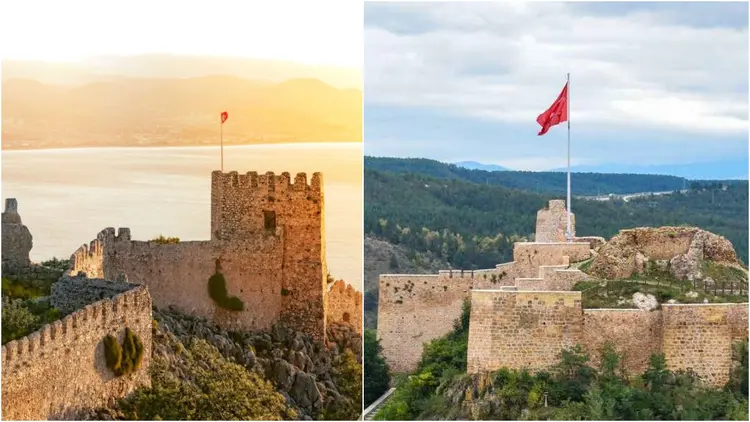
Firewood is gathered from every corner of the kingdom and piled where Halil-ür Rahman Lake lies today, until it forms a mountain. North of it, on Nimrod’s fortress, two great columns go up. Local tradition says these are the two columns still standing on Urfa Castle; in reality they are Roman-era columns, and it was the 17th-century Ottoman traveler Evliya Çelebi who described them as the remains of Nimrod’s war machine.
14. The plan

The idea is simple and cruel. A rope will be stretched between the two columns, and Abraham will be flung from it into the fire like a stone from a sling.
15. Zeliha pleads

Day and night, Zeliha begs her father to spare him. Nimrod does not soften.
16. How the Pool of Sacred Fish was born

Abraham is launched from the rope between the columns and falls into the middle of the burning pile. The moment he lands, the fire turns into a lake, and the burning logs turn into fish. This is the legend of the Pool of Sacred Fish, which takes its proper name, Halil-ür Rahman Lake, from Abraham’s title “Halil-ür Rahman,” the friend of the Merciful.
The Quran does tell of Abraham being saved from a fire, but it names no place; placing the miracle in Urfa is local tradition, and archaeologists have found a Neolithic statue at the site, so people were gathering here thousands of years before the story arrived.
17. Zeliha follows him

Zeliha, who believes in Abraham, throws herself into the fire after him, and where she falls another lake forms: Aynzeliha, the “spring of Zeliha.” Not every telling agrees, and one credits her tears instead. Either way, the two pools sit side by side today, the long Halil-ür Rahman and the smaller Aynzeliha, linked by channels and lined with tea gardens.
18. Why no one touches the fish

In local belief, the lake and its fish are sacred; in the story, after all, these carp were once the logs of Nimrod’s fire. The carp are never caught or eaten, and an old warning says anyone who eats one will go blind. Feeding them is another matter. Visitors buy fish food at the edge of the pool and toss it in, and the water boils with carp within seconds, a scene that makes the old legend easy to picture.
Sources: Wikipedia, Balıklıgöl, GoTürkiye, Legendary Balıklıgöl



Bir yanıt yazın