
Dara Ancient City: 6 Things to Know Before You Go


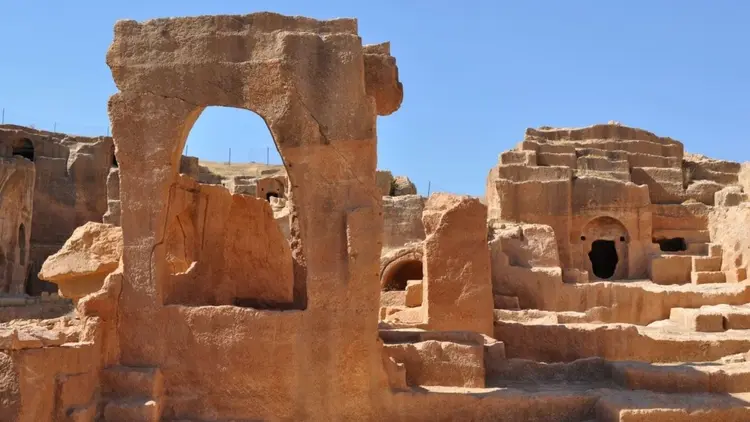
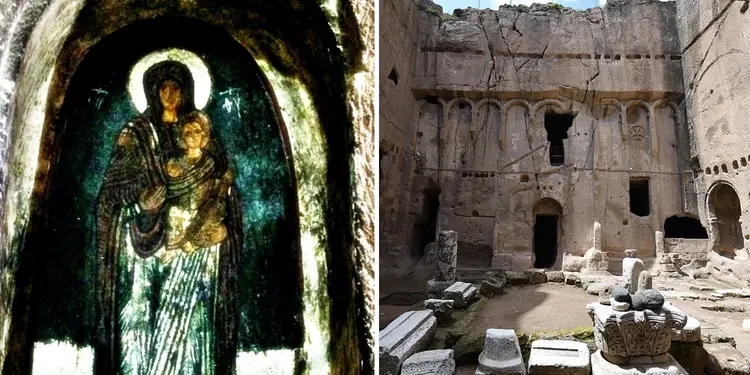
Outside Mardin, in southeastern Türkiye, lie the ruins of Dara ancient city, a fortress the Eastern Roman Empire built on its Persian frontier. A 4-kilometer wall rings the site, with the inner citadel on the flat top of a 50-meter hill. Churches, a palace, a market, a dungeon, rock-cut tombs, giant cisterns beneath the town: all have survived in some form.
1. Where the name Dara comes from

The name carries a legend. Ancient and medieval chroniclers, among them Evagrius, Malalas, Agapius and Bar Hebraeus, linked the site to the Persian king Darius III and his war with Alexander the Great, and said the place took its name from him.
A good story. Historians, though, treat it as tradition rather than record.
2. A site settled long before the Romans

Dara was not built on empty ground. Finds from earlier periods have turned up in excavations, which shows that people were drawn to this spot well before the Roman fortress went up. Why here? The site was defensible. Strategically placed, too, and surrounded by fertile land.
3. Anastasiopolis, a Roman garrison town

In 505, Emperor Anastasius I turned the settlement into a garrison city to guard the empire’s eastern border against the Sasanian Persians, and the new town, named Anastasiopolis after him, became the seat of the Roman military commander of Mesopotamia. Justinian I later went further. He raised the walls and towers and added a moat, an arch dam and two churches. Rome and Persia traded the city more than once until Arab armies took it in 639; a slow decline followed.
4. Where is Dara ancient city?

Dara ancient city sits in Oğuz village, Mardin Province, about 30 km southeast of the city of Mardin and roughly 18 km west of Nusaybin, the ancient Nisibis. The Syrian border is close by. Geographically, it stands where the flat Mesopotamian plain ends and the Tur Abdin highlands begin. Seen from the citadel hill, the case for a frontier fortress on this exact spot stops being abstract.
5. How to get to Dara

The site lies off the road between Mardin and Nusaybin. Heading south, turn west near the village of Akıncılar. The ruins are about 10 km on.
One thing to sort out in advance: according to Türkiye’s official culture portal, no dolmuş (shared minibus) runs to Dara, so a car, taxi or organized tour from Mardin is the practical way in.
6. Is there an entrance fee?

Older guides describe Dara as free to enter. Don’t take that as settled. Heritage-site fees in Türkiye are set by the Ministry of Culture and Tourism and revised every year, so check the current status before you go. The cisterns and rock-cut tombs reward an unhurried visit. Plan for more than a quick stop.
Sources: Kültür Portalı, Dara Antik Kenti, Wikipedia, Dara (Mesopotamia)







Bir yanıt yazın