
Turkish City Names: The Stories Behind 16 Cities


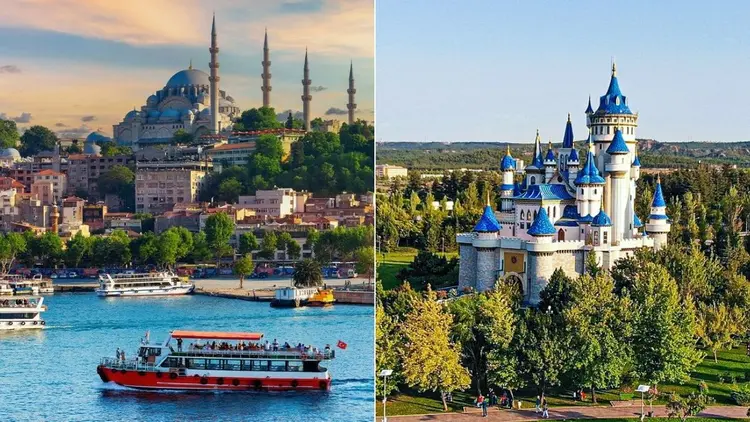
Most Turkish city names are older than Turkish itself. Behind them sit Greek colonists, Roman emperors, Seljuk sultans and a few queens who may never have existed. Here’s where 16 of them, from Istanbul to Artvin, really come from.
1. Istanbul: a name borrowed from street talk

Istanbul has worn more names than almost any city on earth. Greek colonists from Megara founded it as Byzantion in the 7th century BC, and legend credits a leader called Byzas as its founder. Around the turn of the 3rd century AD, Emperor Septimius Severus briefly renamed it Augusta Antonina in honor of his son, the future emperor Caracalla; the name died with them. Then came Constantinople, after Constantine the Great made the city his capital in 330.
And Istanbul? It probably grew out of everyday Greek. Locals spoke of going “stin Poli,” roughly “in the City” or “to the City,” and Turkish speakers added an “i” at the front to smooth the consonant cluster.
One of the world’s grandest capitals, named after a casual phrase.
2. Adana: a son of the sky god, or just a river

A Greco-Roman legend says Adana was founded by Adanus, a son of the sky god Uranus, who built the city by a river with his brother Sarus. The river took the brother’s name. The city took his. Linguists offer a drier option: the name may come from an old root meaning “on the river,” the same one behind the Danube and the Don. Given that Adana sits on the fertile delta of the Seyhan and Ceyhan rivers, the plain explanation has a lot going for it.
3. İzmir: from Smyrna, via medieval mispronunciation

For most of its history, İzmir was Smyrna. Where that name comes from is still argued. One story links it to an Amazon called Smyrna, said to have charmed the hero Theseus, who then named the city after her. Another points to myrrh, the fragrant resin that was the city’s chief export in antiquity.
The shift to İzmir is easier to trace. Medieval Western writers wrote Smire, Esmira and Ismira, and Turkish speakers turned that into İzmir. The name became official in 1930, though Italian, Spanish and Portuguese still say Smirne or Esmirna.
4. Trabzon: the city on the table

Trabzon was founded in 756 BC as Trapezous, by Greek traders from Miletus who came by way of Sinope. The Greek word trapeza means “table,” and the name describes the flat-topped hill between two streams where the first settlement stood. Sound out Trapezous, then Trabzon. The resemblance holds up nicely after almost 2,800 years.
5. Manisa: the city that may have named the magnet

Manisa sits at the foot of Mount Spil, the ancient Sipylus, and was known in antiquity as Magnesia ad Sipylum. The name came with its settlers, colonists from the Greek region of Magnesia. Here’s the twist: the city wasn’t named after magnets. It may be the other way around. Lodestones from a Magnesia gave us the word “magnet,” though whether it was this Magnesia or the one in Thessaly has been debated since antiquity.
6. Amasya: an Amazon queen, a mother goddess, or both

Amasya was Amaseia, capital of the Kingdom of Pontus from 333 BC to 26 BC, and the name appears on the city’s ancient coins. Its most famous son, the geographer Strabo, recorded a mythical origin: Amaseia was named after Amasis, a queen of the Amazons. A second explanation, cited by local historians, reads the name as “city of Ma,” a mother goddess worshipped in the region. The two theories can coexist. And the rock-cut tombs of the Pontic kings above the river make either one easy to believe.
7. Ankara: an anchor, far from any sea

Ankara’s ancient Greek name, Ankyra, literally means “anchor.” Odd, for a city about 300 km from the nearest coast. Phrygian tradition credited King Midas as its founder, and the Celtic Galatians, who occupied the area in 278 BC, made it a tribal center under a similar name.
Later Europe knew it as Angora, the name that stuck to its long-haired goats, cats and rabbits, while Ottoman Turkish called it Engürü.
8. Ağrı: named after Mount Ararat

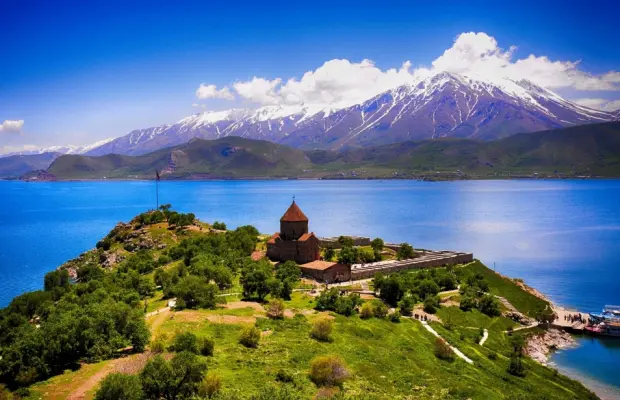
In Turkish, Ağrı is the name of Mount Ararat, the peak where, by biblical tradition, Noah’s Ark came to rest. The city itself is younger and its name newer. It began around 1860 as Karakilise (“the black church”), was later called Karaköse, and by 1946 had taken the name of the mountain.
9. Antalya: a king’s name, worn down by time

No myth, no rival theory this time. Antalya was founded in the 2nd century BC by King Attalus II of Pergamon, who named it Attaleia after himself. Greek still uses that name. In Turkish it softened into Adalia and then Antalya.
Of all the names on this list, this is one of the easiest to trace back to a single person.
10. Alanya: a sultan’s name, respelled by Atatürk

Alanya’s earliest known name was Korakesion, Coracesium in Latin, from a Luwian word glossed as “point” or “protruding city,” fitting for a rocky peninsula. Under Byzantium it became Kalonoros, “beautiful mountain.” In 1221 the Seljuk Sultan Alaeddin Keykubad I took the castle and renamed the town Alaiye, after himself. Antalya and Alanya make a neat pair here: both are named after rulers, yet Attalus picked his own name at the founding, while Alaeddin attached his to a town that was already ancient. The final step came in 1935, when Atatürk visited and fixed the spelling as Alanya.
11. Artvin: nobody is quite sure

Artvin keeps its secret better than most. The city is called Artvini in Georgian and Laz, and one common view holds that the name is Georgian, meaning something like “high place” or “wooded area.” That would suit the steep, forested valleys of the Çoruh River. But it’s not settled. The region passed through Colchian, Armenian, Byzantine, Georgian, Seljuk and Ottoman hands, and Bronze Age finds show people lived here long before any of them. With that many layers, the honest answer is that the name’s exact origin remains open.
12. Edirne: Hadrian’s city

Edirne, in Türkiye’s small European corner, began as a Thracian settlement called Uskudama and was later known as Orestias, after the mythical Orestes. In the 2nd century AD, the Roman emperor Hadrian rebuilt it and gave it his own name: Hadrianopolis, or Adrianople in English. Edirne is simply how Turkish speakers pronounced it.
The Ottomans took the city in the 1360s; the exact year, often given as 1361 or 1362, is still debated. It served as their capital until the conquest of Constantinople in 1453. Ottoman spellings varied. Edrene was one of them. Losing the capital title didn’t reduce its importance much, and the city’s Ottoman mosques are still its main draw today.
13. Isparta: three theories and a frustrated historian

Isparta’s name has no single accepted origin. The simplest theory treats it as the Turkish spelling of the Greek “Sparta,” with an “I” added in front, the same habit that turned “stin Poli” into Istanbul.
A second theory looks to Baris, an ancient city of Pisidia in the same area, while a third links it to a Byzantine fortress called Saporda, which Muslim sources wrote as Sabarta. Local tradition adds more colorful versions, including one from a water-related root. The British archaeologist George E. Bean summed up the debate: “These perpetually shifting conceptions leave the reader quite bewildered.”
14. Eskişehir: the most literal of Turkish city names

Eskişehir means “old city” in Turkish, and for once the name says exactly what it means. The ancient city here was Dorylaion, Dorylaeum in Latin, whose remains lie at Şarhöyük, just north of the modern center. When the settlement moved to its current spot, the old site gave the new town its name.
Few cities are this candid about their age.
15. Muğla: a Greek name, a Turkish legend

Muğla appears in the record in the early 2nd century BC as Mobolla, which slowly shifted to Mogolla and then Muğla. Local tradition disagrees. In its version, a commander called Muğlu Bey, serving the Seljuk Sultan Kılıç Arslan, took the area, and his name stayed. For centuries the region was better known as Menteşe, after the Turkish dynasty that ruled it, and only in the Republican era did the province take the name of its main town.
16. Sinop: a girl the god Apollo carried away

Sinop was Sinope, and in Greek myth Sinope was the daughter of the river god Asopus. In one telling, Apollo carried her off to the Black Sea shore where the city later stood. Another version makes her a daughter of Ares, and probably one of the Amazons.
Either way, the name has traveled well: an outer moon of Jupiter is also called Sinope.
Sources: Wikipedia, Names of Istanbul, Wikipedia, İzmir, Alanya Municipality, History

Bir yanıt yazın