
10 Rock-Cut Buildings Carved Into Cliffs and Mountains


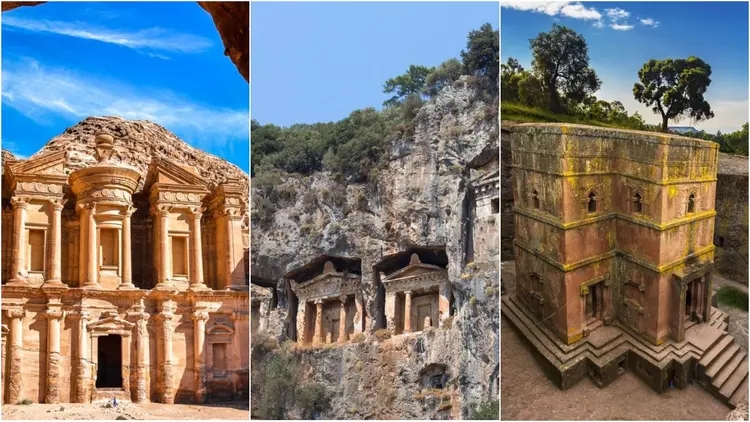
Long before cranes and reinforced concrete, builders took the opposite approach: instead of stacking stone, they took it away. Rock-cut architecture turned cliffs into homes, temples, tombs and fortresses, and many of these places are still standing after hundreds or even thousands of years.
1. Petra, Jordan: the rose-red capital
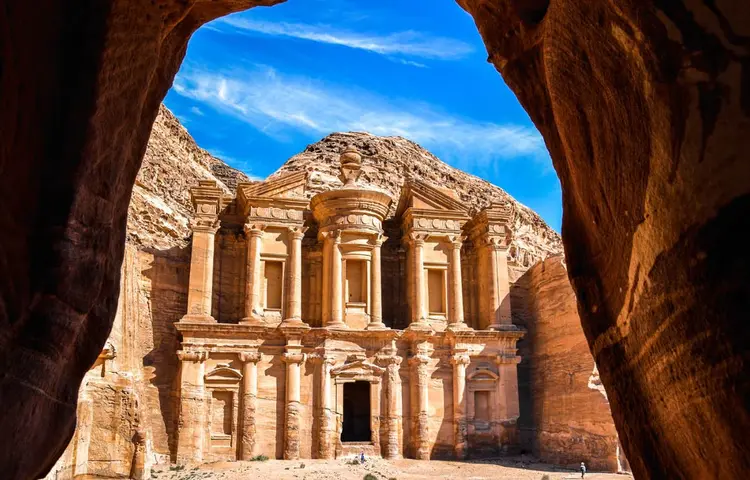
Petra, in southern Jordan, became the capital of the Nabataean Kingdom in the 2nd century BCE. Incense made it rich. Sitting on the trade routes that carried it, the city grew until, at its peak in the 1st century CE, it is thought to have held about 20,000 people, with temples, tombs, reservoirs, passageways and a theater all carved into the sandstone.
Petra is a UNESCO World Heritage Site, and its Treasury facade made a memorable cameo in Indiana Jones and the Last Crusade (1989).
2. Predjama Castle, Slovenia: a fortress in a cliff mouth
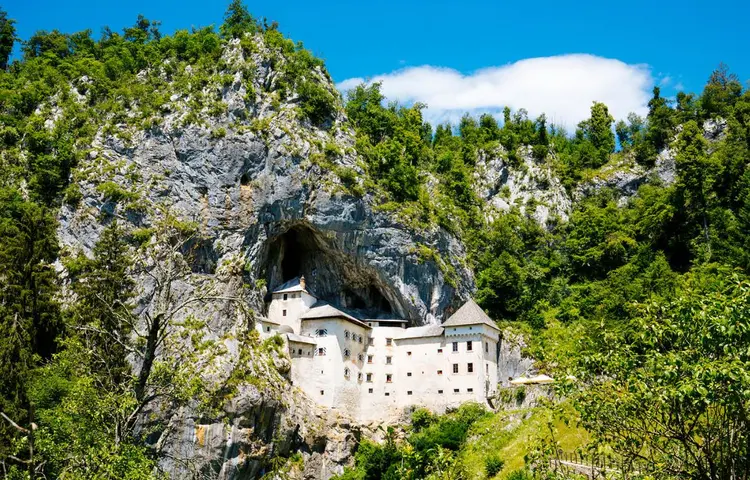
Halfway up a cliff, built into the mouth of a cave, Predjama Castle holds the Guinness World Record for the largest cave castle, and records point to a fortress there since the 13th century, though the present look dates mostly to the 16th.
From below, it looks less built than wedged into the rock.
Then there are the tunnels. Behind the walls, a network of secret passages gave defenders a way to slip out and bring in supplies during a siege.
3. Ellora Caves, India: three religions, one cliff
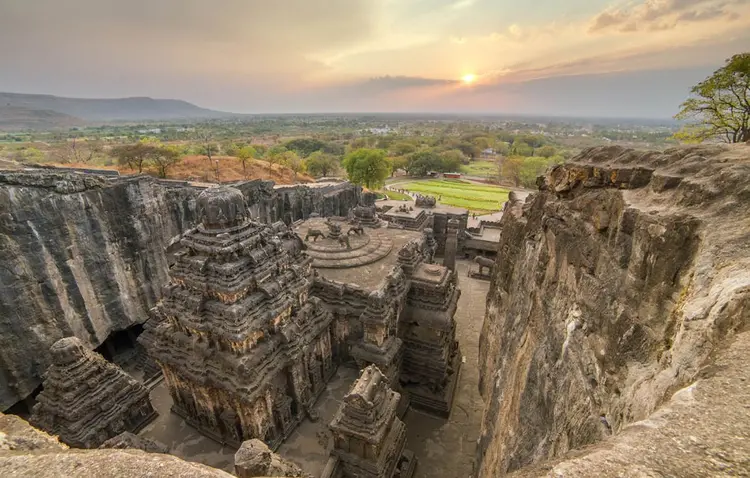
Carved between roughly 600 and 1000 CE, Ellora is a row of 34 monasteries and temples stretching over about 2 km. Three faiths share it. Buddhist, Hindu and Jain caves sit side by side in the same cliff, a rare record of different traditions working alongside each other in one region. Ellora is UNESCO-listed.
4. Lycian Rock Tombs, Fethiye, Türkiye: tombs built for the sky
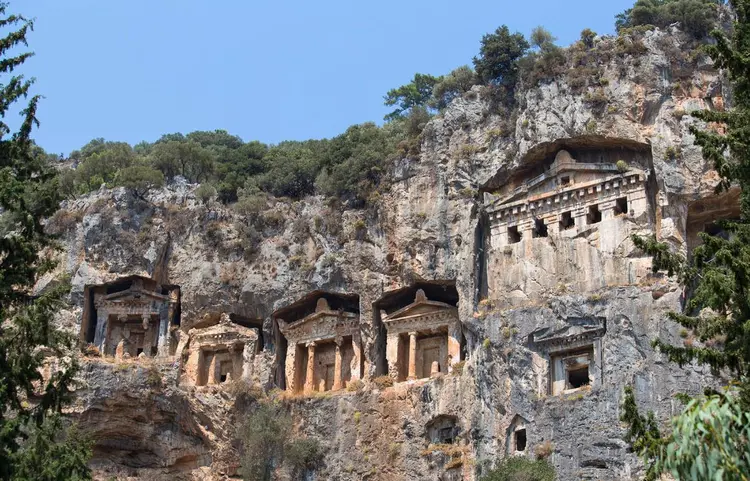
Above the modern town of Fethiye, on the Turkish Mediterranean coast, the Lycians cut elaborate tomb facades into the cliff in the 4th century BCE, and the best known, the Tomb of Amyntas (around 350 BCE), imitates the front of a Greek temple. Why so high up? The Lycians believed winged creatures would carry the dead to the afterlife. Behind those grand facades, though, the burial chambers are a bit of a letdown: small and plain.
5. Ajanta Caves, India: a gallery in the rock
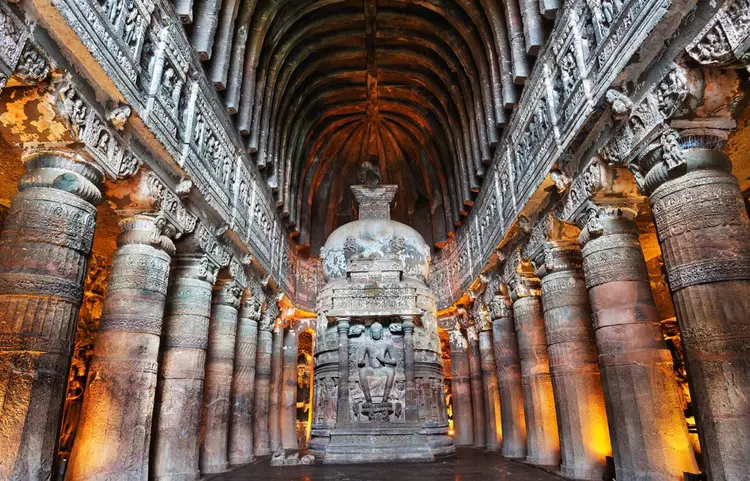
Where Ellora mixes three faiths, Ajanta is Buddhist through and through: 30 cave monuments, carved between the 2nd century BCE and about 650 CE. Paintings and sculpture decorate the ceilings as well as the walls, including scenes from the life of the Buddha, and together they count among the finest surviving examples of ancient Indian Buddhist art.
The caves once sheltered monks, merchants and pilgrims, which came in handy during the monsoon.
6. Longmen Grottoes, China: a hundred thousand statues
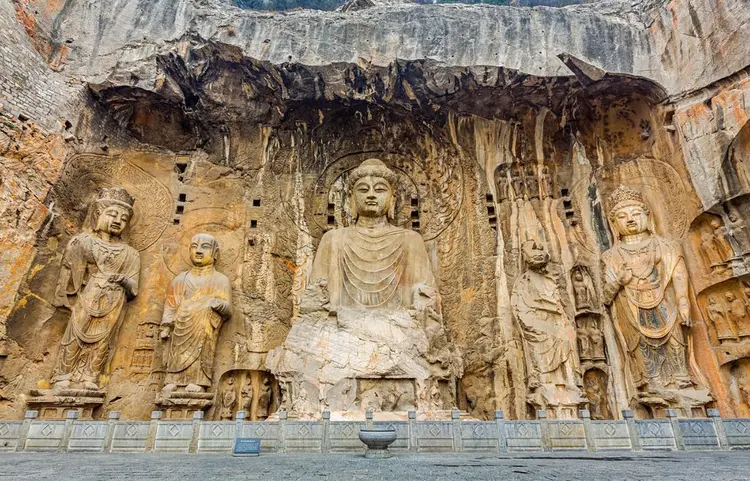
Work at Longmen near Luoyang began around 493 CE, when Emperor Xiaowen of the Northern Wei moved his capital to the city, and carving continued for roughly four centuries. Now for the numbers. About 1 km of riverbank holds more than 2,300 grottoes and niches and an estimated 100,000 Buddhist statues. Listed by UNESCO in 2000, it’s often called the high point of Chinese stone sculpture.
7. Lalibela Churches, Ethiopia: eleven churches below ground level
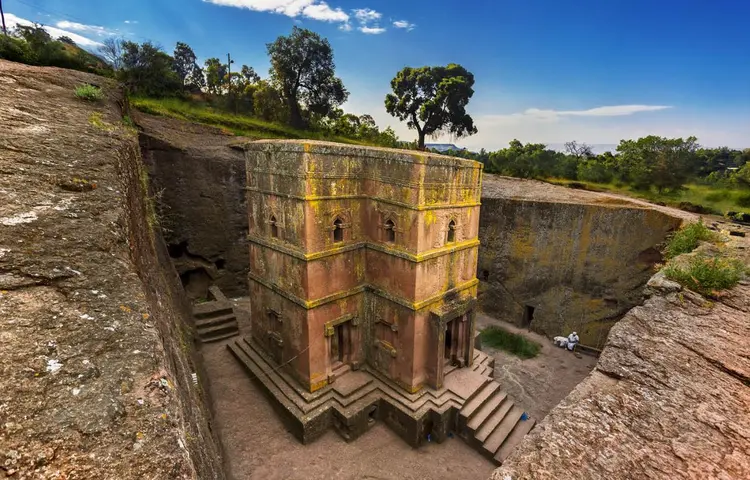
Tradition credits King Gebre Mesqel Lalibela, who ruled around 1181 to 1221, with all 11 churches here: four stand free from the rock around them, carved out as single blocks, while the other seven remain connected to the mountain through a shared wall.
None are museum pieces. Ethiopian Orthodox Christians still come here for daily worship and religious festivals.
8. Cliff Palace, USA: a village under a stone roof
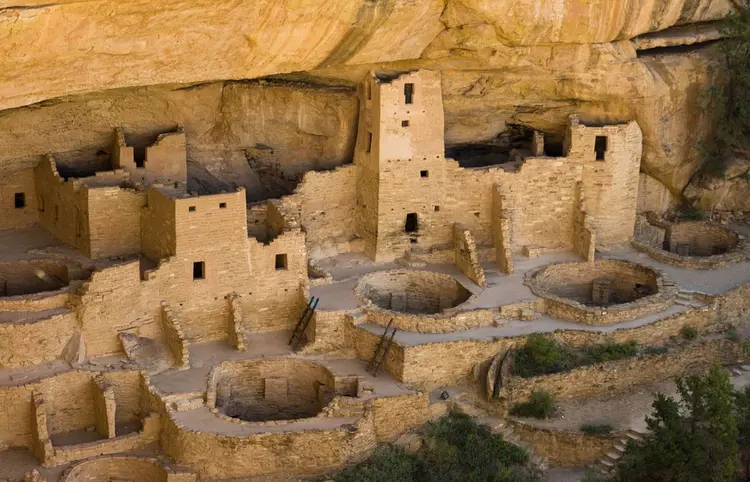
Ancestral Puebloans built Cliff Palace, in Mesa Verde National Park, Colorado, in the 13th century. It has about 150 rooms. Often described as the largest cliff dwelling in North America, it was spotted in December 1888 by Richard Wetherill and Charlie Mason, who were out looking for stray cattle, not lost villages. Visitors are welcome, but the National Park Service allows entry only on a ranger-guided tour, so check current tour tickets before going.
9. Sassi di Matera, Italy: a city that never moved out
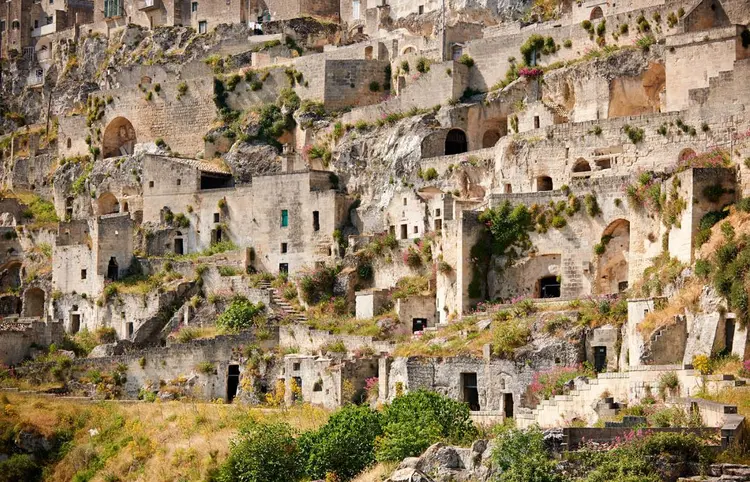
Matera, in southern Italy, has cave dwellings that were inhabited from the Paleolithic period, and homes cut into the rock are described as around 9,000 years old. The habit stuck. Through invasions and upheaval, each new generation kept building houses, churches and tombs into the stone, until the district came to count, by most accounts, among the oldest continuously inhabited places in the world. UNESCO listed the Sassi in 1993.
10. Kropfenstein Castle, Switzerland: a ruin with no paperwork
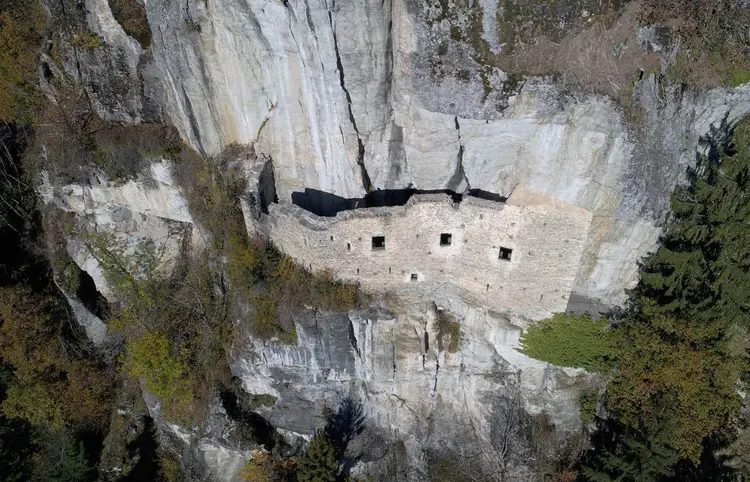
Nobody knows exactly when or why Kropfenstein, in Waltensburg/Vuorz in the canton of Graubünden, was built.
Any dating rests on its style. Best guess: the 13th century, with use apparently lasting until the 15th. A path cut into the rock on the east side leads to the castle, and a parapet was added later so visitors could reach it without a fall.
Sources: History Hit, Wikipedia: Rock-Hewn Churches, Lalibela, National Park Service: Cliff Palace





Bir yanıt yazın