
Aphrodisias: 10 Facts About the Marble City of Aphrodite


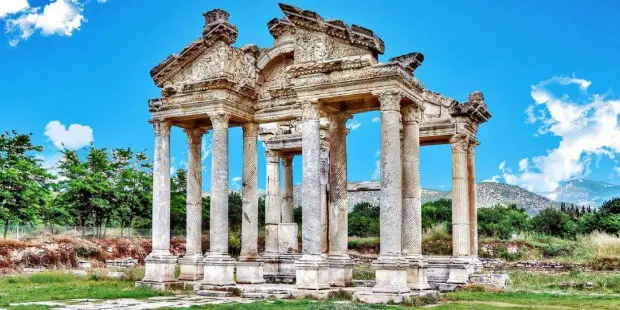
Aphrodisias, in Türkiye’s Aydın province, was a city of marble sculptors, with a temple, theater and one of the best-preserved stadiums in the ancient world. UNESCO added it to the World Heritage List in 2017. Its modern rediscovery began with a photographer’s wrong turn.
1. A city named for the goddess of love
The name comes from Aphrodite, the Greek goddess of love and beauty, and her temple was the heart of the city. Pilgrims traveled far to honor her.
Love didn’t get the last word, though: the sanctuary later became a Christian church.
2. Emperor Augustus gave the city his favor
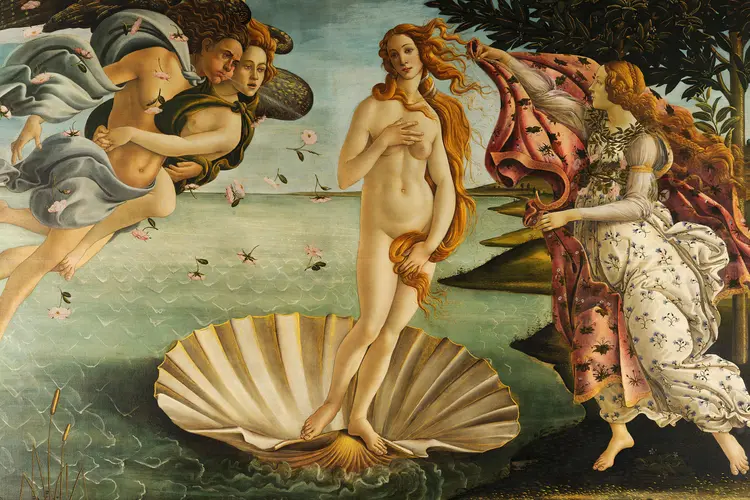
Why would an emperor single out a provincial city? Aphrodisias had backed Octavian, later Augustus. The payoff: privileges and funding under the emperor’s protection. A major temple-like complex for the imperial cult, the Sebasteion, was dedicated here, and over the next two centuries new buildings kept arriving.
3. A photographer’s wrong turn led to the excavation
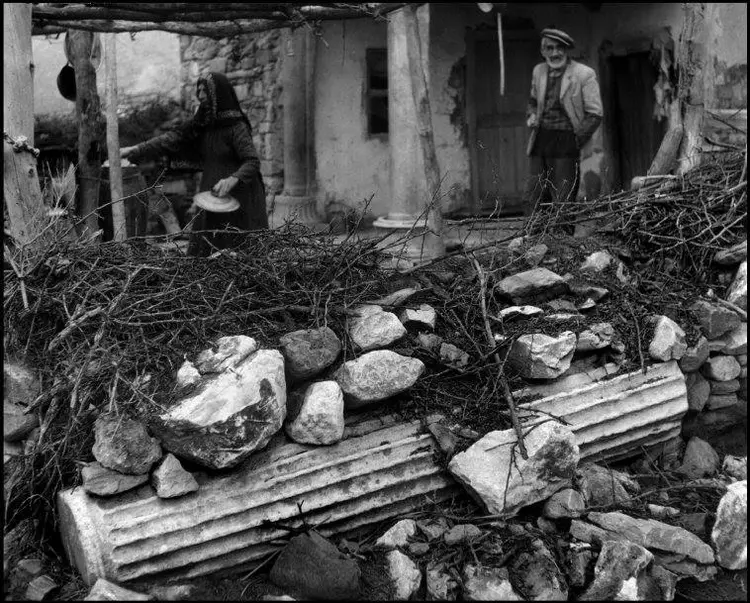
In 1958, the Turkish photographer Ara Güler lost his way after photographing a dam opening and spent a night in the village of Geyre, where columns and carved stones lay everywhere. His photos later reached foreign magazines. Professor Kenan Erim began systematic excavations in the early 1960s for New York University, and the Aphrodisias Excavations project has worked with Oxford University since 1995. Contrary to the popular story, though, Erim’s team wasn’t the first to dig: Paul Gaudin, a French engineer, had excavated here briefly in 1904 and 1905.
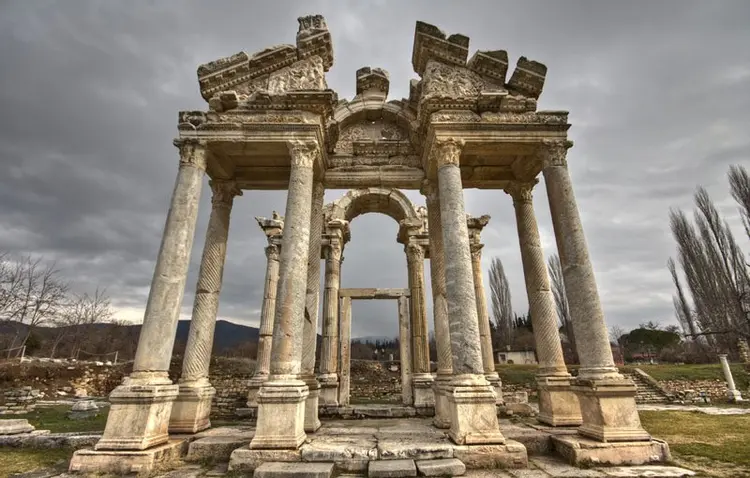
4. The Temple of Aphrodite stood for centuries
Exact dates are hard to pin down, but building the temple reportedly took well over a century.
Later rulers kept adding to it. After the Roman era, the temple was converted into a church.
5. Pilgrims came for Aphrodite, then for a bishop
Before Christianity, worshippers of many gods visited the temple. After the change of faith, the building became a basilica, its dedication changing with it, and by the late 5th century the Christian conversion was complete.
6. The council house hosted poetry and politics
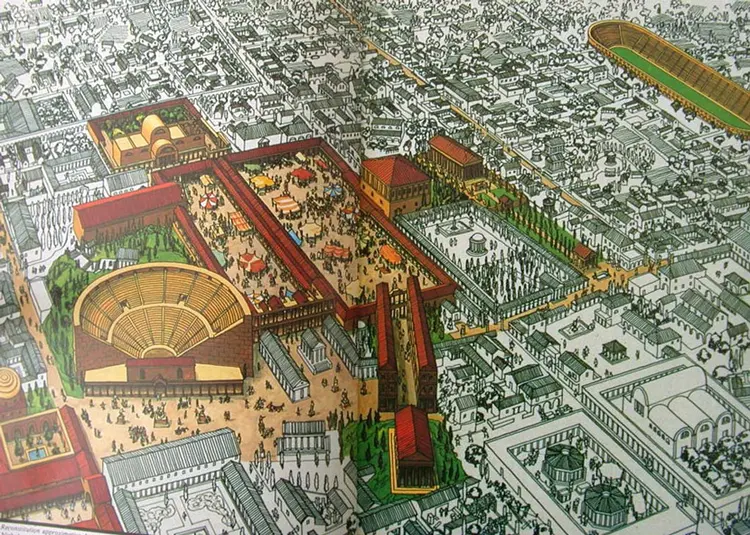
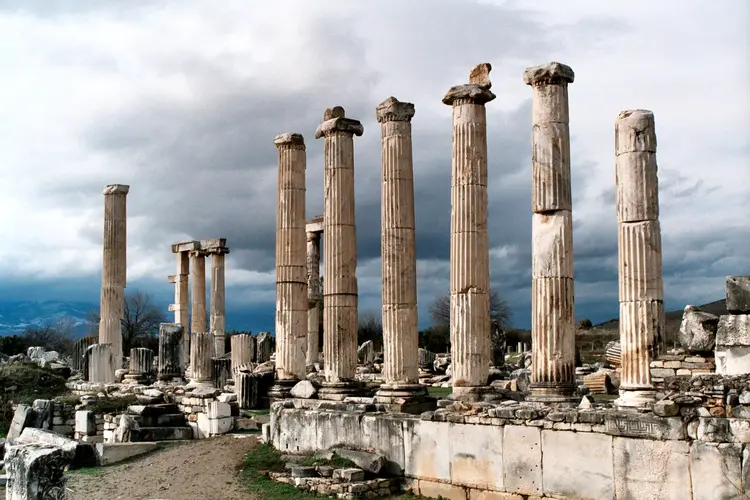
The Bouleuterion, also called the Odeon, was the council chamber and concert hall, seating around 1,750. Meetings, recitals, readings: citizens gathered here for all of them.
The Bishop’s Palace stands nearby on the same cultural axis.
7. The baths were built on an imperial scale
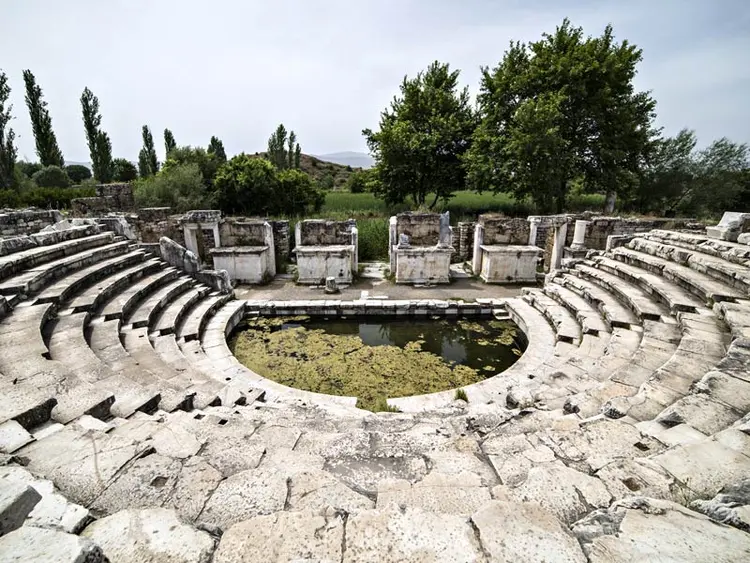
The Hadrianic Baths were a large complex of the 2nd century AD, laid out in the usual Roman sequence. Their marble heads and sculptures? Now in the site museum. A bath visit was as much a social event as a wash.
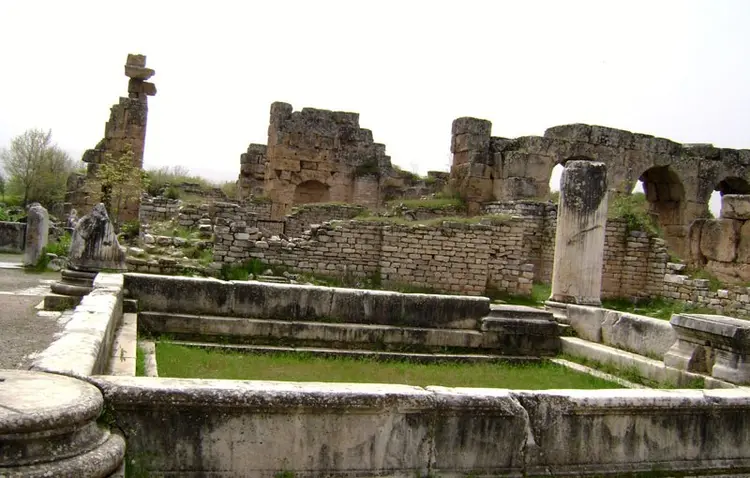
A typical bath had four main parts: a changing room, and cold, warm and hot rooms.
8. A village stood on top of the theater
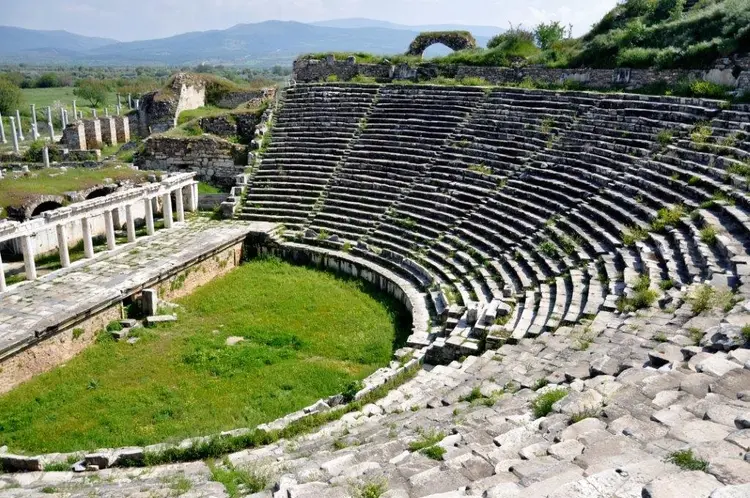
When digging began in the 1960s, archaeologists found that the village of Geyre had been built over the ancient theater. The villagers were moved to a new Geyre nearby. Archaeology often has to make room in the present before it can reach the past. The theater was later modified for gladiator shows and animal hunts, with lower rows removed to make an arena.
9. The stadium held around 30,000 people
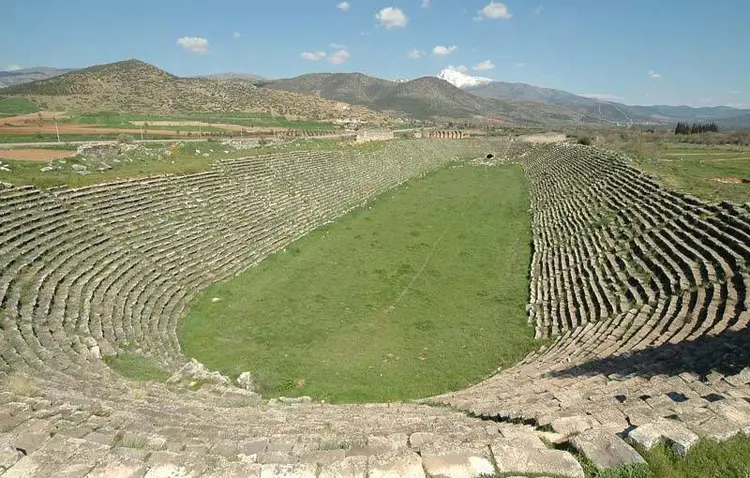
At roughly 270 by 60 meters, the stadium is one of the best-preserved of its kind in the Mediterranean. Its elliptical shape gave nearly every seat a good view.
Athletic contests and festival games filled it, and its crowd was roughly 17 times what the Odeon could seat.
10. Marble made the city a sculpture capital
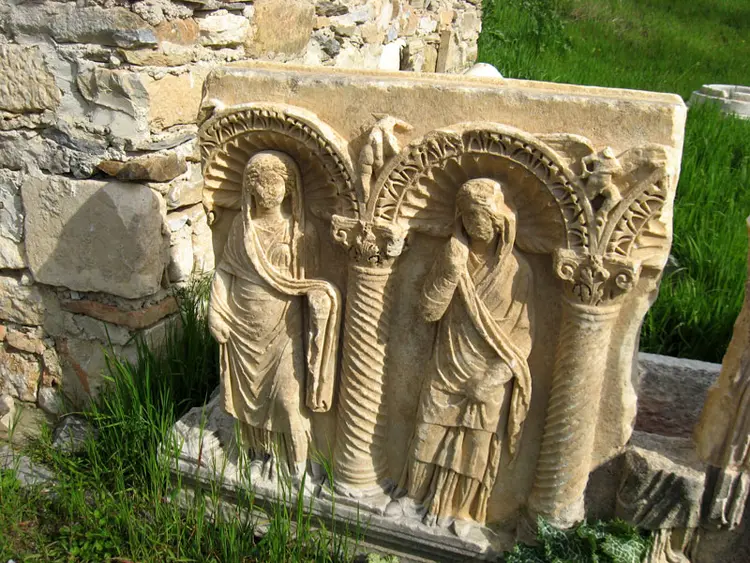
Nearby quarries provided fine white marble. Workshops turned it into statues and reliefs in huge numbers. Many inscriptions and carved panels survive in exceptional condition. That’s no small detail: it’s a main reason UNESCO recognized the site, together with its ancient marble quarries, and the finds are displayed in the Aphrodisias Museum.
Sources: Wikipedia, Aphrodisias, UNESCO World Heritage Centre, Aphrodisias, Aphrodisias Excavations (NYU and Oxford)

Bir yanıt yazın