
Chefchaouen, Morocco’s Blue City: What to Know Before Going


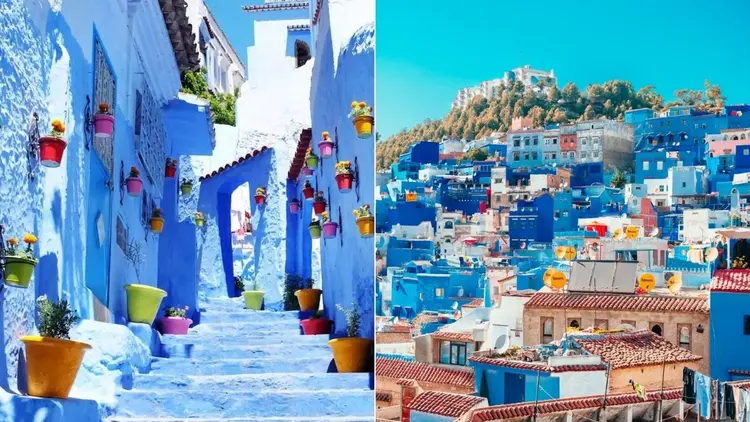
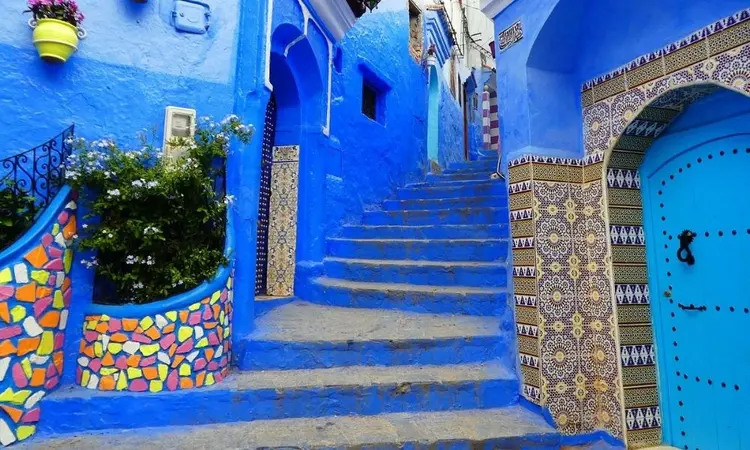
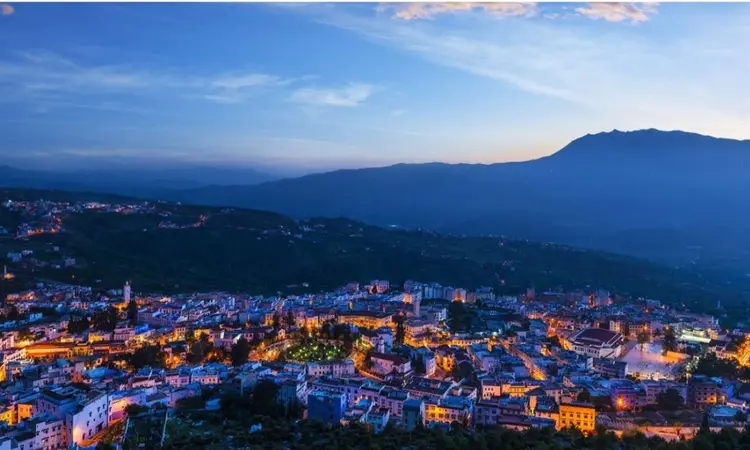
Chefchaouen sits in the foothills of Morocco’s Rif Mountains, and nearly every wall, doorway and staircase in its old town is painted some shade of blue. The result looks like a storybook set, but the town has a real past as a mountain fortress, a refuge and, for a while, a place closed to outsiders.
1. The history of the blue city
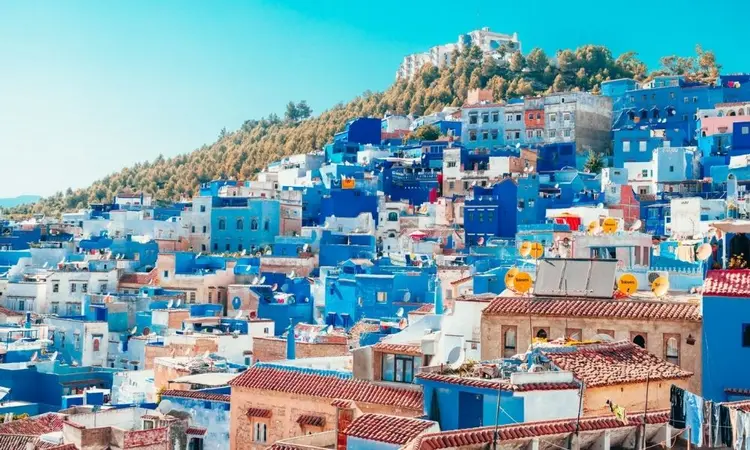
Chefchaouen was founded in 1471 by Ali ibn Rashid al-Alami as a small kasbah to defend against Portuguese attacks. Muslims and Jews who left Spain after the Reconquista settled here, which is why parts of the old town feel more Andalusian than North African. Spanish forces occupied the town in 1920, and Spanish is still widely heard in northern Morocco as a result.
So why blue? Nobody can say for certain. The most popular explanations are that the color repels mosquitoes, that it echoes the sky and heaven, and that Jewish refugees introduced it in the 1930s, though some locals insist the walls were simply repainted in the 1970s to attract visitors. Any guide who sells one of these as settled history is overselling it. Whichever story wins, the paint keeps getting refreshed.
2. What to see in Chefchaouen
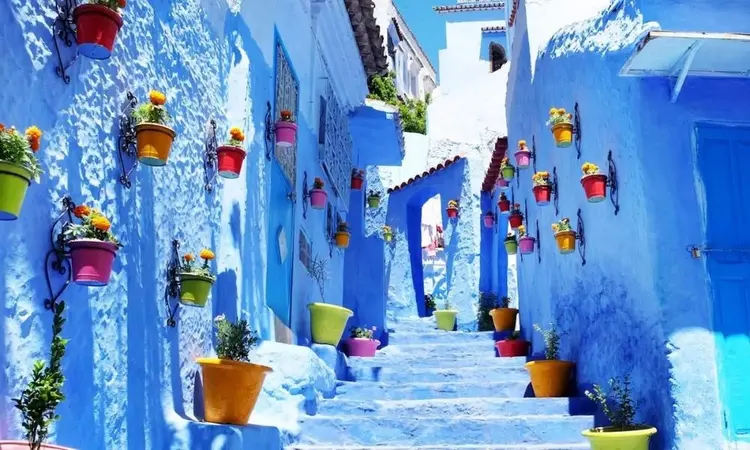
Almost everything worth seeing lies within a short walk of Outa el Hammam, the main square of the medina.
Kasbah: The 15th-century fortress, the oldest part of the old town, holds rammed-earth walls, ten towers, a quiet garden and a small museum inside, which makes it a good place to catch your breath after the crowds on the square.
Medina: Truth is, the narrow, winding lanes are the real attraction. Skip the map. Small shops along the way sell woven blankets and leather goods, and wandering without a plan is half the fun.
Outa el Hammam Square: The lively heart of town, with the kasbah on one side, the Great Mosque on the other and terrace cafes in between. Non-Muslims cannot enter the mosque. Its octagonal minaret, though, is a rare shape in Morocco and well worth a look.
Souk: Spices to handwoven textiles, in stall-lined lanes running from the square to the edges of the medina.
3. Day trips and hikes near Chefchaouen
Tetouan, a whitewashed coastal city with a UNESCO-listed medina, lies roughly 70 km away: white where Chefchaouen is blue, and an easy half-day trip. Nature fans head instead for Talassemtane National Park, where Akchour, about 45 minutes from town according to Morocco’s national tourism office, draws hikers with its waterfalls and the natural rock arch known as God’s Bridge. Want to see both? Allow a full day. The walk to God’s Bridge alone takes about 45 minutes each way, while the lower falls are shorter and easier. A local guide helps on the longer trails.
4. How to get to Chefchaouen
Chefchaouen has no airport. With no train station either, every route ends on a road. Most visitors fly into Tangier, Fez or Casablanca and continue by bus or rental car, and the trip takes roughly 2.5 hours by direct bus from Tangier, around 4 to 5 hours from Fez and 6 to 7 hours from Casablanca. The bus station sits outside the blue medina. Expect a short taxi ride.
5. Where to eat in Chefchaouen
Finding tagine is easy. Traditional Moroccan dishes fill the menus around Outa el Hammam, and terrace tables there come with a view of the kasbah. Casa Aladdin (17 Rue Targi, on the square) is known for its tagines and panoramic views, Beldi Bab Ssour is a long-running local favorite, and Café Sofia is a small place run by a woman. Opening hours change. Check a map app before heading out.
Chefchaouen is a town where getting lost is the best itinerary, and every wrong turn tends to end at another blue staircase.
Sources: Wikipedia: Chefchaouen, Visit Morocco (Moroccan National Tourism Office): Chefchaouen

Bir yanıt yazın