
Perge Ancient City: 13 Things to See Near Antalya


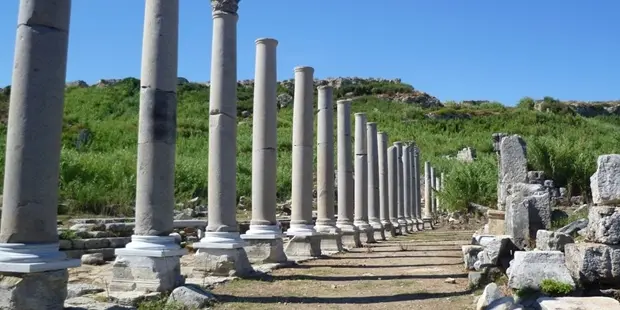
Antalya is known for beaches, but the Perge ancient city, about 15 km east of the city center in the Aksu district, rewards a half-day away from the sand. Roman streets, towers and a theater still stand on a Bronze Age settlement. These 13 highlights explain what to look for.
1. Perge ancient city, heart of fertile Pamphylia
Pamphylia, often glossed as “land of all tribes,” stretched along the coast east of Lycia, and its fertile plain, inviting to settlers, held Aspendos, Perge and Side.
Perge was the capital.
2. The Aksu River made the city
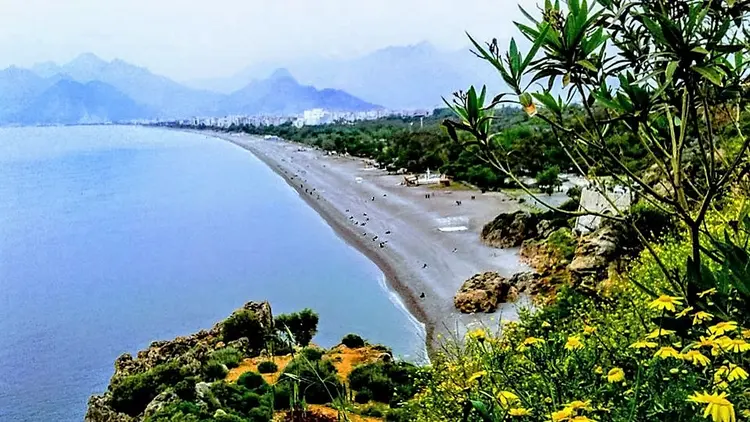
Perge sat on the road between Pergamon and Side, yet its lifeline was the Kestros, now the Aksu River, a once-navigable waterway that fed the soil and moved goods and people alike. According to the Acts of the Apostles, Paul reached Perge around 46 AD after sailing from Cyprus. The river even had a god. Kestros appears on coins and in a statue by the monumental fountain.
3. The Hittites knew it as Parha
The name is older than most visitors guess. The city appears as “Parha” in a Hittite treaty, and a bronze tablet unearthed at Hattusa in 1986 confirms the role it played in that era. Greek legend tells it differently: heroes returning from Troy founded several Pamphylian cities, Perge among them. In 334 BC, Alexander the Great was welcomed without a fight.
4. One of Anatolia’s tidiest Roman cities
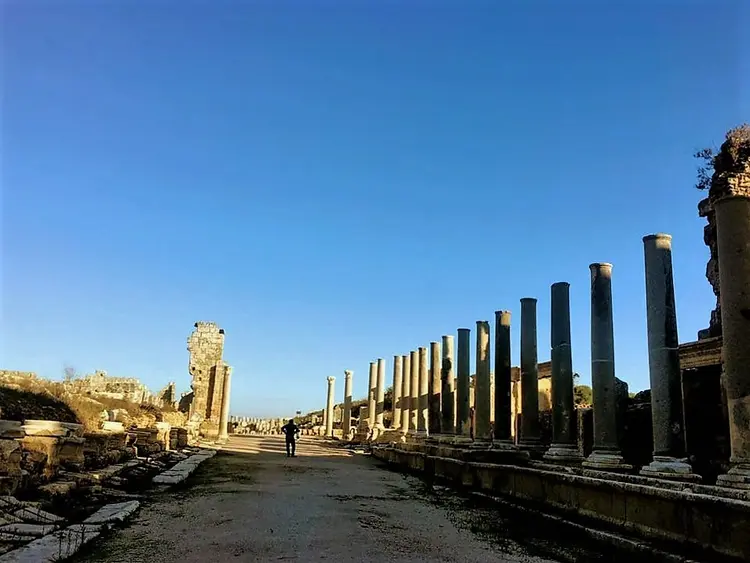
Rome brought order. From the 1st century AD, Perge adopted the Roman urban plan and became one of the best-organized cities in Anatolia. Istanbul University has excavated here since 1946, and many of the site’s finest marble statues now stand in the Antalya Museum, whose collection of Roman sculpture ranks among the richest in the world.
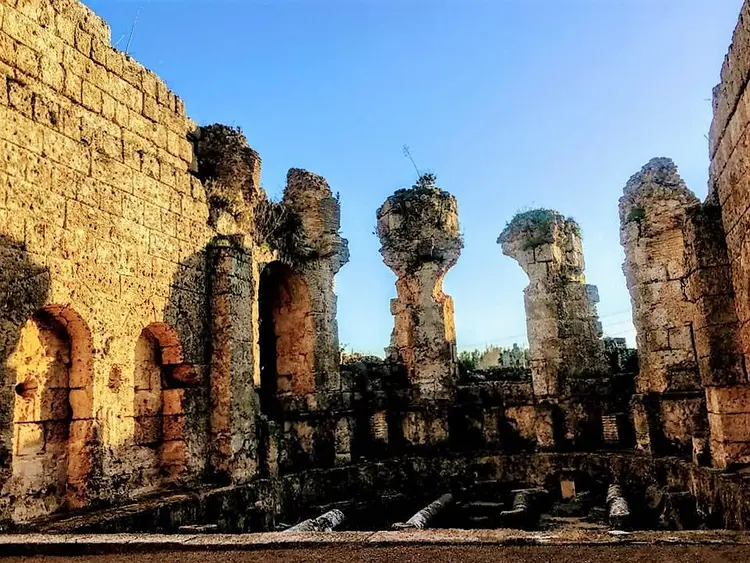
5. The walls date from the Hellenistic era
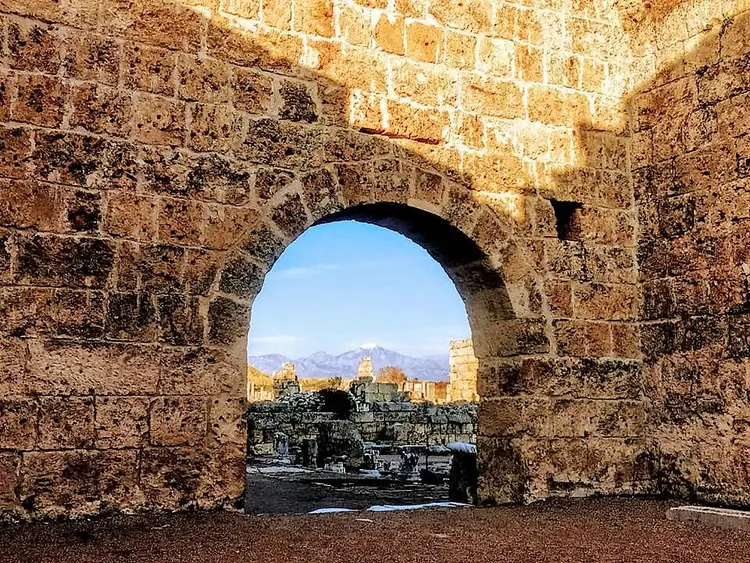
Start at the walls. Built of large stone blocks, they lead to the city’s symbol, the Hellenistic south gate with its two round towers. A story says Perge opened its gates to Alexander simply because it had no fortifications, yet the towers that stand today date from the 3rd century BC, and Plancia Magna rebuilt the gate in the early 2nd century AD.
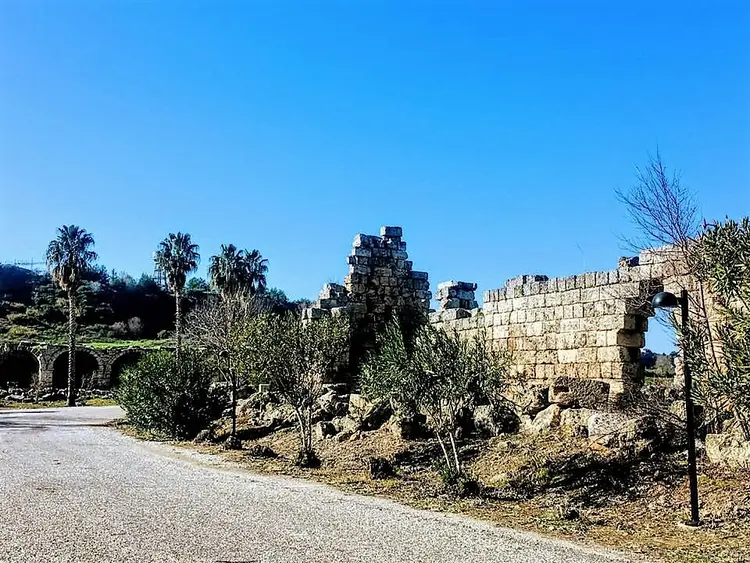
6. The colonnaded street is the city’s spine
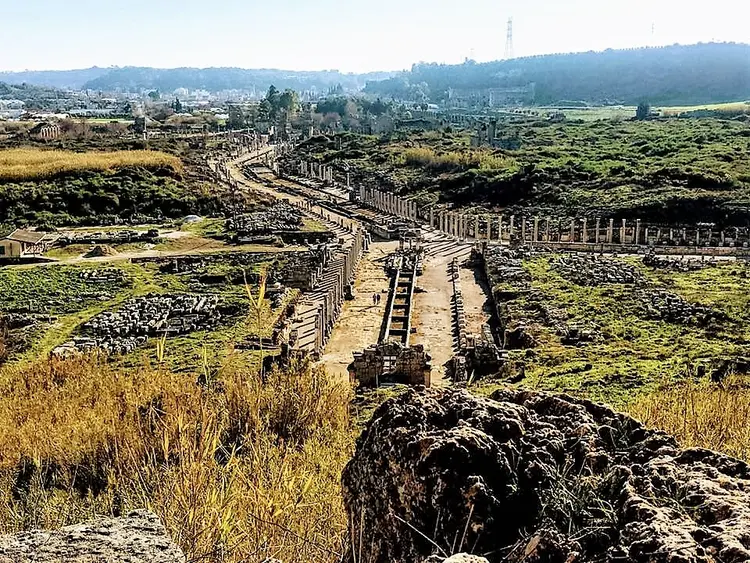
The main street, about 300 meters long, runs from the Hellenistic gate all the way to the fountain at the foot of the acropolis, lined on both sides by shops and mosaic porticoes.
Then a cross street cuts in. Where the two meet, at the center, the city’s basic grid takes shape.
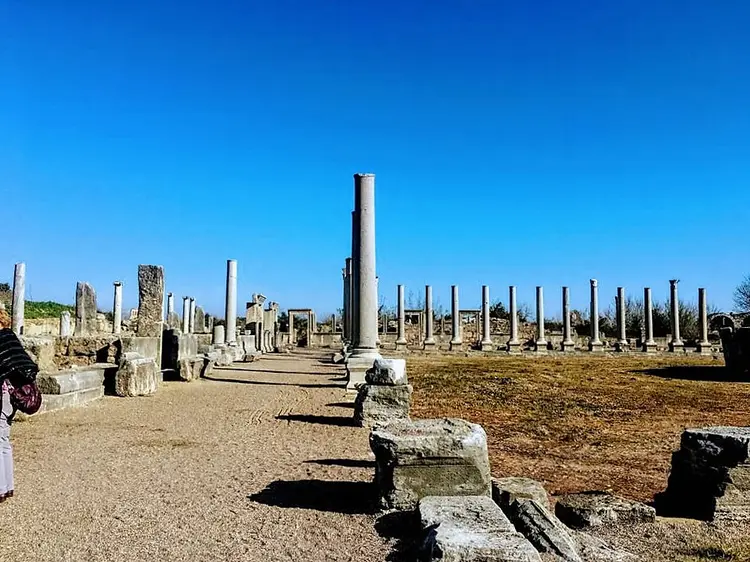
7. A water channel ran down the middle
Water spilled from the monumental fountain, where a statue of the river god Kestros stands, and flowed along a channel down the middle of the street. Summers in the region pass 40°C (104°F). In that heat the running water must have been welcome, and the paving still carries the ruts of cart wheels.
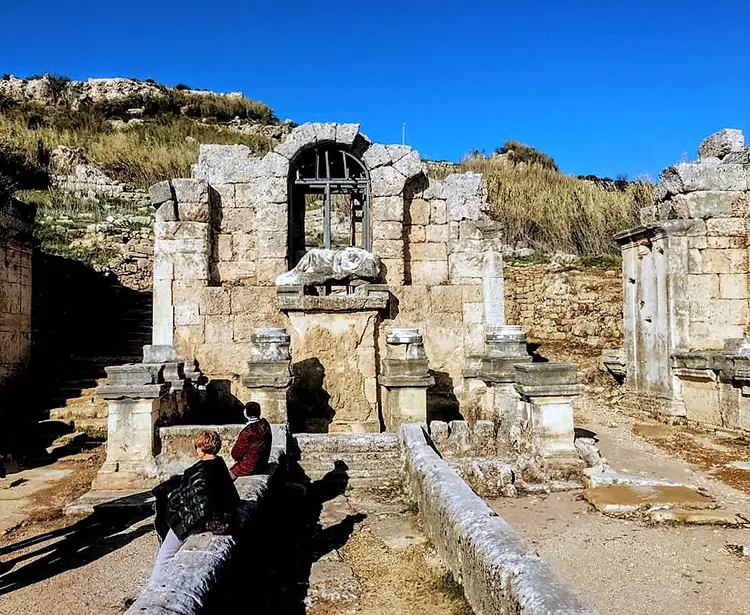
8. The towers had market inspectors
Where the streets cross, the Arch of Demetrius and Apollonius marks the center, and beyond it the Hellenistic gate leads toward the agora.
Now for the lore. Officials, local tradition says, stood on the towers to watch for dishonest merchants, a kind of market police force. Hard to prove, but hard to forget.
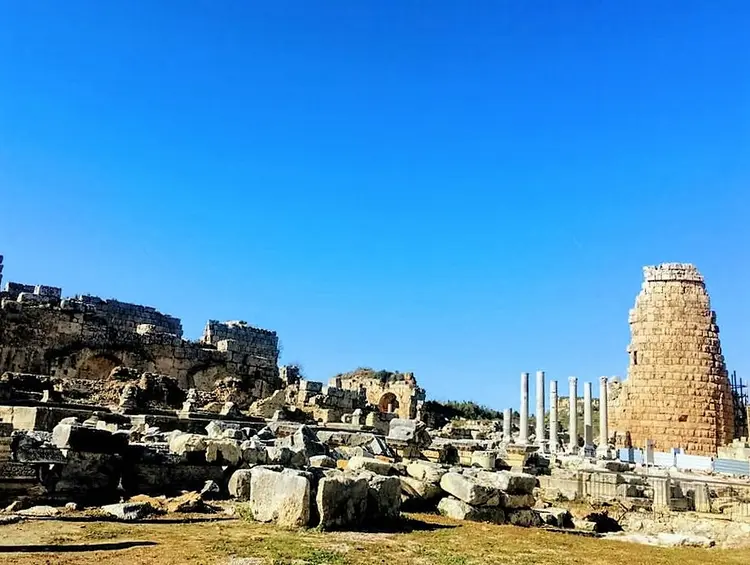
9. The agora has shops with double doors
The agora was a courtyard framed by shops. Some still have mosaic floors. The clever part: certain shops opened both onto the square and onto the surrounding street. The word “agora” comes from an ancient Greek verb meaning to gather.
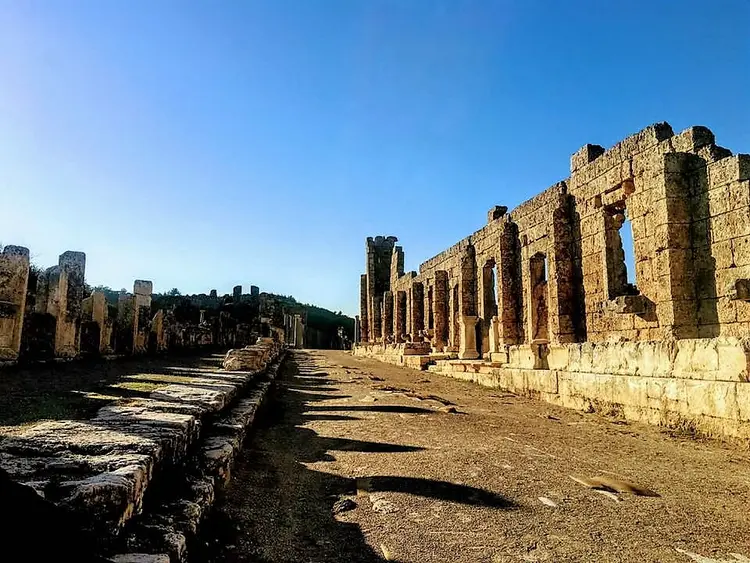
10. The Roman baths are among the best preserved
West of the Hellenistic gate stand the baths, with cold, warm and hot rooms, a gym area and even the furnace rooms that once heated the whole complex. Truth is, a Roman bath was as much about conversation, politics and rest as about getting clean. Most of what still stands at Perge is Roman, after all.
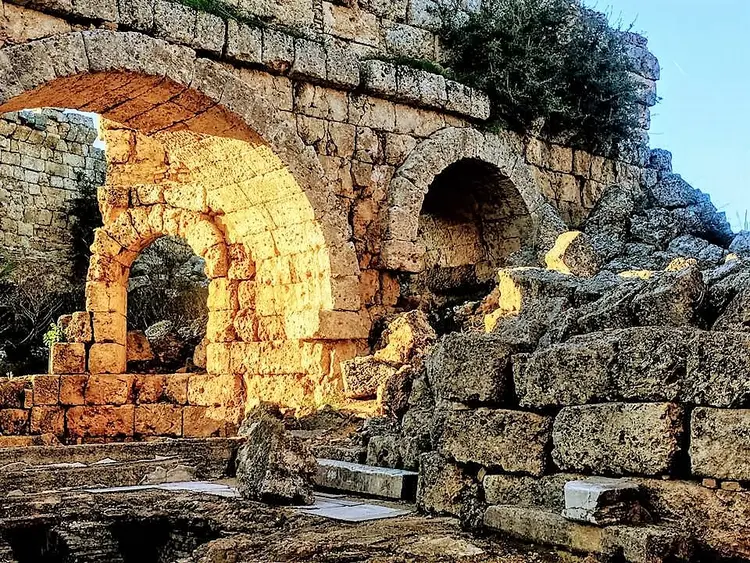
11. Gravel protects the mosaics
That gravel underfoot is not neglect. Many streets at Perge are deliberately covered in fine gravel or sand to protect the mosaics beneath.
From the fountain a stairway climbs the hill, and the view from the top takes in the whole city.
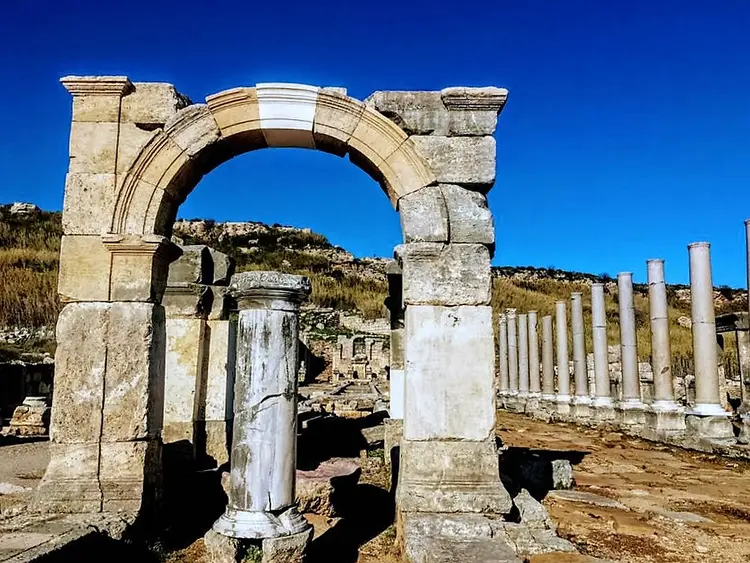
12. The theater held around 12,000 people
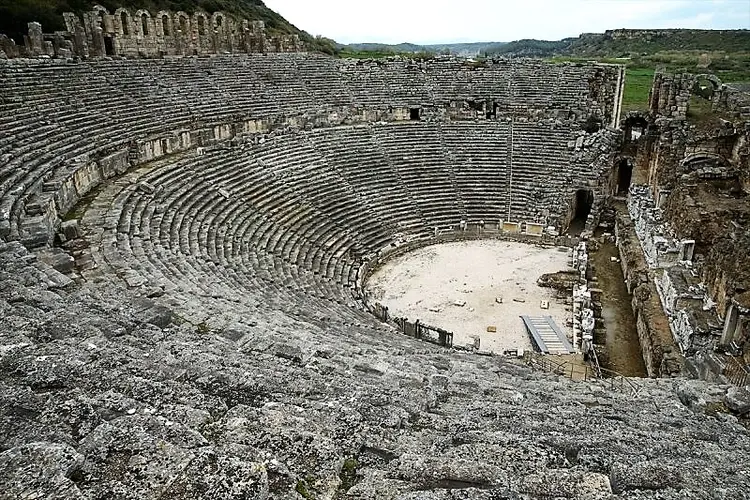
The first building most visitors see on the road in is this Greco-Roman theater from the 2nd century AD. Its stage building, famous for marble decoration and for reliefs from the life of Dionysus, once held statues that are now displayed in the Antalya Museum. Drama only? Not quite: gladiator and animal fights were staged here too.
13. The stadium is shaped like a horseshoe
Measuring 234 by 34 meters and once holding about 12,000 spectators, roughly the crowd the theater seated, the stadium ranks among the largest in Anatolia, and its stone seats rest on vaulted arches. The official Perge page of Türkiye’s Ministry of Culture and Tourism calls it one of the best-preserved stadiums of antiquity. Later, the north end was fenced and turned into an arena. Restoration works have been reported, so check current access, hours and fees on that page before going.
Sources: Wikipedia, Perga, Hürriyet Daily News on the Perge stadium, Türkiye Ministry of Culture and Tourism, Perge Archaeological Site

Bir yanıt yazın