
Herculaneum Ancient City: 6 Things to Know


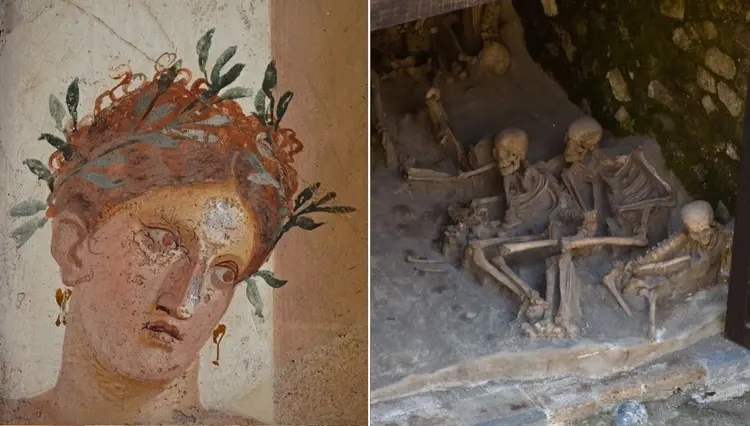
Pompeii gets the headlines, but right next to it lies Herculaneum, a smaller, quieter and in some ways luckier Roman town. Buried when Vesuvius erupted in AD 79, it preserved everyday life in remarkable detail, from wooden furniture to loaves of carbonized bread. Think of it as a time capsule with a sea view.
1. A small town with an outsized place in history
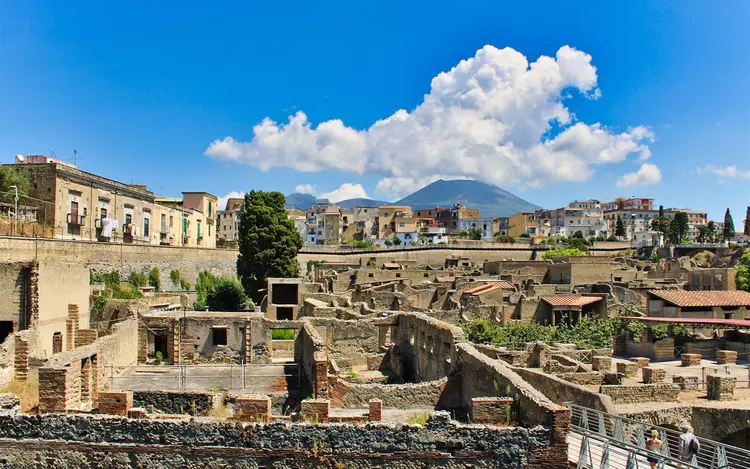
It was a modest place. Roman-era estimates put the population at 4,000 to 5,000 people, living on the western slope of Mount Vesuvius a few kilometers southeast of Naples, and in AD 79 the town shared the fate of Pompeii, Stabiae and Torre Annunziata. Modern Ercolano now sits on top.
The irony is that the disaster that destroyed the town also preserved it: roughly 20 meters of volcanic material sealed in objects that would normally have rotted away.
2. A name that points to Hercules
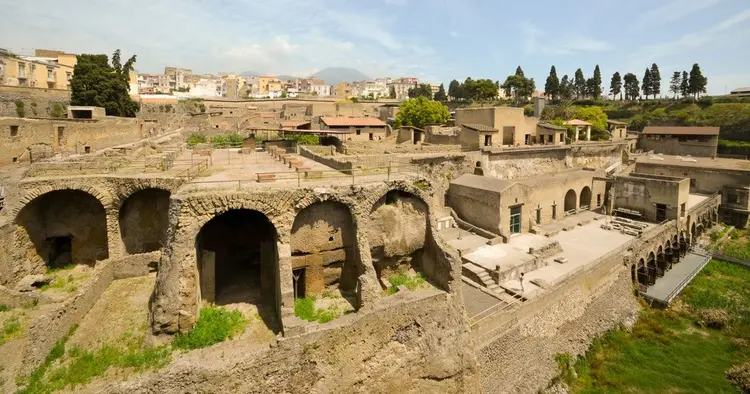
Ancient writers credited the city’s founding to Heracles, the Greek hero the Romans called Hercules. That hints at early Greek influence. Rome came later. First the Oscans held the area, then the Samnites in the 4th century BC, and when Herculaneum joined the Social War against Rome it fell in 89 BC to Titus Didius, a legate of Sulla, and became a Roman municipium. The result: Greek-flavored buildings, Roman villas and local life, side by side.
3. An earthquake came first, then the volcano
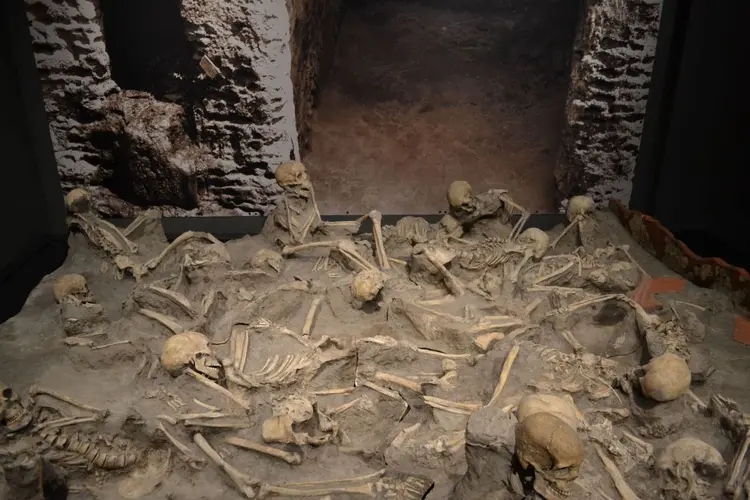
Trouble started early. A major earthquake in AD 62 had already damaged much of the town when Vesuvius erupted in AD 79. For years, few skeletons turned up, which suggested most residents had escaped. That assumption was wrong. In the 1980s, excavations at the old shoreline uncovered vaulted boat houses packed with victims, and later digs raised the count to roughly 340, many of whom had gathered at the water’s edge hoping to flee by sea before pyroclastic surges killed them. Even the date isn’t settled. Tradition says August 24; newer evidence points to October.
4. Wood, bread and even a boat
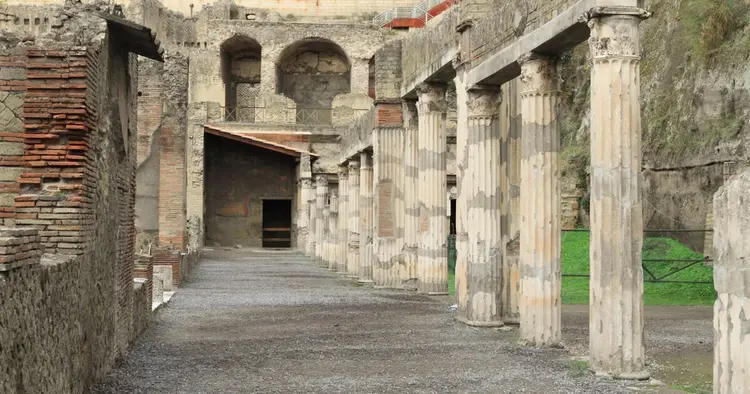
Pompeii has its body casts. Herculaneum has something rarer: organic material that should have decayed long ago, including wooden house frames, pieces of furniture, scraps of cloth and even food, all held in place by volcanic deposits for nearly two thousand years. Loaves of carbonized bread from a bakery show what an ordinary day looked like when it ended abruptly. It is the kind of small, domestic detail that tends to stay with visitors longer than the grand ruins. Then there is the boat. Archaeologists recovered a large wooden one, rare evidence of how everyday Romans lived and worked.
5. Forgotten for centuries, then found by a well
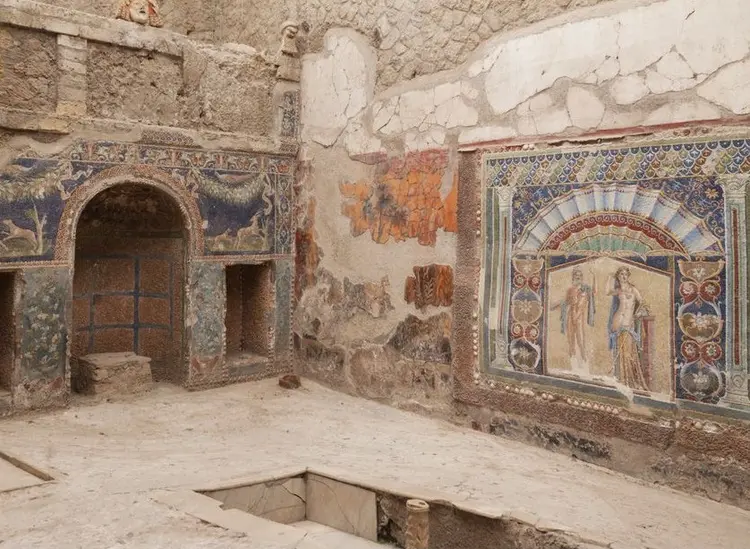
For centuries the town was simply lost. Then, in the early 18th century, a well being dug hit a wall of the ancient theater’s stage. Treasure hunters tunneled in first. Regular excavations began in 1738 under Charles of Bourbon, and Swiss engineer Karl Weber mapped the work systematically between 1750 and 1764. The star find, and a genuinely startling one: the Villa of the Papyri, whose library is the only one to survive from the Greco-Roman world. Excavation has since revealed a classic Roman plan: a main street (decumanus) meeting the forum, with blocks of buildings (insulae), seaside villas, workshops, shops, middle-class homes, a palaestra with a large pool, plus baths whose details are strikingly well kept. Much is still buried, the forum included, under the same volcanic seal that saved the rest.
6. A UNESCO site that feels intimate
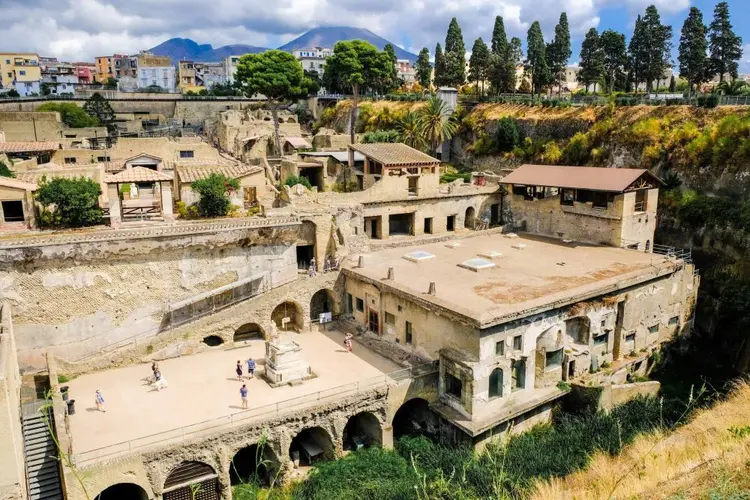
Herculaneum was inscribed on the UNESCO World Heritage List in 1997, together with Pompeii and Torre Annunziata. Pompeii or Herculaneum, then? The short version: Pompeii wins on size and drama. Herculaneum feels more personal. Smaller streets, better-preserved details, fewer crowds to jostle.
Compared with Pompeii’s sprawl, a visit here is easier to fit into a half day, which is exactly why it pairs well with a Naples base: see the ruins in the morning, and the rest of the day stays free.
Sources: Wikipedia, Herculaneum, The Herculaneum Society, Parco Archeologico di Ercolano (official site)

Bir yanıt yazın