
10 UNESCO World Heritage Sites in India to See


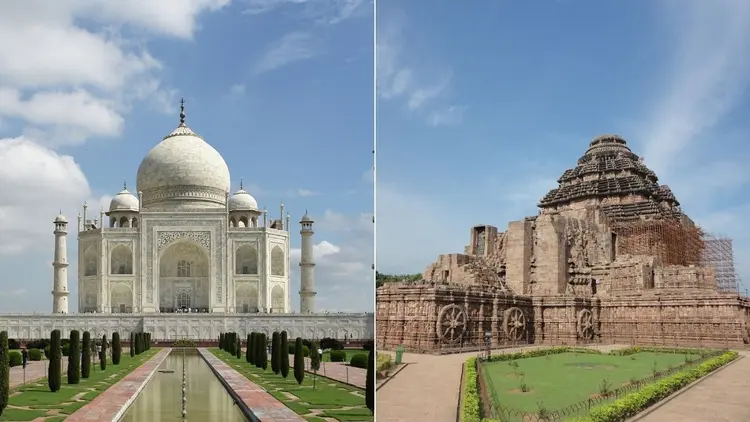
India has 45 places on UNESCO’s World Heritage List, more than almost any other country, and they range from marble tombs to rhino-filled floodplains. Some are famous enough to need no introduction; others, like a temple built as a stone chariot or a city abandoned barely 15 years after it was finished, are stranger than any postcard suggests. These 10 UNESCO World Heritage Sites in India are a good place to start.
1. Taj Mahal
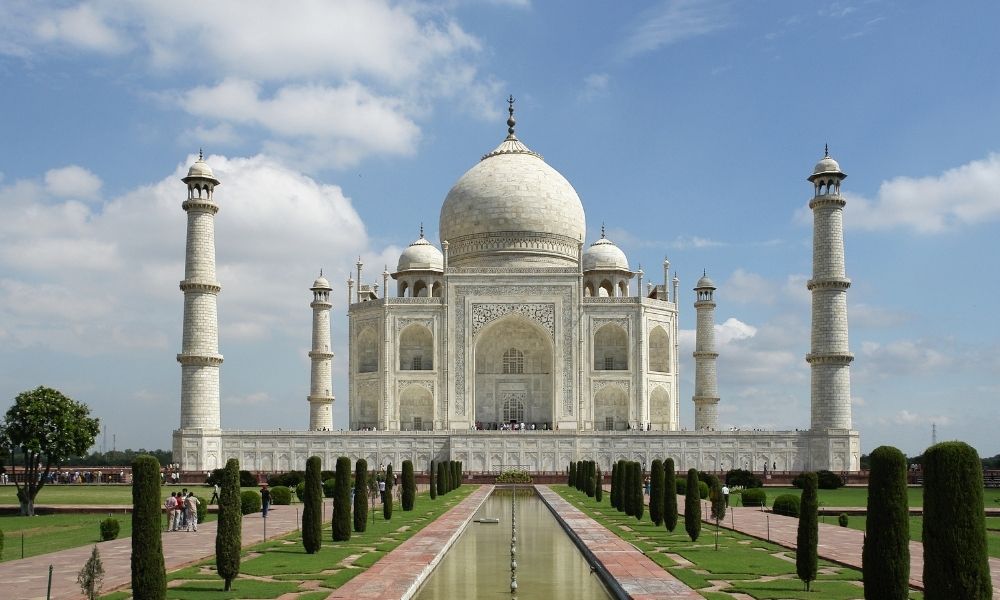
The Taj Mahal in Agra is a tomb, and a love story carved in stone. When the Mughal emperor Shah Jahan lost his wife Mumtaz Mahal, he commissioned a mausoleum that would keep her memory alive. Work began in 1632. The mausoleum itself was finished in 1648, and the gardens and surrounding buildings took about five more years.
The main tomb is white marble inlaid with 28 kinds of semi-precious stones, in designs of vines, flowers and fruit. Its style blends Persian, Islamic and Indian traditions. Four minarets, each over 40 m tall, stand at the corners and lean slightly outward, so that if one ever fell, it would fall away from the tomb.
Go at sunrise. The crowds are thinner and the early light turns the marble soft and pink.
The complex is closed on Fridays, and a limited night viewing is offered on full moon nights.
2. Jaipur
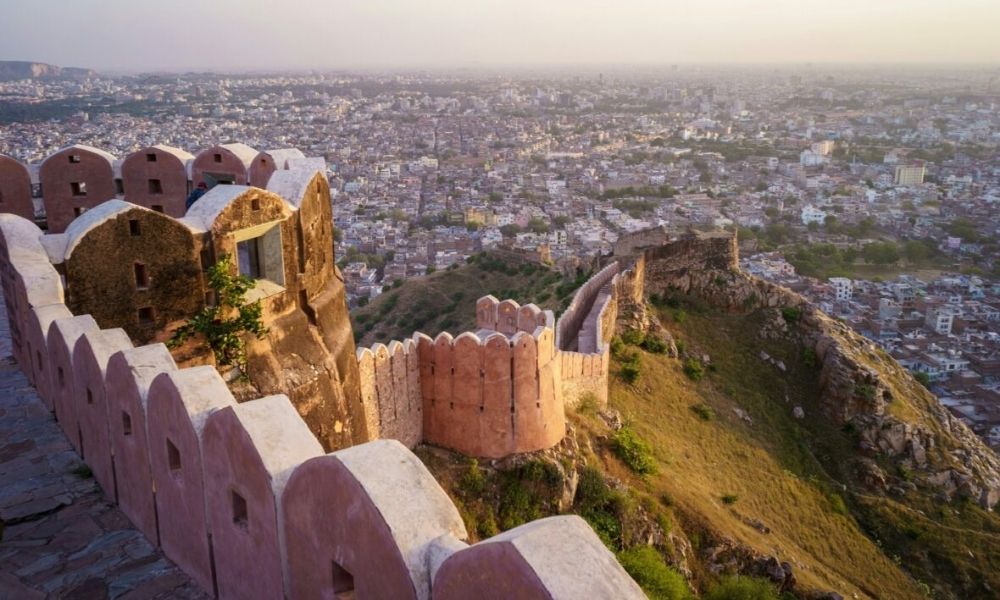
Founded in 1727 on a grid plan, Jaipur is one of the earliest planned cities of modern India. Its nickname, the Pink City, dates to 1876, when buildings were painted pink to welcome Albert Edward, Prince of Wales. People liked the look. It stuck.
The walled old city is on the UNESCO list in its own right, and two more listed sites sit close by. Amber Fort (Amer Fort), on a hilltop just outside town, is part of the Hill Forts of Rajasthan listing and mixes Rajput and Mughal styles. Its Mirror Palace (Sheesh Mahal) is lined with tiny mirrors that multiply even a single flame.
In the city, the pink Hawa Mahal (Palace of the Winds) has 953 small windows, built so royal women could watch street life without being seen. Jantar Mantar, the second of those listed sites, is an open-air observatory from the 1720s and 1730s and holds the world’s largest stone sundial, said to tell local time to within about two seconds.
Then there are the markets. Johari Bazaar and Bapu Bazaar are crammed with textiles, handmade jewelry and Rajasthani crafts. Bargaining is normal here, so treat the first price as an opening offer.
3. Khajuraho temples
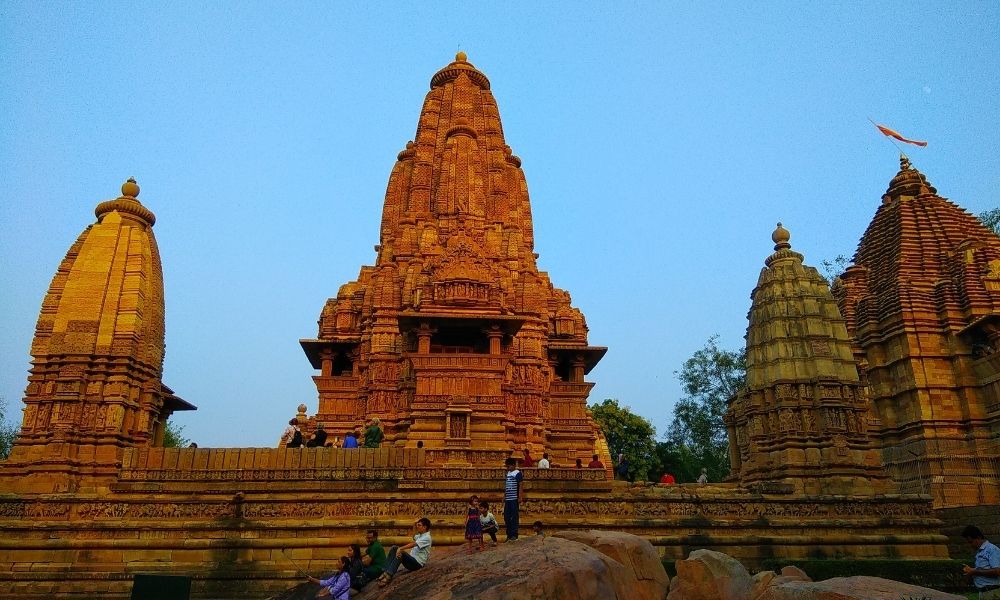
The Khajuraho temples in Madhya Pradesh were mostly built between the late 9th and 11th centuries under the Chandela dynasty. Records from the 12th century mention 85 temples. About 25 survive.
You may have heard of Khajuraho’s erotic carvings. They exist. But they make up only around a tenth of the sculpture. The rest is everyday life: musicians, potters, farmers, women putting on makeup, plus gods, myths and celestial dancers. Taken together, the walls read less like a scandal and more like a catalog of being human.
4. Konark Sun Temple
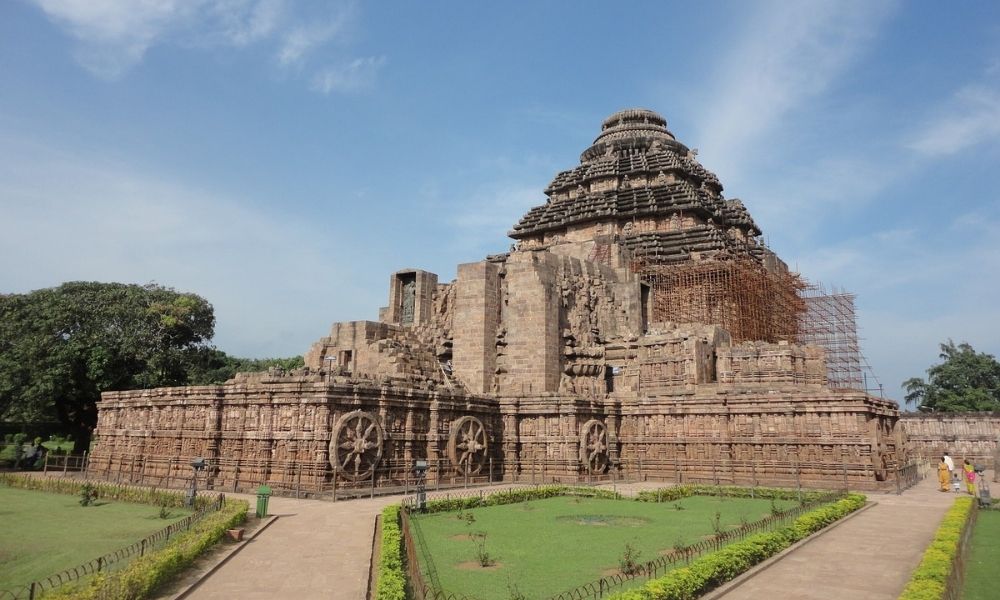
Built around 1250 under King Narasingha Deva I, the Konark Sun Temple in Odisha is dedicated to Surya, the Hindu sun god. The whole building is designed as his chariot: 24 carved stone wheels, pulled by seven horses. The wheels aren’t just decoration. They work as sundials. Precise ones, too.
The temple’s main tower collapsed in 1837, so the sanctum is now open to the sky, but what remains, especially the great assembly hall, is still enough to show how far 13th-century engineering and sculpture had come.
5. Ajanta and Ellora Caves
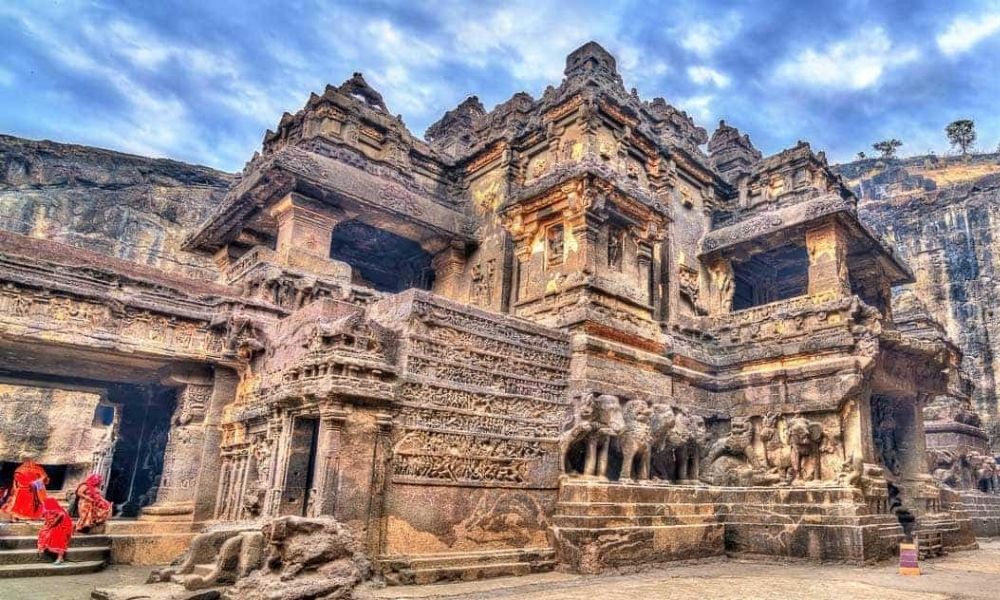
The Ajanta and Ellora Caves in Maharashtra are two separate UNESCO sites about 100 km apart, usually visited on the same trip.
They were carved in different eras.
Ajanta (2nd century BCE to around 480 CE): about 30 Buddhist caves, cut into a horseshoe-shaped cliff. Their wall paintings, mostly stories of the Buddha’s previous lives, are among the largest surviving collections of ancient Indian painting, and color still clings to them in places.
Ellora (roughly 600 to 1000 CE): more than 100 caves, 34 of them open to visitors, shared among Hindu, Buddhist and Jain traditions. The star is the Kailasa Temple, carved downward from a single mass of rock. It’s often called the largest monolithic rock excavation in the world, which means nobody built it. They removed everything that wasn’t temple.
6. Hampi
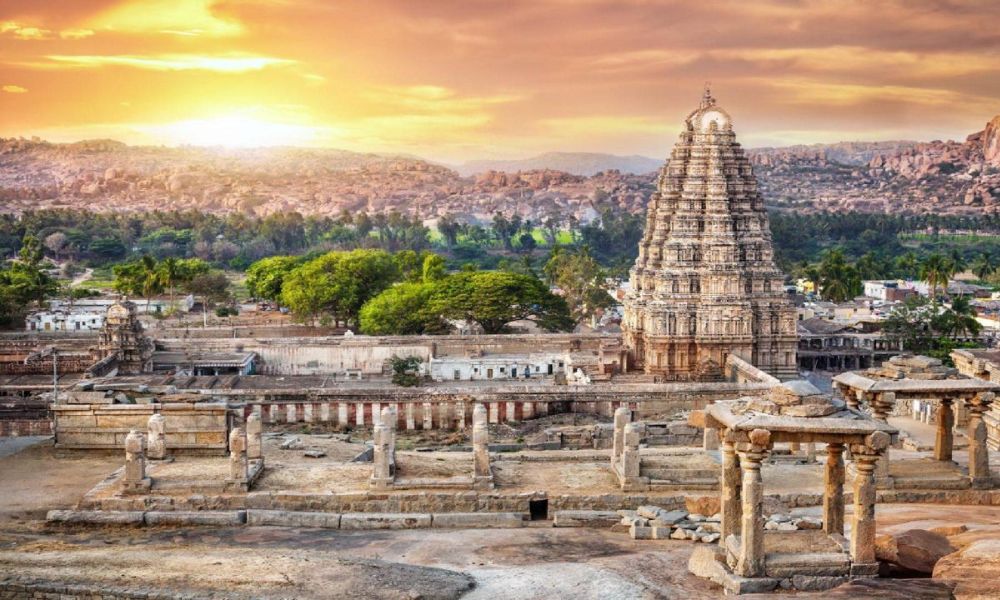
Hampi, in Karnataka, was the capital of the Vijayanagara Empire, and around 1500 it may have been the second-largest city in the world after Beijing. Today the ruins spread over roughly 4,100 hectares.
What makes Hampi special is scale: more than 1,600 surviving remains, not one famous building. The Virupaksha Temple, the oldest shrine, is still a working place of worship. At the Vittala Temple, carved stone beams ring with musical notes when tapped, and a stone chariot shrine in the courtyard has become the symbol of Hampi. In the royal center you’ll find elephant stables with 11 domed chambers and a stepped tank fed by an aqueduct.
The setting is half the appeal. Huge granite boulders are piled across the hills, and the Tungabhadra River still runs past the ruins.
The river’s old name, Pampa, gave Hampi its name.
7. Fatehpur Sikri
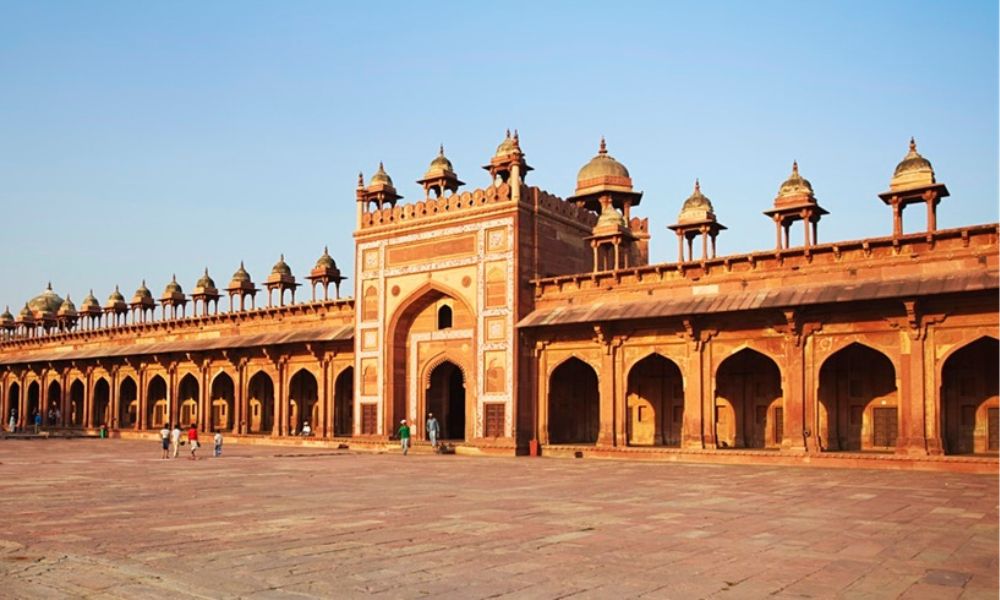
Picture a capital built from scratch, then left behind within a generation. That’s Fatehpur Sikri, near Agra.
Emperor Akbar founded it in 1571 as the Mughal capital. It held that role only until 1585, when he left to campaign in Punjab, and by 1610 it was completely abandoned. Why walk away from a brand-new capital? The usual explanation is a failing water supply. The real story is probably messier, and Akbar’s own shifting interests likely played a part.
What he left behind is a remarkably intact ghost city.
Almost everything is red sandstone. The Jama Masjid, the city’s great congregational mosque, was completed around 1571 to 1572. About five years later came the Buland Darwaza, a towering gateway usually given as 54 m (177 ft) high.
The five-story Panch Mahal is the most playful building here. Each floor is smaller than the one below, the pavilions are open to the breeze and the pierced stone screens suggest it was used by the women of the court.
8. Kaziranga National Park
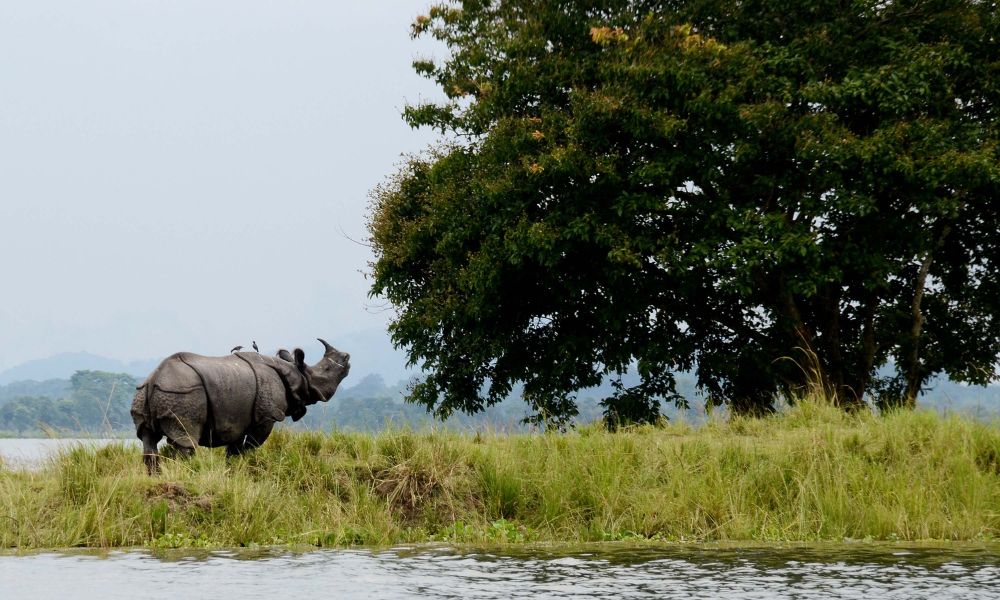
Not every UNESCO World Heritage Site in India is a monument. Kaziranga National Park in Assam, on the floodplains of the Brahmaputra River, is one of the country’s most important wildlife reserves.
The park covers about 1,090 km² and is home to the world’s largest population of Indian rhinoceros, with 2,401 counted in its last census. Rhinos aren’t the only draw. Bengal tigers, Asian elephants, wild water buffalo and swamp deer live here too, and about 57% of the world’s wild water buffalo are found in the park.
Grasslands, wetlands and forest overlap, which makes it a magnet for birds: pelicans, storks and the black-bellied tern among them. Many storks fly in from Central Asia for the winter.
Hiking is not allowed. Visits are by jeep or elephant safari. The park closes during the monsoon and typically reopens in October, so plan for the drier months.
9. Mahabalipuram
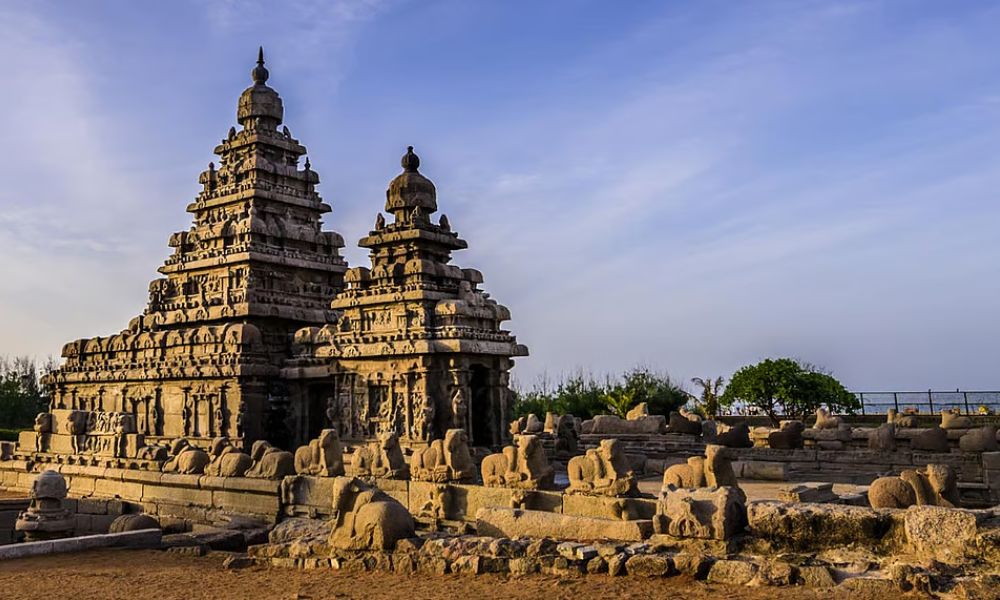
Mahabalipuram (also called Mamallapuram) is a seaside heritage site in Tamil Nadu. Its monuments were created in the 7th and 8th centuries under the Pallava dynasty. Much of it, like Ellora’s Kailasa Temple, is cut straight from the rock rather than built. The Five Rathas (Pancha Rathas) are five monolithic shrines carved from granite outcrops near the beach, each in a different temple style. The Shore Temple, facing the Bay of Bengal, is among the oldest built stone temples in South India.
Arjuna’s Penance, also called the Descent of the Ganges, is one of the largest open-air rock reliefs in the world, packed with gods, animals and scenes from Hindu mythology. Close by, Krishna’s Butterball, a huge boulder balanced on a slope, looks as if it’s about to roll away at any moment. It hasn’t yet.
10. Western Ghats
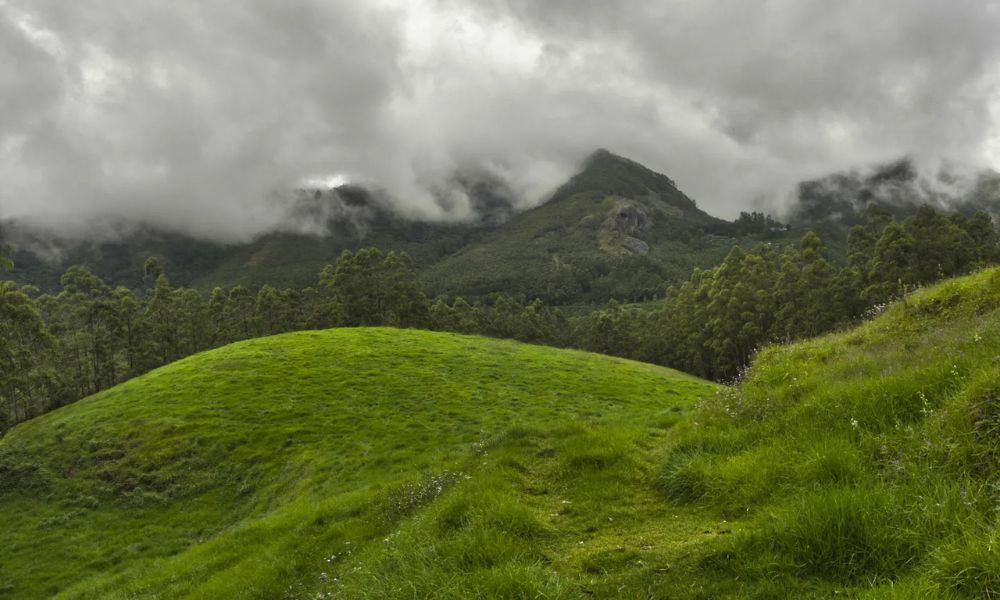
The Western Ghats, a mountain range running down India’s west coast, made the UNESCO list in 2012, and they’re recognized as one of the world’s major biodiversity hotspots.
The range covers about 160,000 km². It shapes India’s climate, ecology and water supply. Big rivers such as the Godavari, Krishna and Kaveri rise here. So do rare species, including the lion-tailed macaque, the Nilgiri tahr and the Malabar large-spotted civet.
The UNESCO listing protects 39 separate sites across four states. Around them, the mountains also hold popular hill stations such as Munnar, Ooty and Mahabaleshwar, along with tea estates and trekking routes, so the Ghats work for wildlife lovers and slow travelers alike.
Sources: Wikipedia: List of World Heritage Sites in India, Wikipedia: Hampi, ThePrint: Kaziranga reopens for tourists after annual monsoon closure

Bir yanıt yazın