
Snake Island, Brazil: 9 Facts About Queimada Grande


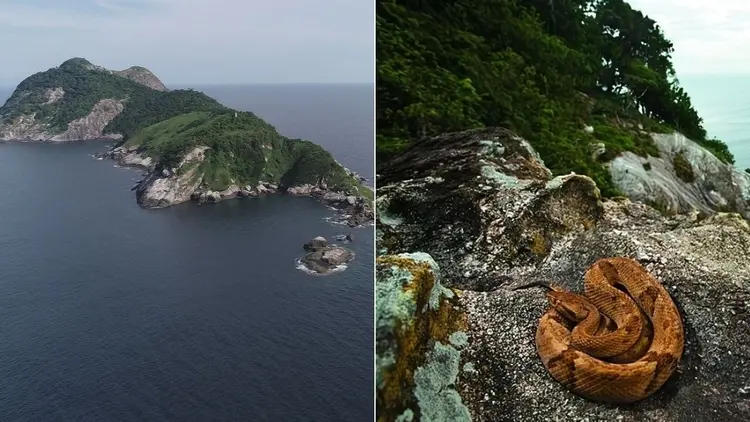
Off the southeastern coast of Brazil, in the open Atlantic, lies a small island ruled not by tropical birds but by a quiet, venomous hunter. Ilha da Queimada Grande, better known as Snake Island, Brazil, is the only place on Earth where the golden lancehead, a critically endangered pit viper, lives in the wild. The Brazilian government keeps it closed to the public, which has only made its reputation grow.
1. Snake Island, Brazil: a place few people will ever see
Brazil usually brings to mind carnival, samba, beaches and the Amazon. Snake Island does not. It is the country’s other, far less inviting postcard: a rocky patch of forest that most people only know from documentaries and internet lists of the world’s most dangerous places.
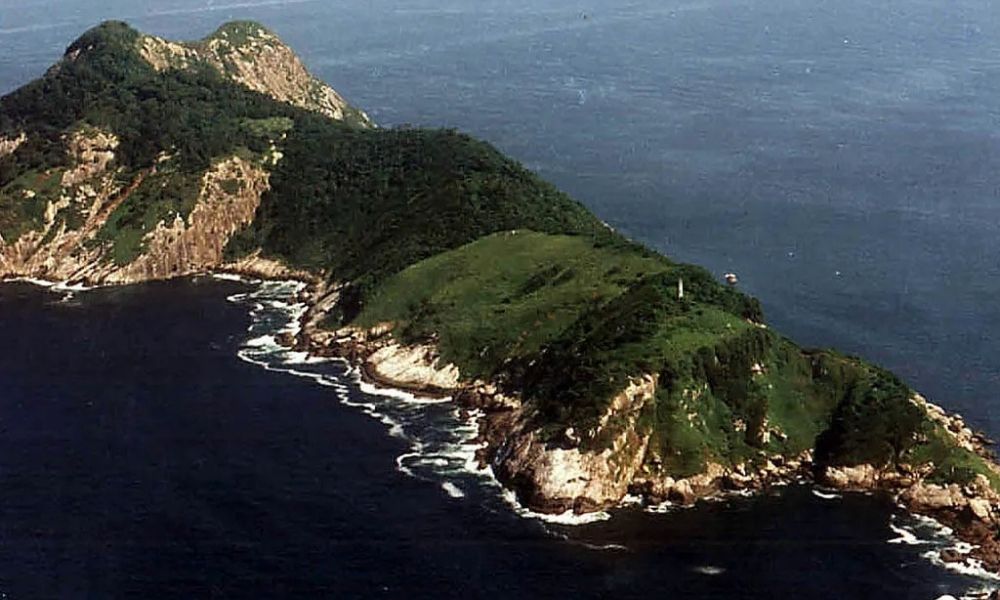
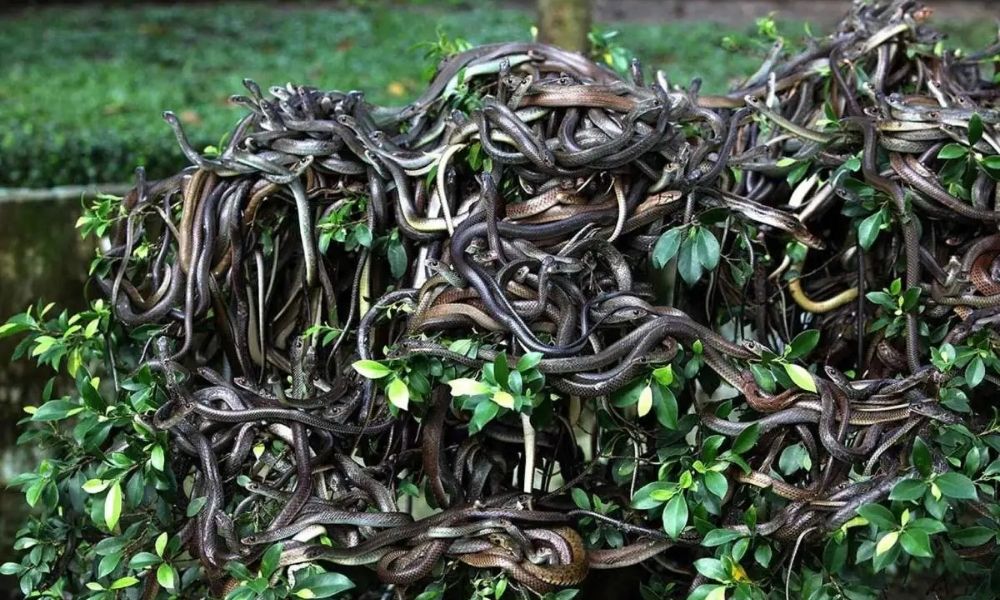
Its fame rests on two things. One is the sheer number of snakes for such a small space; the other is the fact that one of the most venomous snakes in Latin America lives here and nowhere else.
2. Where is Snake Island?
It is small. Covering about 43 hectares (106 acres) and sitting roughly 33 km (21 miles) off the mainland coast, the island belongs to the state of São Paulo and is administered as part of the municipality of Itanhaém.
The name is not about snakes. In Portuguese, “queimada” refers to burning: people once set fires to clear land for a banana plantation, which left parts of the island bare.
The plantation never became the island’s future.
3. Why is the island famous?
In two words: the golden lancehead (Bothrops insularis).
The species is endemic to Queimada Grande. Adults usually measure 70 to 90 cm (28 to 35 in). Not a big snake. Its venom is another matter. Studies suggest it is about five times as potent as that of its mainland relative, the jararaca, and it is described as the fastest-acting venom in the lancehead genus. Reported effects of lancehead bites include severe swelling, internal bleeding, kidney failure and muscle necrosis.
The snakes are built for their island. Their main food is birds, so the venom has to stop a bitten bird before it can fly away.
4. How many snakes live on Snake Island?
This is where legend and science part ways.
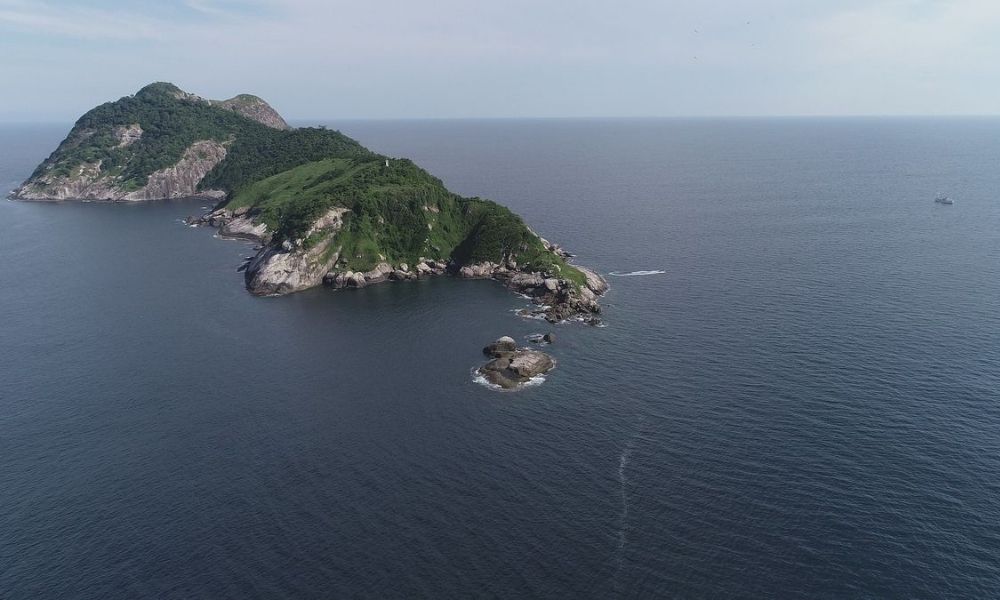
The legend says there is a snake in every square meter. Older estimates went as high as 430,000 snakes. The science is more modest. The first systematic study, published in 2008, put the population at 2,000 to 4,000, and a 2021 estimate based on 2015 surveys came in at roughly 2,400 to 2,900. On 43 hectares, 2,000 to 4,000 snakes works out to about one snake for every 100 to 215 square meters. Far from a snake per step. Still, not a place for a long walk.
5. The lighthouse keeper story
For decades, the island has been linked to one grim tale in particular, involving its old lighthouse, built in 1909.
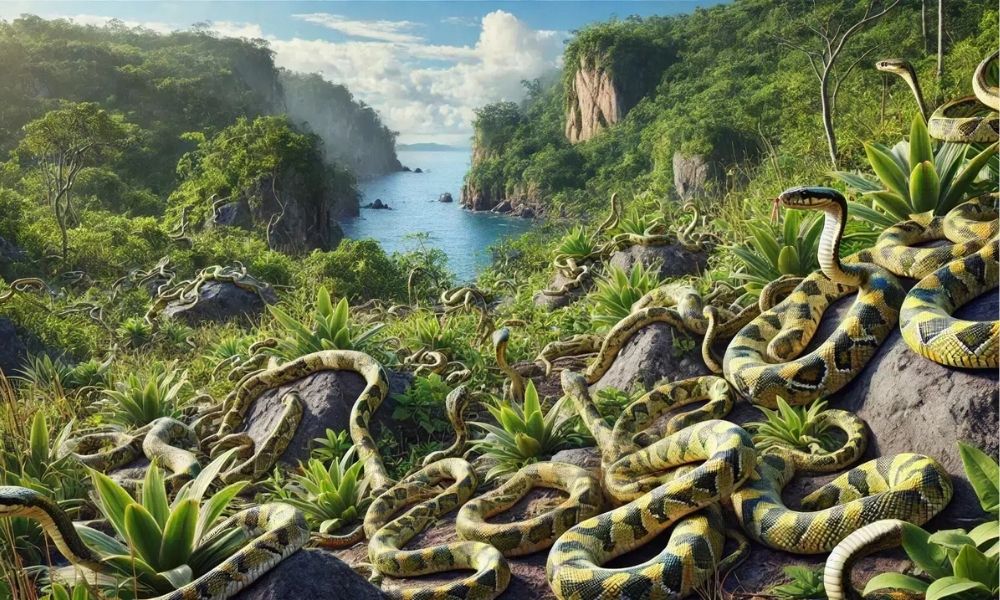
According to the story, the last keeper and his family were living at the lighthouse when snakes came in through an open window and killed them. Versions differ on the details. None of them has any historical record behind it, and the tale is most likely a legend, one that fits the island’s forbidden image a little too neatly. The lighthouse was automated in the 1920s. Nobody has lived there since.
Biologists who work there describe golden lanceheads as non-aggressive, and the snakes tend not to react when people approach, because their real targets are birds. Harmless, though, they are not: a cornered snake will still defend itself.
6. Why do they live only here?
At the end of the last ice age, around 11,000 years ago, rising seas cut Queimada Grande off from the mainland. The lanceheads living there at the time were stranded. They evolved on their own.
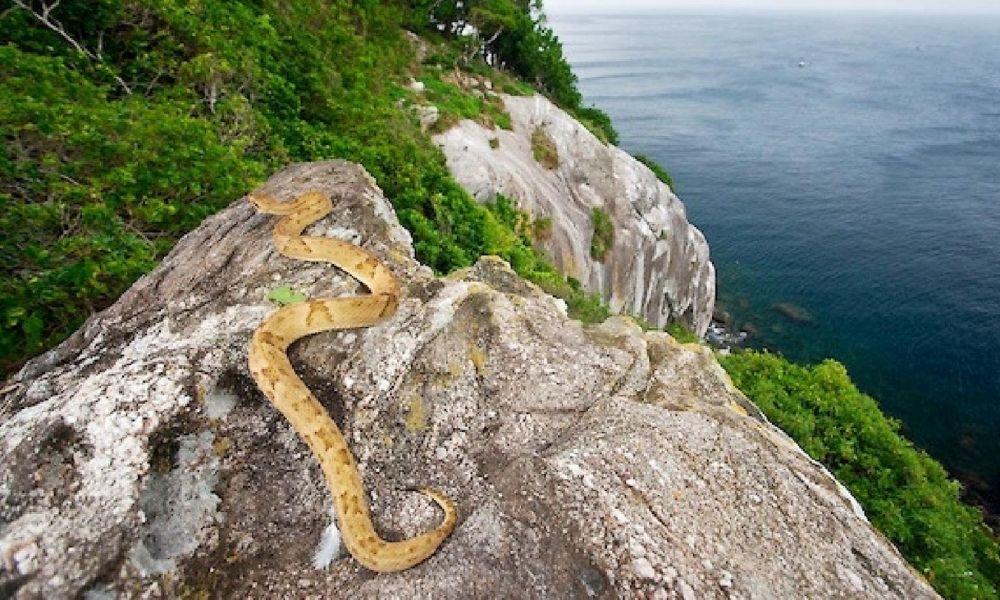
Isolation changed them, and not in the direction a horror film would choose. Compared with their mainland cousins, they became smaller, but their venom turned faster and more potent, an advantage for a snake whose prey can escape into the air.
7. What do the snakes eat?
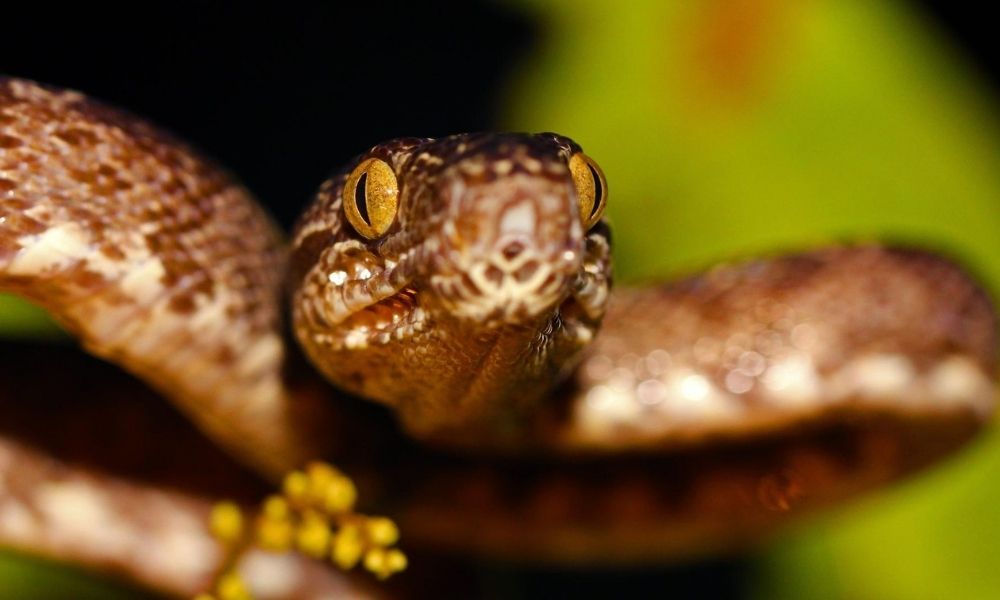
Adults depend mainly on birds. Researchers have recorded more than 40 bird species on the island, yet the snakes rely on just one or two of them in a given year. Young snakes feed mostly on invertebrates, and adults also take lizards.
Two migrants matter most:
- The Chilean elaenia, which stops over in spring
- The yellow-legged thrush, an autumn visitor
Then there are the two resident birds, the southern house wren and the bananaquit, which somehow share the island with thousands of vipers all year round.
8. Is the snake population shrinking?
Those early estimates of hundreds of thousands? Simply too high. An island this small could never have fed that many snakes.
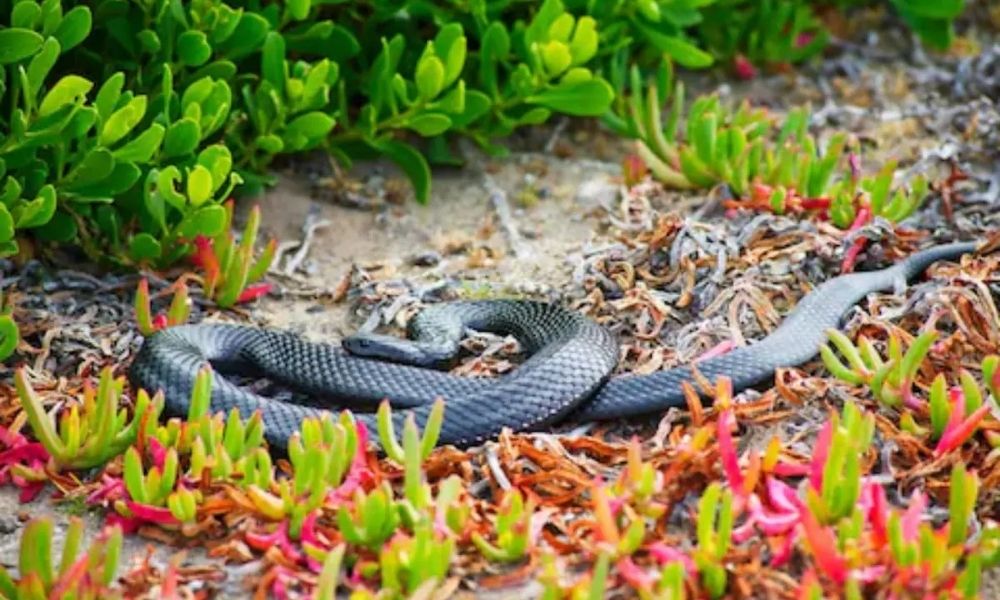
The real population faces several threats:
- Poaching for the illegal wildlife trade: in 2008, researchers were offered up to $30,000 for a single specimen
- Fewer visiting birds, a decline linked to deforestation on the mainland. For a snake that leans on one or two migrant species a year, that is a thin margin
- A tiny habitat and inbreeding
The IUCN lists the golden lancehead as Critically Endangered. That is the official verdict, and it leaves little room for argument.
9. Can you visit Snake Island?
No. The island is closed to the public, both to protect people and to protect the snakes. Only the Brazilian Navy, which maintains the lighthouse, and researchers vetted by the Chico Mendes Institute for Biodiversity Conservation (ICMBio) are allowed to land.
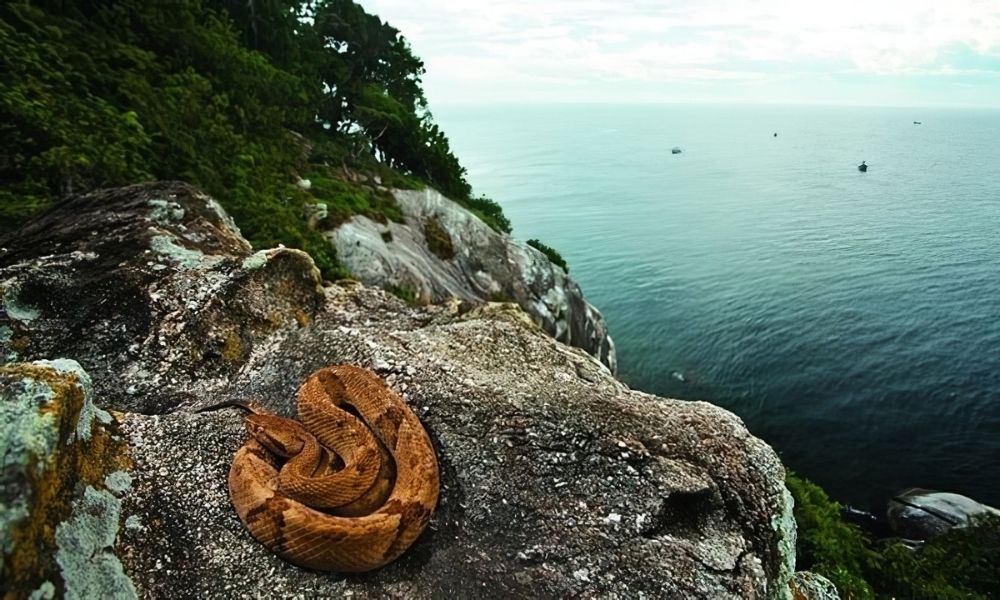
The island and its neighbor, Queimada Pequena, are also protected as an Area of Relevant Ecological Interest, created in 1985. Anyone trying to land without permission would face the law. And the snakes.
Sources: Wikipedia, Ilha da Queimada Grande, Wikipedia, Bothrops insularis, BBC Wildlife (Discover Wildlife), Snake Island Brazil








Bir yanıt yazın