
11 Black Sea Highlands in Türkiye Above the Clouds


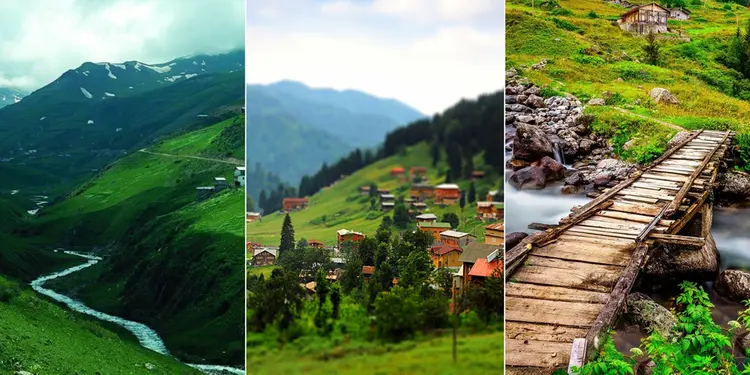
Along Türkiye’s northeastern coast, forested mountains climb straight out of the sea, and above the tree line sit the Black Sea highlands: summer pastures the locals call yayla, where cows graze, fog rolls through and the air stays cool in August. They’re the region’s answer to anyone who wants a summer escape that isn’t a beach. These 11 run from the Kaçkar Mountains of Rize west to Ordu.
1. Ayder Plateau, Rize: the Black Sea highlands classic

Ask anyone in Türkiye to name a yayla and Ayder usually comes first. It sits at about 1,350 meters in the Çamlıhemşin district of Rize province, roughly 88 km from the city of Rize and 17 km from Çamlıhemşin town, with dense forest all around and the Kaçkar Mountains rising behind it. The government declared it a tourism center in 1987, and it now draws both Turkish and international visitors. Summer weekends can get busy. Hot springs here were recorded in official papers as far back as 1871. Bungalows, hotels and guesthouses cover every budget.
2. Elevit Plateau, Rize

Higher and quieter. Elevit also belongs to Çamlıhemşin, but it sits in the Çat Valley at the foot of the Kaçkar range, at around 1,800 meters. Hundreds of kinds of wildflowers cover the slopes in summer, and a cold stream runs right through the settlement. There are bungalows and small hotels. Camping works too.
3. Anzer Plateau, Rize

Anzer is famous for one thing above all: Anzer honey, a rare, expensive honey made from the area’s endemic mountain flowers.
The plateau lies about 35 km southwest of İkizdere, in Rize province, and was declared a tourism center in 1991. Peaks here top 3,000 meters. The forests reach up to about 2,000 meters, and the meadows change color from one season to the next as different flowers bloom. Beyond the views and the honey, it’s a base for summit climbs, trekking and paragliding, and an Anzer Honey and Plateau Festival takes place in early August.
4. Pokut Plateau, Rize

Pokut is the postcard. At 2,032 meters, between the Fırtına and Hala valleys south of Çamlıhemşin, it’s a cluster of traditional Black Sea wooden houses that spend much of the day wrapped in fog. The surrounding forest and wildlife are part of the draw.
Getting there takes patience: it’s about 15 km from Çamlıhemşin, but the trip usually takes 1.5 to 2 hours. Visitors who want to stay can choose between bungalows and stone or wooden houses.
5. Karagöl Plateau, Artvin

What sets Karagöl apart is its lake. About 25 to 27 km from Borçka in Artvin province, a landslide blocked the valley and the water backed up into Karagöl (“black lake”), which now sits at around 1,480 meters inside a nature park. A wooden walkway runs around the shore. There are hotels in the area, and camping is allowed for those who prefer a tent. The forest is home to plenty of animals, which is why wildlife photographers come here too, while everyone else settles for a walk or a picnic in the clean air.
6. Gito Plateau, Rize

Gito is another Çamlıhemşin plateau, about 30 km from the district center at roughly 2,070 meters. Up here it’s green below and blue above. The view seems to go on forever.
On the road up the Fırtına Valley, it’s worth stopping at Zil Castle (Zilkale), a medieval fortress perched on a cliff about 380 meters above the Fırtına River, at around 1,130 meters above sea level.
7. Sis Dağı Plateau, Giresun

The name says it all: sis means “fog.” This plateau spreads across a wide area of Mount Sis (also called Ali Meydan), which rises to about 2,182 meters, roughly 40 km inland from the coast at Görele in Giresun province. Clouds of mist wrap the slopes much of the time, and patches of snow can linger into early July. A clear view of the summit is something of a lucky draw. Visitors stay in places near the mountain or pitch a tent on the plateau itself.
8. İkizdere Plateau, Rize

İkizdere means “twin streams,” and the name fits. The highlands here, on the slopes of the Kaçkar Mountains, are known for their rushing creeks, and the sound of water follows you almost everywhere. It’s a good choice for an unusual nature break rather than a packaged resort stay. Is the mountain air really richer in oxygen, as people often claim? Cleaner, yes. Richer, no: at altitude there’s actually less oxygen per breath, so take the first uphill walk slowly.
9. Kiraz Plateau, Trabzon

Big, open and festive. Kiraz covers about 35 square kilometers at roughly 1,850 meters, around 18 km from the Maçka district of Trabzon province. Accommodation is limited, so sort out a bed before setting off, not after arriving. Grass skiing is one of the activities on offer.
Every year on the third Friday of July the plateau hosts the Ayeser Festival, a summer gathering of the local highland communities.
10. Perşembe Plateau, Ordu

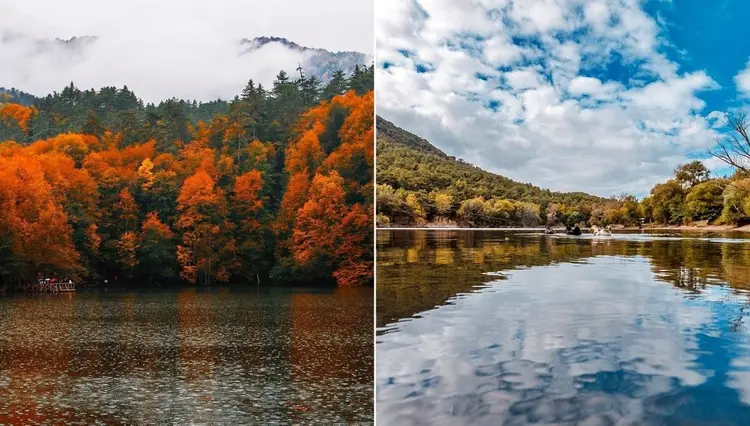
Perşembe, about 18 km from the Aybastı district of Ordu province, combines meadows with a pine-fringed lake, and that lake is the difference: compared with the fog-bound wooden hamlets of Rize, this is a plateau for doing things. Its exact elevation is hard to pin down: sources put it anywhere between about 1,350 and 1,500 meters. Paragliding, safari tours and camping are all possible, canoeing and sailing take place on the lake, and July brings a run of summer events. For a bed, there are guesthouses on the plateau and hotels around Aybastı.
11. Sultan Murat Plateau, Trabzon

This one comes with history. The plateau lies about 17 km southwest of Çaykara, in Trabzon province, at around 2,000 meters, and it takes its name from the Ottoman sultan Murad IV, who camped here with his army in 1635 on the way back from a campaign in Iran. During World War I, Ottoman troops fought Russian forces on these slopes, and a hill called Şehitler Tepesi (Martyrs’ Hill) holds the graves of the soldiers who fell, along with the remains of wartime trenches.
It’s a place to enjoy the scenery and pause at the graves on Martyrs’ Hill in the same visit.
Sources: Wikipedia: Ayder, Wikipedia: Zilkale, Wikipedia: Sultan Murat Yaylası (in Turkish), Ministry of Culture and Tourism: Ordu Highlands

Bir yanıt yazın