
9 Things Not to Do in Other Countries


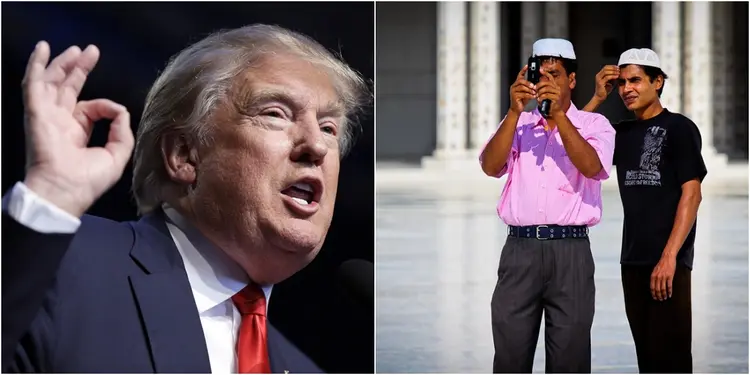
A tip left on the table, a friendly open palm, a quick nod: habits that feel polite at home can land very differently a few borders away. Most of the things not to do in other countries are small gestures nobody thinks twice about until a local’s expression changes. Here are nine of them, plus one hand sign that causes trouble in more places than you’d guess.
1. Tipping in Japan

Tipping is generally not practiced in Japan. Service charges are usually already built into hotel and restaurant bills, and like many people in East Asia, Japanese diners and staff can see a cash tip as insulting rather than generous. Good service is simply the job.
A sincere thank-you on the way out does the work a tip would do elsewhere.
2. Splitting the bill in France

Picture the end of a long dinner in Paris, and someone pulls out a phone to work out who had the extra glass of wine. Many French diners would rather skip that scene. Talking about money at the table tends to be seen as a little crass, so a drawn-out, line-by-line debate over the check rarely goes down well, and one person paying while the others cover the next meal is a common way around it. With a big group, though? Dividing the bill is perfectly normal.
3. Showing an open palm in Greece

Waving alone is fine. The real trap is the moutza, one of the oldest insults in Greece: an open hand with the fingers spread, palm pushed toward someone’s face, and the closer it gets to the face, the stronger the insult. Some innocent moves turn risky. Holding up a flat palm to say “stop” is one, and spreading five fingers to order five of something is another. Greeks themselves tend to avoid showing the number five palm out for exactly this reason.
4. Touching someone of the opposite sex in India

Physical contact between men and women in public is more restrained in much of India than in many Western countries, especially outside the big cities. A hand on the shoulder or a hug from someone just met can make people uncomfortable. India is huge, though, and there is no single rule that holds from one city or community to the next. The safe default: a namaste. Press the palms together, and save the handshake for when the other person offers one first.
5. Photographing people without permission in the UAE
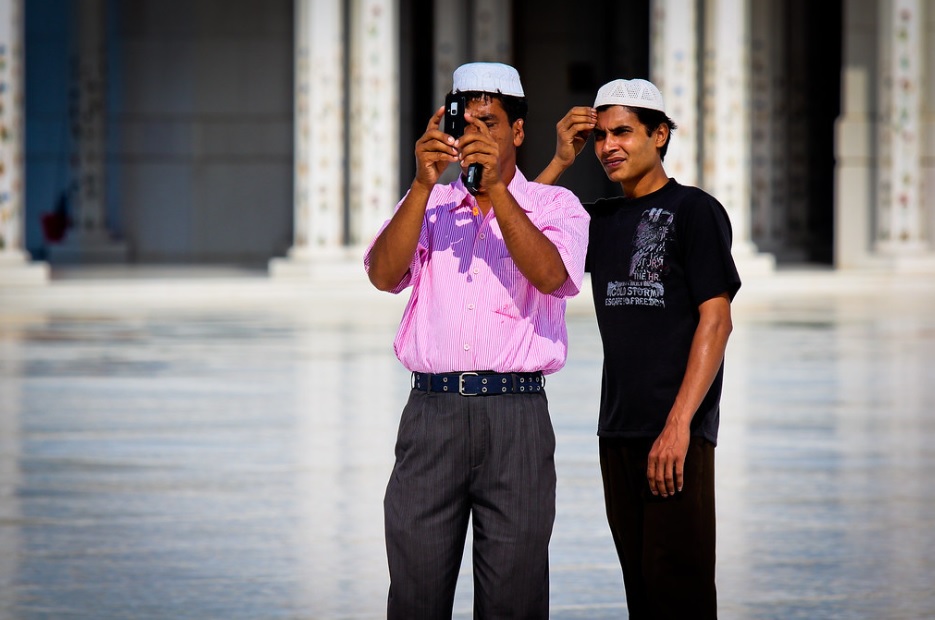
A moutza in Greece costs you goodwill. A careless photo in the United Arab Emirates can cost you far more, because here the problem is legal, not social. Under the UAE’s cybercrime law, in force since January 2, 2022, taking photos of people without their consent and sharing them online can be punished with six months in prison, a fine of AED 150,000 to 500,000 (approx. $41,000 to $136,000), or both. That applies to friends who never agreed to be posted and to strangers who wandered into the frame while you were shooting the skyline.
Check the background before you share.
6. Cutting in line in Australia

Queues are close to sacred in Australia, and in the UK too. Jump one and expect cold stares at best.
7. Walking in the bike lane in the Netherlands

Bicycles rule the streets in the Netherlands, and the bike lanes are built for traffic, not strolling. Step into one and you’ll likely hear a bell before you see the rider. Pedestrians belong on the sidewalk.
8. Nodding your head in Bulgaria and Albania

In most of the world, nodding means yes. Not everywhere. In Bulgaria, an upward tilt of the head means no, and the head movements for yes and no are often described as reversed compared with most of Europe; Albania is regularly mentioned alongside it, and the upward “no” nod turns up in Greece and Türkiye as well. A simple yes-or-no question can go sideways fast. When in doubt, say the word out loud.
9. Feeding birds in Singapore

Scattering crumbs for the pigeons looks harmless. In Singapore, feeding wildlife, pigeons included, without approval from the National Parks Board (NParks) is an offense under the Wildlife Act, courts have fined repeat pigeon feeders several thousand Singapore dollars, and in 2026 Parliament moved to double the maximum fines.
Chewing gum has a legendary reputation here too, but the rule is narrower than the legend. Chewing it isn’t illegal. Importing and selling it is, with exceptions for therapeutic and nicotine gum, and spitting gum out in the wrong place can earn a fine.
Bonus: Making the OK sign in Türkiye, Brazil and parts of Germany

In many countries, a circle made with the thumb and index finger means “okay” or “great.” In Türkiye it is considered very insulting, and it can carry a vulgar meaning in Brazil and parts of Germany as well. Brazil even has a famous cautionary tale: Richard Nixon, then US vice president, reportedly flashed the sign to a crowd on a 1950s visit and got a hostile reaction instead of cheers.
The same shape can mean money in Japan, so one small circle covers a lot of ground. Same fix as with the nod in Bulgaria: words are the safer choice.
Sources: Wikipedia, Moutza, Khaleej Times, New UAE cybercrime law: Up to Dh500,000 fine for taking photos of people without consent, Mothership, Illegal wildlife feeders can face doubled fines, Wikipedia, Chewing gum sales ban in Singapore, Wikipedia, OK gesture




















Bir yanıt yazın