
8 Enchanted Forests in Europe Worth Seeing


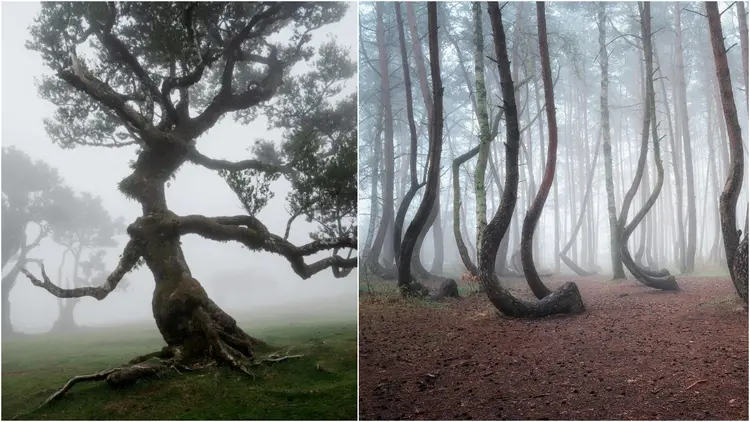
Europe is famous for old cities and Gothic cathedrals, but some of its most memorable scenery grows wild: twisted trunks in the fog, carpets of blue flowers, dark paths wrapped in ghost stories. These enchanted forests in Europe look as if they slipped out of a fantasy novel, and several come with legends to match. If you have ever wondered what it would feel like to walk into a Grimm fairy tale or an Arthurian romance, start here.
1. Black Forest (Germany)
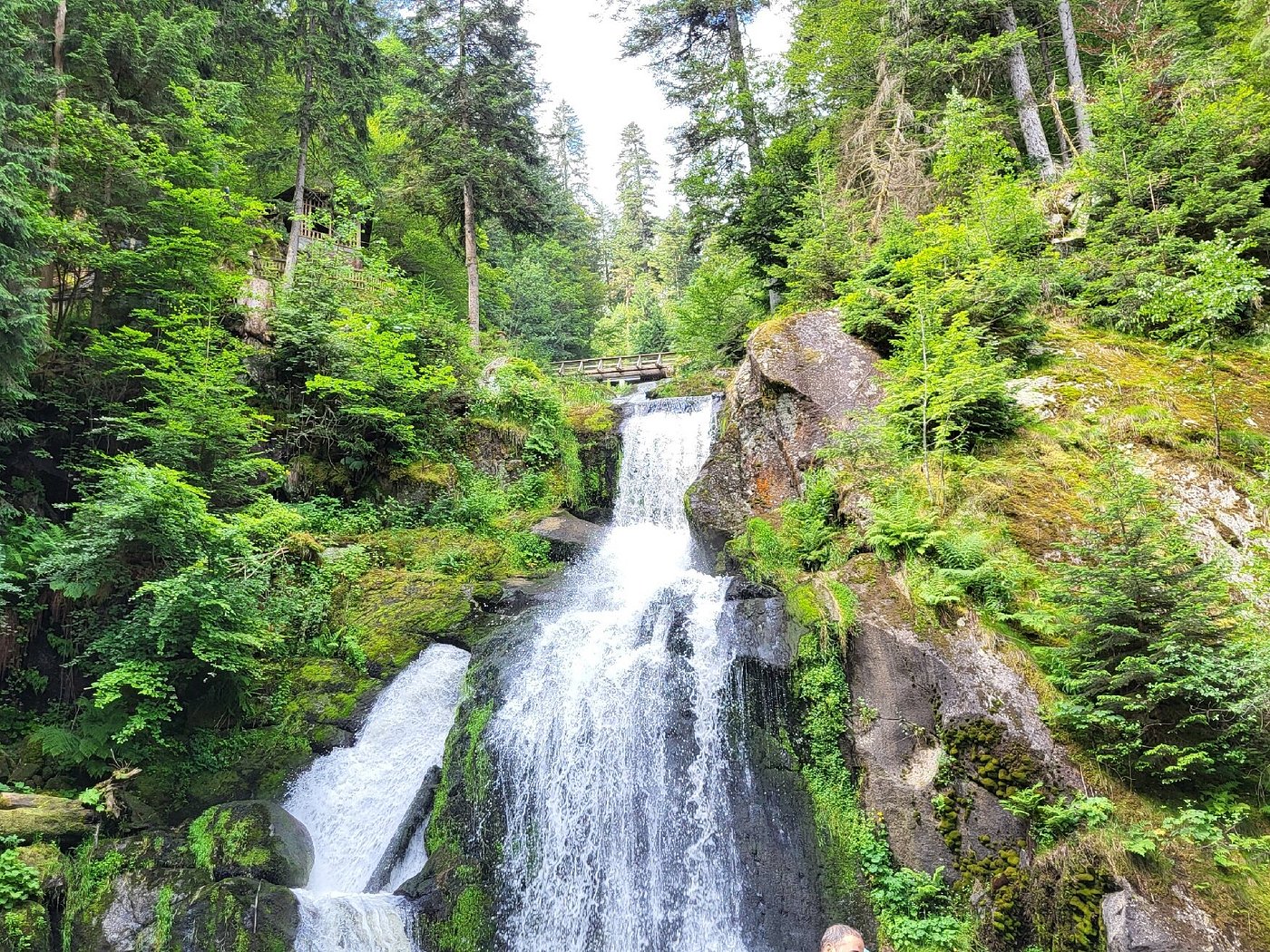
The Black Forest, Schwarzwald in German, covers a mountain range in the state of Baden-Württemberg in southwestern Germany, close to the French and Swiss borders. It is the forest most people picture when fairy tales like Hansel and Gretel come up. The link has stuck, though it owes more to popular lore than to any written record. With dense stands of spruce and fir, misty trails, lakes such as Titisee and Schluchsee, and the Triberg Waterfalls all in one range, it is easy to see where the brooding mood comes from.
When sunlight filters through the trees, the whole scene feels like the opening page of a storybook.
2. Fanal (Madeira, Portugal)
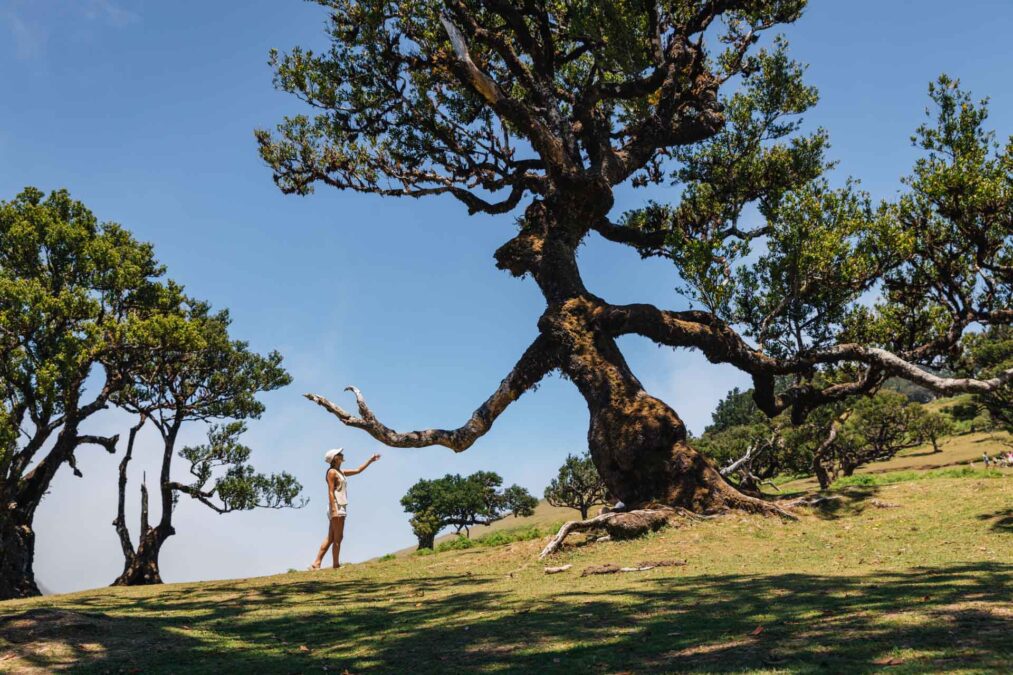
On a foggy day, Fanal looks like a doorway to another dimension. This patch of laurel forest in the municipality of Porto Moniz, on the Portuguese island of Madeira, is known for its til trees (Ocotea foetens), a native member of the laurel family. Many of them are centuries old, with gnarled trunks and branches that stretch sideways rather than up.
Then the fog rolls in.
Visibility drops. The tree silhouettes start to look like giants frozen mid-step, eerie and beautiful at once. That mood is exactly why photographers and nature lovers keep coming back.
3. Crooked Forest (Poland)
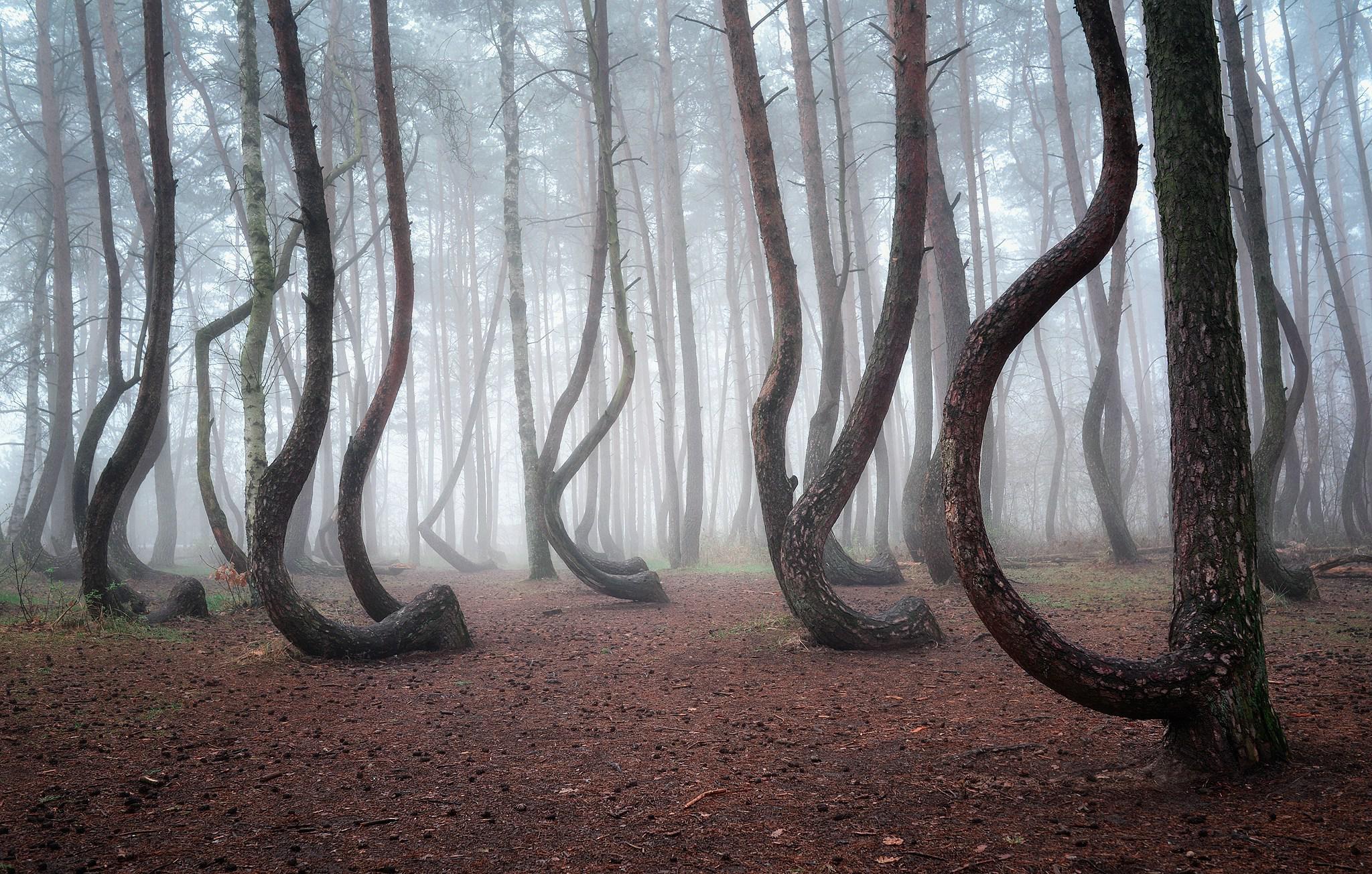
Near the village of Nowe Czarnowo in northwestern Poland, about 400 Scots pines grow in a way that seems to break the rules. Each trunk bends sharply to one side just above the ground, then curves back up and grows straight. The trees were planted around 1930. Why the bend? Nobody knows for sure. Most people assume some human technique was involved, perhaps to grow curved timber for furniture or boat building, while a heavy snowfall is another, weaker theory. Whatever the cause, the result is strange. Because the trunks all curve in the same direction, the grove looks like a set built for a fantasy film.
4. Dark Hedges (Northern Ireland)
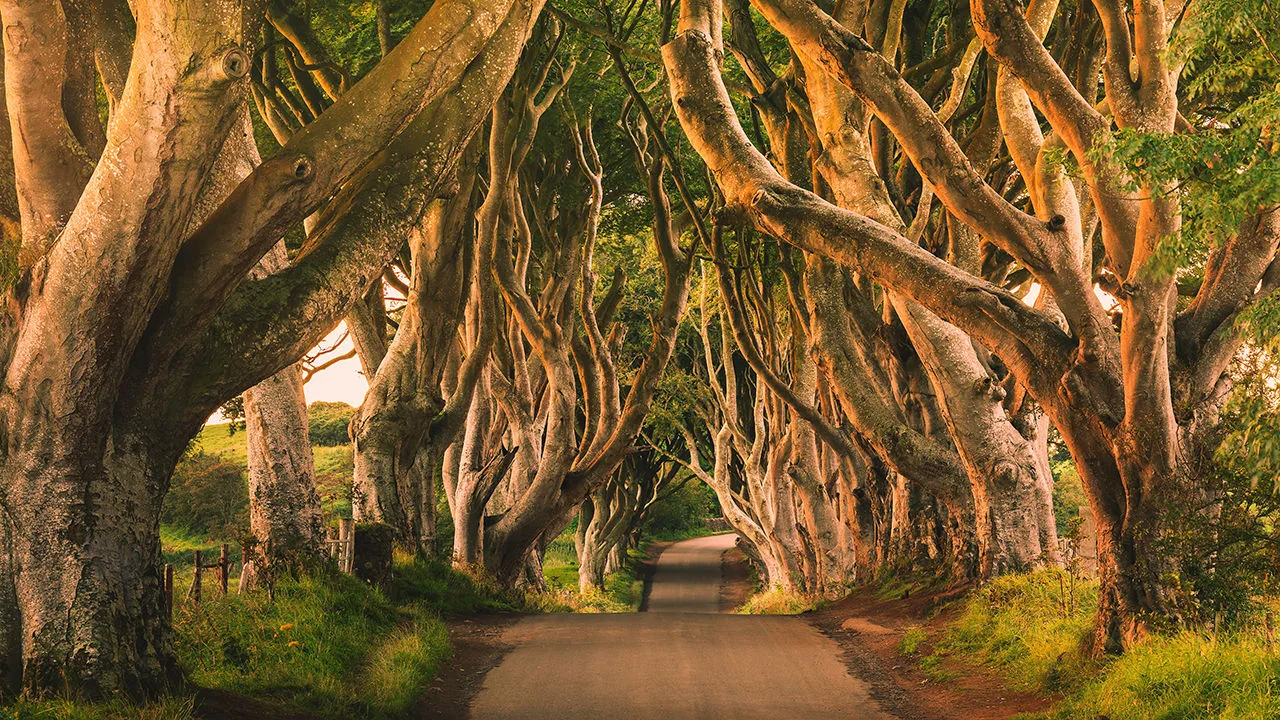
Around 1775, the Stuart family planted a row of beech trees along the road leading to their house, Gracehill House, and over the centuries the branches leaned toward each other and laced together into a natural tunnel over Bregagh Road in County Antrim. This is the Dark Hedges. It is at its most atmospheric on misty mornings, when the Gothic mood is hard to miss.
Then there is the ghost, because of course there is. Local legend speaks of a “Grey Lady” said to drift from tree to tree along the road. Fans of Game of Thrones may recognize the avenue too: it stood in for the Kingsroad in the series.
The catch: fewer of the original trees remain each year, so the tunnel is not quite as complete as it once was.
5. Hoia Baciu Forest (Romania)
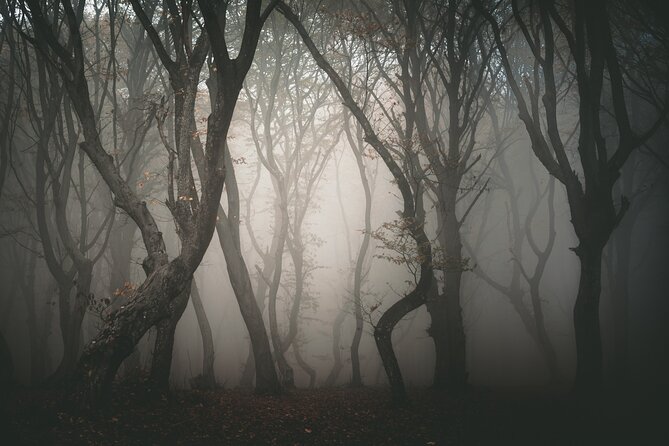
Just west of Cluj-Napoca, in Romania’s Transylvania region, Hoia Baciu has a reputation as one of the creepiest places in Europe. The stories are countless. Disappearances, unexplained lights, electronic devices that fail, oddly shaped trees: the list runs long enough that some even call it the Bermuda Triangle of Transylvania, and paranormal TV shows have filmed here more than once.
Skeptics have a point: none of these claims comes with testable evidence. These days the forest is also a local recreation spot. It even has a bike park, which does little for its haunted image.
Believe the stories or not, the atmosphere really is unsettling.
6. Hallerbos (Belgium)
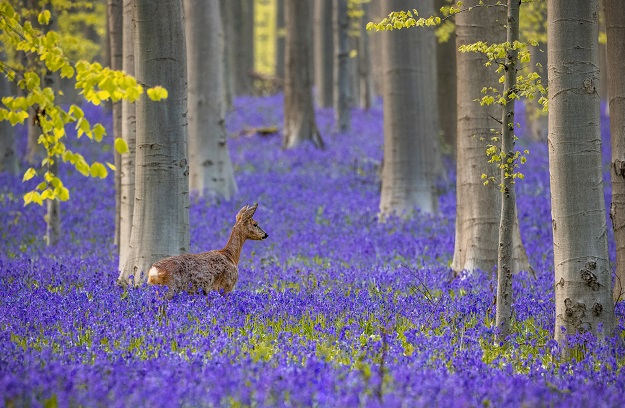
For a few weeks each spring, Hallerbos turns into a blue dream. This forest, mostly within the municipality of Halle just south of Brussels, is famous for the bluebells that cover its floor from one end to the other, and when light falls through the trunks onto that violet-blue carpet, the view is pure postcard.
The show is brief. That is part of the magic. It makes Hallerbos one of the most romantic woodlands in Europe.
7. Otzarreta Forest (Spain)
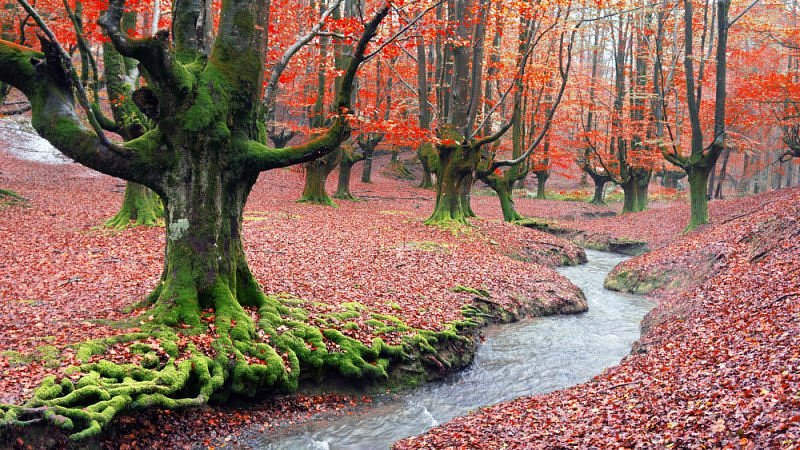
The Otzarreta beech forest sits in Gorbeia Natural Park, in Spain’s Basque Country, and it is especially striking in autumn. Moss-covered rocks, contorted beeches, the small Zubizabala stream: the scene could pass for a painting. The trees owe their shape to people: charcoal makers once pruned the branches on a regular cycle, and when the pruning stopped, the trunks kept their thick, many-armed form. That history is documented. At Poland’s Crooked Forest, by contrast, the method behind the bent trunks remains a guess. The unusual shapes and deep shades of green have made Otzarreta a favorite with nature photographers.
8. Brocéliande Forest (France)
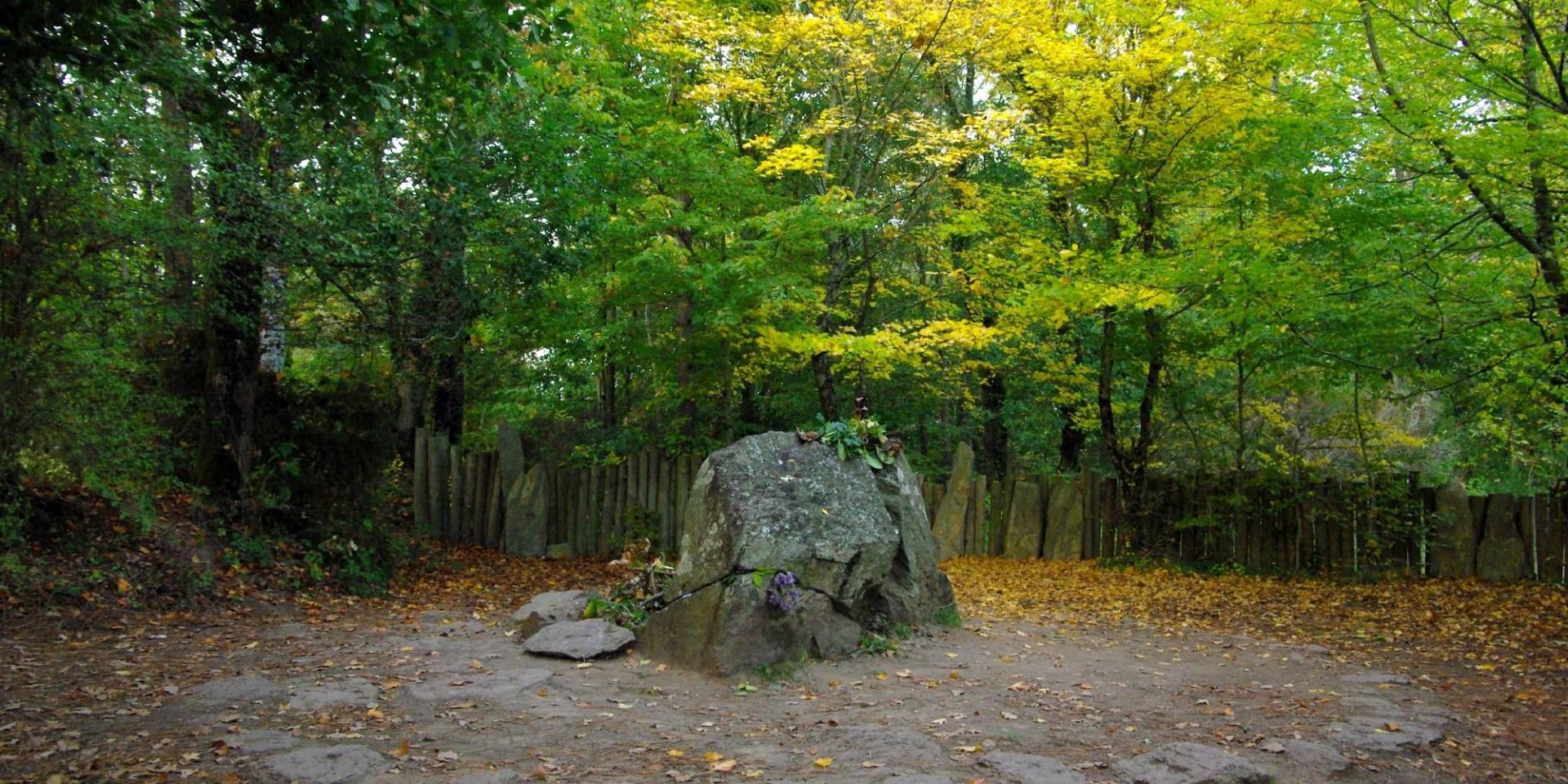
The last stop is Brocéliande, the legendary name attached to the Paimpont forest in Brittany, western France, a forest bound up with the tales of King Arthur, from the wizard Merlin to the Lady of the Lake. Legend even places Merlin’s tomb here. The truth is humbler: a largely ruined Neolithic dolmen. Nearby, the Val sans Retour (Valley of No Return) is where the fairy Morgan le Fay was said to trap unfaithful knights. Old oaks and beeches, including an oak believed to be about 1,000 years old, keep the stories alive.
In Brocéliande, the line between legend and reality almost disappears.
Sources: Wikipedia: Dark Hedges, Wikipedia: Crooked Forest, Wikipedia: Paimpont forest, Visit Madeira: Fanal, Basque Country Tourism: Otzarreta





Bir yanıt yazın