
15 Eiffel Tower Facts, From Near-Demolition to Bond


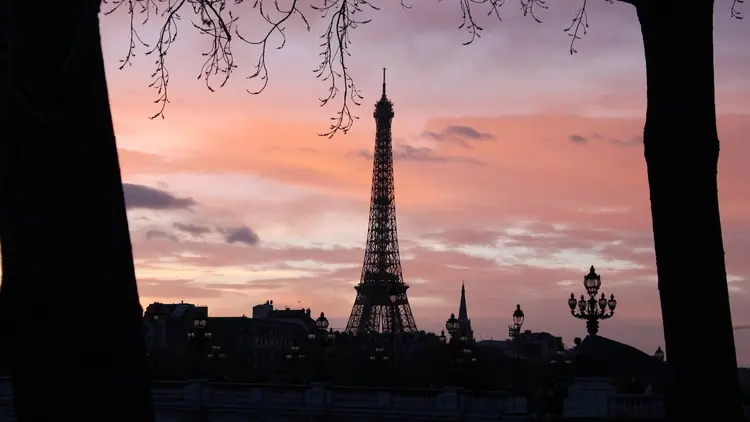
Completed in March 1889 for a world’s fair in Paris, the Eiffel Tower was supposed to come down after 20 years. It stayed. These Eiffel Tower facts cover how it was designed, who hated it, and how it became the symbol of a city and one of the most recognized structures on Earth, escaping demolition more than once along the way.
1. It was built as the gateway to the 1889 World’s Fair

To mark the 100th anniversary of the French Revolution, Paris hosted the 1889 Exposition Universelle. It needed a gateway. Not a modest one, either: the plan called for a monumental entrance on the Champ de Mars, a large public park near the center of the city, and designers submitted their proposals for it.
The winning idea was a 300 m (984 ft) iron tower.
2. Eiffel’s own company designed and built it

The job went to the engineering and construction firm of Gustave Eiffel. Metal was his specialty. A civil engineer, he had worked in the early 1880s on the Garabit Viaduct in France’s mountainous Massif Central, at the time the highest bridge in the world. The list goes on: the railway station in Pest (now part of Budapest), the dome of the Nice Observatory, and the internal framework of the Statue of Liberty.
3. The first sketch didn’t impress Eiffel

Two senior engineers at Eiffel’s company, Maurice Koechlin and Émile Nouguier, were the tower’s main designers. Koechlin drew the first sketch in 1884. Eiffel showed little enthusiasm. So Stephen Sauvestre, head of the firm’s architecture department, reworked it, adding the decorative arches at the base and a glass pavilion on the first level, and Eiffel, won over by the more ornate version, bought the patent rights to the design.
4. It took a mountain of metal

About 300 workers built it. The job took just over two years, from January 1887 to March 1889, and in that time the crews assembled 18,038 wrought-iron parts held together by 2.5 million rivets. The metal frame alone: about 7,300 metric tons.
5. Its original height was 300 meters

When it was finished in March 1889, the tower measured 300 m (984 ft). That number is less fixed than it sounds. Iron expands in heat. It contracts in cold, too, which means the structure can lose roughly 15 cm (6 in) of height on a cold day, while the antennas added to its summit over the decades have pushed the tip to about 330 m (1,083 ft).
6. It was the world’s tallest structure until 1930

For 41 years, nothing built by humans stood taller. Then came 1930. The Chrysler Building in New York, at 319 m (1,046 ft), took the title, only for the Empire State Building to become the world’s tallest building a year later. Today the record belongs to the Burj Khalifa in Dubai. It stands 828 m (2,717 ft), almost three Eiffel Towers stacked end to end.
7. Hundreds of artists signed a protest against it

In February 1887, the newspaper Le Temps published a petition titled “Artists against the Eiffel Tower.” Its signatories included the writer Guy de Maupassant, the composer Charles Gounod, and the painter William-Adolphe Bouguereau, while Alexandre Dumas fils was also among the tower’s critics. They called it “useless and monstrous.” Construction went ahead anyway.
8. The public loved it right away

The petition made little difference. The 1889 fair was a huge success, largely thanks to the tower: nearly 1.9 million people went up it during the exhibition, and ticket sales reportedly brought in about $1.4 million, making the fair one of the few of its kind to turn a profit. Compare that with the artists’ “useless and monstrous” verdict. The critics had a newspaper. The public had the ticket booth.
9. It was only meant to last 20 years

Contrary to what most visitors assume, the tower was never meant to stand on the Champ de Mars for good. It was due to be dismantled in 1909.
So what saved it? An antenna on its summit. Radio telegraphy made the tower useful. In 1914, during World War I, its transmitter jammed German radio communications, helping the Allies win the First Battle of the Marne.
10. It barely moves in strong winds

Eiffel, who later became a pioneer of aerodynamics research, designed the tower with his team to cope with very strong winds, and the key was the open lattice, which lets air pass straight through. Storms barely register. The numbers are almost anticlimactic: the top sways only a few centimeters, less than about 10 cm (4 in).
11. Visitors can reach three levels

Three levels. That is what the tower’s roughly 6 million visitors a year can explore, each at a very different height. The first, at about 57 m (187 ft), has a viewing area, shops, exhibits, and a glass floor. Higher up, at about 116 m (380 ft), the second level adds another observation deck, more shops, and Le Jules Verne, a Michelin-starred restaurant. The top sits at about 276 m (906 ft). Its small champagne bar comes with the best view in Paris.
12. A daredevil rode a bicycle down its stairs

Over the years, the tower has attracted plenty of eccentric behavior. Few stunts are better known than this one. In 1923, Pierre Labric, a cyclist, journalist, parachutist, and World War I veteran, rode a bicycle down its stairs.
How it ended is less clear. Reportedly, with his arrest.
13. It gets a fresh coat of paint every seven years

Each repainting takes about 60 metric tons of paint. The City of Paris owns the tower. Day to day, the monument is run by the Société d’Exploitation de la Tour Eiffel (SETE), a public company that employs more than 500 people, from guides and security staff to postal workers and the teams in the tower’s restaurants and shops.
14. It closed during the Nazi occupation

During the occupation of Paris, from 1940 to 1944, the tower was off-limits to the public. The elevators were out, too: when the Germans arrived, the French cut the cables, so German soldiers who wanted the view had to climb the stairs. Then came a bigger threat. In August 1944, Hitler ordered Dietrich von Choltitz, the military governor of Paris, to destroy the tower along with much of the city. Choltitz never carried out the order.
15. It has starred in plenty of films

In A View to a Kill (1985), James Bond, played by Roger Moore, chases an assassin through the tower. Bond is in good company. Burgess Meredith played a knife grinder in the 1949 murder mystery The Man on the Eiffel Tower, and a scene from the British comedy The Lavender Hill Mob (1951), starring Alec Guinness and featuring a young Audrey Hepburn in a brief role, was shot at the tower.
More than 130 years after critics called it monstrous, it is still one of cinema’s favorite shorthand signs for Paris.
Sources: Wikipedia, Eiffel Tower, Mental Floss, 15 Monumental Facts About the Eiffel Tower, Official Eiffel Tower site, Restaurants and shops



Bir yanıt yazın