
Gunung Padang: 6 Facts About Indonesia’s Pyramid Debate


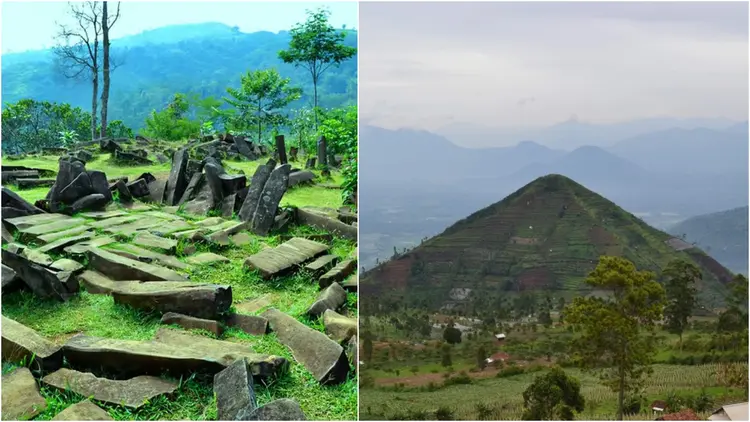
History textbooks tell a tidy story: hunter-gatherers first, then farming, then cities and monuments. Gunung Padang, a terraced hilltop in West Java, Indonesia, has become the most famous test of that order, because a group of researchers argued it could be a pyramid tens of thousands of years older than the ones in Egypt. The claim made headlines around the world, and the backlash was just as loud.
1. Stone terraces built from natural columns
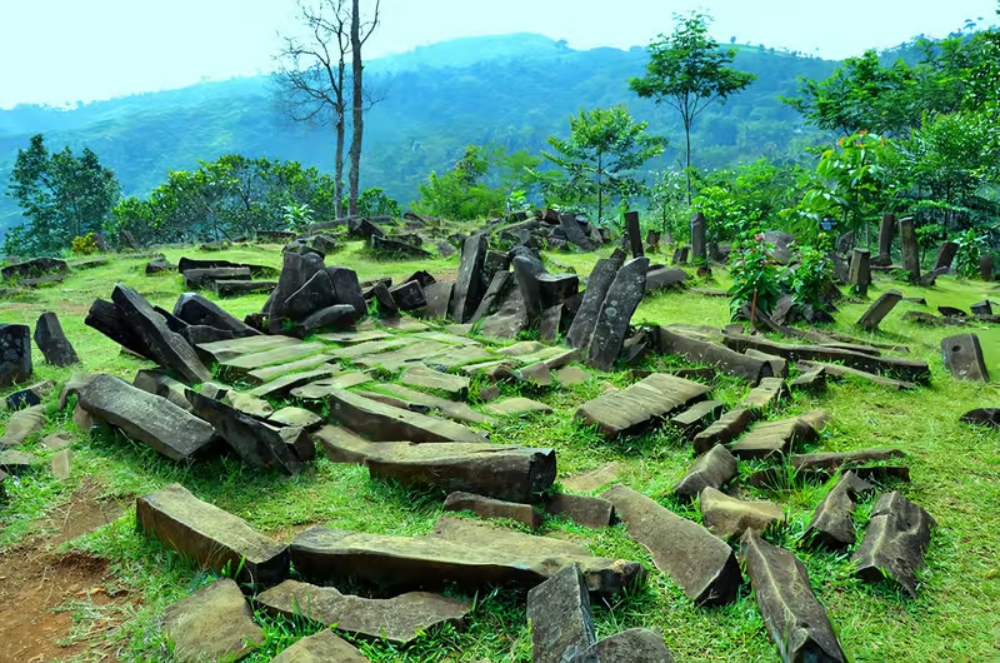
The first thing visitors see is stone. Lots of it. Gunung Padang sits on an extinct volcano about 885 m (2,900 ft) above sea level, near Karyamukti village in Cianjur Regency, roughly 50 km southwest of the town of Cianjur, and its summit is shaped into five terraces held up by stone retaining walls.
The building material came ready-made. The hill’s andesite naturally cracks into long hexagonal columns, 1 to 3 m long, and whoever built the site stacked and arranged them like oversized bricks. Getting to the top means climbing about 370 andesite steps that rise around 95 m. For the Sundanese people of West Java, it’s a sacred place: local legend says King Siliwangi tried to build a palace here in a single night.
2. The claim: a pyramid from the Ice Age
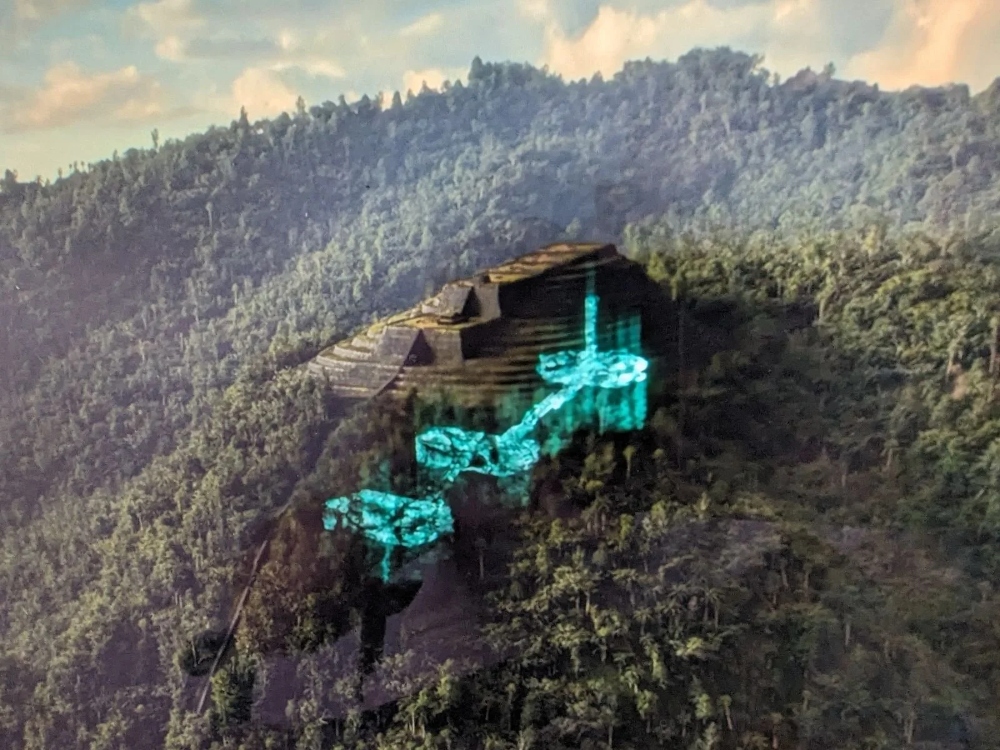
In October 2023, geologist Danny Hilman Natawidjaja and his colleagues published a paper in the journal Archaeological Prospection. Their toolkit was broad: ground-penetrating radar, seismic surveys, core drilling and radiocarbon dates from soil deep inside the hill. The conclusion was bold. Gunung Padang, they argued, was not a natural hill dressed with stones at the top but a multi-phase structure, with its earliest stage reaching back into the last Ice Age. Natawidjaja has long put the site at somewhere between 9,000 and 27,000 years old. If true, history’s opening chapter changes. Monumental building by people who supposedly hadn’t settled down or started farming would mean early societies were far better organized than anyone assumed.
3. Why most archaeologists weren’t convinced
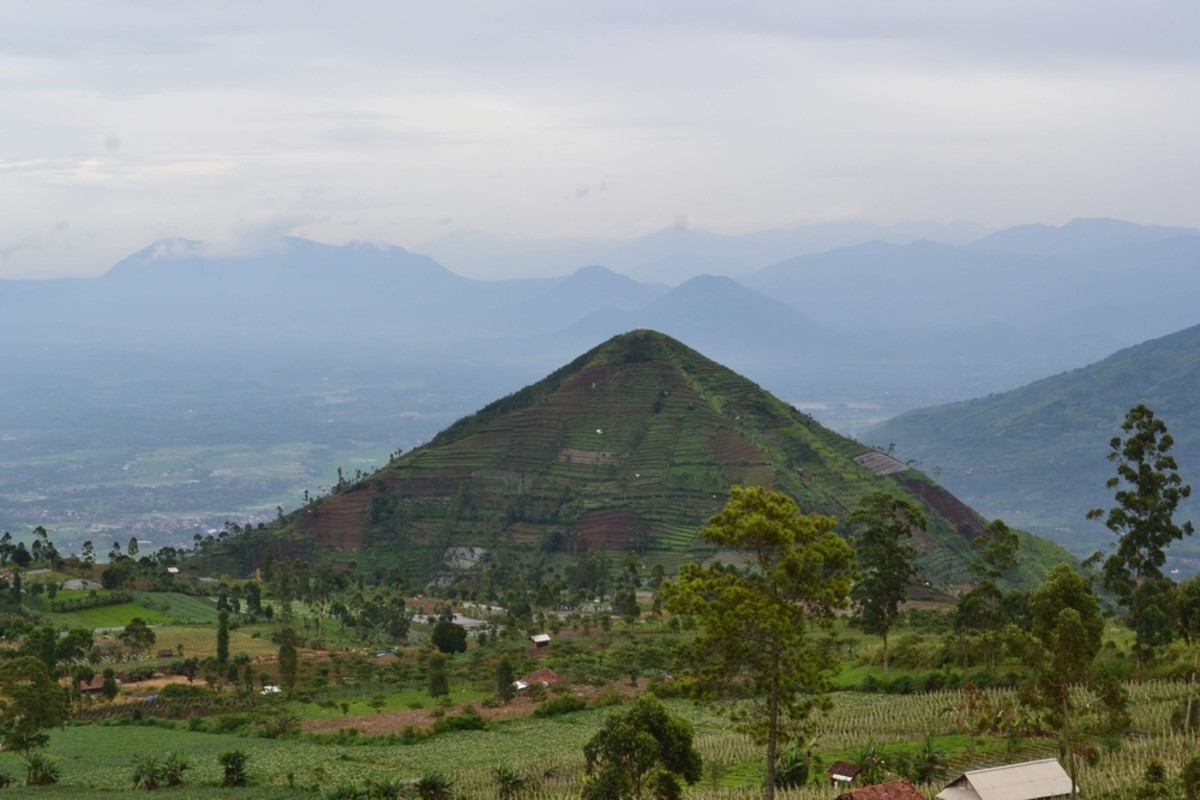
So where did the argument fall apart? Critics zeroed in on one gap. Old soil is not the same thing as an old building: radiocarbon dates from dirt buried deep in a hill show when that organic material formed, not when anyone stacked stones above it. None of the dated samples came with artifacts, tools or features that could be reliably read as human-made. Some geologists also argued that much of the hill’s interior is simply natural volcanic rock.
The journal agreed.
In March 2024, the publisher Wiley and the editors retracted the paper, citing a “major error” missed in peer review and concluding that the interpretation of an ancient pyramid built 9,000 or more years ago was incorrect. All of the authors disagreed with the decision and have defended their findings since.
4. The part that is clearly human-made
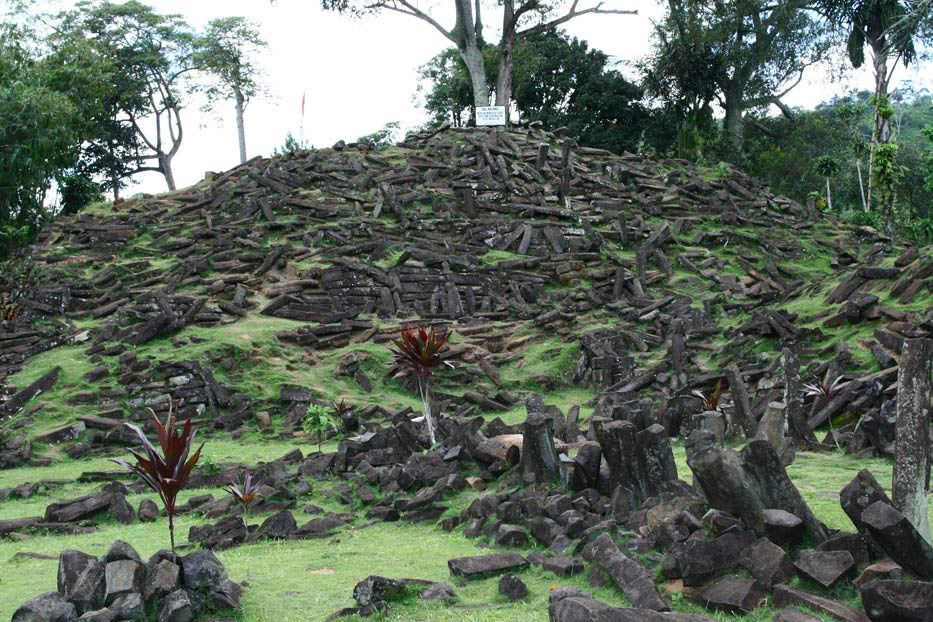
Nobody disputes the top. The terraces, the stairway and the deliberate layout of the stones are clearly the work of people, and that alone makes Gunung Padang one of the largest megalithic sites in Southeast Asia.
What’s contested is age and scale. Mainstream estimates place the construction between roughly the 2nd and 8th centuries CE, depending on the researcher; archaeologist Lutfi Yondri has pointed out that charcoal found in direct association with the architecture dates to about 2,100 years ago. Pottery fragments from the site have been dated to between 45 BCE and 22 CE. That’s still impressive, just ten thousand or so years short of the Ice Age. Proponents of the older theory have also described possible hollow spaces inside the hill. Whether they exist is anyone’s guess: no excavation has confirmed hidden chambers.
5. A site with a long, interrupted record
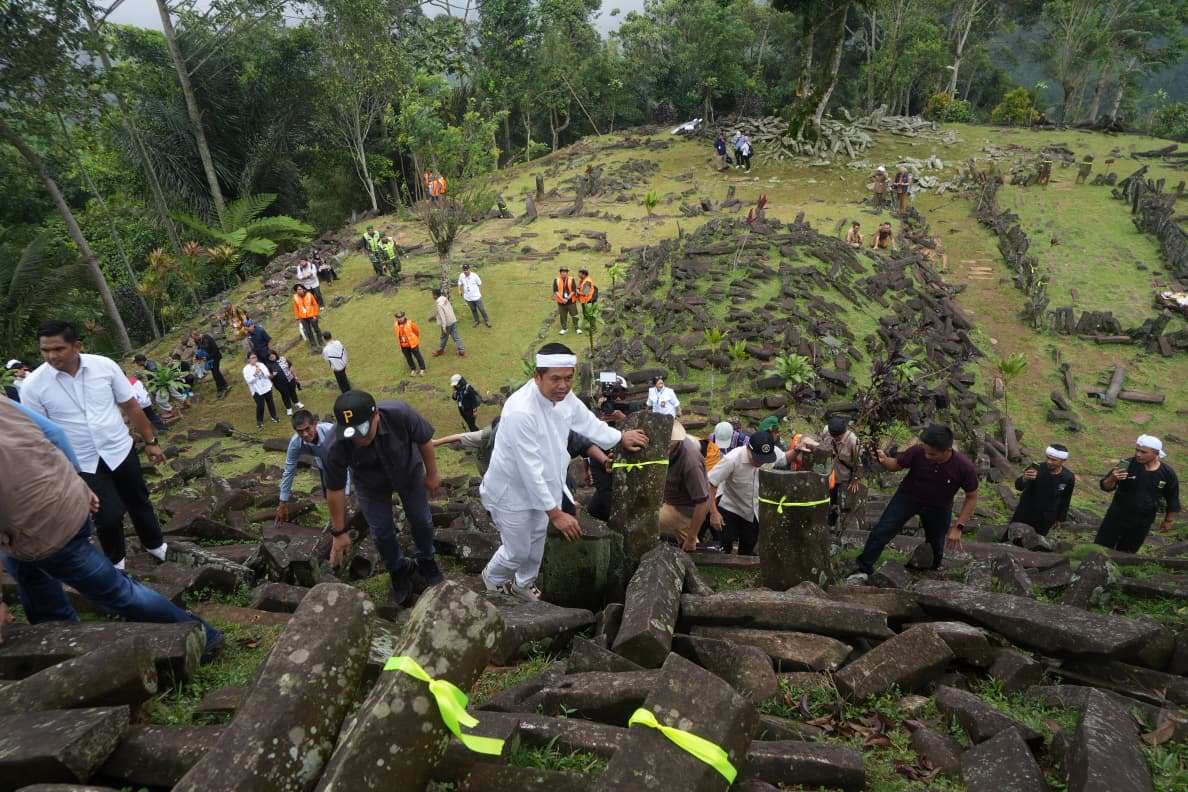
Gunung Padang is not a new discovery. Dutch historian Rogier Verbeek recorded it in an 1891 book, and archaeologist Nicolaas Johannes Krom wrote about it again in 1914. Then it slipped out of sight. Local farmers came across it again in 1979. Protection came slowly. Indonesia’s Ministry of Education and Culture listed it as a heritage site in 1998 and, in 2014, declared a National Site Area covering 29 hectares (72 acres). Excavations that year were halted and later criticized by archaeologists as poorly conducted, which, frankly, is part of why so many questions remain open.
6. What Gunung Padang still has to say
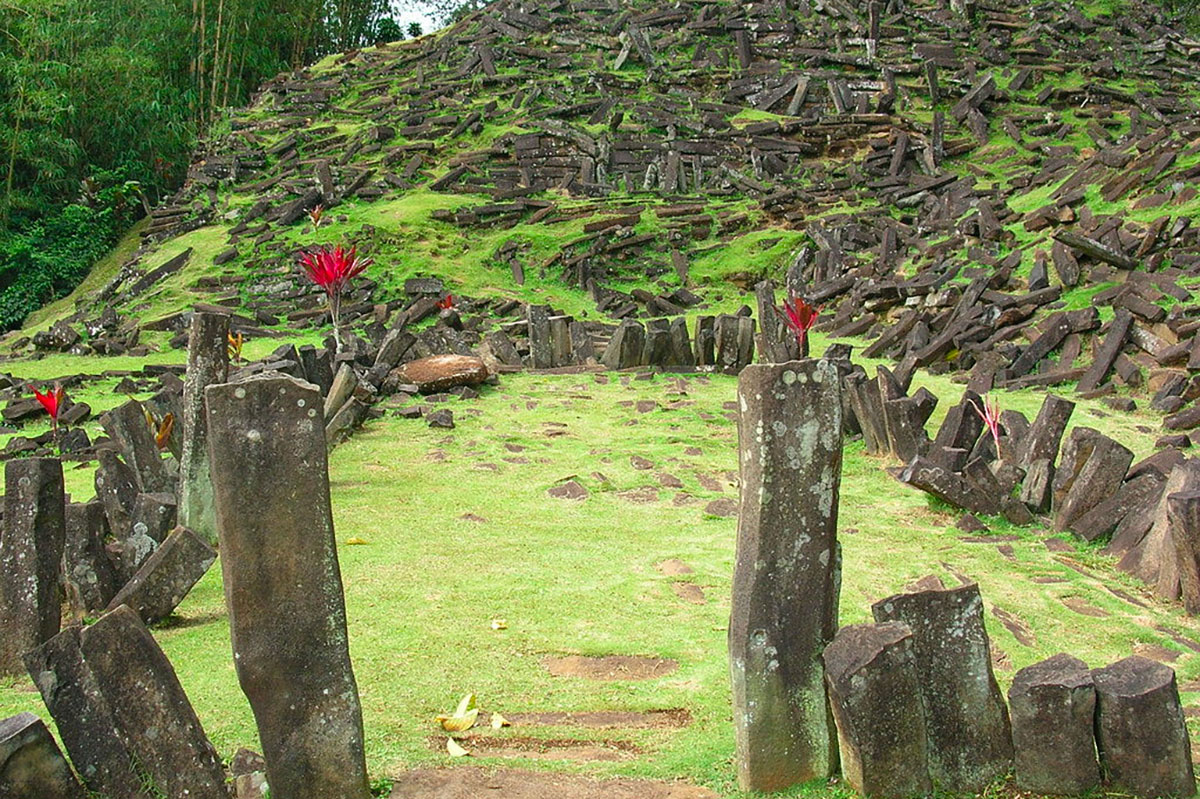
Whether or not it turns out to be a pyramid, Gunung Padang shows how hard it is to read the deep past from a single hill. The careful, unglamorous answer, a monument roughly 2,000 years old built by people who reshaped a volcano’s peak with natural stone columns, is already a remarkable one.
For a traveler, that’s enough. Climb the 370 steps.
Sources: Wikipedia: Gunung Padang, Retraction Watch, Time Travel Turtle












Bir yanıt yazın