
Jindo Sea Parting: 5 Things to Know Before You Go


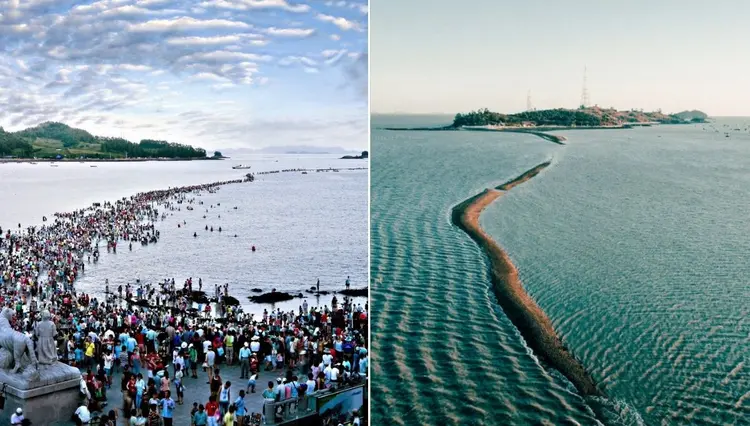
South Korea usually brings to mind neon cities, fast trains and K-pop, yet one of its strangest sights happens on a quiet island in the far southwest. A few times a year, the sea off Jindo Island draws back and a road of sand and rock appears where there was open water an hour earlier. The Jindo sea parting has a legend, a scientific explanation and a festival, and all three are worth knowing before you go.
1. Where the sea opens: Jindo to Modo
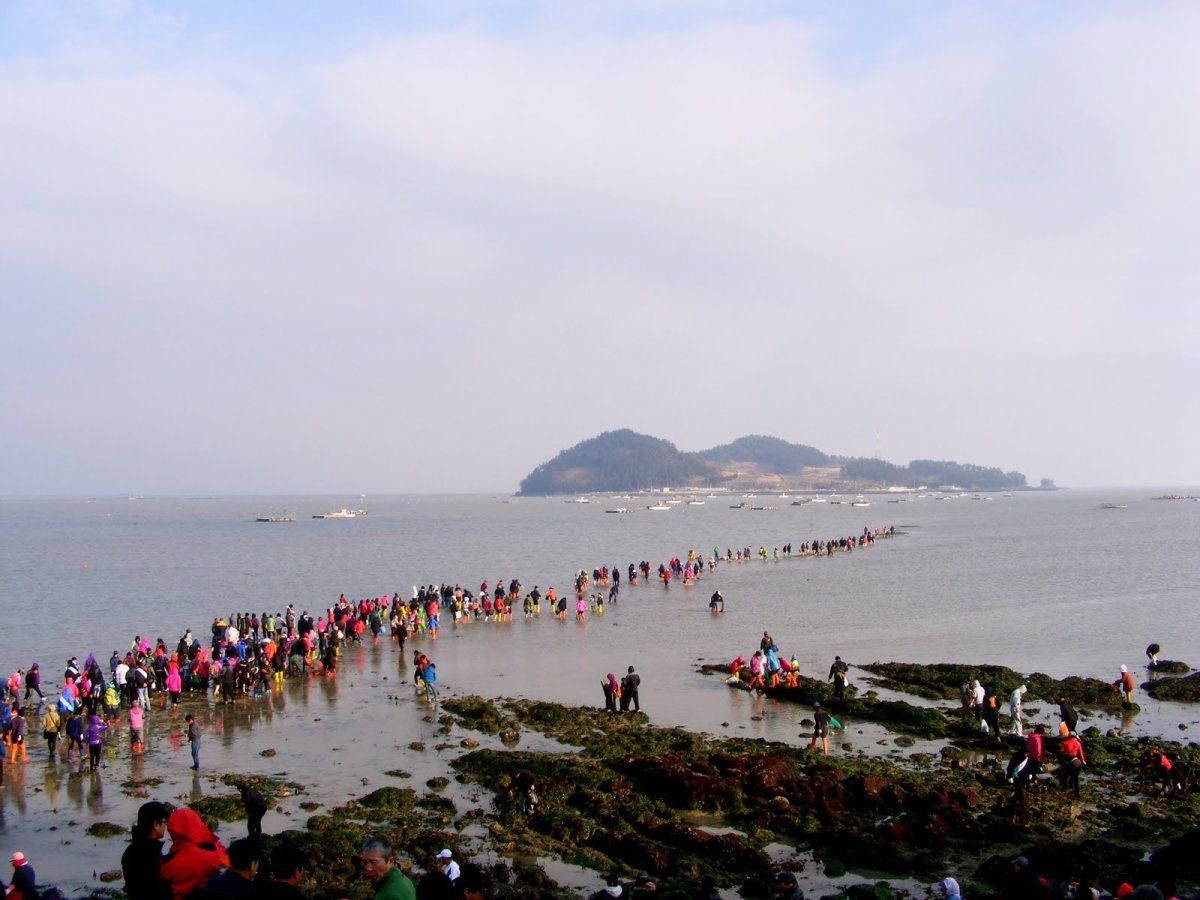
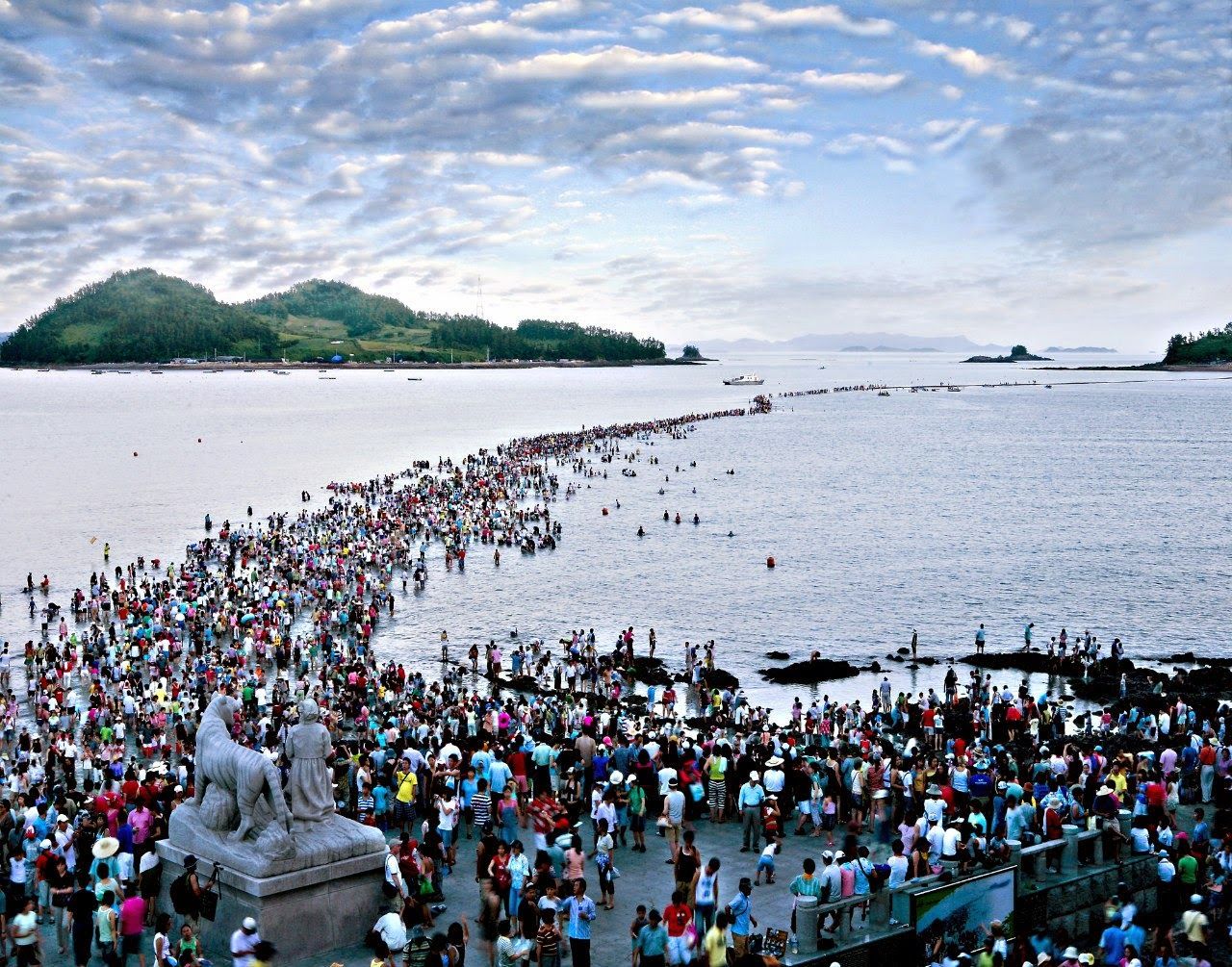
Picture a wide stretch of blue water slowly pulling back. Wet sand, shells and dark rocks take its place, and within minutes a ridge of seabed rises clear of the surface.
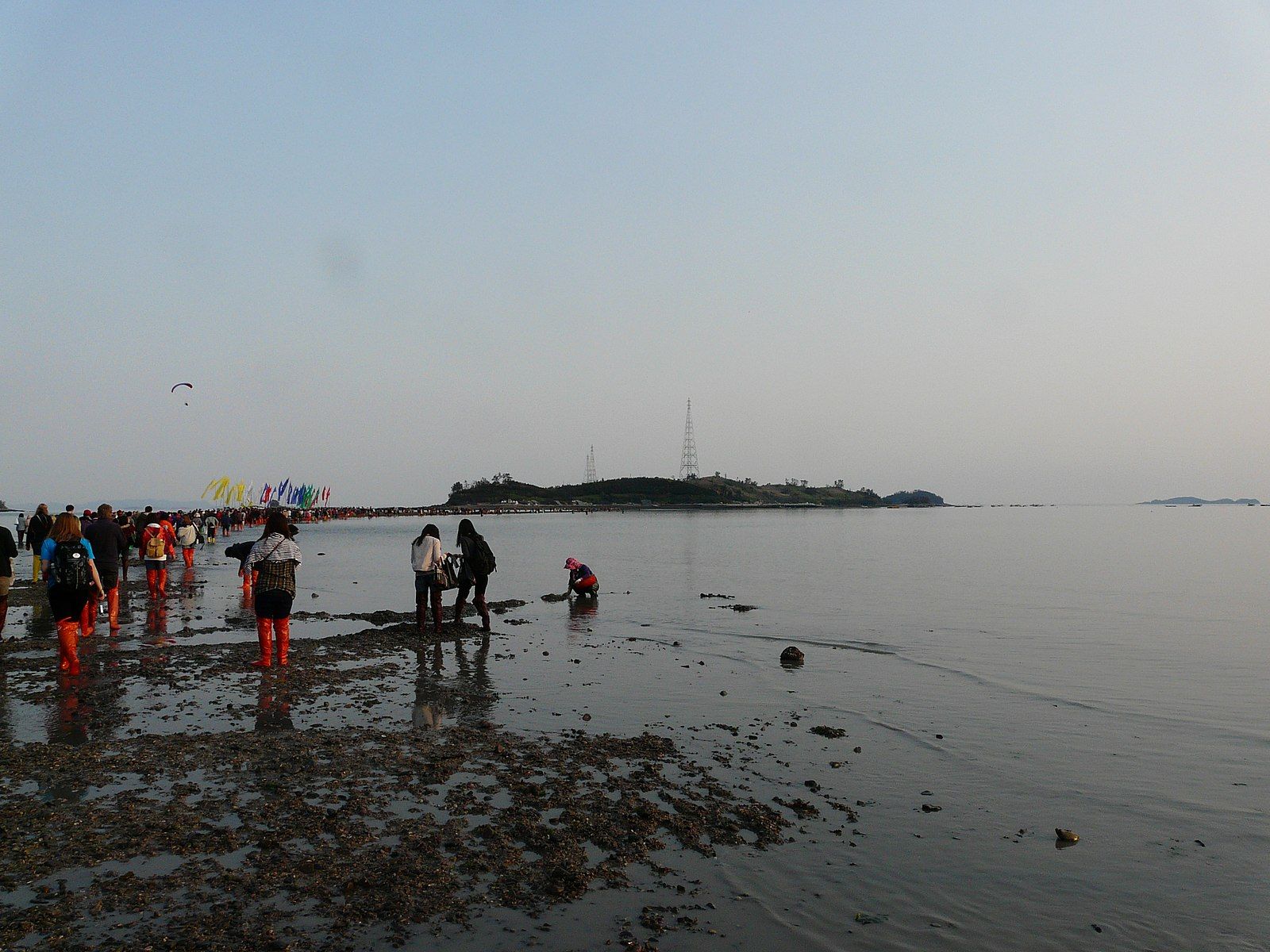
That ridge becomes a path about 2.9 km (1.8 miles) long, linking Jindo, South Korea’s third-largest island, with the small island of Modo to its south. It is a few dozen meters wide and stays walkable for roughly an hour at the lowest point of the tide, and people pour onto it in rubber boots to take photos, dig for shellfish and stare at the water still lapping on both sides. Locals call it the Miracle Sea Road. The name hardly exaggerates.
Then the tide turns. The road slips back under the sea as if it had never been there.
2. The legend of Grandmother Bbyong
Every good natural wonder seems to come with a story. Jindo’s is a touching one. According to the legend, tigers once roamed the island and drove the villagers to flee by boat to Modo, and in the rush an old woman named Bbyong (also spelled Ppong) was left behind, alone on the shore.
She prayed every day to Yongwang, the Dragon King of the sea, to see her family again. One night he came to her in a dream and promised a rainbow across the water. The next day, the sea opened. Bbyong was reunited with her family, though tellings differ on who crossed to whom. Since then, the parting has been read as a symbol of separated people finding each other again. A statue of the old woman and a tiger stands near the coast, greeting the crowds that come for the same crossing.
3. The science behind the Jindo sea parting
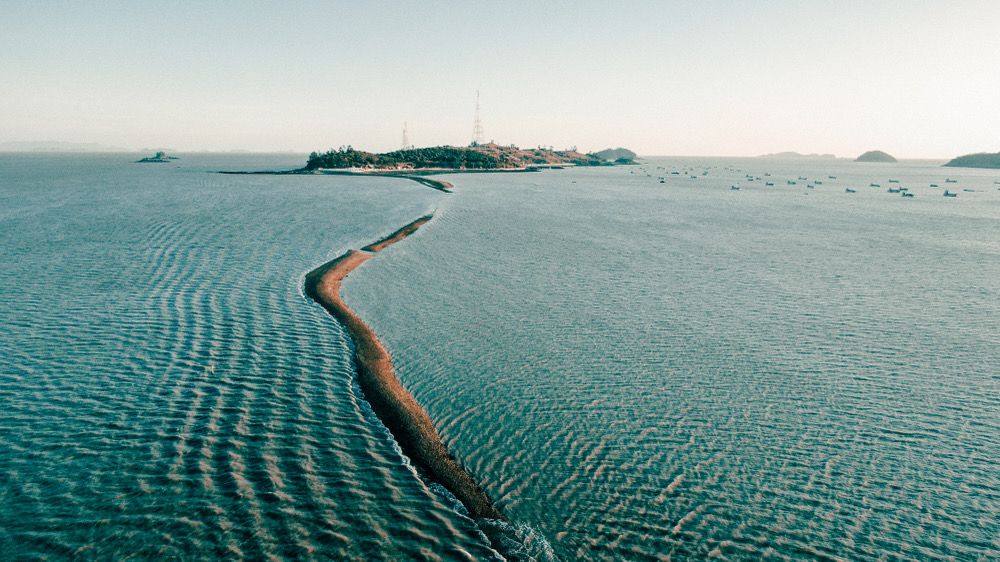
The real explanation? Tides, not magic. The gravitational pull of the moon and the sun makes the oceans rise and fall, and that rhythm is the sum of many smaller tidal cycles, known as tidal harmonics. Most of the time they partly cancel each other out. Occasionally, several of them fall into step at once and push the water to an extreme low.
Off Jindo, the shape of the coast and the Myeongnyang Strait east of the island amplify the effect, so these rare extreme lows expose a shallow ridge of sediment between the two islands. Hydrologist Kevan Moffett, speaking to National Geographic, compared it to a group of drummers who usually play out of time and every so often land on the same beat. Despite the name, nothing splits. The popular image of two walls of water is simply wrong: the sea drains off a hidden road for a while.
4. When to go and how to get there
Planning matters here. Those drummers rarely land on the same beat at the same moment twice, so the dates move every year with the tides and the lunar calendar. The most celebrated partings fall between March and June, around the new and full moons, when tides are strongest. Check the exact day and the low-tide time on the official Jindo County or Korea tourism sites before booking anything.
Getting to Jindo takes some effort but no special skill. The island is joined to the mainland by the Jindo Bridge, so there is no ferry to worry about. From Seoul, most travelers take a bus or train to Gwangju or Mokpo and change there for Jindo Bus Terminal; expect most of a day on the road, roughly four to six hours depending on connections. Gwangju also has the nearest domestic airport. On the island, local buses run toward Hoedong, the village on the Jindo side of the crossing, and taxis are an option on festival days.
One blunt warning: the event is crowded. Arrive early to find a spot, rent or bring boots, and keep an eye on the time, because the tide comes back faster than most first-timers expect, and it won’t wait for one last photo.
5. More to see on Jindo Island
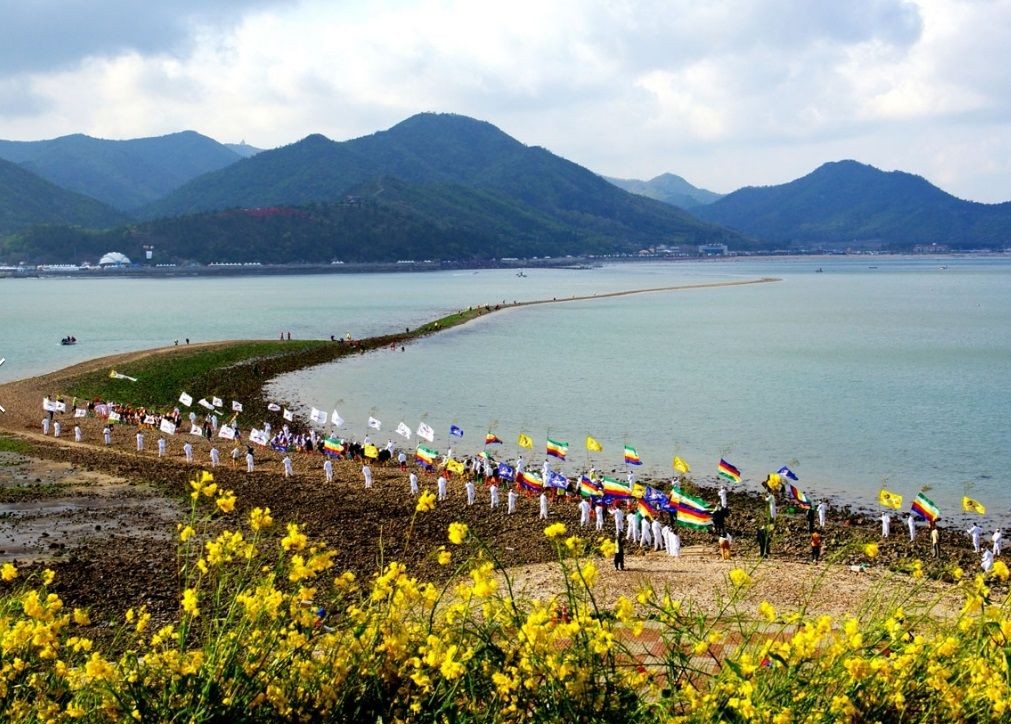
The sea road is the headline. Honestly, though, the island has more. Jindo is home to the Jindo dog, a loyal, sharp hunting breed that Korea designated Natural Monument No. 53 in 1962, and the dog is the island’s unofficial mascot. If you time your trip with the parting, you will also catch the Jindo Miracle Sea Road Festival, with traditional performances such as Ganggangsuwollae (a women’s circle dance), drumming, folk songs, a Jindo dog show and fireworks.
Modo, the small island at the far end of the road, is a quiet escape once the crowds thin out. This is a coastal county. Fresh seafood is never far away.
The Jindo sea parting pairs a moving old story with very precise physics.
For about an hour, you can walk on the seabed between two islands, so mark the date and plan ahead.
Sources: National Geographic, Jindo sea parting, Wikipedia, Jindo Island, Wikipedia, Jindo dog




Bir yanıt yazın