
Atatürk Arboretum: 6 Things to Know Before You Go


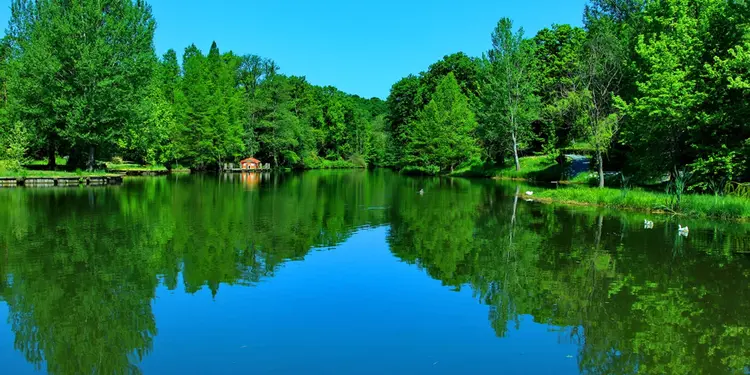
Atatürk Arboretum is one of the quietest green spaces in Istanbul, a tree collection on the edge of Belgrad Forest where birdsong replaces traffic noise. It opened under its current name in 1982, the centenary of Atatürk’s birth, and is run by Türkiye’s General Directorate of Forestry.
1. What Is an Arboretum?

An arboretum is a botanical garden devoted to trees and other woody plants, grown and labeled for research and education. It’s not just a park with name tags, though. It’s a living library of trees. Each species is planted so it can be studied, compared and protected.
The idea predates the name. In 1949, forestry scientists proposed a research collection near Bahçeköy, and today Istanbul University’s Faculty of Forestry still sits on its board as the scientific partner, so the paths you walk double as an open-air classroom.
2. Where Is Atatürk Arboretum?

Atatürk Arboretum is in Bahçeköy, a village-like neighborhood in the Sarıyer district on Istanbul’s European side, right next to Belgrad Forest, and by car it’s roughly 35 minutes from Beşiktaş. Istanbul traffic can stretch that considerably.
For the exact entrance, search “Atatürk Arboretumu” on Google Maps. That’s the name on the signs.
3. How to Get There

By car: Driving is simplest. There’s a parking lot in front of the entrance. Head north toward Maslak and Sarıyer, pass the Regional Forestry Directorate and Hacı Osman, then follow the Kilyos road to Bahçeköy.
By public transport: Don’t count on the metro to get you all the way. No metro or metrobüs stop is within walking distance, so plan on a bus for the last stretch. The metrobüs is Istanbul’s bus rapid transit line, and fares on buses, metro and metrobüs are paid with the İstanbulkart, the city’s rechargeable transit card. Bus lines that have served Bahçeköy include:
42T Taksim-Bahçeköy: Runs from Taksim via Beşiktaş, Ortaköy, Bebek, İstinye, Tarabya and Çayırbaşı. Allow about 50 minutes, more in heavy traffic.
42M Zincirlikuyu-Bahçeköy: Starts at the Zincirlikuyu metrobüs stop and passes Levent metro, Maslak, the Regional Forestry Directorate, Hacı Osman and Çayırbaşı. Also about 50 minutes, traffic permitting.
153 Sarıyer-Bahçeköy: Leaves from central Sarıyer and runs along Büyükdere Caddesi and Çayırbaşı to Bahçeköy.
42HM Hacı Osman Metro-Bahçeköy: Starts at Hacı Osman, the last stop on the M2 metro line, and takes about 23 minutes. If you’re coming from the old city or Taksim, this metro-plus-bus combination is usually the most predictable route.
59RK Rumeli Hisarüstü-Arıköy: Departs from Boğaziçi University, which you can reach by changing from the M2 at Levent, and takes about 50 minutes.
Routes and timetables change. Check the current lines on the Istanbul transport authority’s app or Google Maps before you set off.
4. Ticket Prices and Opening Hours

Tickets are sold online through the official ticket site. Payment is by card only, credit or debit. Cash won’t help you here. The prices listed for 2026 were:
Weekdays: ₺20 for students (approx. $0.50) and ₺60 for adults (approx. $1.50).
Weekends: ₺50 for students (approx. $1.25) and ₺120 for adults (approx. $3).
Fees in Türkiye are revised often. Check the ticket site for current figures. Entry has also been free on certain days, such as World Forestry Day on March 21 and, for primary school children and their companions, Children’s Day on April 23.
The arboretum is open 9:00 a.m. to 5:00 p.m., Tuesday through Sunday. It’s closed on Mondays. Groups can book their visit in advance.
5. When to Visit Atatürk Arboretum

So when should you go? Picking a single best season is honestly hard. Every season works here, each for a different reason.
Fall is the showstopper: leaves turn orange, red, purple and pink, and around midday the low sun throws shifting shadows through the branches, which is why photographers arrive in numbers.
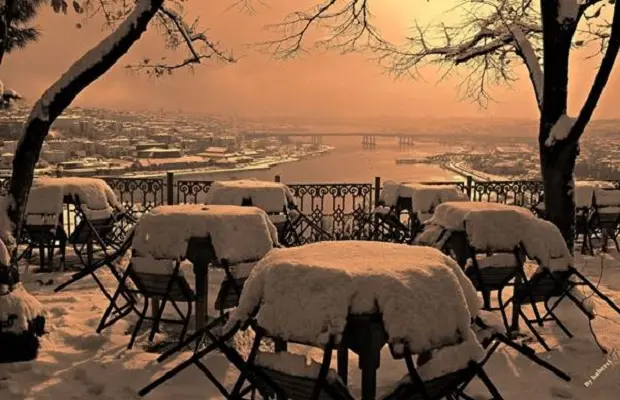
Summer is peak wildlife season. Birds, insects and small mammals are all active, frogs call from the ponds, and the shade under the canopy is a few welcome degrees cooler than the city. Spring is when the place wakes up, with blossoms, fresh leaves and squirrels darting between trunks. Winter is cold and quiet. After a snowfall, though, the arboretum looks like a postcard, and you may have the paths almost to yourself.
6. Rules to Know Before You Go

Pets: Not allowed. Leave dogs at home.
Groups: Schools, clubs, companies and associations need to arrange their visit in advance.
Food and drink: Only water may be brought in. Bags are checked at the entrance, and snacks have to be left behind, so any packed picnic stays at the gate.
Photography: Cameras are welcome, and in fall you’ll want one, but tripods, monopods, gimbals and drones are prohibited, and wedding, engagement or other costumed photo shoots are treated as commercial and charged separately.
Other items: To protect the vegetation as visitor numbers grow, bicycles, kites and balls stay outside.
Sources: Atatürk Arboretum (General Directorate of Forestry), Wikipedia: Atatürk Arboretum








Bir yanıt yazın