
The İstiklal Street Secret Tunnel in 6 Chapters


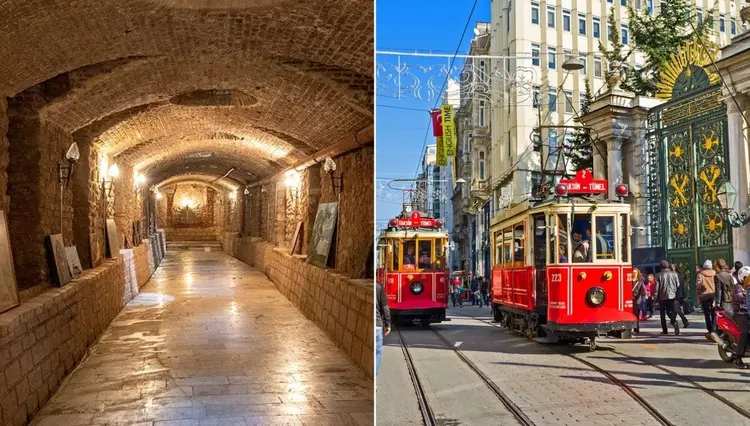
İstiklal Street, the long pedestrian avenue in Istanbul’s Beyoğlu district, carries huge crowds of shoppers, diners and street musicians every day. Underneath one of its 19th-century buildings, Rumeli Han, restoration work that began in 2017 uncovered something the neighborhood had only gossiped about: a cellar and passage that people now call the İstiklal Street secret tunnel.
1. Rumeli Han, a pasha’s grand idea
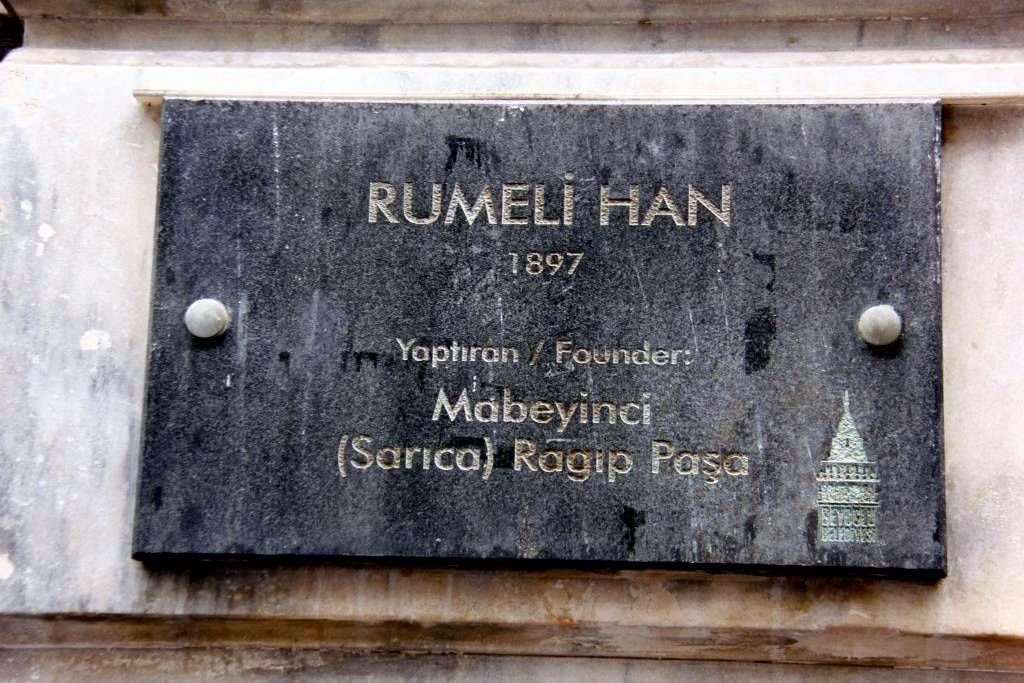
Plenty of people walk past Rumeli Han without looking up.
It was built in 1894 for Sarıcazade Ragıp Pasha, chief chamberlain to the Ottoman Sultan Abdülhamid II. The facade is neoclassical. Its main entrance door mixes styles in an eclectic way, while baroque and Empire-style decoration appears inside. As Turkey Travel Planner points out, the Ottoman Turkish inscription over the entrance is flanked by the building’s name in Greek and French, a small trace of how mixed late-19th-century Pera was.
Ragıp Pasha was a statesman with a merchant’s instincts. He built three inns. Each was a han (an Ottoman commercial building with shops and offices), named after a continent where the empire held land: Anadolu Han for Asia, Afrika Han for Africa and Rumeli Han for Europe. A popular story adds that he would have built an America and an Australia inn too, had he lived longer. Treat that one as a good story, not history.
2. The rumor: tunnels linking three inns
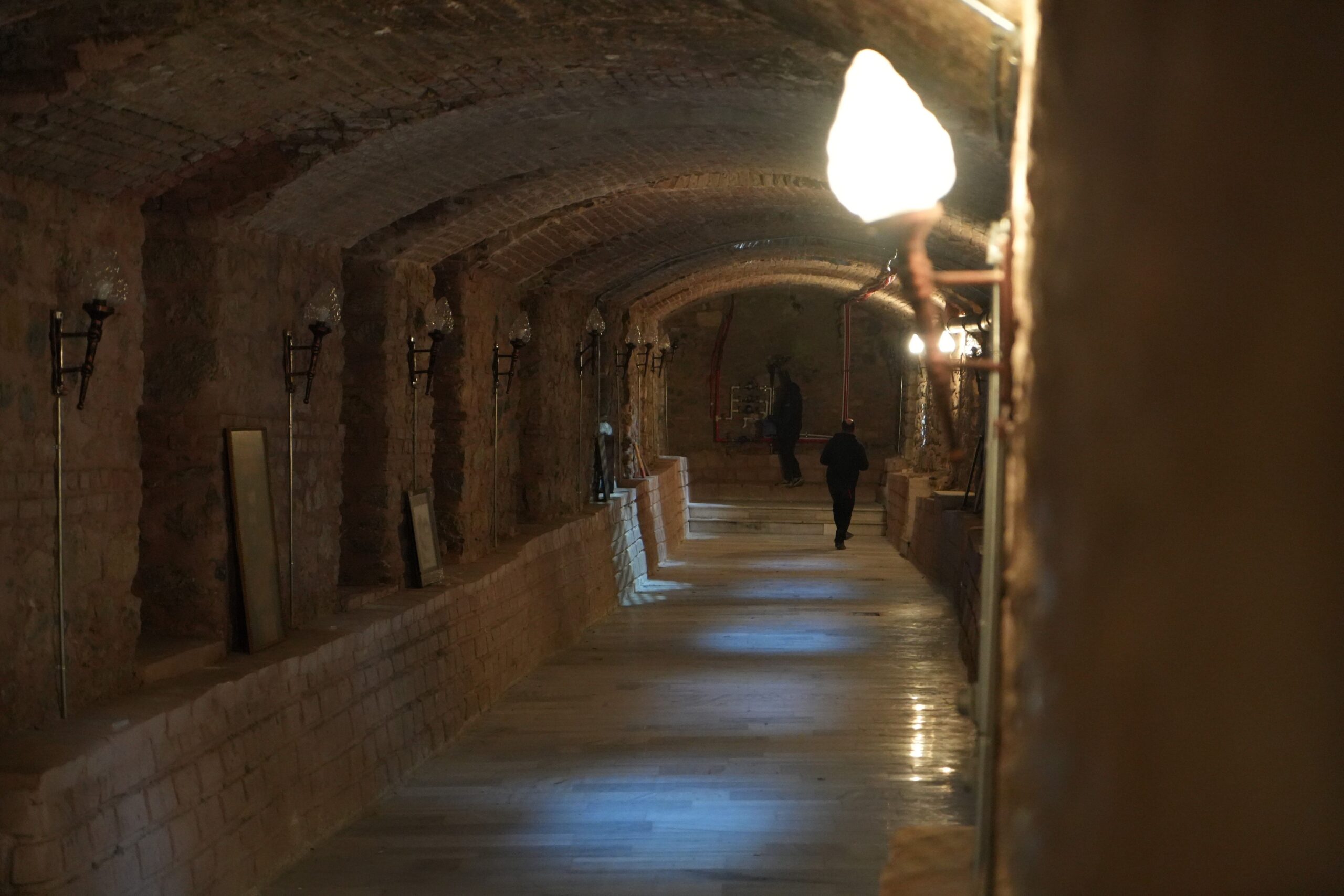
For years, word went around that a network of tunnels ran under the three inns and tied them together. It stayed a rumor. Above ground, Rumeli Han became part of the city’s social life. It is remembered as the home of the Rebul pharmacy and the Abdullah Efendi restaurant, two well-known Beyoğlu names, and by the 1990s its cafés, theater and concert halls had made it a hangout for artists and night owls.
3. How the tunnel was found
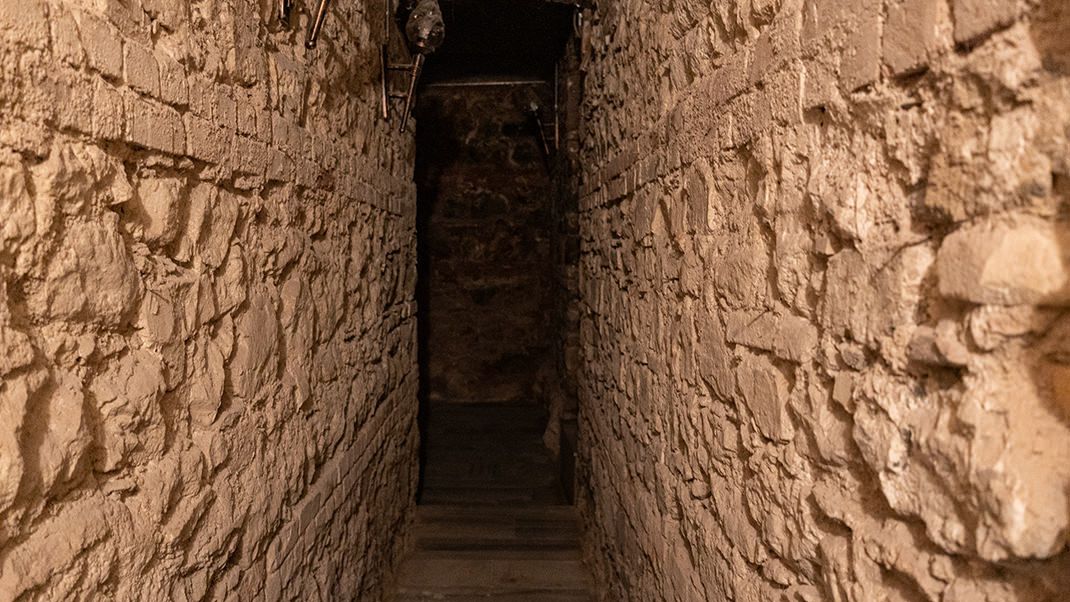
The rumor turned solid during the restoration that started in 2017. While digging to secure the building’s foundations, workers came across a space under the floor. It turned out to be a cellar of about 1,400 square meters (roughly 15,000 sq ft), a maze of small connected rooms around a main corridor. That leaves the big question. Does the corridor head toward Anadolu Han and Afrika Han? Nobody has proven it does, and any retelling that says otherwise is repeating the legend, not the evidence. People working on the site have said openly that they don’t know how much of it is true, and that honesty keeps the mystery alive better than any claim could.
4. Why build a hidden passage?
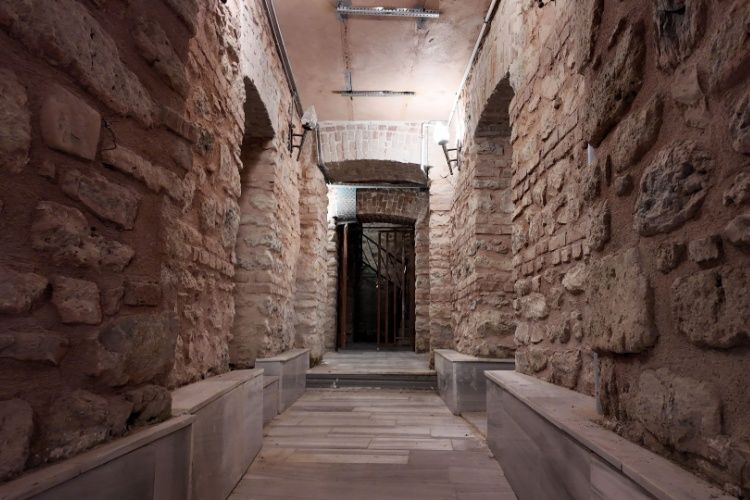
The favorite theory is about privacy. In the late Ottoman period, the streets around İstiklal, then called the Grande Rue de Péra, were the most fashionable part of the city, and the story goes that the wealthy used the tunnels to move between buildings without being seen.
A second theory is plainer: trade. Merchants could have moved valuable goods between the inns underground instead of through busy streets, and stored them in the side rooms. The likelier answer is less romantic. According to historical documents, the area was once used to store firewood, possibly before the inn itself was built. Secret escape route or woodshed, the rooms look the same by lamplight.
5. What the tunnel is becoming
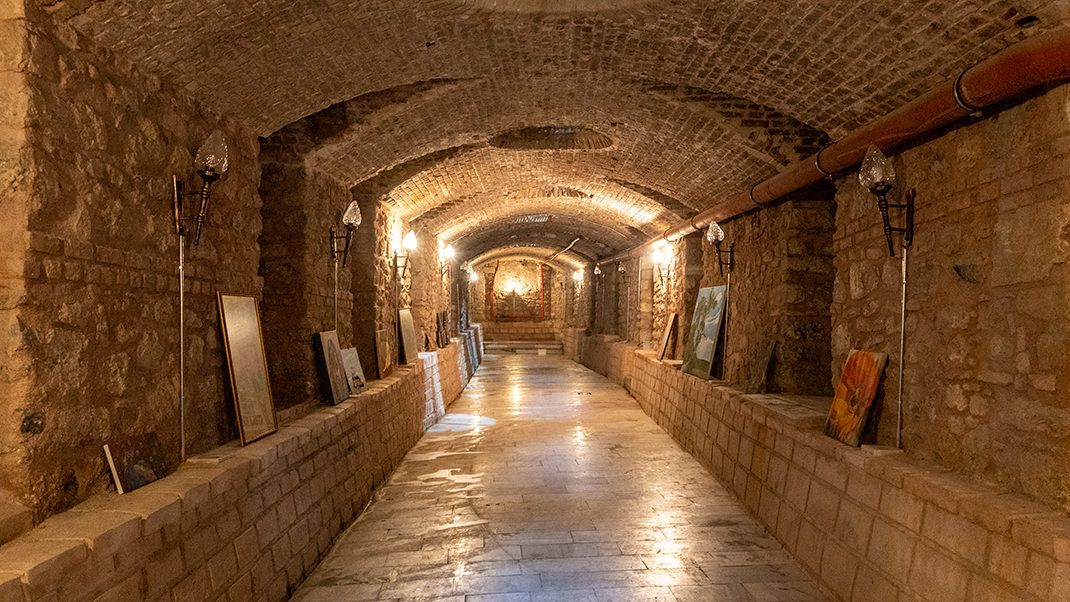
Protection came first. Rumeli Han itself has been a registered historic monument since 1978, under a decision of Türkiye’s High Council of Monuments. Now the cellar gets a job. The people running the space plan exhibitions of art, sculpture and books, workshops and concerts, so the walls that once sheltered deals, gossip or simply stacks of firewood are set to echo with music instead.
Few cellars get a second life this public.
6. How to see the İstiklal Street secret tunnel
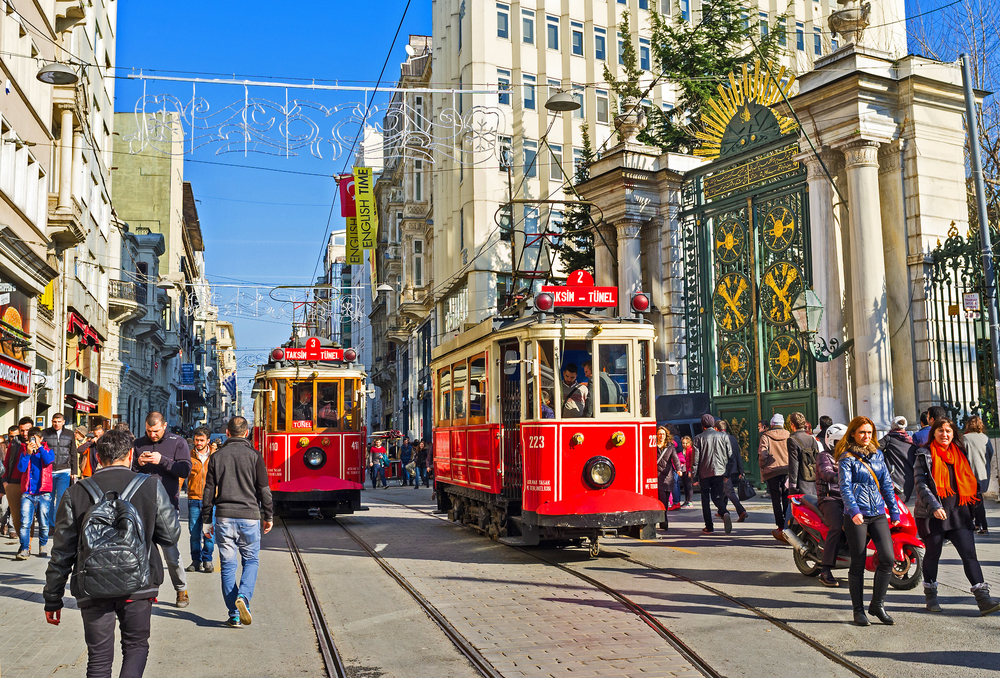
Rumeli Han stands on İstiklal Street, next to the Ağa Mosque, a short walk from Taksim Square. The easiest way in is the M2 metro to Taksim, or the short funicular that runs up to Taksim from the Kabataş tram and ferry stop; from there you simply join the crowd heading down the avenue.
The tunnel has been opened to visitors with a ticket, but opening days and prices change. Check before you go.
Before heading down, look up. The Greek and French names beside the Ottoman inscription over the entrance are the detail most passersby miss.
İstiklal is busy at almost any hour, so keep an eye on your bag.
Sources: Hürriyet Daily News, Istanbul’s Rumeli Han draws visitors with enigmatic tunnel, Hürriyet Daily News, Rumeli Han’s mystic tunnel to transform into cultural hub, Türkiye Today, 130-year-old mysterious tunnel on Istiklal Street, Turkey Travel Planner, Rumeli Han, İstiklal Cad, Istanbul













Bir yanıt yazın