
Cunda Island: 10 Places to Visit on the Aegean Coast


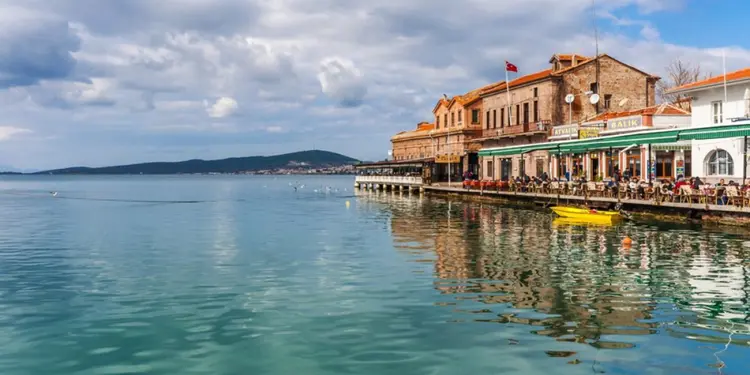
Cunda Island, off the coast of Ayvalık in Balıkesir province, is small and slow, and that is the whole point. Old Greek stone houses, seafood tables and sunsets set the pace, and Cunda Island is easy to cover in a day or two, with stops that range from a hilltop of windmills to an abandoned island monastery. Ten stand out, a few of them just off the island.
1. Ayışığı Monastery
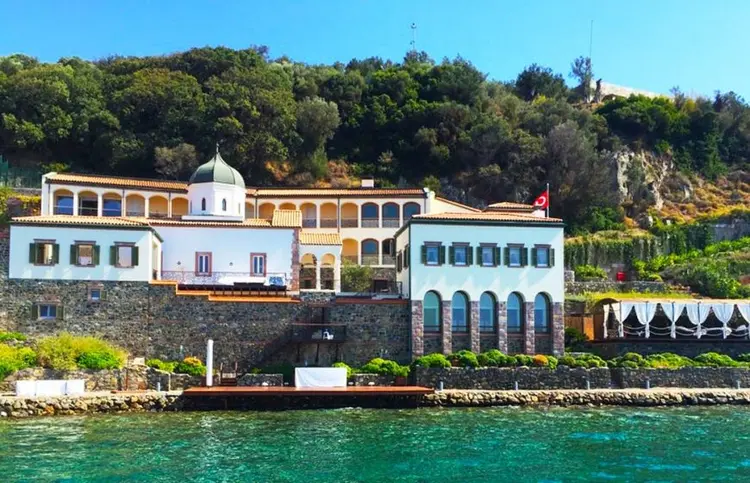
The Ayışığı (“Moonlight”) Monastery, Agios Dimitrios in Greek, stands right by the water at the far northern end of the Patriça (Pateriça) peninsula. Monks from Mount Athos built it in the 17th century. Roughly 30 years of neglect followed, until businesswoman Suzan Sabancı Dinçer bought the building, restored it and, from 2012 onward, opened it to a steady run of private and public events. Getting there is another matter. This is the island’s most remote corner, and a private car is the only practical way in. Whether the doors are open on a given day is hard to say from afar, so confirm access first.
2. The historic windmills of Cunda Island
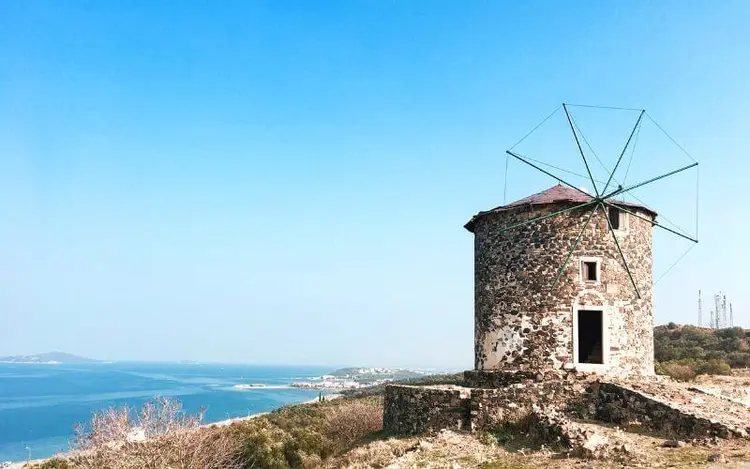
Three old windmills form the island’s trademark skyline. They have been welcoming visitors for years, and two have found new jobs: one is now a restaurant and wine house, while another, restored with the support of Rahmi Koç, works as a café and the Sevim and Necdet Kent Library up on Aşıklar Tepesi (Lovers’ Hill). The historic character survives. Sunset is the real reason to come. Plan the visit around it.
3. Çataltepe Beach
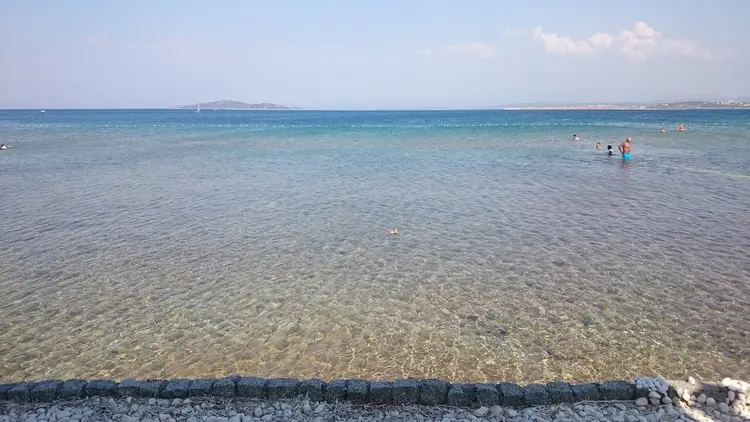
Çataltepe is one of Cunda’s most popular beaches. Families like it. Calm, clear, wave-free water explains the appeal, and getting there needs no car at all, since a dolmuş (shared minibus) from Ayvalık covers the trip in about 20 minutes.
By midday it fills up. The honest advice: go early.
4. Aşıklar Tepesi (Lovers’ Hill)
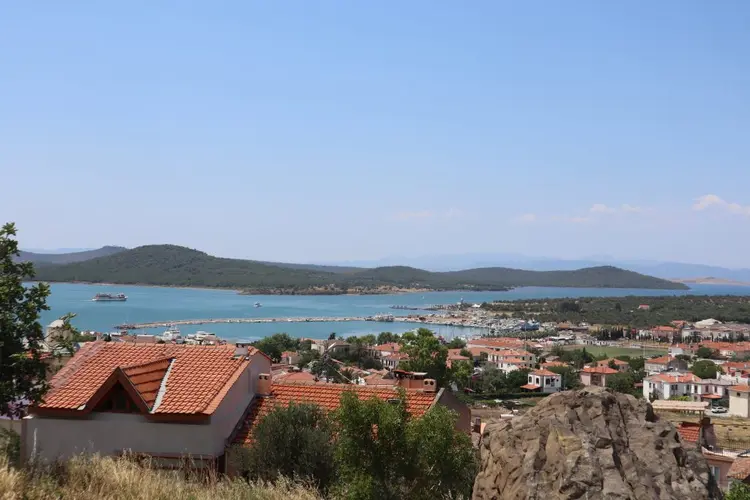
From this hilltop the whole island spreads out below in a bird’s-eye view, and since one of the windmills stands right on top, the steady foot traffic up the slope is easy to explain. The climb is short. The payoff is not: sea views on every side. Plenty of visitors only realize at the top that the island is small enough to take in at a single glance.
5. Ortunç Cove
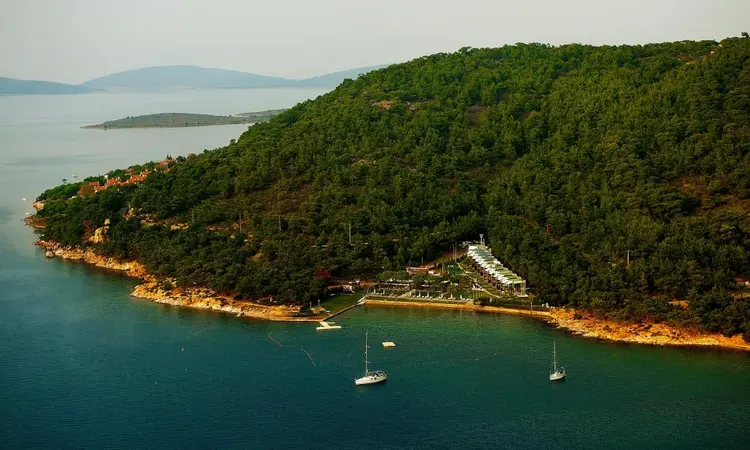
Ortunç keeps things quiet. It ranks among the least crowded coves on the island, and the contrast with Çataltepe is the trade-off in a nutshell: Çataltepe is a 20-minute dolmuş ride and full by midday, while Ortunç asks for a car or a boat and gives back space. The water is clear, the shore has a hotel plus designated camping areas, the beach carries Blue Flag status, and offshore lie dive spots where some operators run diving courses.
6. Şeytan Sofrası (Devil’s Table)
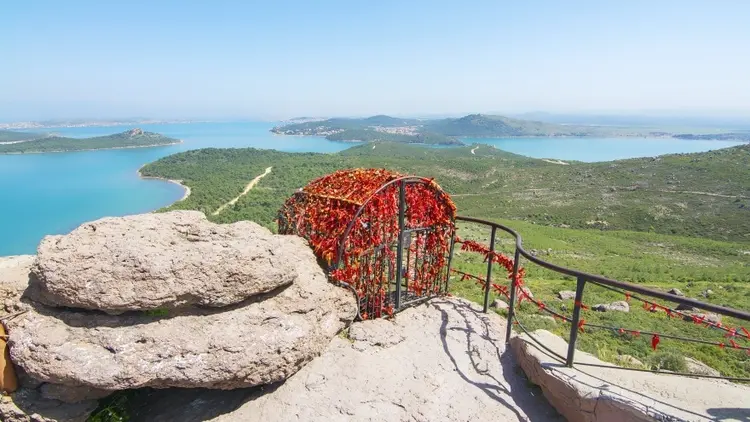
Şeytan Sofrası turns up on nearly every Cunda list, yet it is not on the island at all: this volcanic hilltop viewpoint sits on the mainland near Ayvalık, about 8 km from the town center, and looks out across the bay toward Lesbos. Then there is the legend. Moonlight on the rocks, the story goes, makes them look like devils seated at a table. Hence the name. Whether any devils actually show up is another question.
Sunrise and sunset are the best times to go, and photographers come from far and wide. It is the windmills’ sunset logic again, just on a bigger stage.
7. Küçükköy (Yeniçarohori)
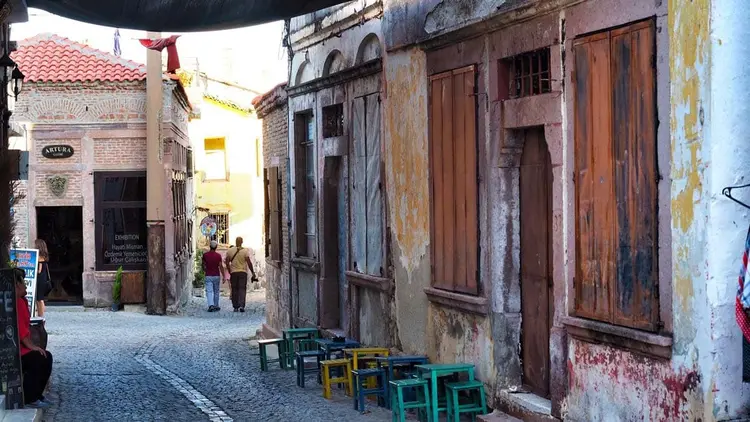
Küçükköy is a village of old stone mansions, now filled with art galleries, cafés and restaurants. Distances are modest. It sits about 5 km from Ayvalık and 14 km from the center of Cunda. A rental car or taxi helps. Greeks and Turks lived here together for generations, and the village still carries that history in its cobblestone lanes and old plane trees, while the traditional market sells small handmade gifts.
8. Lesbos (Midilli)
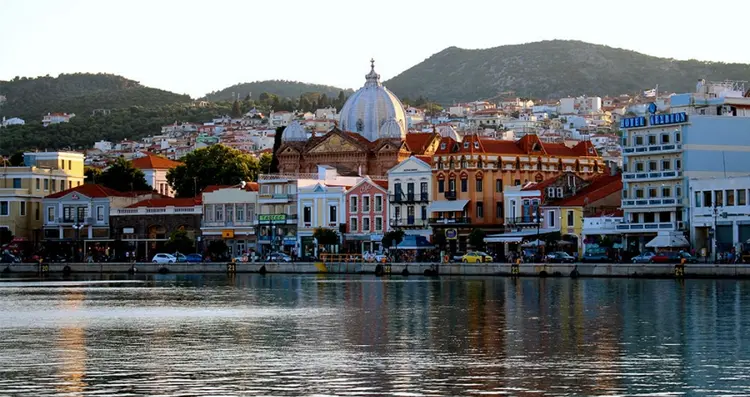
The Greek island of Lesbos, Midilli in Turkish, lies just across the water. Ferries and boats from the Ayvalık area take around 90 minutes. A day trip to another country? From here, it’s realistic. Don’t forget the passport, though. This is an international border, not a hop to the next beach, and entry rules apply. Lesbos rewards the crossing with old mansions, churches, craft shops and an archaeological museum, and when the sun starts to drop over the water, the harborside tavernas serve fish.
9. Taksiyarhis Church
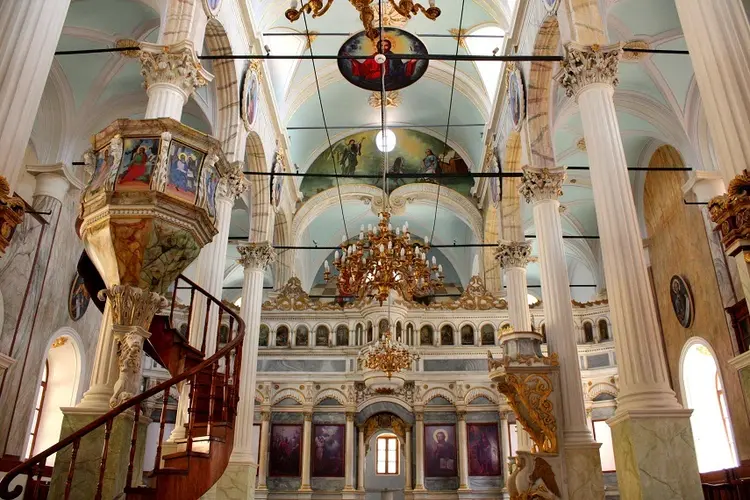
Taksiyarhis is one of Cunda’s most visited buildings. It has had three lives. Built by the Greek community in 1873, it later served as a tobacco depot before becoming the Cunda Taksiyarhis Rahmi M. Koç Museum, which is how most visitors know it today. Its basilica plan, dome and gilded details recall Byzantine models. The walls deserve a look: they are built of “garlic stone,” the pale local stone of the Ayvalık area.
10. Tımarhane Island (Taşlı Ada)
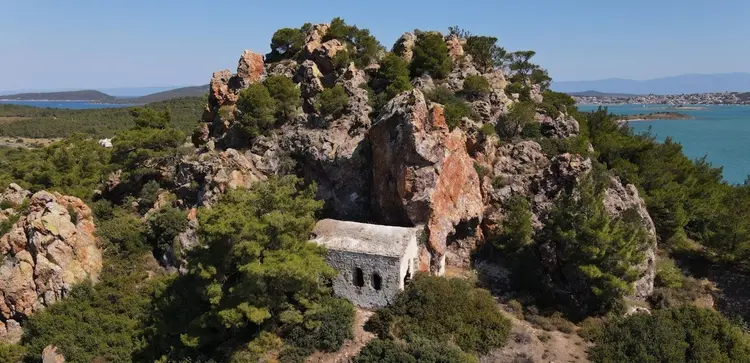
Tımarhane Island, also called Taşlı Ada (“Stony Island”), is a favorite stop on boat tours from Cunda. The name needs explaining. It means roughly “asylum island,” and according to local stories the island was once used as a place of care for the mentally ill. How much of that is history and how much is harbor talk is hard to pin down, but the abandoned monastery only deepens the mood for anyone stepping ashore.
Most visitors come for the quiet, and for a swim in clear water away from the crowds.
Sources: Daily Sabah, Hürriyet Daily News, Wikivoyage


Bir yanıt yazın