
Pergamon Ancient City: 16 Facts to Know Before You Go


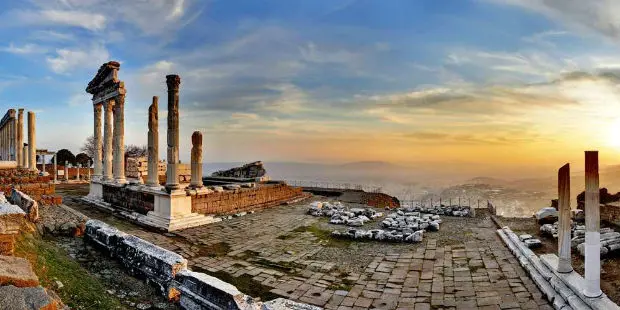
For roughly 150 years, from 281 to 133 BC, the Pergamon ancient city was the capital of the Attalid kingdom, one of the richest courts of the Hellenistic world. Today its ruins crown a steep hill above Bergama, in the İzmir province of Türkiye. The highlights run from the royal acropolis at the top to the healing sanctuary down the hill.
1. The name means a fortress, and it survives in Bergama
Pergamon is the ancient Greek name. Bergama, the modern town below, simply softened it.
The name is commonly explained as meaning a fortified citadel, which suits a city built around a steep rock, and in 2014 UNESCO inscribed the site as the Pergamon and its Multi-Layered Cultural Landscape.
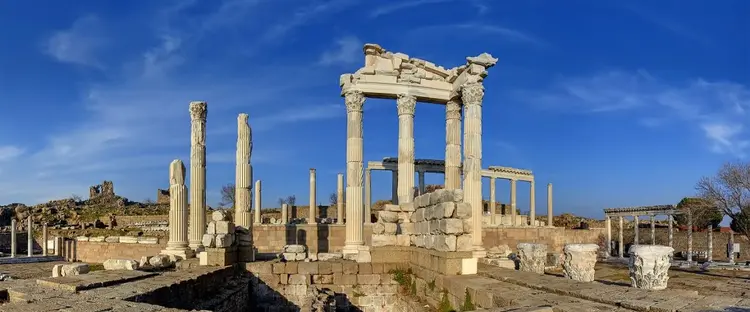
2. The acropolis is a mesa about 335 meters high
The upper city sits on a flat-topped hill roughly 335 meters (1,100 ft) tall. The kingdom’s rulers lived and governed up here. Visitors who dislike heights should know the views are wide and the drops are real, although a cable car now runs from Bergama’s edge to the top and spares most of the climb.
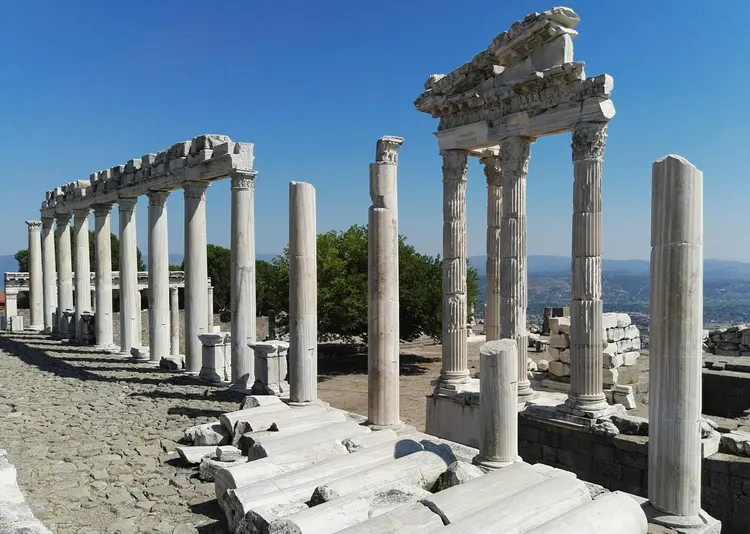
3. Palaces, sanctuaries and a library shared one hilltop
The Attalid kings packed their palaces, temples, arsenals and library into the upper city. Flat ground was scarce, to put it mildly.
Terraces were cut into the slope instead, and the result, seen from the valley, is a layered city that reads almost like a stage set.
4. The Altar of Zeus is in Berlin, but its base is still here
German engineer Carl Humann began digging at Pergamon in 1878 and uncovered the Great Altar of Zeus, a masterpiece of Hellenistic sculpture. Its reliefs were shipped to Berlin, where they are displayed in the Pergamon Museum. On the acropolis, just the base is left.
The Berlin museum is scheduled to reopen on June 4, 2027, with the altar back on show.
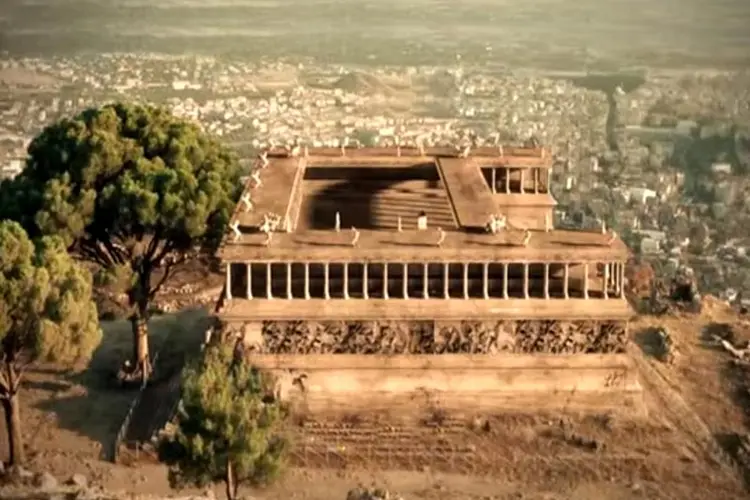
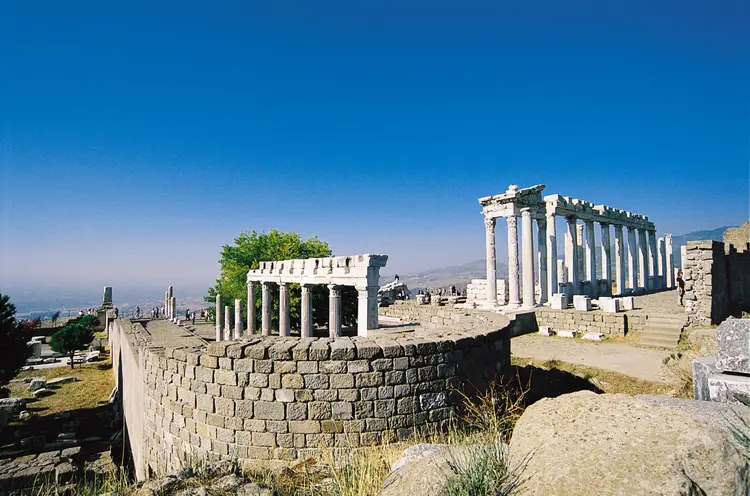
5. The Temple of Trajan crowns the highest point
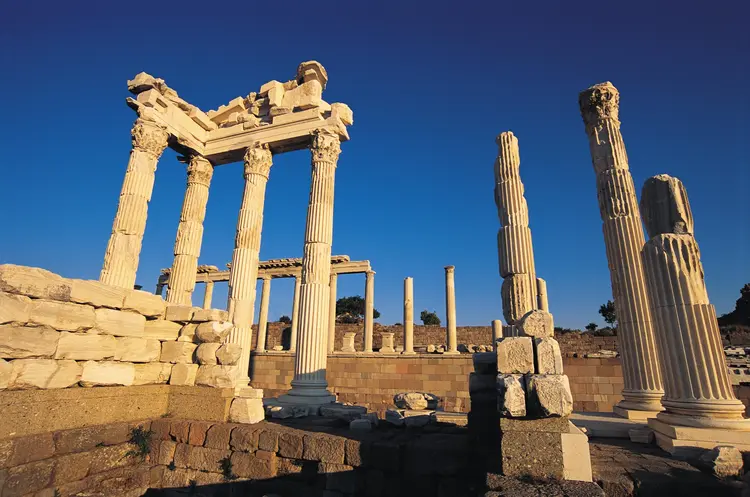
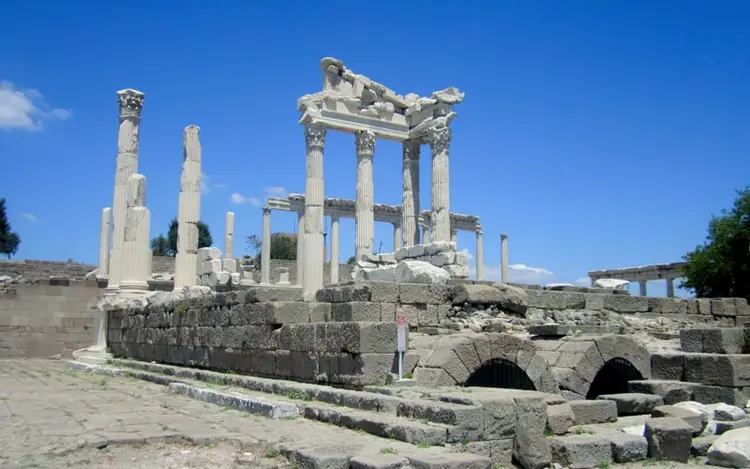
The Traianeum, dedicated to Emperor Trajan and Zeus Philios, stands at the summit and was begun under Trajan before being completed under Hadrian. It was raised on a platform with colonnaded galleries around the courtyard. Several columns have been re-erected. The scale is easy to picture.
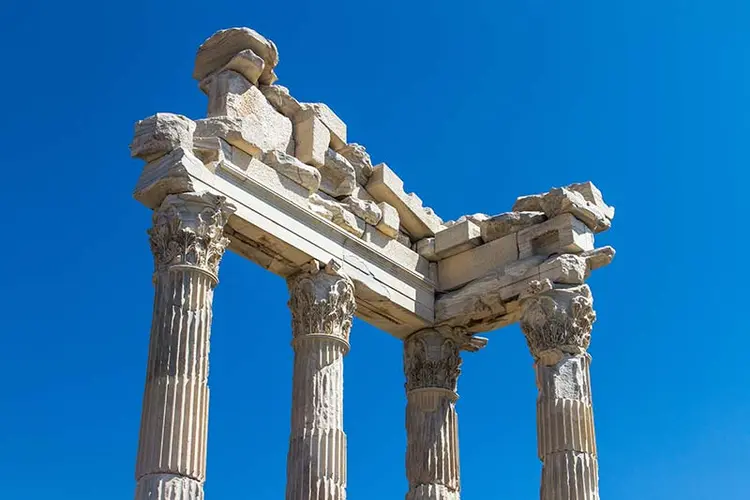
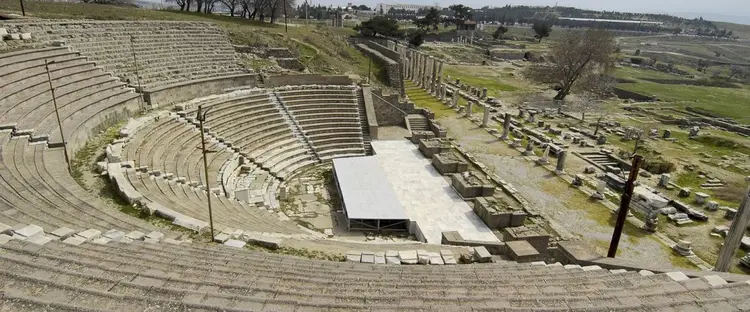
6. The theater is among the steepest of the ancient world
Carved into the hillside, the theater has about 78 rows and held roughly 10,000 spectators.
The slope is the real shock. From the bottom row to the top, the seating rises about 36 meters, so sharply that the stage seems to hang over the valley. Most people only feel that gradient on the way down.
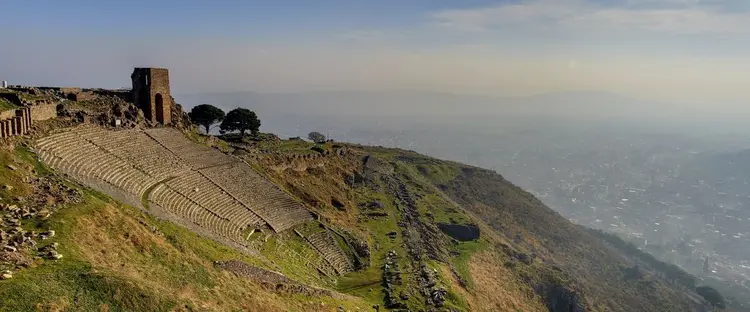
7. Only the foundations of Athena’s sanctuary remain
The sanctuary of Athena, the city’s patron goddess, sits just above the theater, and almost nothing of it stands today beyond its base. Why stop here, then? The library once stood beside it.
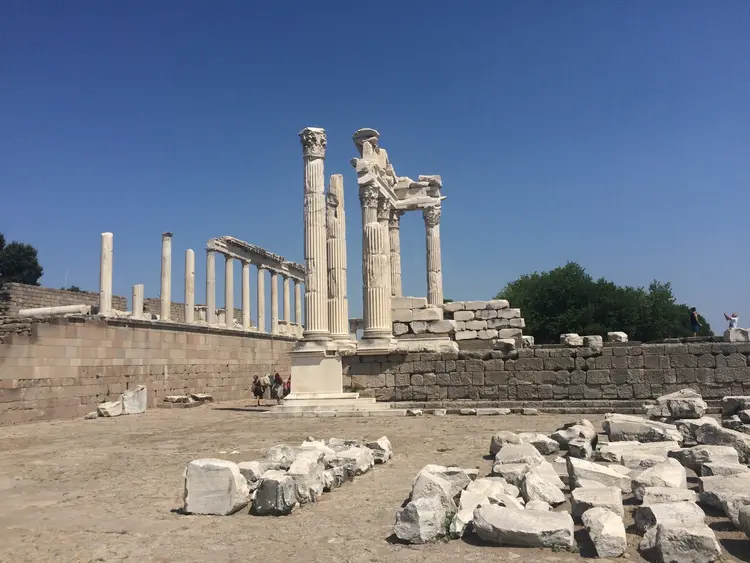
8. The library held about 200,000 scrolls
Only Alexandria’s library was larger.
Pergamon’s collection made the city a center of learning, and rulers treated books as a form of prestige. Little of the building survives, but the Athena precinct beside it hints at the cultural ambition of the kings.
9. Parchment takes its name from Pergamon
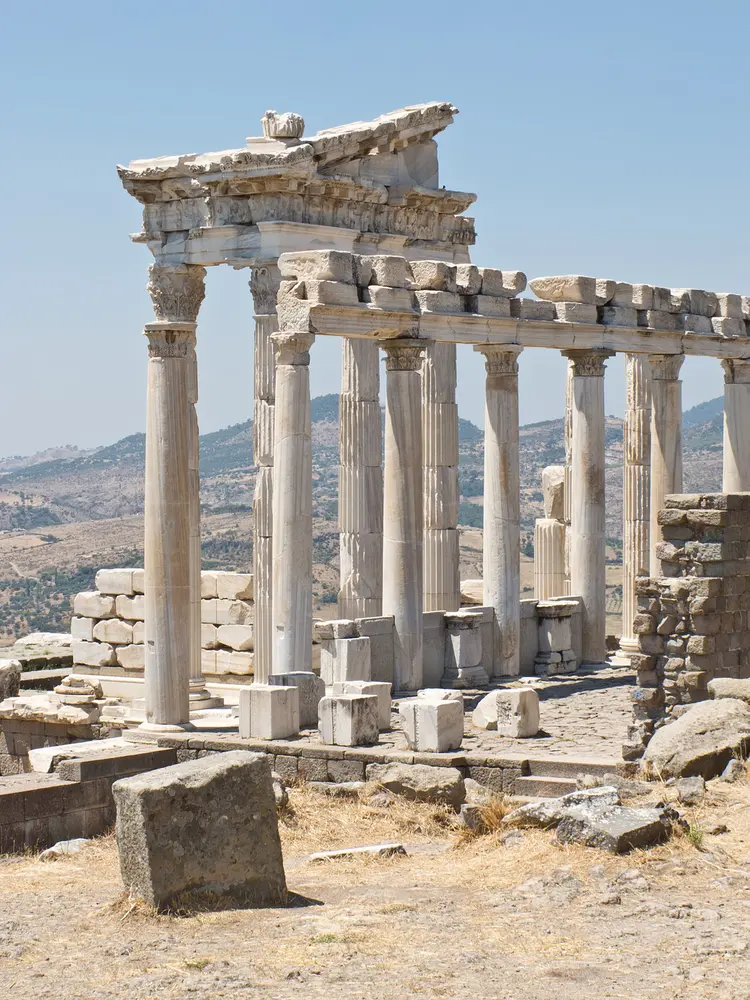
The English word “parchment” comes from the Latin for “of Pergamon.” A popular story claims the city invented it after Egypt halted papyrus exports, but that’s legend, not history: animal-skin writing was used across Anatolia long before. The name stuck anyway. So did the legend.
10. The lower agora was the city’s marketplace
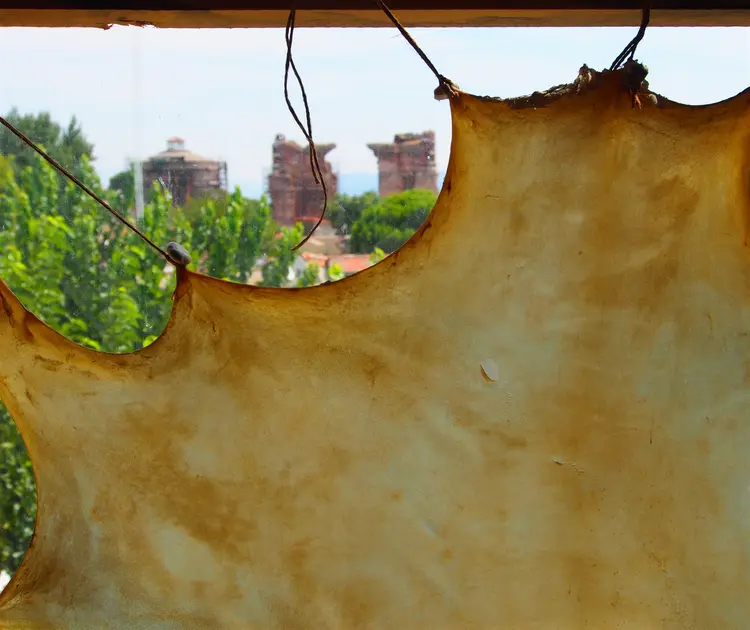
Built under Eumenes II, the lower agora served as the commercial heart of Pergamon, with shops lining its colonnades and traders crowding the open space. Daily life happened down here. The royal acropolis sat well above it, in every sense.
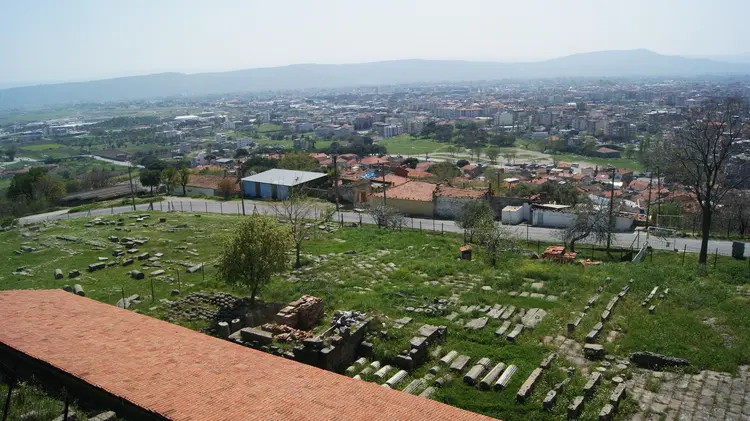
11. The middle city was where the elite lived
Where the upper city felt official, the slopes below were more residential.
Royal relatives, scholars and military commanders are said to have lived here, and walking this stretch shows how the city shifted from ceremony at the top to everyday comfort lower down.
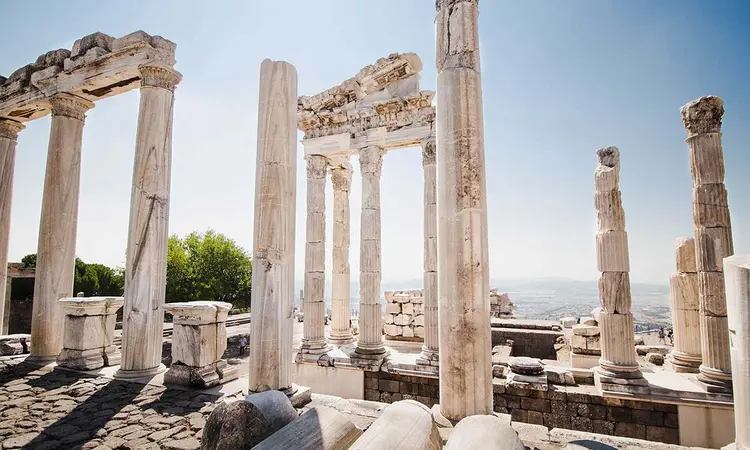
12. Temples and gymnasia lined the middle terraces
Heading from north to south, the middle city contained sanctuaries to Hera and Demeter and a series of gymnasia, the training grounds that doubled as schools. In a Greek city, these were core civic life, not a hobby. Their terraced layout is clearest from above.
13. Open squares gave ordinary residents room to gather
Beyond the administrative buildings, the middle city had public spaces where people could meet and rest. They’re easy to walk straight past next to the grand monuments, yet they show, more plainly than the temples do, a city built for living and not only for display.
14. The Roman “golden age” spilled beyond the walls
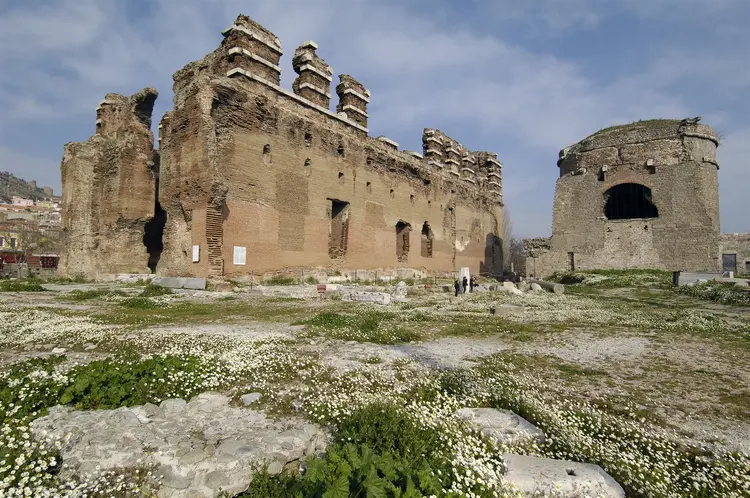
In the 2nd century AD, under Trajan and Hadrian, Pergamon grew outside its old fortifications. The most striking addition was the Red Basilica, a vast brick temple about a kilometer south of the acropolis, probably dedicated to Egyptian gods such as Isis and Serapis. Its twin round towers still rise over the modern town.
15. The Asklepion was an ancient health resort
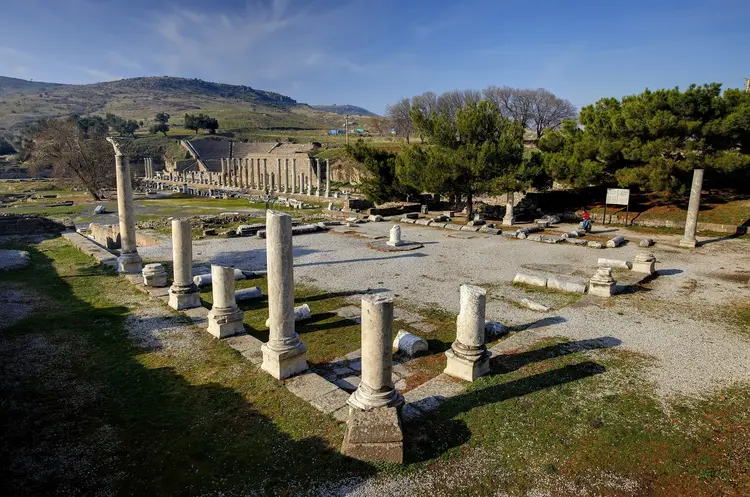
Dedicated to Asklepios, the god of healing, this sanctuary began in the 4th century BC according to most accounts and reached its peak in the 2nd century AD. Patients came for sacred spring water, mud baths, dream interpretation and herbal remedies, a treatment menu that sounds a lot like a modern spa. The acropolis was built to impress; the Asklepion, a short drive below it, was built to heal. An old colonnaded sacred way leads in.
16. A famous orator wrote about his treatment here
In the mid-2nd century AD, the orator Aelius Aristides spent years at the sanctuary and left detailed accounts of his cures, from baths and walking therapy to dream-guided routines. The physician Galen, born in Pergamon, was working in the same city at about the same time.
Between them, they show why the Asklepion was famous across the Roman world.
Sources: Wikipedia, Pergamon, İzmir Provincial Directorate of Culture and Tourism, Staatliche Museen zu Berlin




Bir yanıt yazın