
Ephesus Ancient City: 16 Facts From the Ruins


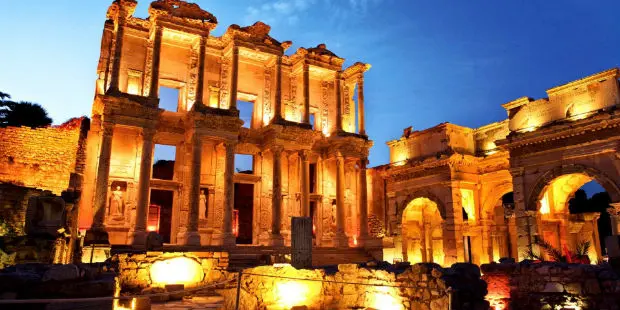
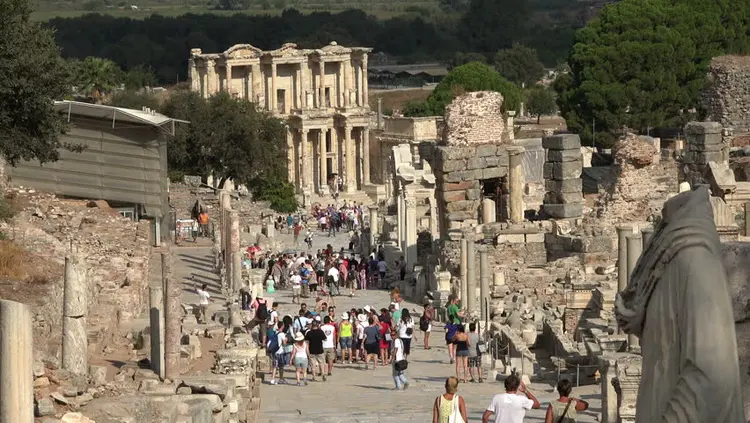
The Ephesus ancient city sits beside Selçuk, in the İzmir province of Türkiye, and it has been Greek, Roman, Christian and Turkish in turn. Visitors come from across the world for the Library of Celsus, the vast theater and the Temple of Artemis’s lone column. These 16 facts sort legend from record.
1. Founders: a Greek prince, or the Amazons?
Ancient writers told two origin stories. The first credits Androklos, a prince of Athens who led Greek settlers here in around the 10th century BC, while the second says the city took its name from Ephos, an Amazon queen. Which one is right? Archaeology sidesteps both. People lived on nearby Ayasuluk Hill long before either date.
2. It became the capital of Roman Asia
Ephesus flourished in the Hellenistic period. Rome raised it higher. In 27 BC Augustus made it the capital of the province of Asia, turning it into the most important Roman city in western Anatolia, and a large population soon followed.
Few ancient cities hosted so many people from so many backgrounds.
3. A harbor made it a port of arrival
It sat right on the coast. Sailors, merchants and settlers stepped off their ships straight into the streets, so the harbor worked as the city’s front door.
Not anymore. Today the sea is several kilometers away: the UNESCO World Heritage listing describes a city that sat in the old estuary of the Kaystros and kept moving as the coastline retreated westward. A port city with no sea in sight takes a moment to make sense of.
4. Trade turned a harbor town into a showpiece
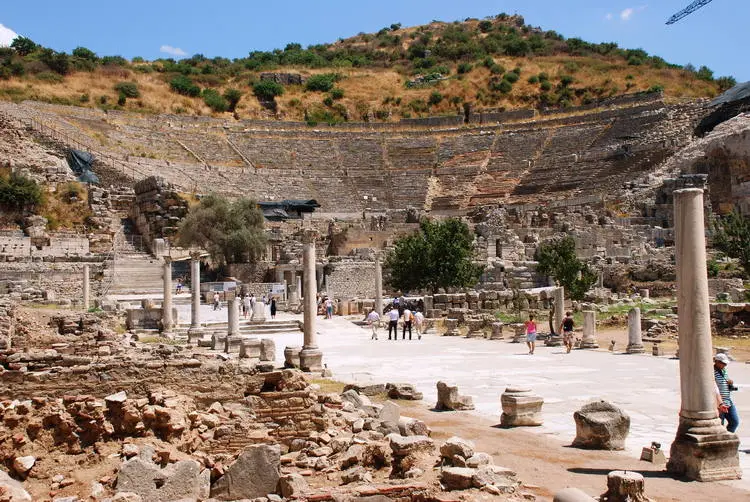
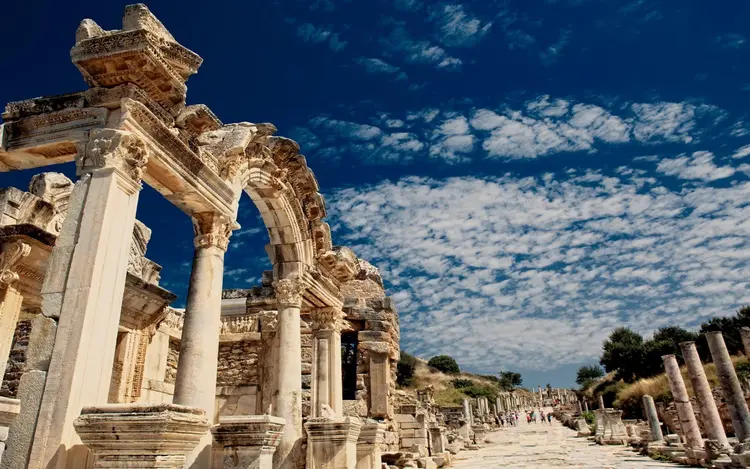
Shipping brought money. Public buildings grew to match it, and the stoas, baths, fountains and paved marble street that still line the site hint at how much wealth passed through the port.
It was built to impress whoever stepped ashore.
5. Control passed from Beyliks to the Ottomans
The Byzantine era ended here in 1304. That year the town surrendered to the Menteşe beylik, and the Aydın beylik took it over soon after. Then came Timur. His campaign in 1402 briefly handed Anatolia back to the beyliks, and it was not until 1425 that the Ottomans fully incorporated the region—by which point the old city was already in decline.
6. The Temple of Artemis was one of the Seven Wonders
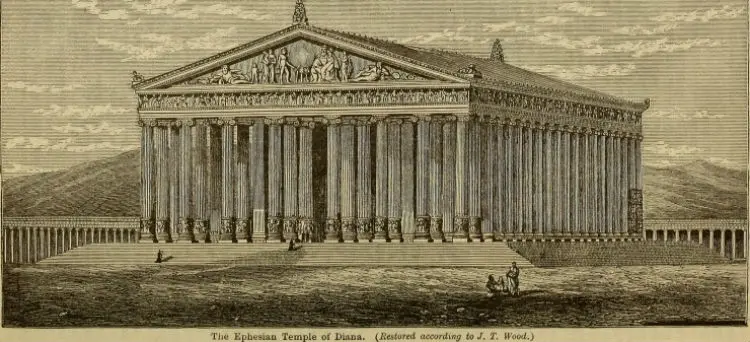
The ancient Greek poet Antipater of Sidon listed Artemis’s temple among the wonders and wrote that the Sun had never seen anything so grand. In 356 BC it burned. It was rebuilt. Today a single reconstructed column marks the spot, standing a short walk from the main ruins on the edge of modern Selçuk.
7. The Great Theater held around 24,000 spectators
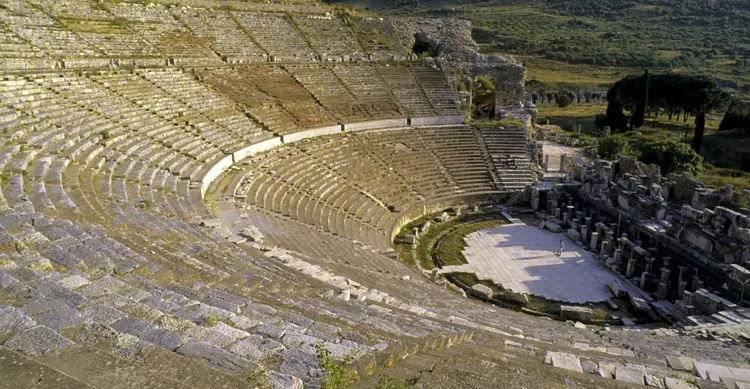
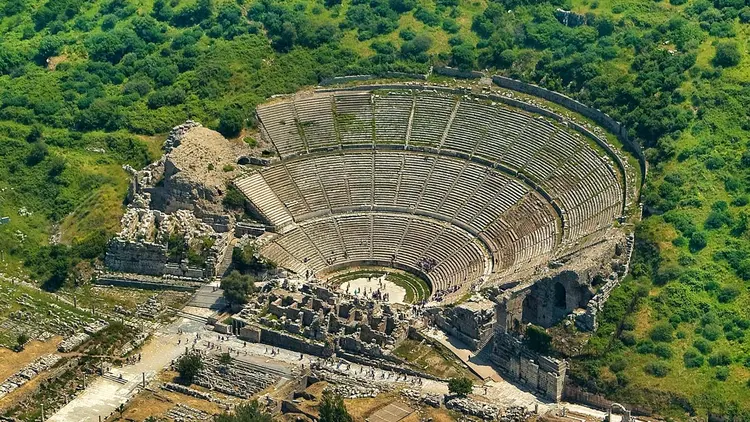
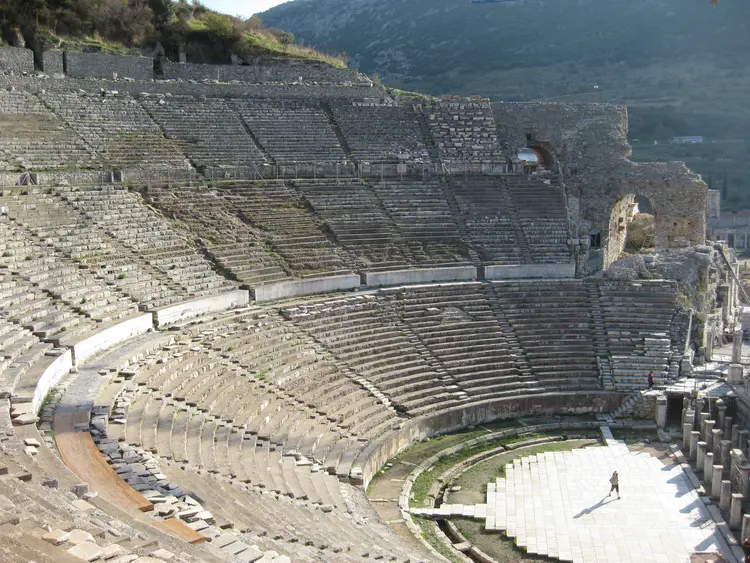
Carved into the slope of Mount Pion, the theater ranks among the largest of the ancient world, with seating estimates running from 24,000 to 25,000. Its program was broad: plays, assemblies, gladiator shows.
The stage has not gone quiet: concerts are still held at Ephesus in season.
8. The seating still looks ready for a show
Much of it survives. Large sections of the cavea are still standing, and the rows of seats remain so intact that it is easy to picture a crowd settling in before a performance. The reward for climbing to the top? A view down the marble street toward the old harbor.
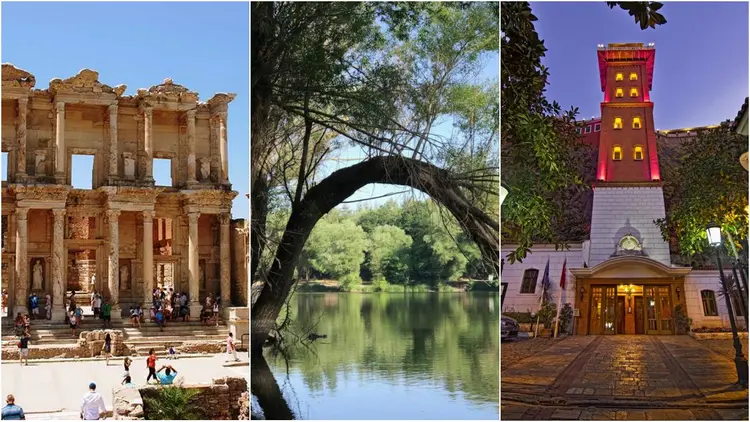
9. The Library of Celsus is a tomb as much as a library
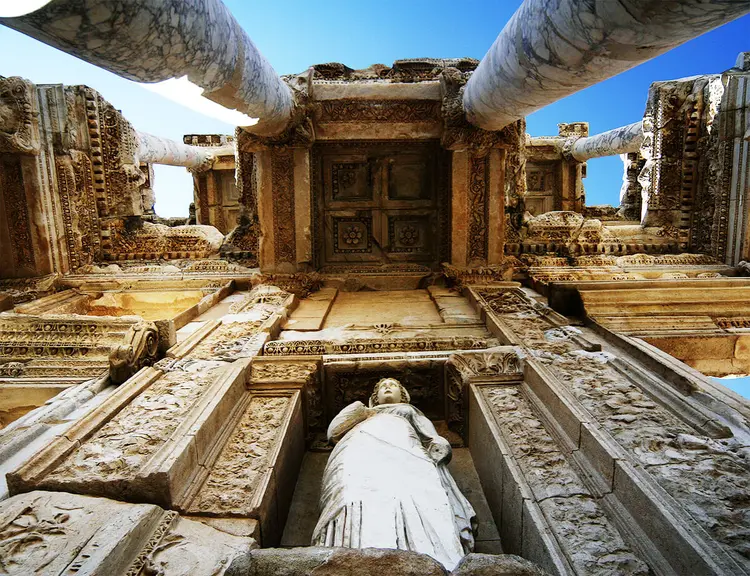
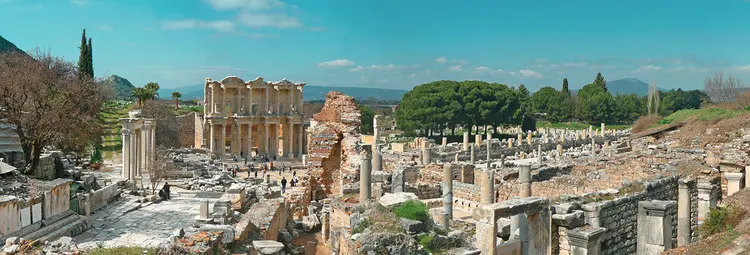
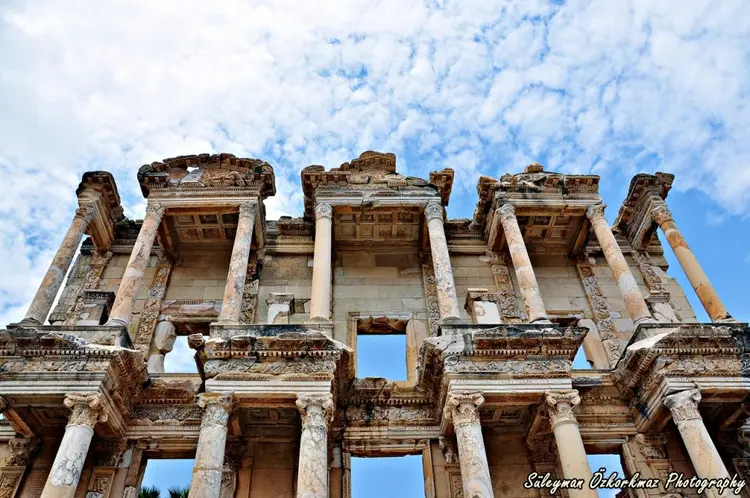
Tiberius Julius Aquila dedicated it to his father, Julius Celsus Polemaeanus, governor of Asia around 106 AD, and Celsus was buried in a chamber beneath it. The facade looks two-storied. Inside, it is a single hall. When it was finished is harder to say: estimates run from about 115 to 150 AD.
10. It held about 12,000 scrolls
Tourist guides love to call the Library of Celsus the third-largest library of the ancient world, behind only Alexandria and Pergamon. Truth is, that exact ranking is a tourism claim, not a settled fact. The scroll count is firmer. Around 12,000 is the standard estimate, roughly one scroll for every two seats in the Great Theater.
The facade is one of the best-preserved Roman monuments in the Mediterranean.

11. A cave on Mount Pion is linked to the Seven Sleepers
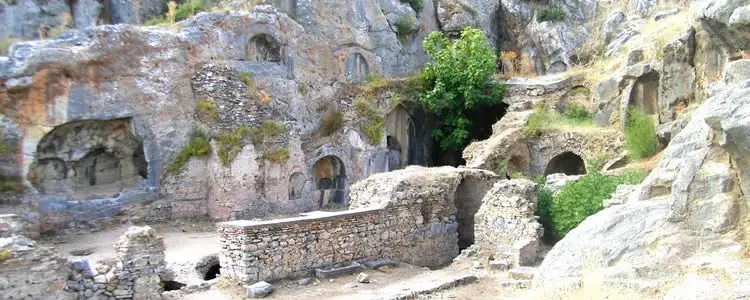
According to a tale told in both Christian and Muslim traditions, seven young men hid in a cave to escape persecution and fell into a sleep that lasted generations. Ephesus is believed to be their city. Tradition points to a nearby cave.
12. The legend appears in both Christianity and Islam
Details differ slightly from one version to the next. The core does not: a miraculous deliverance and a very long sleep. That shared core is why visitors of both faiths make their way to the same cave on the slopes outside the ancient city.
The Quran tells it too.
13. The Terrace Houses had underfloor heating
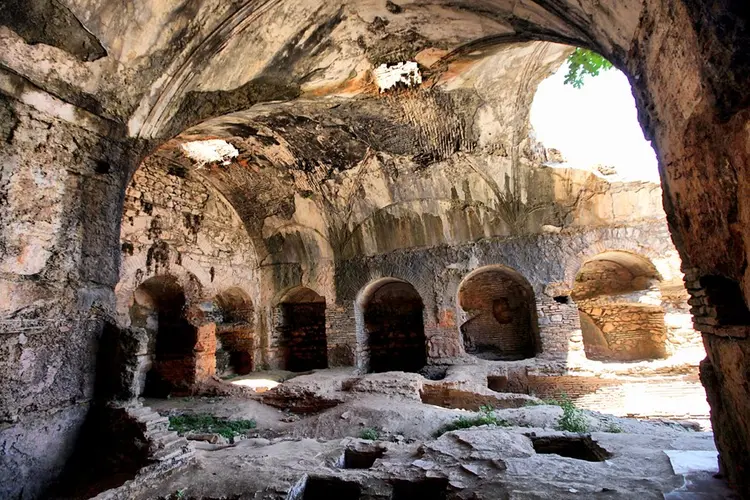
On the hillside, about six luxury residences sit on three terraces, their walls and floors decorated with mosaics and frescoes, and they stayed in use for a remarkably long stretch, from the 1st century BC to the 7th century AD. Heat ran under the floors. Yes, underfloor heating, in Roman Ephesus. Each home opened onto its own courtyard. Entry usually takes a separate ticket.
14. Guides say slaves warmed the latrine seats first
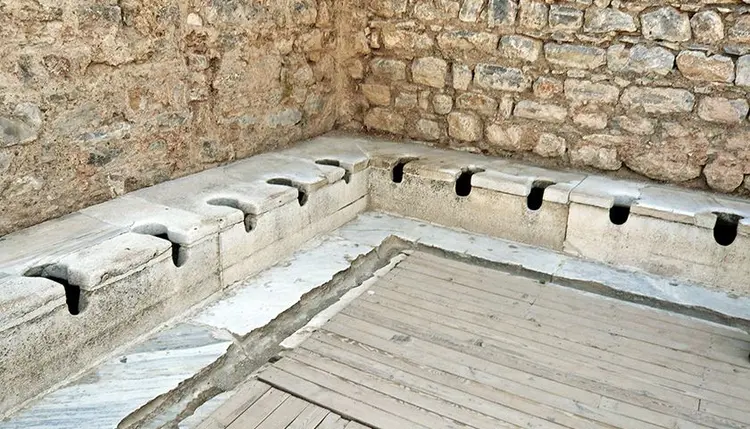
A well-known guide story says slaves sat on the public toilets before the wealthy did, just so the marble would be warm. Hard to prove, and probably impossible to. The setting plays along: long rows of stone seats over flowing water. The latrines near the Library of Celsus are among the most photographed spots at the site.
15. The philosopher Heraclitus was born here
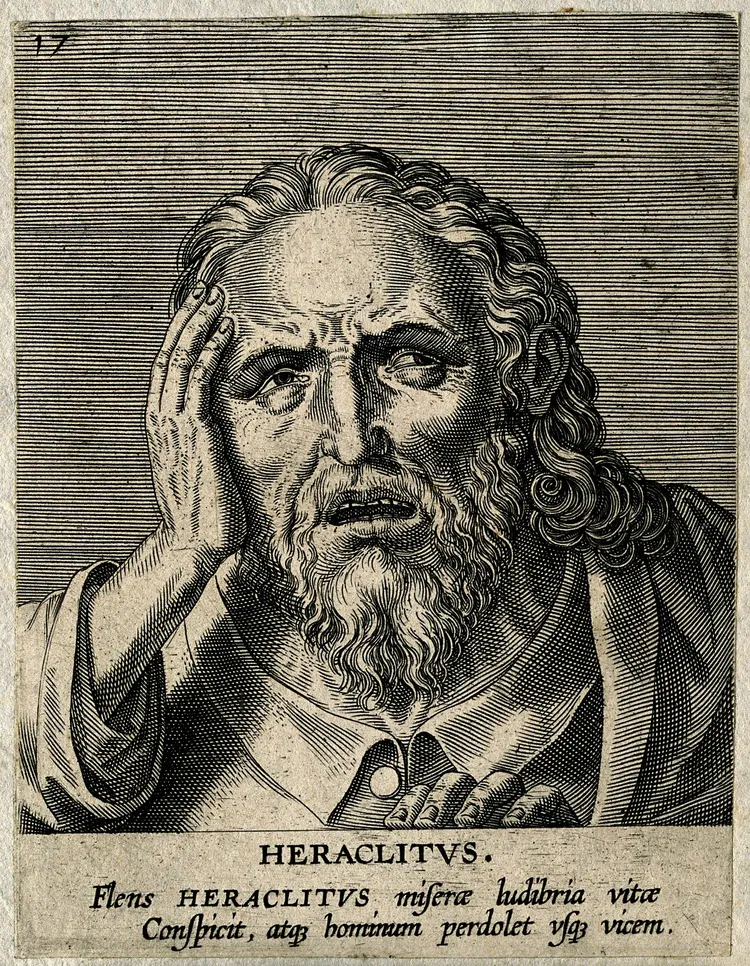
Everything flows. That idea belongs to Heraclitus, the pre-Socratic thinker who came from Ephesus and lived around 500 BC, centuries before Augustus made the city a Roman capital.
The city carried intellectual weight long before the Romans arrived.
16. A church of Mary hosted an early Christian council
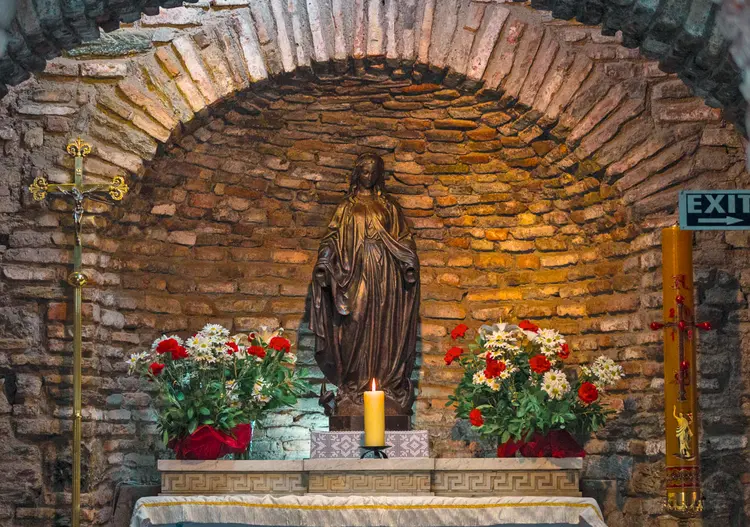
The Church of Mary at Ephesus is often described as the first church dedicated to the Virgin Mary. In 431 AD it hosted the Council of Ephesus. Nestorius was condemned there. About seven kilometers away stands the House of the Virgin Mary, a pilgrimage site for both Christian and Muslim visitors, and in 2015 Ephesus joined the UNESCO World Heritage List.
Sources: Wikipedia, Ephesus, Duke University, Library of Celsus at Ephesos, UNESCO World Heritage Centre, Ephesus

Bir yanıt yazın