
20 Things to Do in Bursa: Ottoman Heritage and Nature


Bursa is where the Ottoman story began, long before Istanbul joined it. The things to do in Bursa run from mosques, tombs and old trading halls to villages and a ski mountain. Wear good shoes, and keep room for kebab.
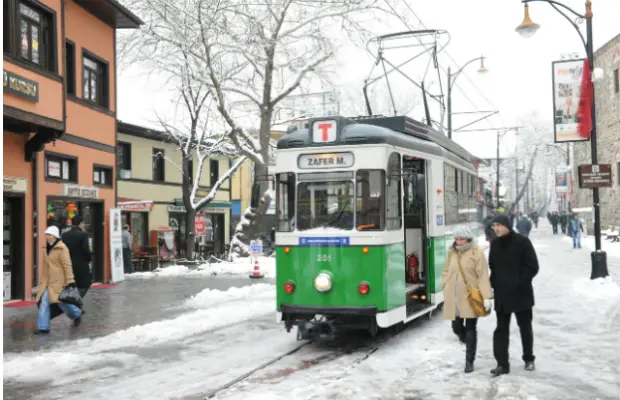
1. Cumhuriyet Avenue: a tram ride through the things to do in Bursa

Cumhuriyet Avenue is the city’s main promenade, and a vintage-style tram runs along it, helping link the old districts. Expect crowds. Few streets in Bursa get busier.
2. Ulu Camii, an early Ottoman mosque

Commissioned by Sultan Bayezid I and completed in 1399, Ulu Camii (“Great Mosque”) is among the earliest large Ottoman mosques and still anchors the city’s religious life. Shoes come off at the door. Dress modestly.
3. Koza Han, the silk trading hall

Koza Han is a caravanserai from 1490 near Ulu Camii. Its name comes from the silkworm cocoons (“koza”) once traded here, which goes a long way toward explaining why Bursa became a textile city in the first place. Today it sells local products. The courtyard teahouses make a pleasant place to rest.
4. The Covered Bazaar

The Covered Bazaar in the Heykel district is a historic shopping hub for locals and visitors alike.
It lies close to Ulu Camii and Koza Han, so the three fit into one walk.
5. The tombs of Osman Gazi and Orhan Gazi

These tombs hold Osman Gazi, founder of the Ottoman state, and his son Orhan Gazi, and they are among the city’s most important cultural and religious sites. Both stand in the Tophane district. They stay busy all year. What stands today dates from 1863, when rebuilding after 19th-century earthquake damage was completed.
6. Muradiye Complex

Muradiye is a complex of mosque, tombs and garden. It holds the tombs of Sultan Murad II, Hümma Hatun (mother of Mehmed the Conqueror) and Mahidevran Hatun, the first consort of Suleiman the Magnificent, with her son Prince Mustafa.
7. İznik, a former capital

İznik, ancient Nicaea, served as a capital for several states, including the Byzantines in exile and the Anatolian Seljuks. It makes an easy day trip from Bursa. History lovers will not be bored.
8. Bursa City Museum

This much history is hard to piece together from street level alone. The City Museum puts the details and the context in one place.
9. Soğanlı Botanical Park

Right beside the Bursa Zoo, this botanical park covers about 40 hectares of plants and flowers. A 1.8 km cycling path runs through it. Bikes can be rented on site.
10. Gölyazı and the Weeping Plane Tree

Gölyazı is a small peninsula village on Lake Uluabat, reached from the Bursa-İzmir road, and a magnet for photographers.
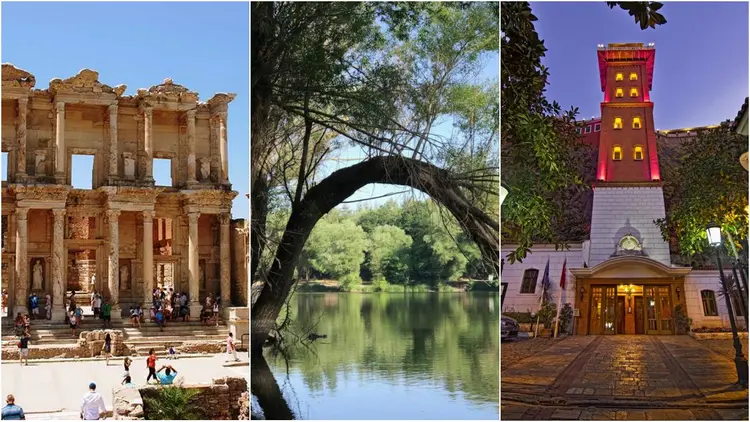
Its famous “Weeping Plane Tree” (Ağlayan Çınar) has several local stories attached to it. Which one is true is anyone’s guess.
11. Irgandı Bridge, with shops on top

Built in 1442, Irgandı Bridge carries a row of small shops across the stream below, a rare sight for a footbridge. It was restored in 2004. Since then the shops have sold traditional crafts, and browsing them tends to take longer than crossing.
12. Cumalıkızık, the village that kept its houses

Cumalıkızık is a village of more than 250 surviving Ottoman-era houses. Most are still lived in. It is one of the sites of the UNESCO World Heritage listing “Bursa and Cumalıkızık: the Birth of the Ottoman Empire,” and a walk through its cobbled lanes belongs on any Bursa trip.
13. Tirilye, a former Greek town on the sea

Tirilye (also written Trilye) was home to a Greek community until the 1923 population exchange, and its old stone houses show a different side of the region’s history.
Where Cumalıkızık keeps Ottoman village life going, Tirilye’s houses tell the story of a community that left. The coastal setting and seafood restaurants, where rakı traditionally accompanies the fish, are the main draw.
14. Arap Şükrü Street, Bursa’s meyhane lane

Arap Şükrü Street plays the same role in Bursa as Istanbul’s Nevizade does: a lane of meyhanes, the Turkish taverns that serve meze, fish and rakı. Evenings here get lively, and loud. An early night is not really the point.
15. Sümbüllü Bahçe Konağı and its view

In the Tophane district, this historic mansion has long been a spot for drinks with a city panorama. Tophane is among Bursa’s most central and lively neighborhoods. Opening status is worth checking before heading up.
16. Pirinç Han and its courtyard

Sultan Bayezid II had Pirinç Han built to bring income to charitable foundations in Istanbul.
Rooms stack on two floors around a courtyard with fountains, and the building is one of the better preserved examples of an Ottoman han. Koza Han is the han for shopping and tea; Pirinç Han is the one for the architecture.
17. Saitabat Waterfall

Blue water against green forest makes Saitabat one of Bursa’s loveliest natural spots. Need a quiet break? This is the place.
18. Tophane Clock Tower

The six-story, 33-meter tower was inaugurated in 1905 to mark the 29th anniversary of Sultan Abdulhamid II’s accession, according to Bursa’s tourism portal. The tower is a familiar landmark across the city.
19. İnegöl Forests

The forests of İnegöl district are among Türkiye’s greenest and most peaceful places, particularly colorful in autumn.
20. Uludağ, the ski mountain

Uludağ is Türkiye’s best-known winter sports area and draws visitors from abroad as well as locals. A cable car runs up from the city. Calling it a winter-only destination misses half the year, though. In summer, when the snow is gone, hikers take over the slopes.
Bonus: Iskender kebab and İnegöl meatballs

The short version: Bursa invented the Iskender kebab. Picture thin slices of döner over pieces of bread, topped with tomato sauce, melted butter and yogurt. İnegöl köfte are grilled meatballs from the nearby district, the same İnegöl whose forests made number 19. Long-running restaurants serve both. A queue is a good sign.
Sources: Visit Bursa, UNESCO World Heritage Centre, Wikivoyage

Bir yanıt yazın