
Vulcan Point: The Philippines’ Island Inside a Volcano


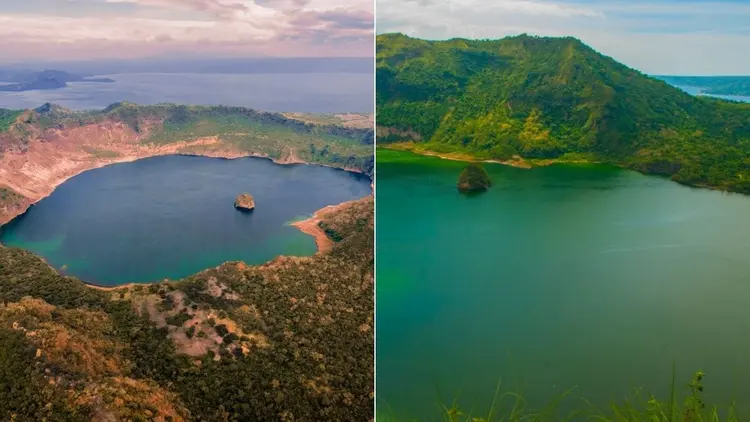
Some places sound like a riddle before they sound like geography, and Vulcan Point, in the Philippines, is one of them: a tiny island in a lake on an island in a lake on an island. Read that twice if you need to. The layering is real, it is volcanic, and it says a lot about one of the most restless volcanoes in Southeast Asia.
1. A geographic nesting doll in the Philippines
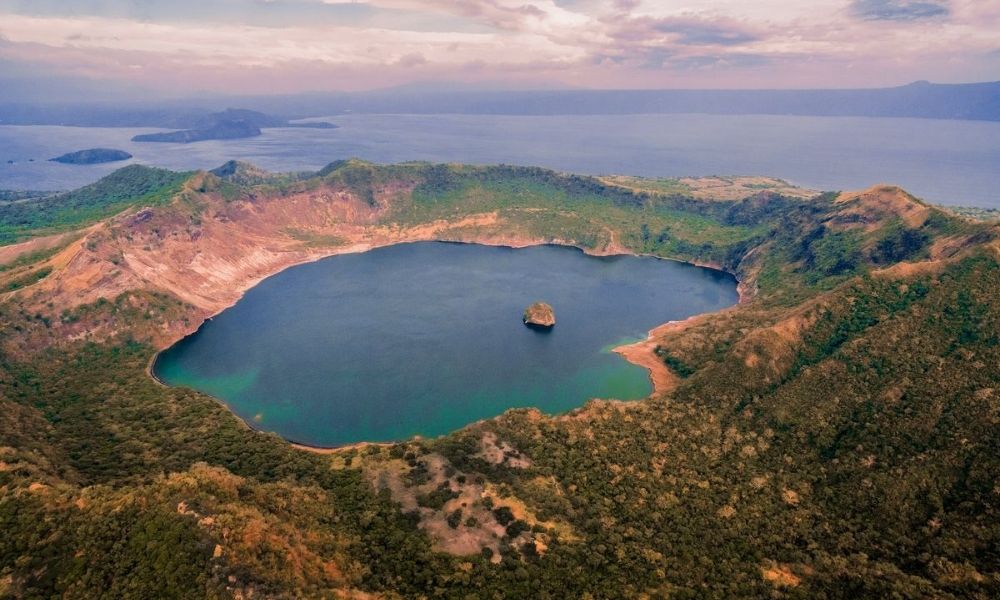
Picture a set of Russian nesting dolls, then swap the dolls for land and water.
That is Vulcan Point. Few places stack up this way. A first look at a map tends to raise the same question: how is that even possible? The answer lies under the water, in the volcano’s own history, which turns out to be just as layered as its shape.
2. What Vulcan Point actually is
Vulcan Point is a small rocky island inside Main Crater Lake, the lake that fills the central crater of Taal Volcano, and it rises from a remnant of the old crater floor, though it is often described as the tip of a cinder cone. Which version is closer to the truth is hard to say with certainty; the sources simply don’t agree.
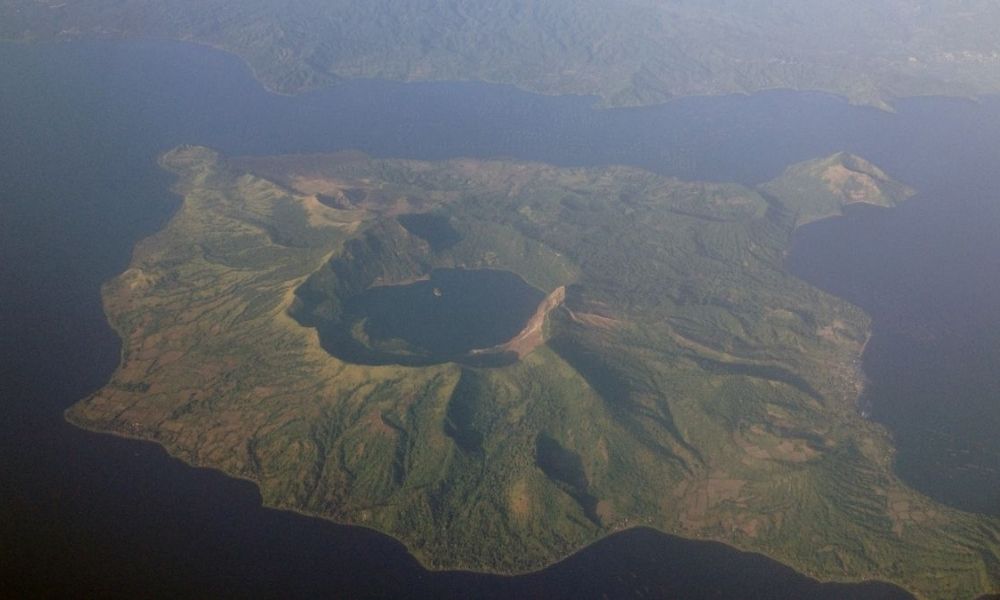
Here is the full stack, from the outside in:
- The Philippines, in the western Pacific.
- Luzon: the country’s largest island.
- On Luzon lies Taal Lake, a flooded caldera.
- Inside Taal Lake rises Volcano Island, the whole of which is off-limits to visitors.
- Main Crater Lake, in Volcano Island’s crater.
- And in that lake: Vulcan Point.
Lake, island, lake, island. Geographers call this a “third-order” island, which is a tidy label for something that still makes most people’s heads spin.
3. How this natural wonder formed
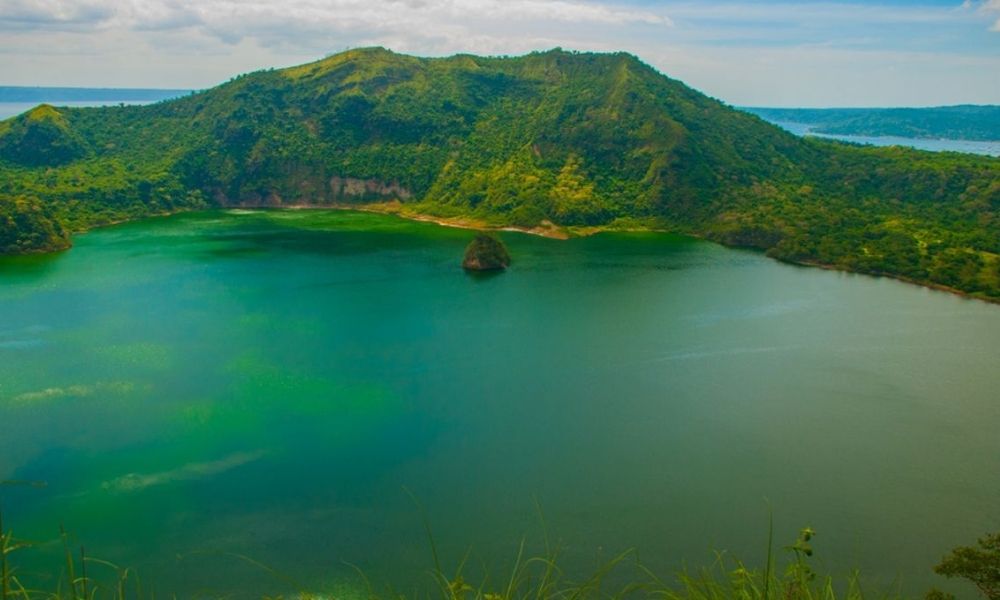
The shape dates to 1911.
That year a major eruption of Taal Volcano obliterated the crater floor. Before it, the crater held several small colored lakes; afterward, they were gone, and a single large lake took their place, today’s Main Crater Lake. Part of the old crater floor stayed above the waterline, and that leftover became Vulcan Point.
Does a calm lake in a crater mean a calm volcano? Not here. Taal is the second most active volcano in the Philippines, with 39 confirmed historical eruptions, the first one recorded in 1572, and its geological record reaches back thousands of years before that. In January 2020 it erupted again, and Main Crater Lake temporarily disappeared, leaving Vulcan Point stranded on dry ground. The water was back by March 2020. The island was an island once more. Two eruptions, two very different outcomes: in 1911 the volcano created the lake, in 2020 it erased it for a few weeks before the water returned.
4. Where Vulcan Point is and how to see it
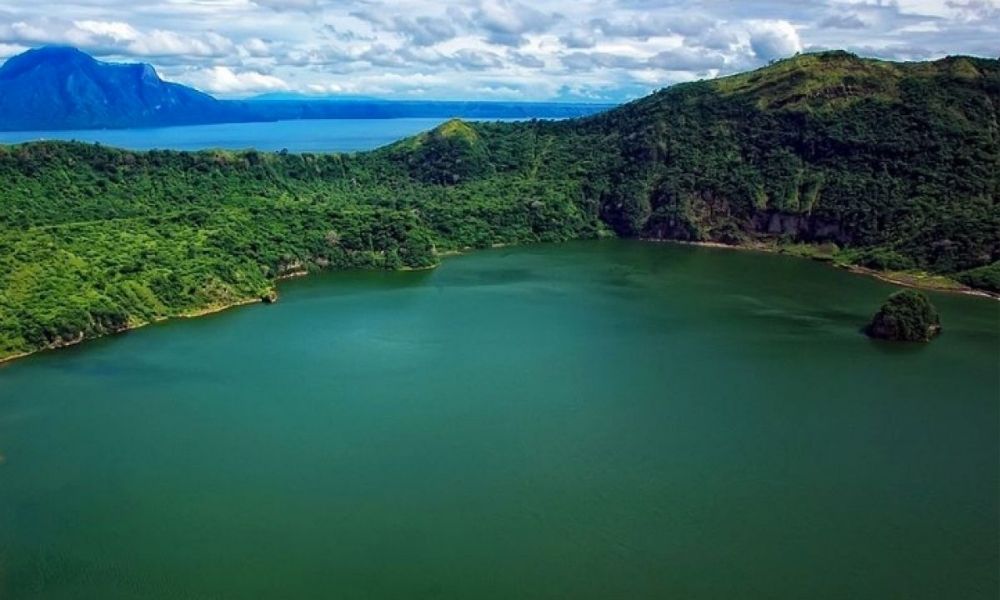
Vulcan Point lies in Batangas province, on Luzon, about 50 km south of Manila. Close, then. Getting onto the island itself is another matter. The Philippine Institute of Volcanology and Seismology (PHIVOLCS) treats all of Volcano Island as a Permanent Danger Zone, and entry into the Main Crater is not allowed even at low alert levels. Most visitors take in the view of Taal Lake and Volcano Island from the ridge at Tagaytay, a short drive away. Check the current alert level before you go; that part is not optional.
Taal Lake has its own surprises. It is the only home of the tawilis, a freshwater sardine found nowhere else, and of the Taal Lake sea snake (Hydrophis semperi), one of only two sea snake species known to live almost exclusively in freshwater.
For scientists, the lake is something of an open buffet.
Sources: Wikipedia: Taal Volcano, Wikipedia: Hydrophis semperi, IFLScience






Bir yanıt yazın