
5 Facts About the Wieliczka Salt Mine Near Kraków


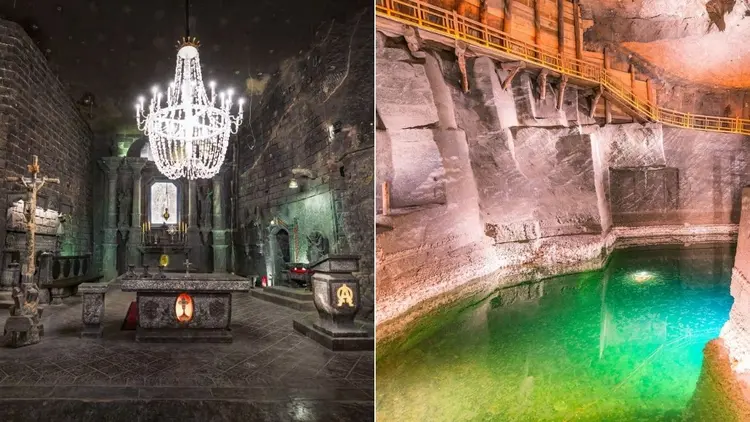
Just outside Kraków, in southern Poland, the Wieliczka Salt Mine hides a whole underground world. Miners worked the rock salt here from the 13th century until 1996, and what they left behind (chapels, statues, even chandeliers, all carved from salt) now draws visitors from around the globe to one of Europe’s strangest places to spend an afternoon. History, art and geology meet down there.
1. One of the world’s oldest salt mines

Salt was dug at Wieliczka for more than 700 years. Commercial extraction stopped only in 1996, after falling salt prices and flooding made it no longer worth the effort. Contrary to what the chandeliers suggest, this was a working mine first and a showpiece second. In 1978 it was among the sites on UNESCO’s very first World Heritage List, and today it is listed together with the nearby Bochnia mine as the Wieliczka and Bochnia Royal Salt Mines. Visitors keep coming. More than a million arrive each year, making it one of Poland’s most popular attractions.
2. 327 m deep, 245 km of tunnels, 2% open to visitors

The mine reaches 327 m (1,073 ft) below the surface across nine levels. According to the mine itself, its galleries add up to about 245 km (152 miles), linking more than 2,000 chambers. Visitors see roughly 2% of it.
That 2% is plenty. The tourist route passes salt statues, monumental chapels and old mining machinery before reaching the showpiece, St. Kinga’s Chapel. Think of it as a cathedral underground: the chandeliers are made of salt crystals, the wall reliefs are carved into the rock salt, and so is the floor. Unsurprisingly, it’s the most photographed spot in the mine. The standard tour takes about an hour and a half, so seeing the whole labyrinth was never really on the table.
3. Salt once filled the royal treasury

From the Middle Ages on, Wieliczka was a major source of income for the Kingdom of Poland. Salt was valuable. Heavily traded, too. The mine was royal property, run by a company known as the Kraków Salt Mines (Żupy Krakowskie). In the 13th century it was the country’s largest source of salt, and under King Casimir III the crown earned large revenues from it, while for centuries afterward the mine shaped how the whole region grew.
4. An underground health resort

Here’s the unexpected part.
It’s the air. Deep in the mine it stays salty and stable, a microclimate believed to help with respiratory conditions, so some chambers now serve as a health resort, with the mine offering stays that range from a single day to three weeks. How much it actually helps is harder to pin down.
5. A museum, concert hall and wedding venue in one

Rich history, striking underground architecture and all that carved salt have turned Wieliczka into something close to a museum below ground. It works like one, too. You can learn how salt was extracted and walk past a brine lake that hosts a light-and-sound show set to Chopin. The sculptures? Pure salt, the same stuff as the chandeliers back in St. Kinga’s Chapel.
A mine dug for salt ends up hosting weddings: St. Kinga’s Chapel and other chambers are rented for private events, and Sinfonia Varsovia even recorded music in the chapel in 1995.
Sources: Wieliczka Salt Mine, About the Mine, Wikipedia, Wieliczka Salt Mine





Bir yanıt yazın