
10 Historic Cities in Turkey for History Lovers


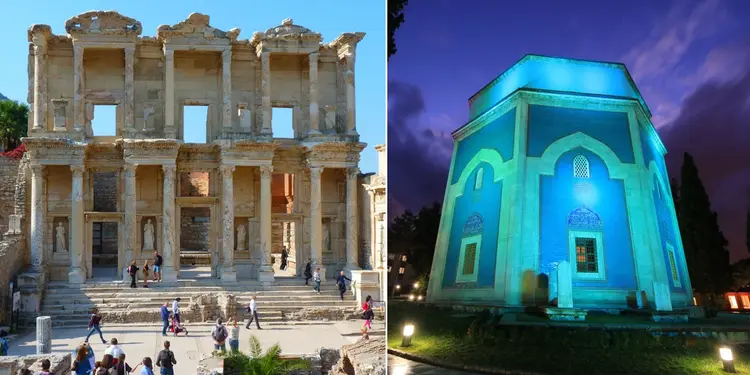
Few countries pack this many civilizations into one map. Anatolia, the land bridge at the heart of Türkiye, has been home to Neolithic temple builders, Greeks, Romans, Byzantines, Seljuks and Ottomans, and each left something standing. These 10 historic cities in Turkey are where history lovers get the most layers per square kilometer.
1. İzmir

Modern on the surface, ancient underneath. İzmir, the Aegean port once known as Smyrna, still has its Roman agora in the middle of town, and the province around it holds two UNESCO World Heritage Sites: Ephesus (listed 2015) and Pergamon (listed 2014). Back in the center, the lanes of Kemeraltı Bazaar mix Ottoman-era inns, mosques and shops with a very modern crowd.
Must-see places in İzmir:
- Ephesus Ancient City
- Agora of Smyrna
- Pergamon Ancient City
- İzmir Clock Tower
2. Istanbul

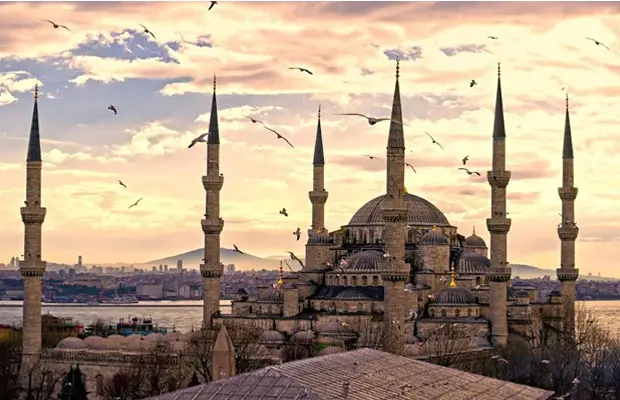
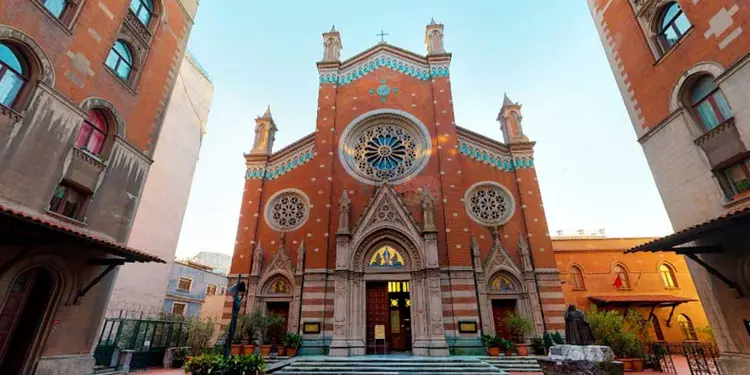
Türkiye’s best-known city sits on the Bosphorus, between the Sea of Marmara and the Black Sea, and its historic peninsula has been on the UNESCO World Heritage list since 1985.
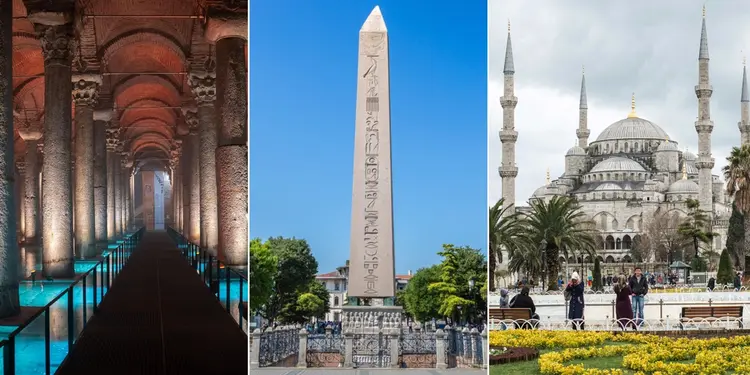
Crowds come with the territory. Why put up with them? Byzantine churches turned mosques, Ottoman palaces and a Roman-era cistern under the street, all within a long walk of each other, which no other city on this list can quite match.
Must-see places in Istanbul:
- Hagia Sophia
- Topkapı Palace
- Blue Mosque (Sultanahmet Mosque)
- Galata Tower
- Basilica Cistern (Yerebatan Sarnıcı)
- Süleymaniye Mosque
- Dolmabahçe Palace
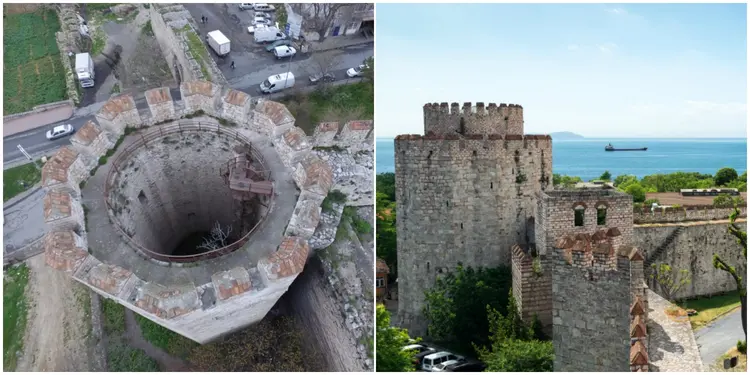
- Rumeli Fortress (Rumeli Hisarı)
- Anatolian Fortress (Anadolu Hisarı)
- Maiden’s Tower (Kız Kulesi)
3. Mardin

Honey-colored stone houses stacked up a hillside, looking out over the Mesopotamian plain. That’s the first impression, and it holds. Mardin has been shaped by Syriac Christians, Arabs, Kurds, Turks and Armenians, and its monasteries, madrasas and churches sit a few streets apart; Go Türkiye points to Deyrulzafaran, Mor Gabriel and Mor Loozor as three monasteries with very different characters, and to a city museum with more than 45,000 artifacts. A half-day plan here tends to stretch.
Must-see places in Mardin:
- Mardin Castle
- Deyrulzafaran Monastery
- Dara Ancient City
- Midyat, the old stone town and its caves
- Mor Behnam (Forty Martyrs) Church
- Beyaz Su area
- Tur Abdin plateau
- Kasımiye Madrasa
- Zinciriye Madrasa
- Mardin Museum (Archaeology and Ethnography)
4. Karabük

Karabük, in the western Black Sea region, is a steel town at heart. Don’t let that put you off: Safranbolu is the star. Its Ottoman timber houses made the district a UNESCO World Heritage Site in 1994, and caravanserais, a hilltop clock tower and old tanneries still survive around a well-kept bazaar, while the Roman city of Hadrianapolis lies elsewhere in the province. Nearby Bartın, with its coastline and forests, is worth adding if you’re in the area.
Must-see places in Karabük:
- Cinci Han and Hamam (caravanserai and Turkish bath)
- Safranbolu houses
- Yörük Village
- Hadrianapolis Ancient City
- İncekaya Aqueduct
- Safranbolu Clock Tower
- Safranbolu City History Museum
- İzzet Mehmet Paşa Mosque
- Safranbolu Castle
- Kasım Sipahioğlu Mansion
- Ulu Mosque (former Church of St. Stephen)
- Kaymakamlar House Museum
- Safranbolu Old Bazaar
- Historic Safranbolu Tannery
5. Bursa

Snow on Uludağ (the “Great Mountain”) above, early Ottoman stone below. Bursa, in northwestern Türkiye, was the first capital of the Ottoman Empire, and UNESCO lists it together with the village of Cumalıkızık as “the Birth of the Ottoman Empire” (2014). The tombs of the first sultans, Osman and Orhan, stand here. So do silk-trade inns like Koza Han, still in business. Compare it with Edirne, the second capital, at the end of this list: Bursa’s mosques are the earlier, more compact prototype that Edirne later scaled up.
Must-see places in Bursa:
- Bursa Grand Mosque (Ulu Cami)
- Green Tomb (Yeşil Türbe)
- Koza Han
- Tombs of Osman and Orhan Gazi
- Irgandı Bridge
- Hanlar district (historic inns)
- Saltanat Gate (Bursa Castle)
- Emir Sultan Mosque
- Muradiye Complex
- Tophane
6. Şanlıurfa

Here the timeline gets dizzying. About 12 km from Şanlıurfa stands Göbekli Tepe, dated to the 10th millennium BC and often called the world’s oldest known temple (UNESCO, 2018); the city itself was founded as Edessa by the Seleucids around 303 BC and passed through Roman, Byzantine, Crusader, Seljuk, Mamluk and Ottoman hands. Tradition names it as the birthplace of Abraham. History can’t settle that claim either way, but it’s why Jews, Christians and Muslims all hold the city in regard. The Pool of Abraham (Balıklı Göl), with its sacred carp, is the place to start.
Must-see places in Şanlıurfa:
- Göbekli Tepe
- Pool of Abraham (Balıklı Göl)
- Şanlıurfa Archaeology Museum
- Rızvaniye Mosque
- Mevlid-i Halil Mosque
- Harran
- Halfeti
- Ayn Zeliha Lake
- Germuş Church
- Deyr Yakup (Monastery of Jacob)
- Regie Church
7. Konya

Konya is Rumi’s city. The 13th-century poet and mystic known in Türkiye as Mevlana is buried here, and the whirling ceremony of his followers, the sema, is what most visitors come to see. Seljuk Konya is the other draw: the carved portal of the İnce Minareli Madrasa and the blue tilework of the Karatay Madrasa. Çatalhöyük, a Neolithic settlement on the UNESCO list since 2012, is in the same province.
Must-see places in Konya:
- Mevlana Museum (Rumi’s mausoleum)
- Karatay Madrasa
- İnce Minareli Madrasa
- Konya Archaeology Museum
- Alaeddin Keykubad Mosque
- Selimiye Mosque
- Çatalhöyük Neolithic Site
- Museum of Stone and Wood Works (inside the İnce Minareli Madrasa)
- Atatürk Museum
- Kilistra Ancient City
8. Çanakkale

Two wars, three thousand years apart. Çanakkale sits on the southern shore of the Dardanelles, with the archaeological site of Troy (UNESCO, 1998) just to the south and the Gallipoli Peninsula across the strait, where the 1915 Gallipoli Campaign cost tens of thousands of lives on both sides. Turkish memorials such as the Çanakkale Martyrs’ Memorial and the statue of Corporal Seyit share the peninsula with Anzac Cove, a pilgrimage site for Australians and New Zealanders.
Must-see places in Çanakkale:
- Çanakkale Martyrs’ Memorial
- Gallipoli Epic Promotion Center
- Çanakkale Clock Tower
- Troy Ancient City
- Seddülbahir Castle
- Kilitbahir Castle
- Anzac Cove
- Troy Museum
- Parion Ancient City
- Çanakkale Naval Museum
- Assos Ancient City
- 57th Infantry Regiment Memorial
9. Antalya

Most people come for the beaches.
Fair enough, but Antalya’s old town, Kaleiçi, has narrow lanes, Ottoman houses and flower-filled courtyards, and the province around it is one long run of ancient cities. Perge, Aspendos with its Roman theater, Termessos in the mountains, Side, Patara, Xanthos: the last was listed by UNESCO with Letoon in 1988. Down the coast in Demre is the Church of St. Nicholas, the bishop behind the Santa Claus legend.
Must-see places in Antalya:
- Perge Ancient City
- Olympos Ancient City
- Aspendos Theater
- Termessos Ancient City
- Phaselis Ancient City
- Alanya Castle
- Temple of Apollo (Side)
- Antalya Museum
- Patara Ancient City
- Side Ancient City
- Xanthos Ancient City
- Church of St. Nicholas (Santa Claus)
- Süleymaniye Mosque (Alanya Castle)
- Red Tower (Kızılkule)
- Hıdırlık Tower
- Lion Sarcophagus (Aslanlı Lahit)
10. Edirne

Before Istanbul, there was Edirne.
The Ottomans ruled from here, their second capital after Bursa, between the 1360s and 1453, and the city’s crown is the Selimiye Mosque, finished in 1575 by the architect Sinan, its four slender minarets rising about 71 meters (UNESCO, 2011). The Old Mosque (Eski Cami), begun in 1403, is known for the giant calligraphy on its walls, and the Bayezid II Complex, built as a hospital and medical school, now houses a museum of Ottoman medicine.
Must-see places in Edirne:
- Selimiye Mosque
- Old Mosque (Eski Cami)
- Hıdırlık Bastion
- Üç Şerefeli Mosque
- Rüstem Paşa Caravanserai
- Bayezid II Complex
- Enez Castle
- St. George Bulgarian Church
- Meriç Bridge
- Grand Synagogue of Edirne
- Bayezid Bridge
- Hacı Adil Bey Fountain
Sources: Wikipedia: List of World Heritage Sites in Turkey, Go Türkiye: Mardin, Kültür Portalı (Ministry of Culture and Tourism)

Bir yanıt yazın