
Gümüşler Monastery Guide: History, Location and Access


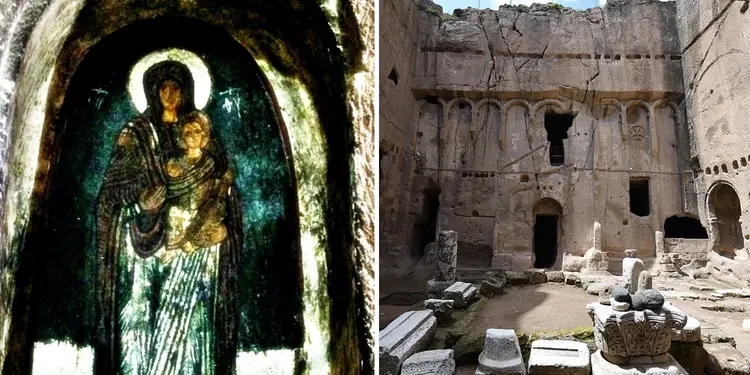
Carved straight into the rock outside Niğde, in southern Cappadocia, Türkiye, Gümüşler Monastery hides some of the region’s best-preserved Byzantine frescoes. Its most talked-about painting is a Virgin Mary who seems to smile, a rare sight in Byzantine art. Getting there from Niğde is surprisingly easy; the ticket rules are the part worth checking first.
1. History of Gümüşler Monastery

Its exact age is unknown. The monastery and the underground settlement beside it most likely date to around the 10th century, built far from the big towns of the day, while the frescoes are dated by Niğde’s provincial culture and tourism directorate to the 11th and 12th centuries on grounds of style and iconography. Under the Ottomans the place was known as Eski Gümüşler (“Old Gümüşler”), a name tied to old silver deposits nearby (gümüş means silver in Turkish). Local Christians used it as a place of worship for centuries.
Then it went quiet.
When the Greek Orthodox population of the Niğde area left for Greece in the 1924 population exchange between Greece and Türkiye, the monastery lost its congregation and sat empty for roughly four decades. It was rediscovered in 1962, and a team led by the British archaeologist Michael Gough began restoring the church and its paintings in 1963. In 1973 the monastery and its surroundings were declared a protected archaeological site. Was it even a monastery? Not everyone thinks so: the Byzantine architecture historian Robert Ousterhout suggested it may have been a wealthy family’s residence with a private chapel.
2. Where Is Gümüşler Monastery?

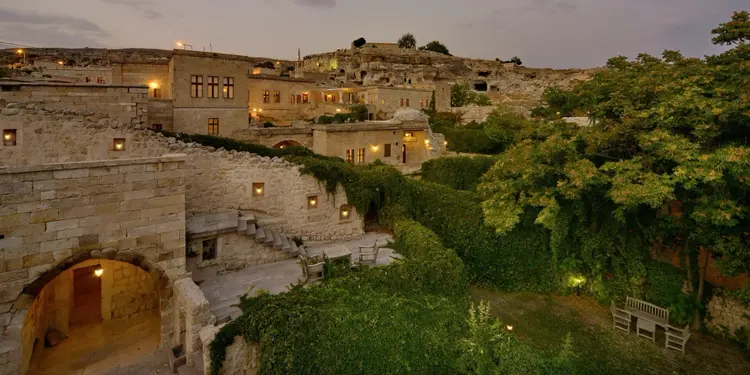
The monastery stands in the small town of Gümüşler, about 10 km (6 miles) northeast of Niğde city center. Its open courtyard, reported to rise around 14 meters, is the first thing that stops visitors: sheer rock walls on every side, with rooms, storage spaces and tombs cut into them.
The church is the real reward. Inside, the main apse is painted in three bands, with Christ enthroned at the top, surrounded by angels, the apostles and the Virgin Mary, and Church Fathers such as Basil of Caesarea below. Near the entrance is the famous Virgin and Child flanked by the archangels Gabriel and Michael. That faint smile has fueled plenty of debate. It’s tempting to credit the original painter, but some experts put it down to clumsy restoration instead. A room above the entrance holds something else entirely: hunting and animal scenes with no known parallel anywhere else in Cappadocia.
Don’t skip the underground settlement. Probably as old as the monastery itself, its ventilation shafts and passages show how much thought went into living below ground.
3. How to Get to Gümüşler Monastery

Reaching it is easier than the remote setting suggests.
Local buses connect Niğde city center with Gümüşler, and the route passes close to the monastery. Ask for the current timetable in Niğde first. By car it takes about 15 minutes, heading out of the center toward Kayseri, turning off toward Gümüşler, and then following the road through town toward Çamardı until the monastery comes into view. Short on time? A taxi from Niğde is simplest.
4. Gümüşler Monastery Entrance Fee and Hours

The site is open year-round. Summer hours run longer than winter ones. Because Turkey’s Ministry of Culture and Tourism revises entrance fees for state-run sites every year, any fee quoted in an older guide is probably out of date, so check the current price and opening hours on the official museum portal before the trip; ministry museum cards have traditionally covered entry to sites like this, too. Still, confirm that the card in hand is accepted at Gümüşler; a quick check beats an argument at the ticket window.
Sources: Wikipedia: Gümüşler Monastery, Niğde Provincial Directorate of Culture and Tourism: Gümüşler Manastırı


Bir yanıt yazın