
Divriği Great Mosque and Hospital: 6 Things to Know


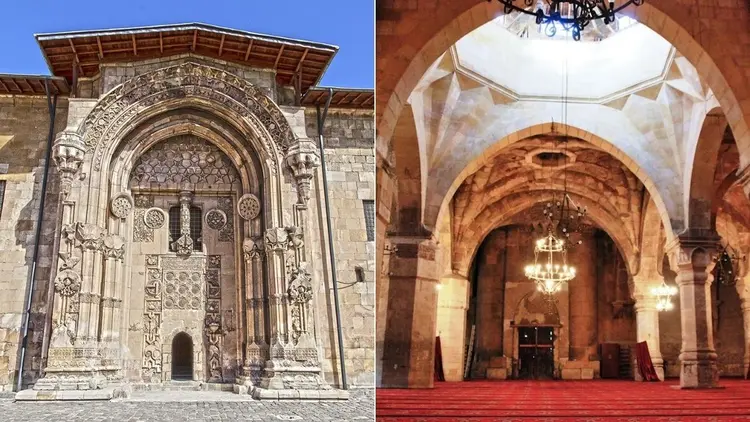
In a quiet town in central Türkiye, stone does most of the talking. The Divriği Great Mosque and the hospital joined to it were finished in 1228-1229, and their portals carry some of the most extravagant carving in medieval Anatolia. UNESCO took one look and listed the complex in 1985.
1. A mosque and a hospital share one wall
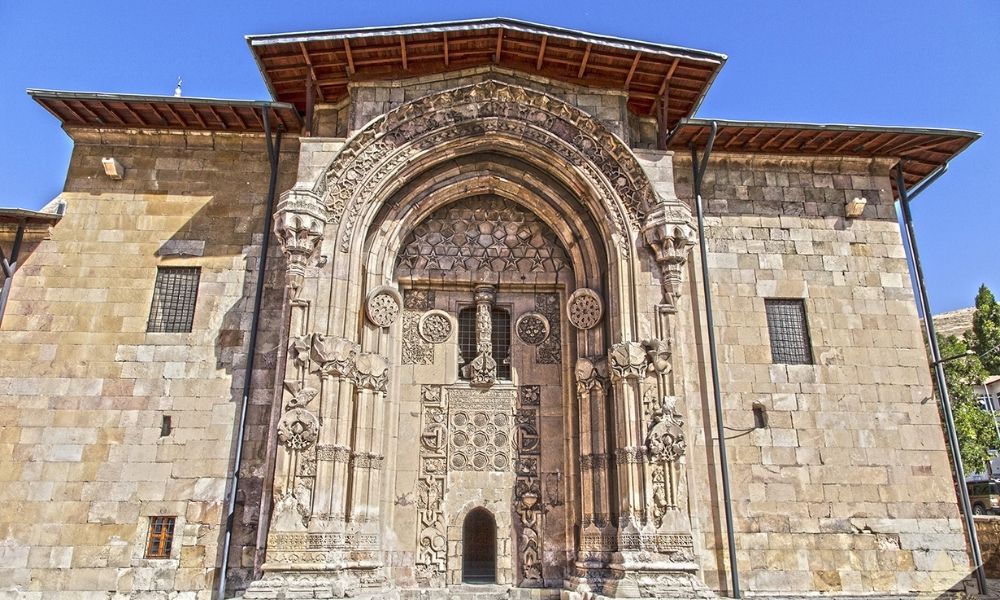
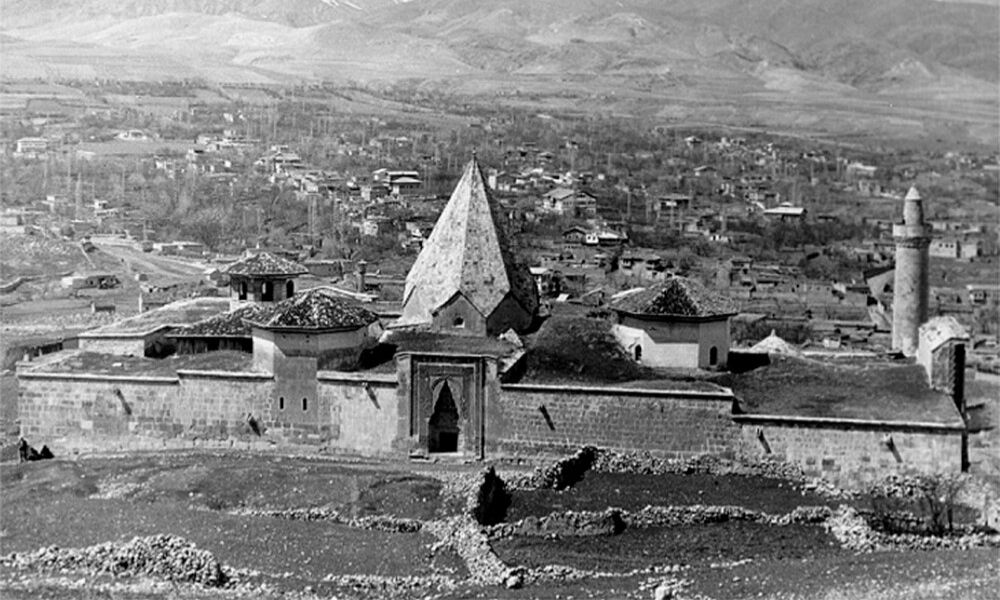
Divriği is a small district of Sivas province, and its Great Mosque (Ulu Cami) stands wall to wall with a hospital, the Darüşşifa. One side was built for prayer, the other for healing.
From outside, the walls look plain. Almost severe. Then you reach the portals, which the Türkiye Culture Portal of the Ministry of Culture and Tourism lists one by one: the north and west gates of the mosque, the hospital gate and the gate of the royal gallery.
2. A ruler and a princess paid for it
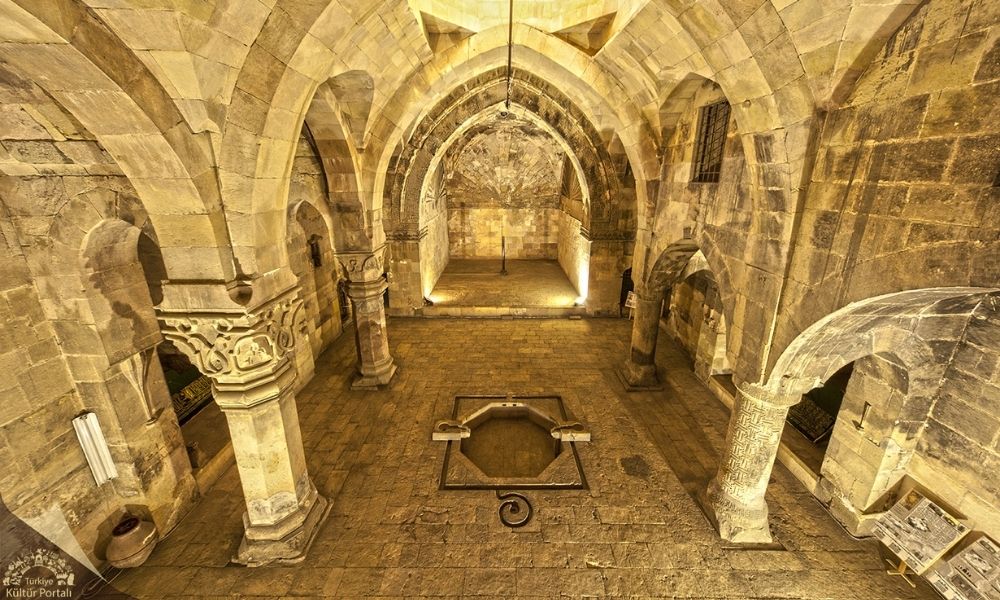
Image: Türkiye Culture Portal
Local histories trace settlement around Divriği far back into antiquity, but the town’s finest hour came in the 13th century under the Mengujekids (Mengücek in Turkish), a small Turkic dynasty of eastern Anatolia. On the north portal, an inscription dates the mosque to 1228-1229 and names its patron, Ahmadshah (Ahmet Şah), son of Süleyman, while the hospital’s own inscription credits Turan Malik (Turan Melek), daughter of the ruler Bahramshah.
Were they husband and wife? Turkish sources say so. The Wikipedia entry points out that no evidence confirms the marriage. Either way, a woman’s name stands over the hospital door, a telling sign of the standing some women held in 13th-century Anatolia.
3. An architect from Ahlat broke the Seljuk mold
The chief architect, Hürremşah, signed his name with a reference to Ahlat, a town on the shore of Lake Van. His work goes well beyond the classic Seljuk style of the period.
The carving is the reason. Stone is cut in high relief so deep that it reads more like fabric than masonry, with geometric and plant motifs spilling across three dimensions. It’s often said that no two motifs on the portals repeat. Hard to check every one. Harder to doubt after a few minutes in front of the north portal.
4. Plain outside, a different world inside
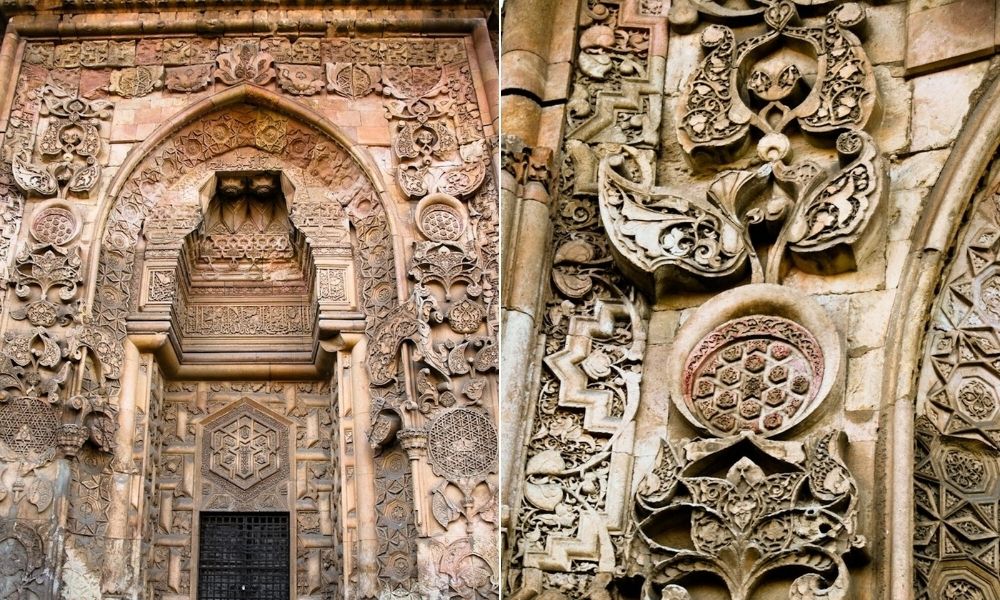
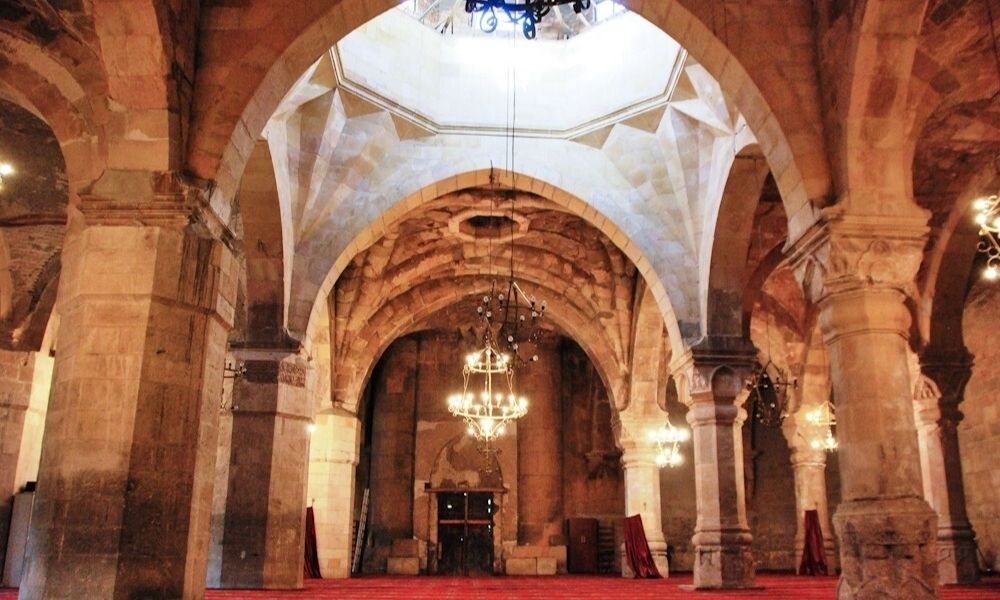
Inside the mosque, stone piers hold up stone vaults, and a dome rises in front of the mihrab, the niche facing Mecca. There’s no courtyard. The central bay seems to have been left open to the sky. The north portal is the showpiece, a wall of high-relief carving that sits closer to sculpture than to architecture. Piers, capitals and bases inside vary in style from one to the next, as if rival workshops had been invited to compete, and the wooden minbar (pulpit) was added in 1243 by a craftsman from Tiflis, today’s Tbilisi.
The plan splits the credit neatly: the mosque was Ahmadshah’s commission, the hospital Turan Malik’s, and each got a carved portal of its own.
The hospital is different again. Rooms and iwans, vaulted halls open on one side, surround a covered courtyard with a small pool at its center, and a second floor exists only on the south side. Tradition holds that the sound of the water helped calm patients, a kind of sound therapy centuries before meditation playlists. One room also served as a tomb chamber for the dynasty.
5. UNESCO listed the Divriği Great Mosque in 1985, alongside Istanbul and Cappadocia
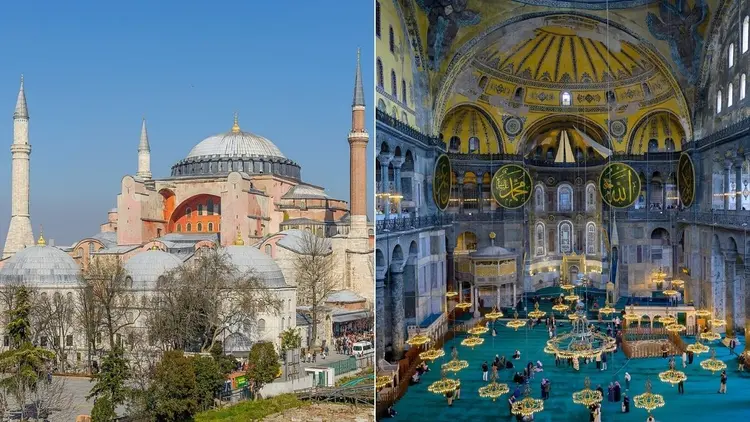
The complex is often billed as Türkiye’s first World Heritage Site. Not quite. It joined the list in 1985 together with the Historic Areas of Istanbul and Göreme National Park in Cappadocia, Türkiye’s first three entries.
The main reason is artistic achievement. Nothing else looks like it. With no open courtyard, it also breaks from the typical mosque plan of the period, a choice that likely suited the long, cold winters of the Sivas plateau.
6. Restoration has been a long story
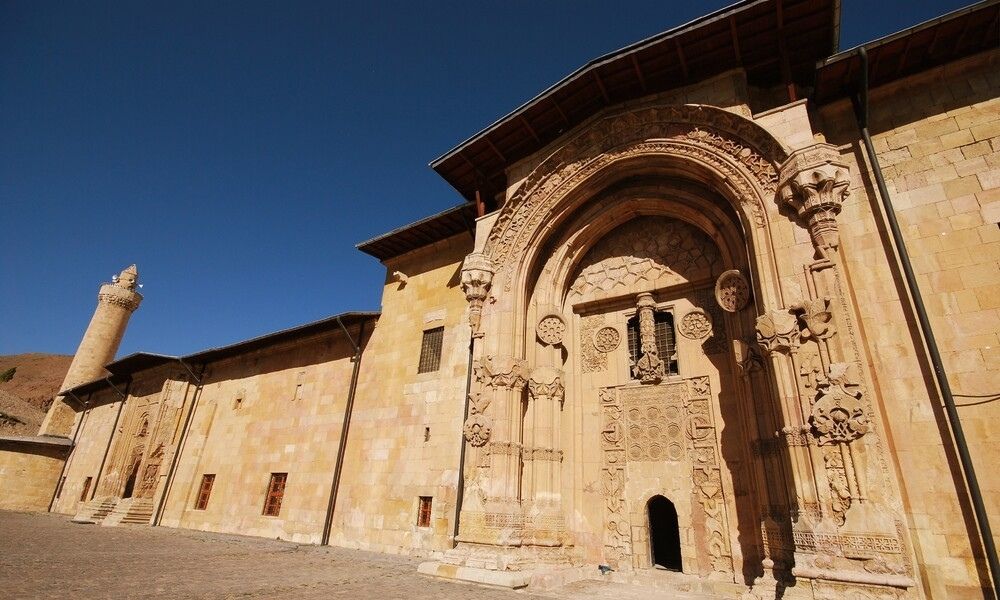
Inscriptions record repairs between the 15th and 19th centuries, with more work in the 20th. A new major restoration was decided in 2010. It started in 2015, stalled, restarted in 2017, stopped again in 2019 for financial reasons and resumed in February 2022, and the mosque reopened to visitors in May 2024. Carved stone of this kind is vulnerable to moisture and salts. Conservation never really ends. Long restorations rarely make news when they go well; the news is usually just that the doors open again.
Visitors should dress modestly, take off their shoes in the prayer hall and avoid prayer times, especially at Friday noon.
Sources: Wikipedia, Great Mosque and Hospital of Divriği, Türkiye Culture Portal, Divriği Ulu Cami ve Darüşşifası





Bir yanıt yazın