
5 Facts About the Skeleton Coast Shipwrecks of Namibia


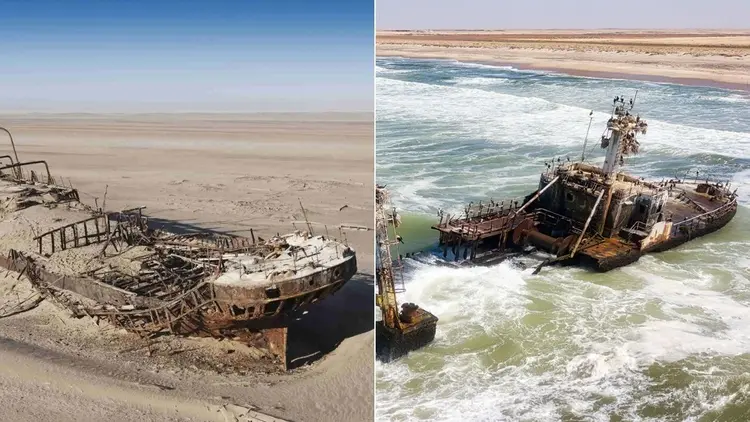
On Namibia’s Atlantic shore, the Namib Desert runs straight into the ocean, and the beach in between is scattered with rusting hulls. The Skeleton Coast shipwrecks have earned this stretch its reputation as one of the most feared coastlines a sailor could meet. Here is how it got that name, why so many ships never left, and what a visit looks like today.
1. From the “Gates of Hell” to the Skeleton Coast

Portuguese sailors were the first Europeans here: Diogo Cão landed at Cape Cross in January 1486 and set up a stone cross to mark the spot, per Wikipedia. Later Portuguese mariners are said to have called this shore the “Gates of Hell.” The San people are said to have named it “the land God made in anger.” Neither name traces back to a firm written source, so treat both as coastal lore rather than record.
Today’s name is younger. It comes from Skeleton Coast, a book by South African journalist John Henry Marsh about the wreck of the Dunedin Star, first published in 1944. The bones were real, too. Whale and seal skeletons, many of them left over from the whaling era, lay along the beaches next to the broken ships.
2. Why so many ships ran aground here

Why here, of all places? Blame the water first. The cold Benguela Current flows up this coast, and where it meets the warm desert air it produces thick fog for much of the year. Add offshore rocks and a heavy, constant surf, and a captain could be on the beach before seeing it. Surviving the landing was the easy part. The surf that pushed boats ashore made launching them again nearly impossible, so the only way out was inland, across a desert where rain rarely tops 10 mm a year. Hundreds of hulls still mark the coast, and some now sit well back from the waves.
3. The oldest wreck and the most famous one

The oldest known shipwreck in Namibia is the Portuguese Bom Jesus, which went down in the 1530s near Oranjemund, in the far south of the country, well beyond the Skeleton Coast proper. It ranks among the oldest Iberian wrecks ever found on Africa’s Atlantic side south of the Sahara.
The most photographed wreck is the German cargo and passenger ship Eduard Bohlen. The date: September 5, 1909. In thick fog at Conception Bay, while carrying equipment for a diamond mine, she ran aground. More than a century later, the hull lies about 400 m from the shoreline, with sand dunes where the sea used to be, according to Wikipedia. A ship stranded in the desert sounds like a myth. Here, it’s just the view.
4. Modern ships still get caught

It’s tempting to file all this under ancient history. It isn’t: better navigation did not end the story.
In 1942, during World War II, the British cargo liner Dunedin Star, the wreck behind Marsh’s book, ran aground on this coast, and although all 106 passengers and crew were eventually rescued, the operation cost a tug, a South African Air Force plane and two of the rescuers’ lives.
The Zeila came much later. This South African fishing trawler, one of the most recent wrecks, broke loose from the vessel towing her in stormy seas on August 26, 2008, and ran aground south of Henties Bay. Her hull is now one of the easiest wrecks on the coast to see from the shore.
5. Why travelers now come looking for it

The same emptiness that once doomed sailors now draws visitors. Skeleton Coast National Park covers about 16,000 km² between the Ugab and Kunene rivers. Its fog-fed desert supports succulent plants, Cape fur seal colonies at Cape Fria, and elephants and lions along the dry riverbeds inland.
Getting in takes planning. According to Wikivoyage, you need a permit, and only the southern third can be explored on your own, through the gates at the Ugab River and Springbokwasser. The north is different. Beyond Terrace Bay, it is open only on tours run by concession holders, many of them fly-in safaris. Some wrecks can be seen from authorized routes, while others lie in restricted areas that are off-limits to drivers.
Legends, old wrecks and a brutal landscape keep the Skeleton Coast on lists of the world’s most dangerous shores.
That danger is exactly why it’s so hard to forget.
Sources: Wikipedia: Skeleton Coast, Wikipedia: Cape Cross, Wikipedia: Eduard Bohlen, Wikipedia: List of shipwrecks in 2008, Wikivoyage: Skeleton Coast National Park



Bir yanıt yazın