
8 Photogenic Places in Türkiye Worth the Camera Roll


Volcanic valleys, mountaintop statues, tulip fields and a strait lined with palaces: the photogenic places in Türkiye cover a lot of ground, and they pull in photographers from around the world. Light, landscape and centuries of history do most of the work. These 8 spots run from central Anatolia to Istanbul, the Black Sea mountains and the Aegean coast.
1. Cappadocia, Nevşehir: First Among Photogenic Places in Türkiye

Cappadocia is the obvious opener.
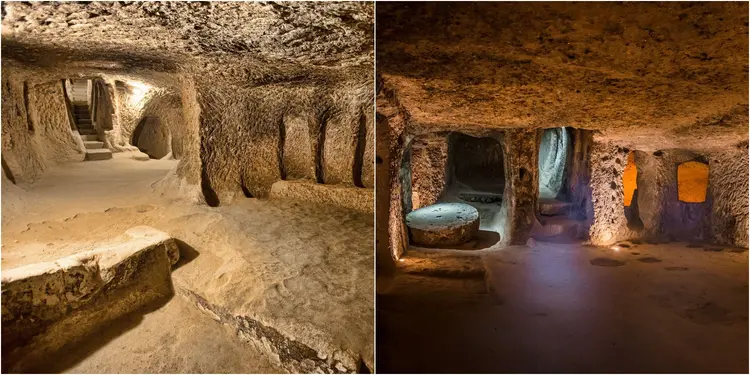
Over thousands of years, volcanic eruptions and erosion shaped its valleys into cones and pillars, and people carved homes, churches and whole underground cities into the soft rock. It’s one of the busiest destinations in the country. Photographers come for one moment in particular: the hot-air balloon flights that lift off at first light and fill the sky over the valleys. For a wide view from solid ground, Sunset Hill, a viewpoint above the valleys, is the classic spot.
2. Mount Nemrut, Adıyaman

Around 62 BC, King Antiochus I of Commagene built himself a tomb-sanctuary on the summit of Mount Nemrut and flanked it with colossal statues of gods, ancestors and himself. The statues stood 8 to 9 meters tall. The heads have since fallen. Today they rest on the terraces, which makes for some of the strangest portraits in the country. The site has been a UNESCO World Heritage Site since 1987. Timing matters: at sunrise and sunset the light turns the stone gold.
3. Tulip Gardens, Konya

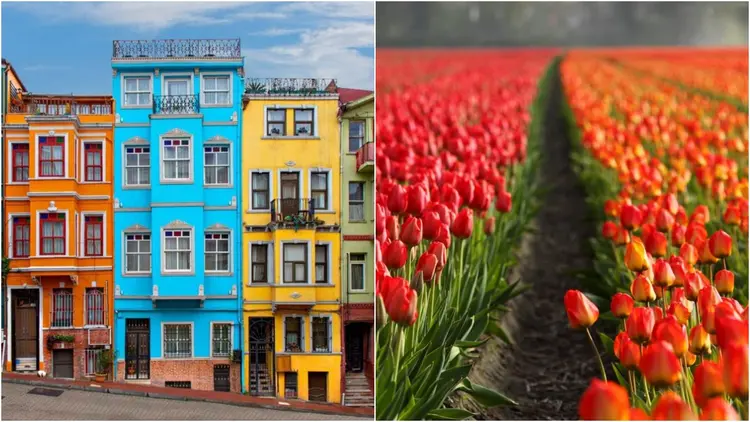
Konya is better known for whirling dervishes than for flowers. Spring changes the picture, as its flat plains turn into stripes of color. The province grows tulips on a commercial scale, and some of the fields open to visitors before the harvest, which usually comes toward the end of April. The exact window shifts from year to year, so nobody can promise a date in advance. Rows of red, yellow and purple make an easy backdrop. Student groups and wedding photographers show up in numbers during the bloom.
4. Balat, Istanbul

Balat sits on the western shore of the Golden Horn, in Istanbul’s Fatih district, and for centuries it was home to Jewish, Greek and Armenian communities. Synagogues, churches and mosques still stand a few streets apart. Steep lanes, brightly painted houses and old wooden facades mean someone is posing for a photo on almost every corner, and that same atmosphere has made the neighborhood a regular filming location for Turkish TV series. For colorful backgrounds, Balat comes first.
5. Ayder Plateau, Rize

Up in the mountains of the eastern Black Sea region, Ayder is a highland village about 17 km from Çamlıhemşin, at around 1,350 meters. The government declared it a tourism center in 1987 for its scenery. It also has hot springs. Waterfalls, dense green slopes and drifting mist draw thousands of visitors every year, and photographers are a regular part of that crowd.
6. The Bosphorus, Istanbul

For landscape shots, the Bosphorus is hard to beat. The strait splits Istanbul between Europe and Asia. Its shores are lined with landmarks: Çırağan Palace, Beylerbeyi Palace, the Adile Sultan Pavilion and Dolmabahçe Palace. From the water or the waterfront, the same frame can also take in the Maiden’s Tower and the domes and minarets of the Historic Peninsula. One of the cheapest ways to see all of it, and honestly one of the best? A public ferry crossing.
7. Sığacık, İzmir

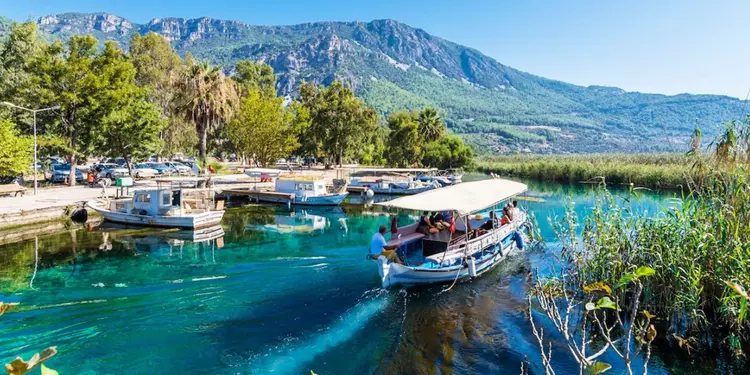
Almost every corner of İzmir province has something to photograph. Sığacık stands out. This small harbor town belongs to Seferihisar, the district that became Türkiye’s first member of Cittaslow, the international “slow city” network. Inside its old walls are cobblestone streets, houses with projecting bay windows and colorful cafés, and the harbor sits right next door.
It’s a place for charming, unhurried photos rather than grand vistas.
8. Grand Bazaar, Istanbul

Building work on the Grand Bazaar began in the winter of 1455/56. It has been a center of trade ever since. Over 4,000 shops line some 61 covered streets, glowing with lamps, textiles and polished metal. Balat gives you color in the open air; here it comes indoors, under lamplight. Although fires and earthquakes damaged it many times over the centuries, restorations kept it standing. It’s closed on Sundays. Contrary to what many first-time visitors assume, haggling here isn’t rude: bargaining is expected, and a friendly back-and-forth is part of the visit. Between shots, the cafés and eateries in and around the bazaar are a good place to try Turkish food.
Sources: Wikipedia: Mount Nemrut, Wikipedia: Grand Bazaar, Istanbul, Wikipedia: Ayder, Daily Sabah: Tulip field draws visitors before harvest

Bir yanıt yazın