
Nyepi Day: Why Bali Goes Silent for 24 Hours


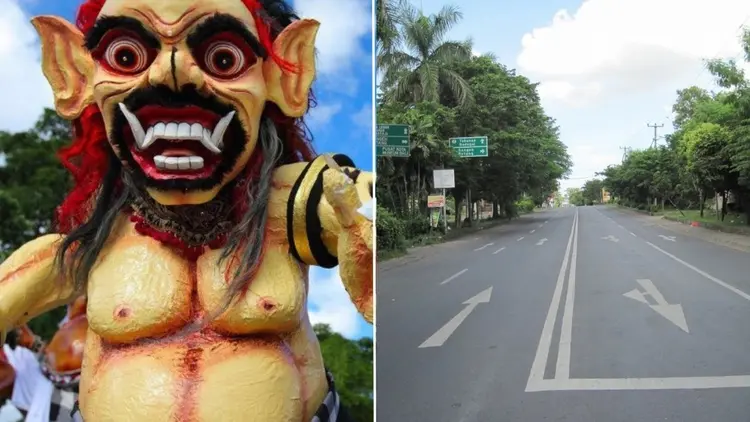
Bali usually means beaches, temples and busy nights out. Once a year, though, the whole island switches off: the lights go dark, the streets empty and the airport shuts for a full day. That day is Nyepi Day, the Balinese Day of Silence, and it is one of the strangest and most peaceful new year traditions anywhere.
1. What is Nyepi?

Nyepi marks the new year of the Balinese Saka calendar, an era that traces back to 78 AD. Forget fireworks. For 24 hours, the Hindu majority on the island observes four prohibitions, known together as Catur Brata Penyepian: no fire or light (electricity included), no work, no travel and no entertainment. Traffic stops. Ngurah Rai International Airport, the island’s only airport, closes for the entire day, and Bali becomes something close to a ghost island.
Why go to such lengths? The short answer: Nyepi is a day for self-reflection, fasting and meditation, a reset for body and mind. It also has a second, older purpose. According to Balinese Hindu belief, an island that is dark and silent looks deserted, so the evil spirits passing overhead find nothing to settle on and move along. One day, then, does double duty: a personal cleanse and a spiritual cleaning of the whole island.
2. When is Nyepi?

The date moves every year. Because Nyepi follows the lunar Saka calendar, it usually lands in March: in 2025 it fell on March 29, and in 2026 on March 19.
Anyone planning a trip should check the exact date before booking flights, since nothing flies in or out that day.
Silence is only the climax. The run-up is anything but quiet. A few days ahead, crowds of Balinese head to the coast for the Melasti ceremony. Sacred objects from village temples are carried to the sea and purified with prayers and holy water, a ritual that symbolizes washing away impurity from people and island alike. Picture long processions in white and gold, parasols, flowers and offerings along the beaches: it is the first step of the Nyepi cycle, and visitors are welcome to watch respectfully from a distance.
3. The night before, giant Ogoh-Ogoh effigies take to the streets

Ogoh-Ogoh effigies depict demons and mythical creatures. On the eve of Nyepi, young men from each village carry them through the streets on bamboo frames while drums, gongs and clanging pans make as much noise as possible. The point is noise. Loud enough, it scares the evil spirits away, and the atmosphere ends up closer to a carnival than a religious rite.
Many effigies are burned afterward. Some survive on display. Households hold their own smaller rituals that evening too, with offerings and noise-making around the home to chase out negative energy.
Hours later, the same streets that echoed with drums will be completely still. Noise to chase the spirits off, then silence to convince them nobody lives here: two opposite methods, one goal.
4. Nyepi starts at 6 a.m. and ends at 6 a.m. the next day, and Bali stops

A common assumption is that tourists get a pass. They don’t. No one is exempt, visitors included. Tourists stay inside their hotel or villa and may move around the grounds, but not onto the beach or the street; traditional village guards called pecalang patrol to make sure. Hotels ask guests to keep lights low and curtains drawn, and in recent years internet and mobile data have also been shut down across the island; whether that happens in any given year is hard to predict, so it is worth asking your hotel in advance what will still work.
Breaking the rules can lead to fines, deportation or prosecution. These are not suggestions.
Next comes Ngembak Geni, the day after Nyepi. The name literally means “lighting the fire,” and the day lives up to it: electricity and cooking return, and people visit family and friends, ask one another for forgiveness and start the year fresh.
If your trip happens to overlap with Nyepi Day, think of it as a rare offer rather than a lost beach day.
Few places on Earth will hand you 24 hours with no traffic, no screens and a sky full of stars you would never see from a lit-up resort. It is a chance to slow down and see a side of Bali that most visitors miss.
Sources: Wikipedia: Nyepi, Viceroy Bali: Nyepi in Bali





Bir yanıt yazın