
31 Must-See Historical Places to Visit in Istanbul


Istanbul straddles two continents. It has also served as the capital of two empires, Byzantine and Ottoman, and with that much history packed into one city, a single visit barely scratches the surface. These 31 historical places to visit in Istanbul run from the famous landmarks every tourist photographs to the ones most guidebooks skip.
1. Maiden’s Tower

The small tower in the middle of the Bosphorus is probably the single image people associate most with Istanbul. It’s larger up close than it looks from a passing ferry, and over the centuries it has served as both a lighthouse and a customs post. Türkiye’s Ministry of Culture and Tourism restored it and reopened it to visitors; the official Maiden’s Tower site has the current visiting details. Worth the short boat ride? Yes, if only to stand where the city’s most-photographed silhouette actually is.
2. Çinili Köşk (Tiled Pavilion)

Sultan Mehmed the Conqueror built this pavilion as a hunting lodge shortly after the conquest of Constantinople. No religious purpose at all. Aside from Topkapı Palace’s outer walls and gates, it’s the oldest structure on the palace grounds that still looks essentially as it did when it was built — a rare survivor among Istanbul’s historical places.
3. Basilica Cistern (Yerebatan Sarnıcı)

This is the largest covered cistern in Istanbul, sitting just west of Hagia Sophia. It’s dim and damp. Large carp still swim between the columns, which is part of the appeal. Since the Basilica Cistern, Gülhane Park and Hagia Sophia all sit within walking distance of each other, pairing them into one afternoon saves a lot of backtracking.
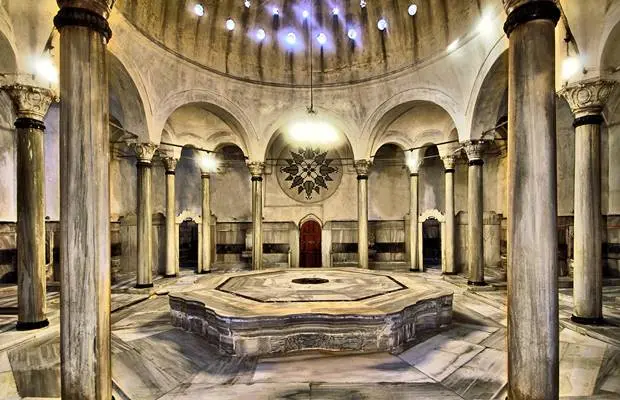
4. Hürrem Sultan Hamam

Tucked between Hagia Sophia and the Sultanahmet Mosque (Blue Mosque), this historic bathhouse was commissioned by Hürrem Sultan and built between 1556 and 1557 by Mimar Sinan, the most celebrated architect of the era. It’s a working hammam today. Visiting means booking a bath, not just a tour.
5. Sultanahmet Mosque (Blue Mosque)

Few sights get more airtime with visitors to Türkiye than this one. Sedefkar Mehmed Ağa designed it. The nickname, Blue Mosque, comes from its interior tilework. “Mosque” undersells what’s actually here: a complex that historically included a school, a bathhouse, a market and more alongside the prayer hall.
6. Soğuk Çeşme Sokağı (Cold Fountain Street)
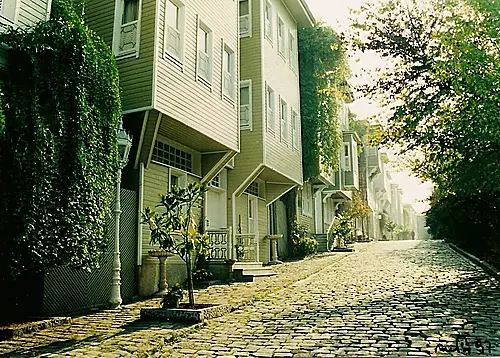
Running downhill from Topkapı Palace toward Gülhane Park, this cobblestone lane is lined with restored wooden houses and closed to cars. It rarely makes the standard “historical places in Istanbul” lists, which is frankly the lists’ loss. The ten-minute detour pays off.
One of the houses once belonged to Fahri Korutürk, former commander of the Turkish Naval Forces and Türkiye’s sixth president.
7. Hagia Sophia

Hagia Sophia has stood for roughly 1,500 years. Its survival owes a lot to Mimar Sinan, who reinforced the structure in the 16th century. The other usual explanation lies underground: the building’s foundation sits on ground saturated with water, which is thought to have absorbed some of the shock from Istanbul’s earthquakes over the centuries.
8. Gülhane Park

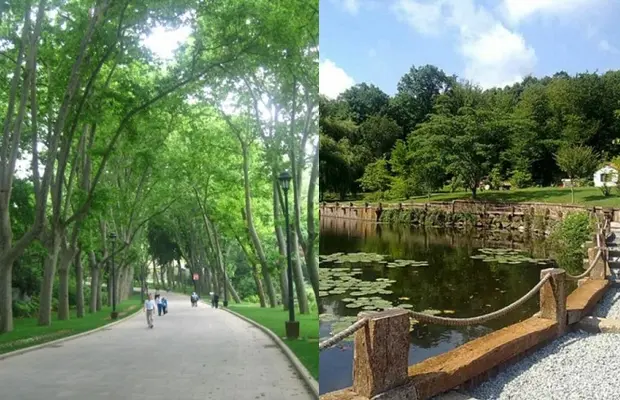
One of Istanbul’s oldest public parks, shaded by walnut trees, Gülhane Park has lately become a hub for tulip season, echoing the Ottoman-era “Tulip Period” obsession with the flower. It’s also simply a good place to sit with an ice cream between palace and museum visits.
9. Dolmabahçe Palace

Along the Bosphorus between Beşiktaş and Eminönü, Dolmabahçe Palace is the kind of building that looks almost too symmetrical to be real — because it was designed that way, down to the last detail. It also hosted the first Ottoman parliament. The Selamlık Hall alone is said to have used around 100 kilograms of gold leaf in its decoration.
10. Rumeli Fortress

Rumeli Fortress is in Istanbul’s Sarıyer district and has hosted concerts and events in the past, though it’s currently closed to that kind of programming. Sultan Mehmed the Conqueror had it built to control the Bosphorus from the north ahead of his siege of Constantinople. The view from the top is spectacular — and steep. Watch your footing.
11. Yedikule Dungeons

One of Türkiye’s oldest open-air museums, Yedikule shows up on nearly every list of historical places to visit in Istanbul.
Despite the name, it wasn’t conceived as a prison. It began as a ceremonial complex meant to receive visiting royalty and foreign dignitaries arriving in Byzantine Constantinople in style.
12. Beylerbeyi Palace

Completed in 1865 as a guesthouse for foreign visitors, Beylerbeyi Palace reportedly took around 5,000 laborers to build, and according to local lore, a 400-member musician ensemble was brought in just to keep the workers motivated. That may be why construction wrapped in only four years.
13. Çırağan Palace

Çırağan Palace sits on Çırağan Avenue, one of the busier streets in Beşiktaş. Before taking its current name, the site was known in the 17th century as the “Kazancıoğlu Gardens” and later as “Beşiktaş Palace.” Built under Sultan Abdülaziz, it now houses several upscale restaurants and regularly hosts weddings and events.
14. Yıldız Palace

Yıldız Palace was first built for Mihrişah Sultan, mother of Sultan Selim III. It’s been looted and stripped over the years, right down to the garden railings, but it also holds a notable first: Türkiye’s earliest cinema screening took place here.
The palace library is worth a dedicated stop on its own.
15. Grand Bazaar

Sitting between the Beyazıt, Nuruosmaniye and Mercan neighborhoods in the heart of Istanbul, the Grand Bazaar is one of the largest and oldest covered markets in the world. Its grounds hold five mosques, a school, seven fountains, ten wells, one public fountain, a courtyard pool, 24 gates and 17 historic inns. Construction began in 1460 under Sultan Mehmed the Conqueror. That’s the founding year most sources cite.
16. Spice Bazaar

Behind the New Mosque in Eminönü, right next to the Flower Market, the Spice Bazaar is said to occupy the site of an earlier Byzantine-era market. The current building was commissioned by Valide Sultan Turhan Hatice and built by chief royal architect Kasım Ağa, completed around 1660 — a later date than some older sources state.
First-time visitors sometimes confuse it with the Grand Bazaar. An easy mix-up, honestly: the two sit close together and are both covered markets.
17. Tekfur Palace

Tekfur Palace sits in Istanbul’s Edirnekapı area, built against the city walls between the Edirnekapı and Eğrikapı gates rather than standing as a freestanding palace. Its exact origins are debated. One account dates it to the reign of Byzantine emperor Constantine VII Porphyrogenitus in the 10th century. It’s thought to have served as a residence, though the structure’s weathering has erased most of the proof either way.
18. Eyüp Sultan Mosque

The mosque anchors the Eyüp district. Sultan Mehmed the Conqueror had it first built in 1458, and after earthquake damage, it was rebuilt by Üzün Hüseyin Efendi in 1800.
19. Khedive’s Pavilion

Perched on the Çubuklu hillside in the Beykoz district, this pavilion was built in 1907 for Abbas Hilmi Pasha, the last Khedive of Egypt and Sudan. With its single tower rising above the trees, it has a storybook quality that’s rare even by Istanbul’s standards.
20. Topkapı Palace

Topkapı Palace is large enough that touring it properly can feel like touring half of Istanbul. The collection ranges from the Spoonmaker’s Diamond to a relic believed to be a hair from the beard of the Prophet Muhammad. The Bosphorus views are hard to beat. One practical note: Topkapı is run by National Palaces of Türkiye, so check current hours and prices there — the Harem needs its own ticket, and it’s worth planning that stop early.
21. Bayezid Mosque

Located in Istanbul’s Beyazıt neighborhood, this mosque was commissioned by Sultan Bayezid II. It’s known among architecture enthusiasts for having some of the most unusual acoustics of any building in the city. That’s a hard claim to judge from a guidebook and an easy one to test standing inside.
22. Haydarpaşa Station
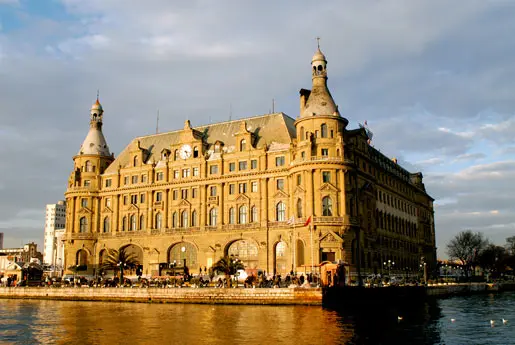
Long associated with both farewells and reunions, Haydarpaşa Station now hosts festivals more often than trains. It opened in 1908 as the starting point of the Istanbul-Baghdad railway line and remains one of the clearest architectural symbols of the city’s role as a cultural capital.
23. Galata Tower

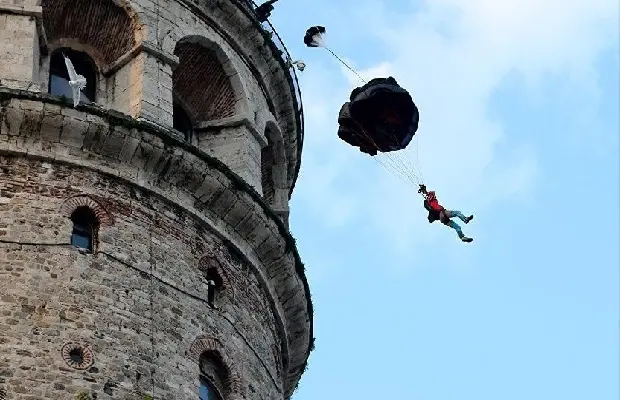
Galata Tower is unmistakably one of Istanbul’s defining landmarks today, though its history is more layered than it first appears. A Byzantine tower stood on this site under Emperor Anastasius in the 6th century. And the tower visitors climb now? The Genoese built it in 1348. During the Allied occupation after World War I, British naval forces reportedly added a small structure to the top to extend their sightline across the city.
24. Ortaköy Mosque

Officially named the Büyük Mecidiye Mosque but far better known as Ortaköy Mosque, this is the neighborhood’s signature landmark. Sultan Abdülmecid commissioned it from architect Nigoğayos Balyan in 1853. Its Neo-Baroque style stands out from Istanbul’s more classical mosques: white cut-stone walls, a single dome lined in pink mosaic, and a mihrab and minbar carved from mosaic and marble.
25. Pierre Loti Hill

A favorite spot for locals since the 18th century, Pierre Loti Hill offers one of the best panoramic views over the Golden Horn. Photos only go so far here. This view rewards showing up in person.
26. Rüstem Pasha Mosque

Rüstem Pasha, husband of Mihrimah Sultan (daughter of Suleiman the Magnificent), commissioned this mosque, and it’s now famous for its extensive İznik tilework. Rüstem Pasha had a reputation for liking things ornate. Today’s visitors can thank that taste for the tiles. Süleymaniye, a few entries down, wins on scale and that famous dome; this one wins up close, on the walls.
27. Aya Yorgi Church, Büyükada

Aya Yorgi Church is close to mandatory for anyone visiting Büyükada, the largest of the Princes’ Islands. Every April 23, the square at the base of the hill fills with visitors making the climb, driven by a long-standing belief that wishes made here come true. That belief explains the glass cabinet inside, crowded with watches, necklaces and other small offerings left behind.
28. Süleymaniye Mosque

Commissioned in honor of Suleiman the Magnificent and built in the mid-1550s, Süleymaniye Mosque is widely considered one of Mimar Sinan’s masterworks and crowned with his tallest dome. If there’s only time for one Sinan mosque, make it this one.
29. Crimean Memorial Church

Set in Istanbul’s Tophane district, a spot few visitors expect to find a Neo-Gothic church, the Crimean Memorial Church tends to catch people off guard the moment they step through its garden gate. It was completed in 1855. All of the stone used in its construction is said to have been shipped in from Malta.
30. Bulgarian St. Stephen Church

Nicknamed the “Iron Church,” this prefabricated building sits along the Golden Horn on Balat’s ferry-pier street.
The nickname is literal: the entire structure was cast from iron.
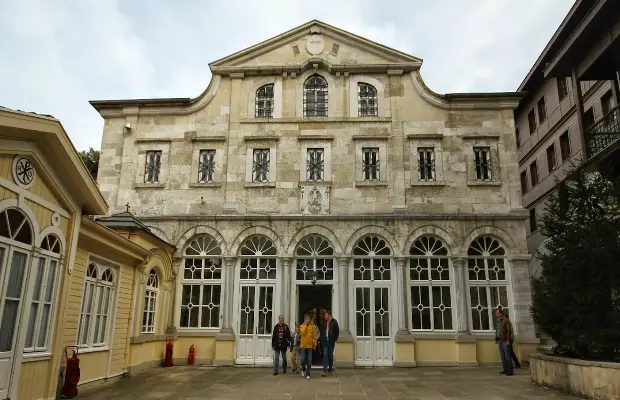
31. Greek Orthodox Patriarchate of Constantinople

After taking Constantinople, Sultan Mehmed the Conqueror left this site untouched, a gesture meant partly to counter a forming Catholic alliance in Europe and partly to signal tolerance toward Orthodox Christians. It remains the seat of the Greek Orthodox Patriarchate today.
That rounds out this list of historical places to visit in Istanbul — a city where two empires and two continents left more layered history than any single itinerary can cover. If there’s a site missing that belongs here, drop it in the comments.
Sources: National Palaces of Türkiye (Milli Saraylar), UNESCO World Heritage: Historic Areas of Istanbul, Maiden’s Tower (Kız Kulesi), Ministry of Culture and Tourism



Bir yanıt yazın