
Dwarka Underwater City: Krishna’s Legendary Sunken Capital


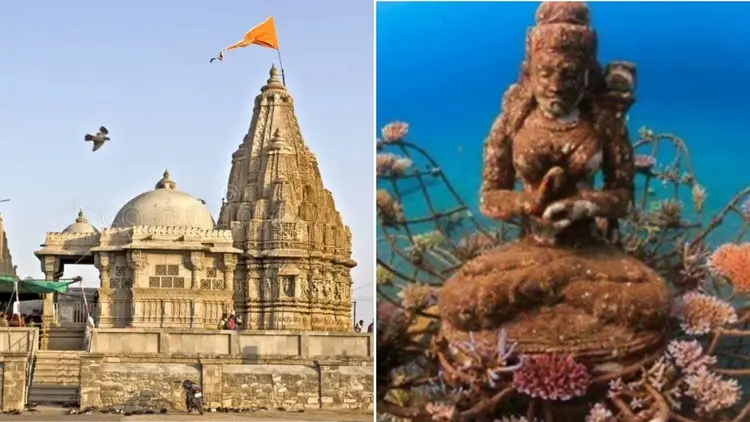
The Dwarka underwater city sits where legend and archaeology overlap. Hindu tradition says Krishna’s golden capital slid beneath the Arabian Sea, and archaeologists have indeed found submerged walls and stone anchors off the coast of Gujarat, India. How old those remains are is still being argued.
1. Dwarkadhish Temple and the legend of Krishna’s capital

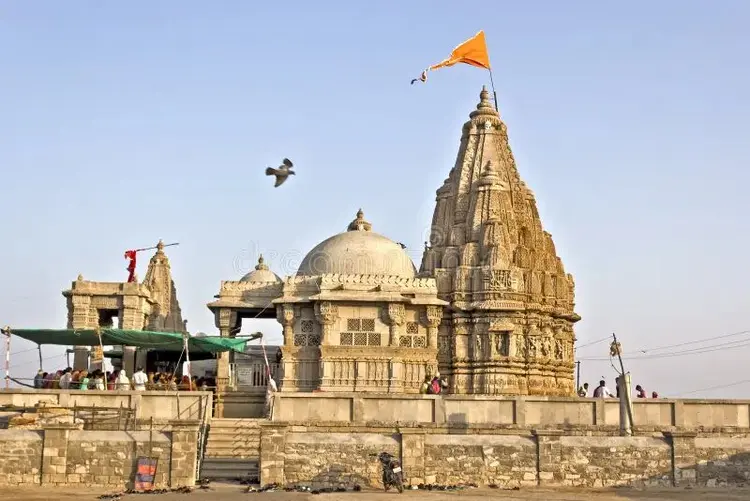
Dwarka’s best-known landmark is the Dwarkadhish Temple, which rises where the Gomti River meets the Arabian Sea. Tradition gives it a history of 2,500 years or more, although archaeologists suggest the original shrine dates to around 200 BCE at the earliest and that the present temple was rebuilt in the 15th and 16th centuries.
The legend is older still. According to Hindu tradition, Krishna left Mathura to escape persecution and settled on the western coast of today’s Gujarat, where he built a city said to be wrapped in walls and decorated with gold and gems. When Krishna left the earth, the story goes, the sea claimed the city. History or myth? That is exactly what the divers are trying to settle.
2. Is the Dwarka underwater city real? What archaeologists found
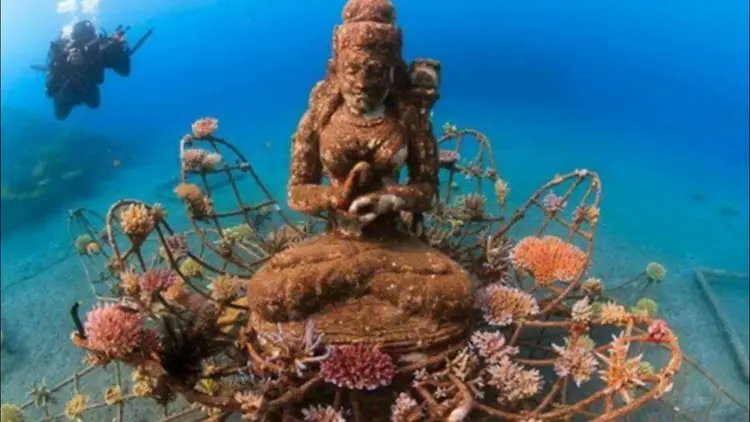
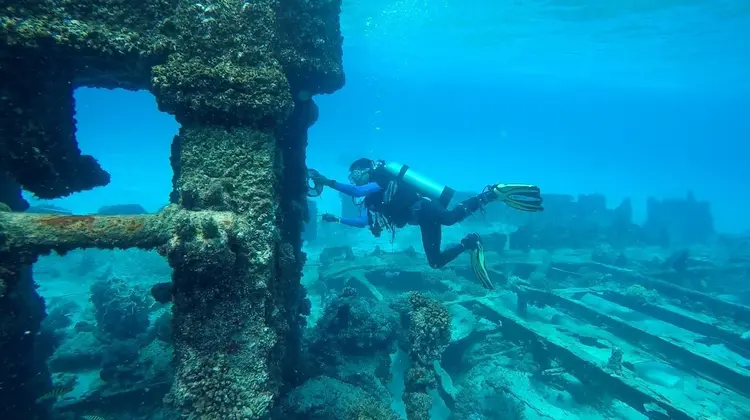
Here the record is plain. Archaeological work at Dwarka began in 1963, with excavations on land. Later digs on the seaward side revealed submerged settlements with walls and fort bastions, a large stone jetty and triangular stone anchors with three holes. A 2004 study in Current Science by marine archaeologists from India’s National Institute of Oceanography read those stone structures as the remains of an ancient jetty and the anchors as signs of an important historical-period port. Coastal erosion most likely sank it. The dates are where things get lively. One settlement near the temple may belong to the second millennium BCE, possibly the era associated with the Mahabharata epic. Nearby Bet Dwarka, an island, has Late Harappan layers with a thermoluminescence date of about 1570 BCE, while other finds range from the 1st century BCE to the 9th century CE. Something big and old is down there, then, but not everyone agrees on which something.
The search is far from finished.
The Archaeological Survey of India (ASI) carried out offshore and onshore excavations at Dwarka between 2005 and 2007, and its revived underwater archaeology wing returned to the waters near Gomti Creek and Bet Dwarka in February 2025. You’ll often read online that the ruins stretch for dozens of kilometers. That claim doesn’t hold up: none of the sources reviewed for this article supports it.
3. How to get to Dwarka and when to go
Dwarka has its own railway station, with trains from Jamnagar, Ahmedabad, Mumbai and other cities. The nearest airports are Porbandar, roughly 100 km away, and Jamnagar, roughly 130 km away. Sources quote slightly different distances. Check before booking a transfer. The most comfortable season runs from October to March, while Janmashtami, Krishna’s birthday, falls in late August or early September depending on the lunar calendar and draws crowds of pilgrims.
Bet Dwarka got easier. Sudarshan Setu, a cable-stayed bridge of about 2.3 km connecting Okha with the island, opened in February 2024, so the boat ride is now optional.
The submerged ruins themselves are a different matter. They are an active research zone, and a planned submarine tour announced in 2023 and 2024 still has no confirmed start date, so any operator promising dives to the ruins deserves a hard second look.
4. Temples and beaches beyond the ruins
Dwarka rewards visitors who come for the living town as much as the sunken one. Temples dedicated to Hanuman, Vishnu, Shiva and Lakshmi Narayan fill the streets, and the beach and lighthouse offer a calmer view over the same sea that supposedly swallowed a golden capital.
On shore, Dwarka’s age rests on tradition. Offshore, it rests on stone anchors and contested dates. Perhaps Dwarka was Krishna’s city. Perhaps it was an ordinary port that drowned slowly and extraordinarily well.
Either way, a good part of the story is still underwater. It waits for the next survey season.
Sources: DeshGujarat, Wikipedia: Dwarka, Gaur, Sundaresh and Tripati (2004), Current Science


Bir yanıt yazın