
10 Secluded Bays in Turkey You Can Only Reach by Boat


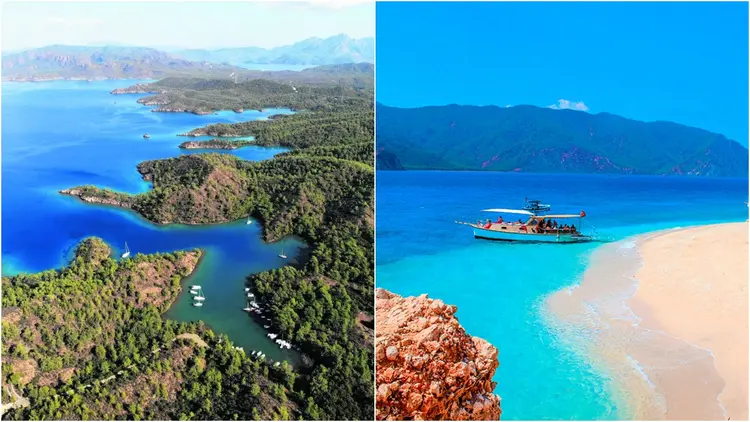
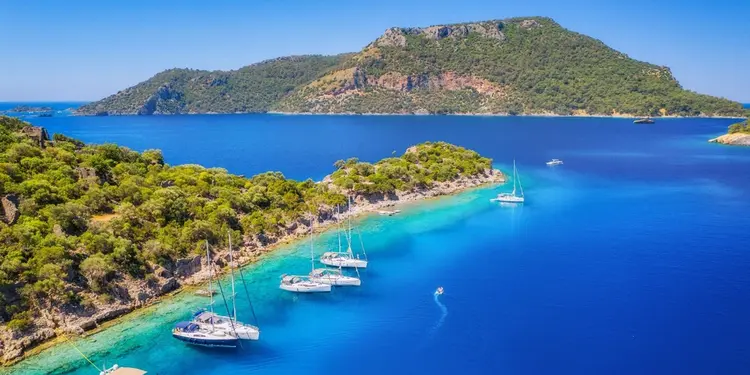
No road runs down to dozens of coves on Türkiye’s Aegean and Mediterranean coasts. The 10 secluded bays in Turkey below are, in practice, boat-only—which is exactly why they are still clear, quiet and mostly empty of beach clubs. Most sit between Göcek, Marmaris and Datça, and a day-trip boat or a blue cruise aboard a wooden gulet is the usual way in.
1. Hamam Bay, Muğla: A Bath Under the Water
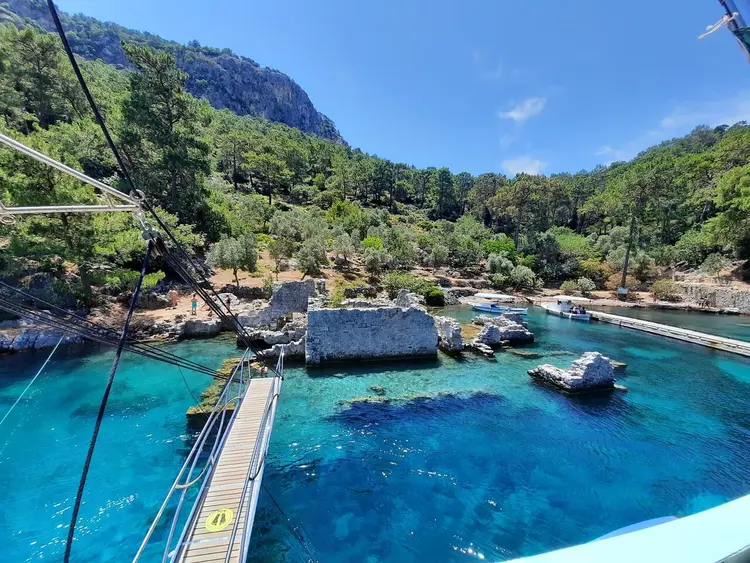
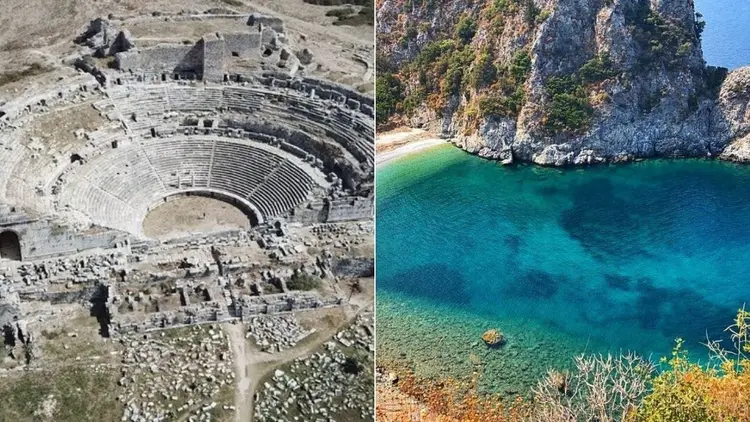
Just under the surface of Hamam Bay, near Göcek, lie the remains of an ancient bath, and since legend credits Cleopatra with building it, the cove also goes by Cleopatra’s Bath. Boats are the only way in, and with nothing at all on shore, everything you need for the day has to come with you. On a cove like this, the forgotten bottle of drinking water is usually the first thing anyone notices.
Honestly, though, the sunset is the real attraction.
2. Gökgemile Bay, Muğla: Pine Forest and Protected Fish
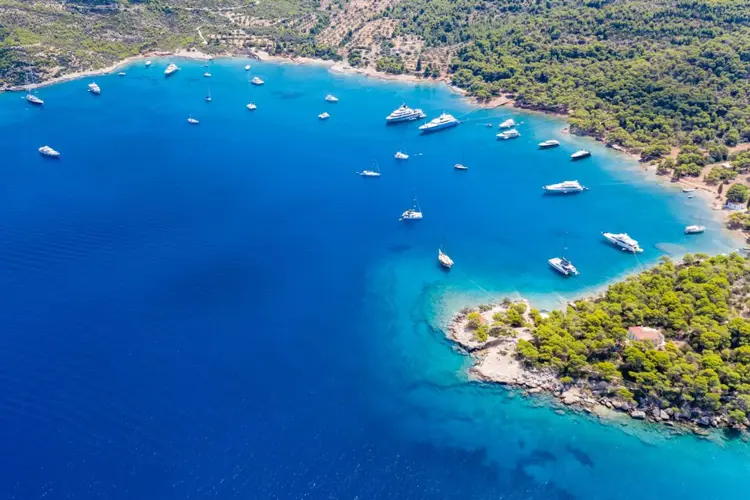
Thick pine forest and clear blue water ring Gökgemile, on the coast near Dalaman. There are no businesses. Arrival is by blue-cruise boat only, though once ashore there is enough flat ground for a short walk, and professional fishing is banned to protect the fish population and the surroundings.
3. Suluada, Antalya: The Turkish Maldives
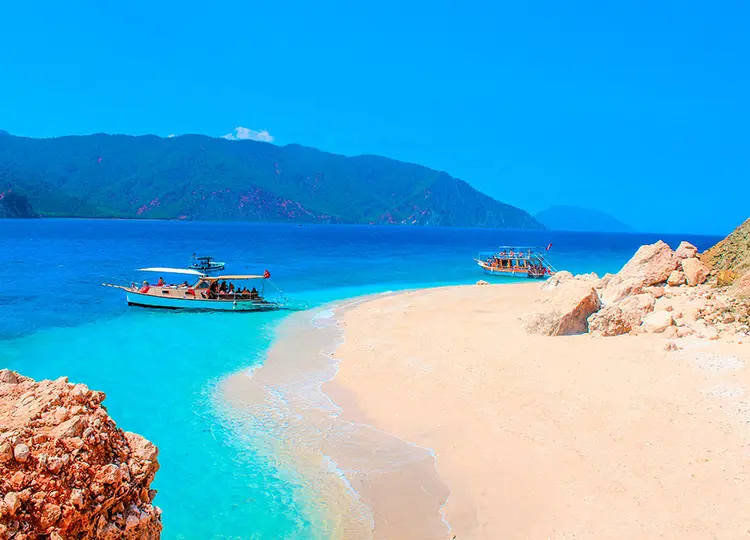
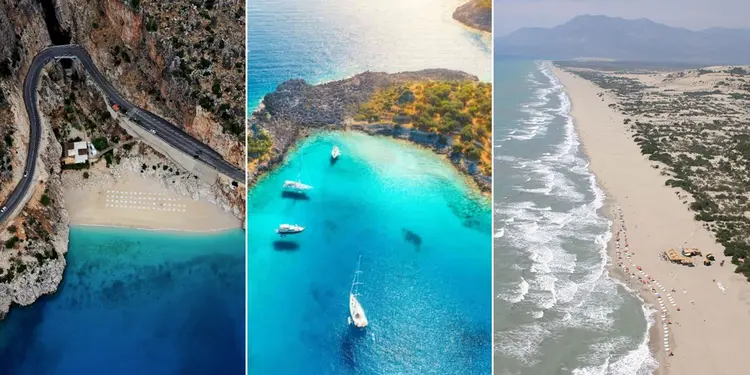
Suluada, an uninhabited island at the western end of the Gulf of Antalya, earned the nickname “Turkish Maldives” for its white sand and water in shades of turquoise. No road, no electricity, no running water—and no camping. Visits are day trips by tour boat or private yacht, usually April to November. Despite the Maldives tag, this is not a swim-anywhere island: swimming near the caves is prohibited because of strong currents, and the caves shelter the rare Mediterranean monk seal, so save the fins, mask and snorkel for the rest of the coast.
4. English Bay, Muğla: A Warship Hides in the Pines

Pine trees and turquoise water frame English Bay, in the Gulf of Gökova between Bodrum and Datça. Local lore says a British warship hid here during World War I to avoid Russian and German fleets, which gave the bay its English name. True? Nobody has confirmed it. The setting matches it, and anyone sailing the Gökova coast should make the stop.
5. Dişlice Island, Marmaris: A Tooth in the Sea
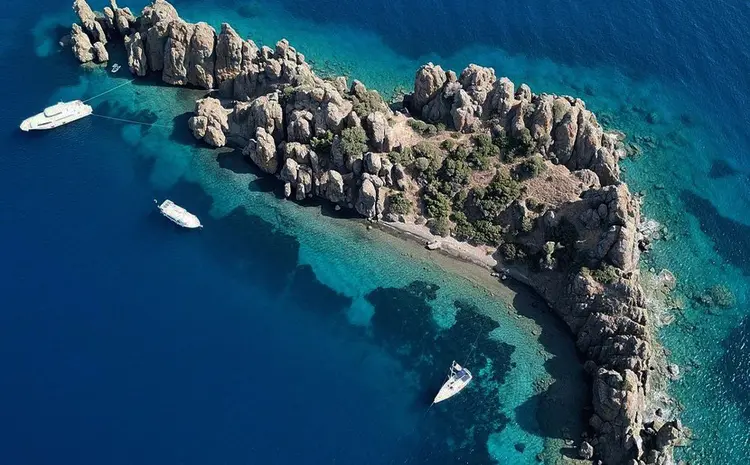
Seen from above, the island looks like a tooth, hence the name, which means “toothed.” A short boat ride from Marmaris brings you to this small rocky island, where calm water meets little pebble beaches tucked between the rocks and you can either climb to the top or snorkel around the shore.
Snorkeling is the best bet.
6. Gebekse Bay, Marmaris: Snorkeling With Loggerheads
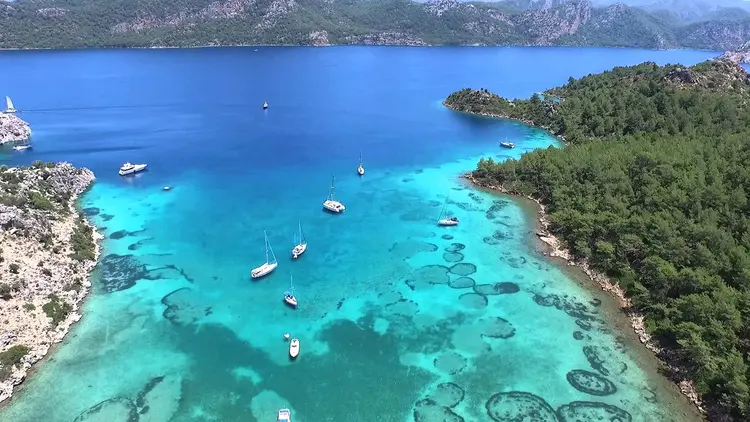
Close to the well-known Çiftlik Bay, Gebekse is a pine-covered cove with very clear water, and many rate it one of the country’s best snorkeling spots—fitting for a Marmaris coast that counts among Türkiye’s recognized dive and snorkel areas. Loggerhead turtles (Caretta caretta) sometimes turn up, though nobody can promise a sighting. On shore, the ruins include what is thought to be an old church.
7. Kızılkum Bay, Marmaris: A Red Sand Strip
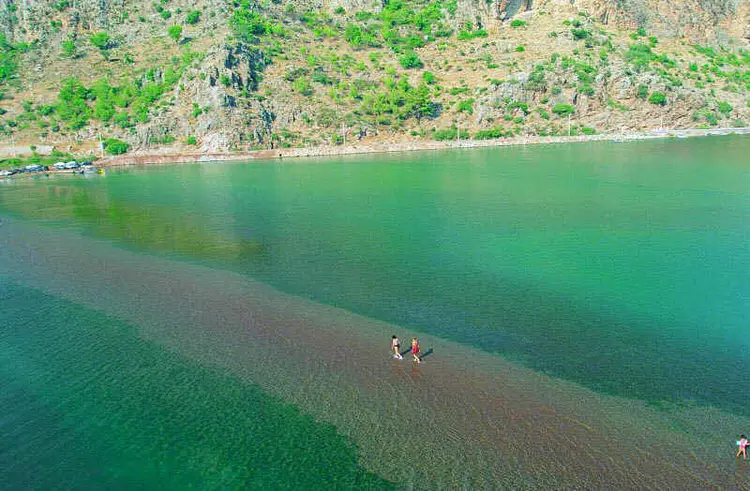
Kızılkum, “red sand,” is in the Adaköy area. It has untouched forest and blue water, and it is quieter than the neighboring bays. The unusual part: a strip of red sand splits the bay in two, making a good walking and photography spot, especially near sunset.
8. Büyük Çatı and Küçük Çatı Bays, Muğla: Twin Coves
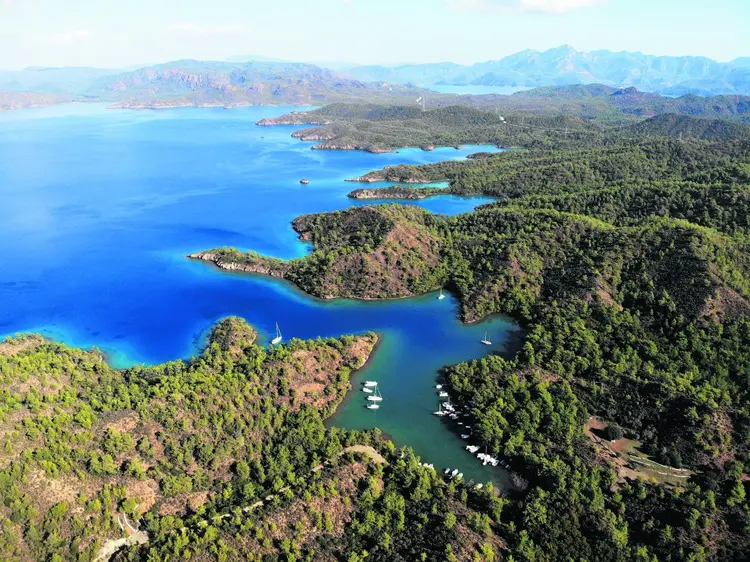
These two neighboring coves lie within Börtübet Harbor in the Gulf of Gökova. With no road in, pine and sweetgum have grown thick here—locals call the sweetgum günlük, which is why the area is also known as Günlük Bay. Calm water most of the time. In summer, though, “secluded” is a relative term: private yachts and tour boats fill both coves.
9. Turunç Pınarı Bay, Fethiye: A Spring and a Few Services
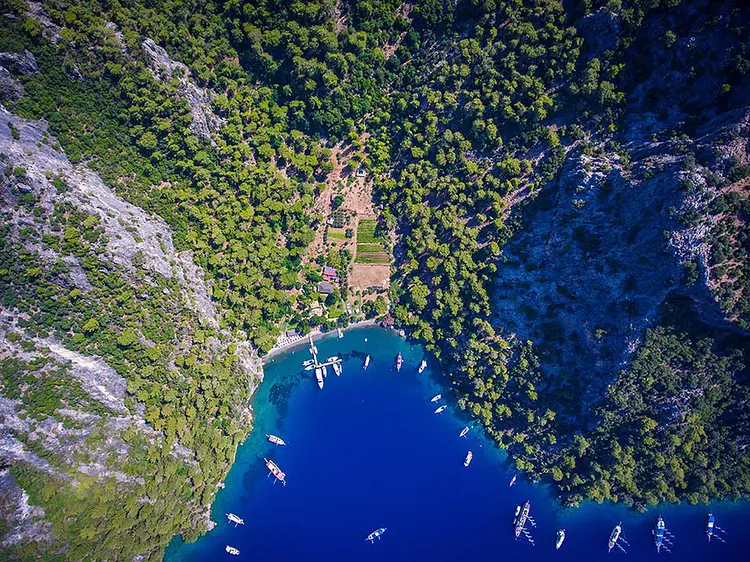
Bitter-orange trees and a spring nearby give Turunç Pınarı its name. Unlike its neighbors, it has a few small businesses, so water, toilets, showers and local dishes are all on hand, and swimming off the jetty is easy. It still stays uncrowded in season. As a first boat-only cove, it makes a gentle introduction.
10. Domuz Çukuru Bay, Datça: Boars, Figs and Camping
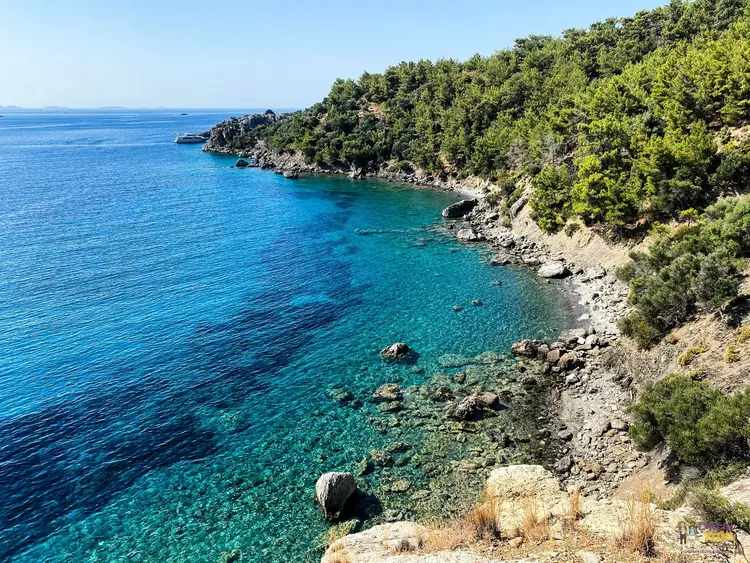
The name means “boar pit,” and the story goes that wild boars came down to eat figs that dropped from the trees. Campers like it. No businesses, about an hour’s ride by tour boat from Datça: the Hamam Bay rule applies again, and supplies and water come with you.
Sources: Suluada (Wikipedia), Muğla (Go Türkiye), Blue Cruise (Wikipedia)

Bir yanıt yazın