
15 UNESCO World Heritage Sites in Turkey to Visit


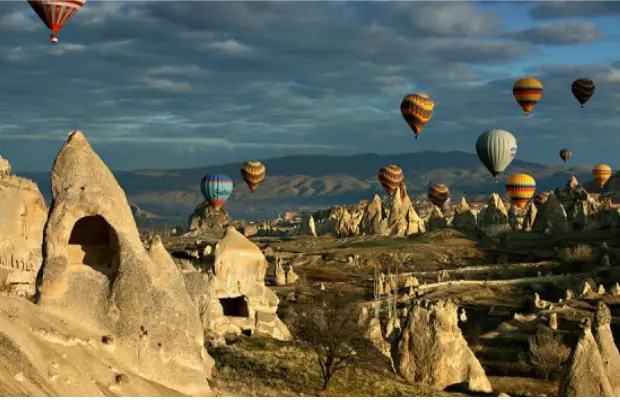
Anatolia has hosted so many civilizations that Türkiye now has 22 places on the UNESCO World Heritage List. Fifteen of the best-known UNESCO World Heritage Sites in Turkey follow, and no, they aren’t all ruins. They run from Istanbul’s Historic Peninsula to Ephesus, each with the year it was inscribed and a reason to go.
1. Historic Areas of Istanbul

Founded in the 7th century BC and capital of the Roman, Byzantine and Ottoman empires in turn, Istanbul packs its heritage into the Historic Peninsula, bounded by the Golden Horn, the Bosphorus and the Sea of Marmara. UNESCO inscribed it in 1985, which surprised nobody. The listed zones include the archaeological park around the Hippodrome, Hagia Sophia, Hagia Irene and Topkapı Palace, plus the Süleymaniye and Zeyrek conservation areas and the city walls. Plenty of first-timers try to cover it all in a day and run out of daylight long before they run out of monuments.
2. Great Mosque and Hospital of Divriği, Sivas

A mosque with a domed tomb and a hospital attached to it form one of the masterpieces of Islamic architecture, listed in 1985 for the stone carving on its portals.
Ahmet Shah of the Mengujekid dynasty and his wife Turan Melek completed it in 1229. Here’s the unexpected part: the stone came from the town itself.
3. Hattusa, Çorum

About 4 km east of Boğazkale in Çorum province lies Hattusa, capital of the Hittite Empire between roughly the 17th and 13th centuries BC. UNESCO listed it in 1986. Inside the walls: temples, sacred precincts and, on the hills, gates, some of them carved with sphinxes.
4. Mount Nemrut, Adıyaman
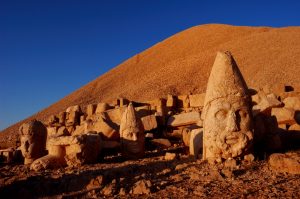
At 2,150 meters, giant statues and a tumulus mark the sanctuary built for King Antiochus I of Commagene, where Greek and Persian traditions meet. Sunrise and sunset draw the crowds, so expect company. The statues, up to about 9 meters high, and their long inscriptions explain why. The World Heritage listing came in 1987.
5. Xanthos-Letoon, Muğla and Antalya

Xanthos was the main administrative center of ancient Lycia, about 46 km from Fethiye near Kınık village; Letoon, 4 km away, was its religious center. Independent until the Persians took it in 545 BC, the city later passed to the Byzantines. Lycian traditions mix with Hellenistic and Roman influences here, and Letoon adds temples, a fountain and a Roman theater. UNESCO listed the pair in 1988.
6. Hierapolis-Pamukkale, Denizli

That white isn’t snow: mineral-rich thermal water has built Pamukkale’s brilliant white travertine terraces, and the ruins of Hierapolis, with late Hellenistic and early Christian remains, sit right above them.
The site lies 2 km from Denizli. Hierapolis is thought to have been founded in the 2nd century BC by King Eumenes II of Pergamon and named after Hiera, wife of Telephos. It joined the list in 1988.
7. City of Safranbolu, Karabük
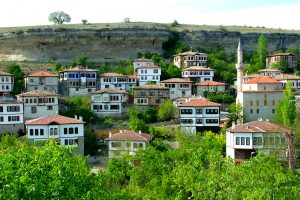
Long a favorite place to settle, Safranbolu passed into Turkish hands in the early 14th century. Its well-preserved timber-framed houses, mansions and monuments make it one of the few towns protected as a conservation site in its entirety. UNESCO inscribed it in 1994.
8. Archaeological Site of Troy, Çanakkale

Troy, the city Homer’s Iliad made famous, lies at the foot of Mount Ida (Kaz Dağı), but was there ever a Trojan War? Whatever the answer, more than three thousand years of continuous settlement show how Anatolia, the Aegean and the Balkans met here. Digging started in the 1870s. The German archaeologist Heinrich Schliemann began near Tevfikiye village; the site has been a national park since 1996 and a World Heritage Site since 1998.
9. Selimiye Mosque and its Social Complex, Edirne
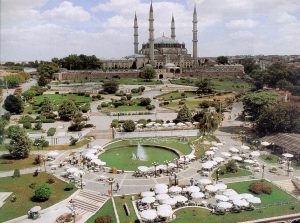
Selimiye crowns the skyline of Edirne, the Ottoman capital before the conquest of Istanbul.
Many consider it the masterpiece of Mimar Sinan’s mature period, and it’s hard to argue. He built it in the 16th century for Sultan Selim II, and its technical mastery and its scale earned UNESCO status in 2011.
10. Neolithic Site of Çatalhöyük, Konya
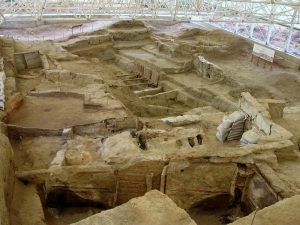
This large Neolithic settlement in central Anatolia was founded about 9,000 years ago and consists of two mounds, east and west, in Çumra district. People lived here for roughly two thousand years, leaving behind unusually dense housing and a strong tradition of art. Digging has gone on since the 1960s, and the Çatalhöyük Research Project keeps its findings and archive online. The site was inscribed in 2012.
11. Pergamon and its Multi-Layered Cultural Landscape, İzmir
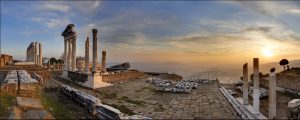
Pergamon, in today’s Bergama district, was an important city of ancient Mysia and capital of the Hellenistic Pergamon Kingdom. The monuments on the Kale acropolis are among the best examples of Hellenistic urban planning, with Roman and Byzantine layers above them and Ottoman mosques, inns, baths and markets adding one more on top. UNESCO listed it as a cultural landscape in 2014.
12. Bursa and Cumalıkızık, Bursa

Don’t write it off as just a pretty village. Founded in the 1300s as a foundation village, Cumalıkızık is among the best-preserved examples of early Ottoman rural civil architecture, and together with the city of Bursa, still a working trading town, it shows how the early Ottomans lived. UNESCO inscribed “Bursa and Cumalıkızık: the Birth of the Ottoman Empire” in 2014.
13. Göreme National Park and the Rock Sites of Cappadocia, Nevşehir
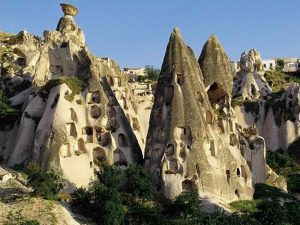
People have lived in Cappadocia since the Chalcolithic. Wind and water have shaped the tuff of Mount Erciyes and Mount Hasan into fairy chimneys, and rock-cut spaces stay mild in winter and cool in summer. Between the 7th and 13th centuries, Christians fleeing persecution settled in the Göreme valleys, making it a center of the faith, with painted rock-cut churches. UNESCO listed the area in 1985.
14. Diyarbakır Fortress and Hevsel Gardens Cultural Landscape, Diyarbakır

Diyarbakır’s walls, built mostly of black basalt, run about 5.8 km and were largely raised in the 4th century under the Roman emperor Constantius II.
Byzantine, Artuqid, Seljuk and Ottoman rulers repaired them in turn. The nearby Hevsel Gardens, an open green area beside the Tigris that has been farmed for thousands of years, form the other half of the listing. UNESCO inscribed both in 2015.
15. Ephesus, İzmir

Ephesus was one of the most important cities of antiquity and a major port, with layers from the Hellenistic, Roman, Byzantine, Beylik and Ottoman periods. Add the House of the Virgin Mary, a Christian pilgrimage site, and Islamic buildings from the Beylik era, and the religious history turns out just as varied.
UNESCO listed Ephesus in 2015, oddly late for a site this famous: Hierapolis-Pamukkale got there in 1988, 27 years earlier.
Sources: Wikipedia, List of World Heritage Sites in Turkey, Turkish Ministry of Foreign Affairs announcement on the 22nd listing, Çatalhöyük Research Project


Bir yanıt yazın