
Persepolis Iran: 6 Things to Know About the Ancient City


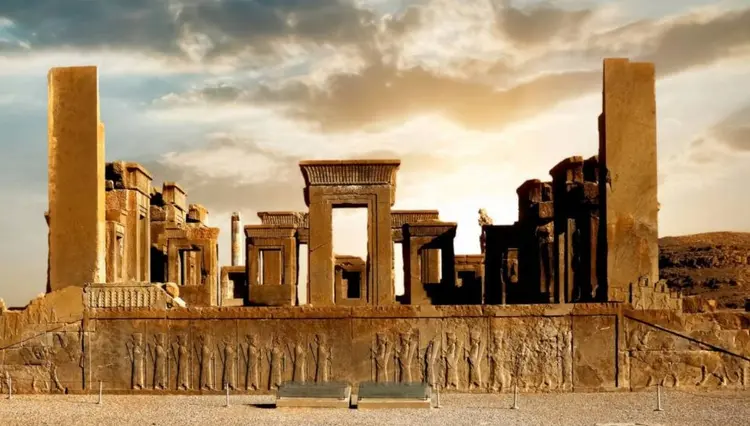
Some ruins give you chills before you even read the plaque. Persepolis in Iran is one of them, its rows of columns, carved processions and wind-scoured stone marking the ceremonial capital of one of the ancient world’s biggest empires. Its story runs from Darius I to Alexander the Great.
1. A capital founded around 518 BC
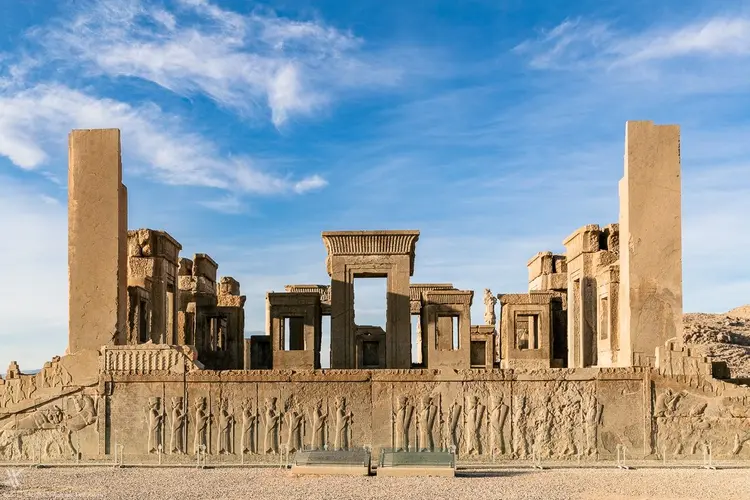
Darius I, king of the Achaemenid Persian Empire, began building Persepolis around 518 BC. Built as much for ceremonies and royal receptions as for administration, the complex carries carved reliefs on its walls and staircases: gift-bearers, dancers and courtiers in embroidered robes, row after row of them. Call it a time capsule. The empire’s self-image survives in stone.
2. Who built Persepolis?
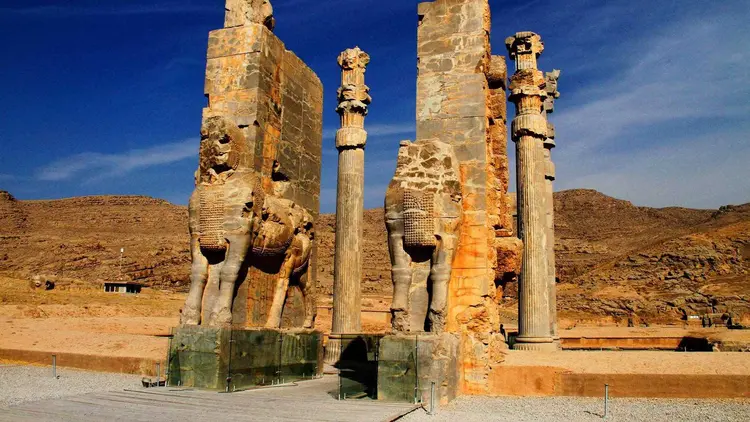
Darius laid the foundations. His son Xerxes I, and later Artaxerxes I, kept building, so the complex grew over several reigns. It stands on a vast terrace of about 125,000 square meters, partly built up and partly cut from the mountain. The best-known structure is the Apadana, the audience hall, whose roof rested on 72 columns about 24 meters tall. A common mix-up: the “hundred columns” belong elsewhere. That name goes to the Hall of a Hundred Columns. The Apadana’s reliefs show delegations from across the empire (Medes, Babylonians, Lydians and Egyptians among them) bringing gifts to the king. Persian diplomacy, in snapshot form. The terrace holds more: the Treasury and the Tachara, Darius’s palace and the best-preserved building on site, while royal tombs cut into the hillside sit behind it all.
3. What does Persepolis mean?
The name is Greek: “city of the Persians.” Its Old Persian name was Pārsa. In Iran today the site goes by Takht-e Jamshid, “Throne of Jamshid,” named after a mythical king rather than a historical ruler, and the name itself is attested only in later periods, not in Achaemenid times. History and legend overlap. Part real imperial capital, part setting for myth.
4. Where is Persepolis?
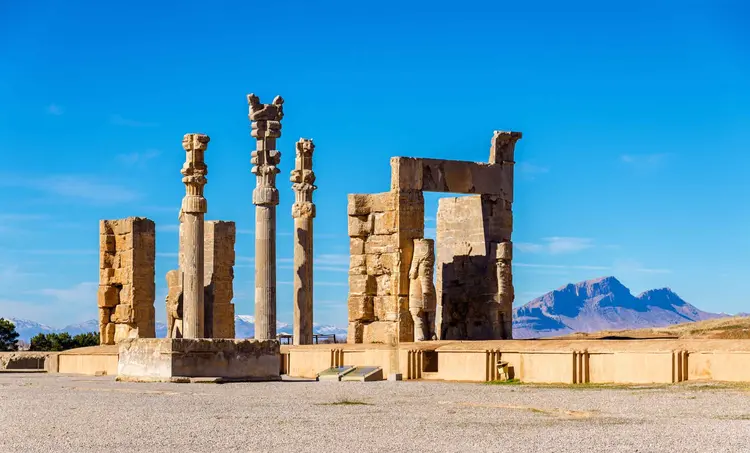
Short answer: Fars province, southwestern Iran. Shiraz is the nearest major city. The ruins sit about 60 kilometers (37 miles) to its northeast, on a rocky platform at the edge of a wide plain.
Approached from the plain, the stone structures appear suddenly rather than gradually, and that abrupt arrival, with columns and gateways rising out of open ground, adds to the sense of stepping into another era.
5. Which civilization built it?
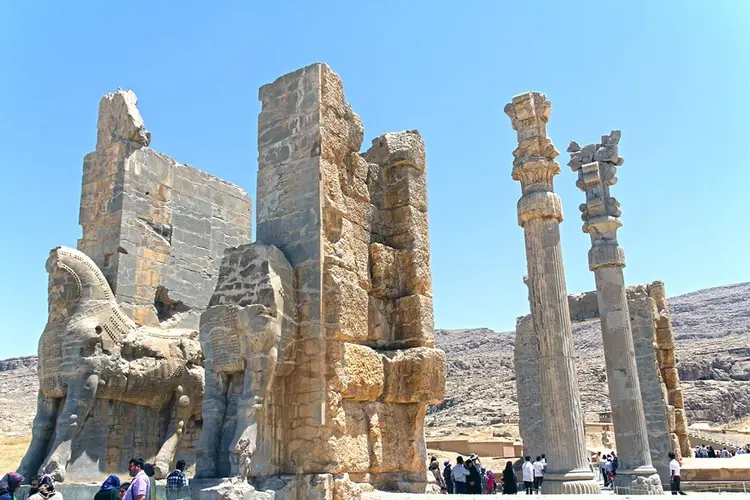
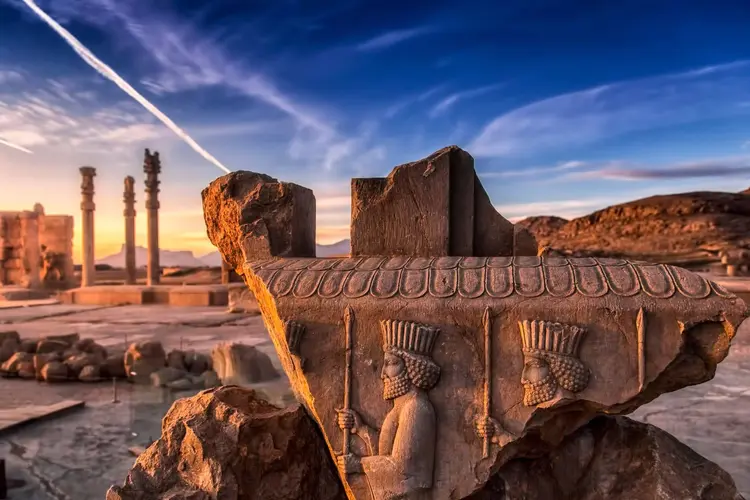
The Achaemenid Empire did. A multiethnic state known for its administration and architecture, it left a record of that diversity in the reliefs, where delegates from many peoples, including Elamites, Medes, Egyptians and Indians, file past in a long procession. The mix matters. It is why the site reads as imperial rather than local.
In 330 BC Alexander the Great’s army took the complex, and parts of it burned soon afterward. Deliberate act or accident? Nobody can say for sure, because the ancient accounts disagree.
6. How to get to Persepolis
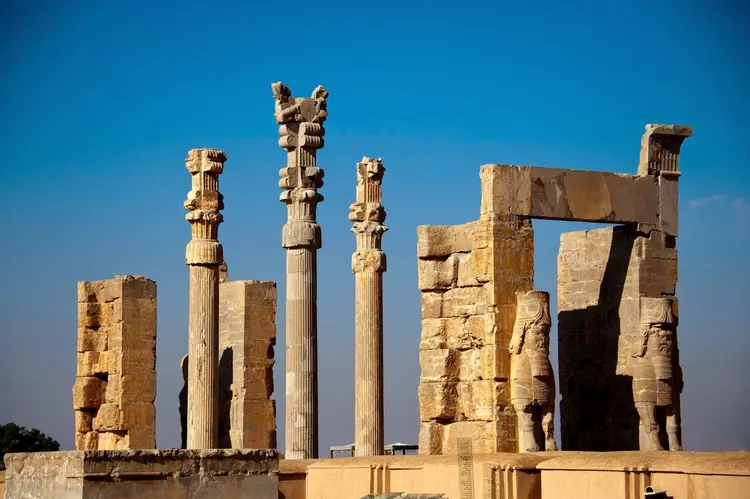
Most visitors fly into Shiraz. From there, the last stretch takes about an hour by organized tour, taxi or rental car. Persepolis has been a UNESCO World Heritage Site since 1979. And it rewards patience. Arrive early, bring water and allow a few hours, and if there is time left, nearby Naqsh-e Rustam, with its royal tombs cut into a cliff, fits easily into the same trip. One dry but necessary step: check your government’s current travel advice for Iran before planning.
Sources: Persepolis World Heritage Site (official site, in Persian), Wikipedia, Persepolis, Wikipedia, Apadana




Bir yanıt yazın