
11 Best Diving Spots in Turkey, From Reefs to Wrecks


The best diving spots in Turkey are spread along the Aegean and Mediterranean coasts of Türkiye, where clear water, reef walls, sea caves and wartime wrecks sit within a short boat ride of busy resort towns. The 11 sites below run from beginner-friendly bays to deep technical dives. Depths and conditions shift with currents and season, so local dive centers have the final word on what is safe on the day.
1. Big Reef, Bodrum
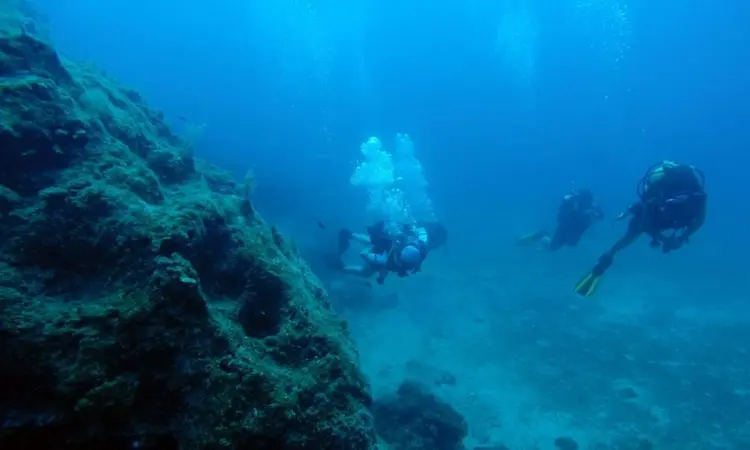
Big Reef rises from the seabed like an underwater mountain, about 20 minutes by boat from central Bodrum, with a top only a few meters below the surface and deeper flanks that drop to roughly 35 m. Mixed-level groups can share it. Shallow water brings sea bream, octopus and scorpionfish, while moray eels, groupers and wrasse take over deeper down and barracuda sometimes pass overhead. Not everyone here is a local, either: Red Sea species turn up too.
2. Cave of Holes (Delikli Mağara), Bodrum
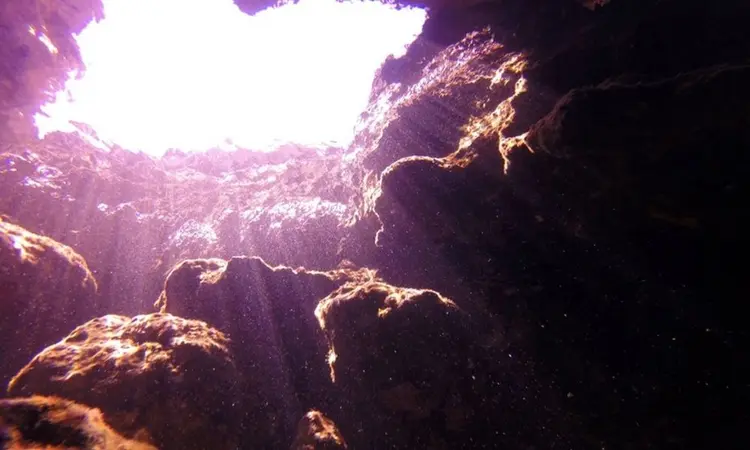
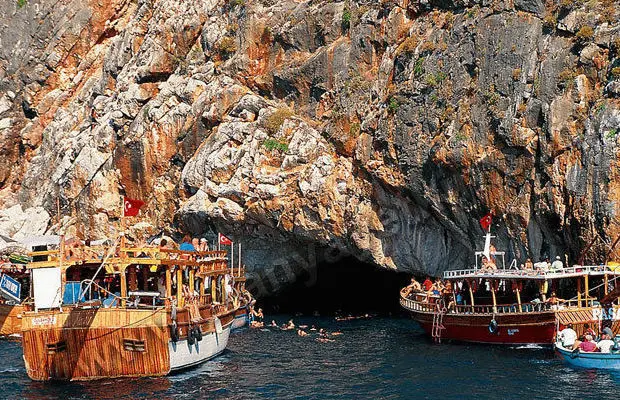
In Turkish, Delikli Mağara means “Cave of Holes.” It lies on the Kos-facing side of Karaada, roughly 40 minutes by boat from Bodrum harbor. Two sea caves make the dive. The first, at around 15 m, has a narrow entrance, the second opens into a wide chamber, and purple and yellow growth colors the cave walls while scorpionfish, spiny lobsters and other crustaceans hide in the crevices. Near the rock shelf at about 25 m, a large grouper often waits, as if on duty.
3. Orak Island, Bodrum
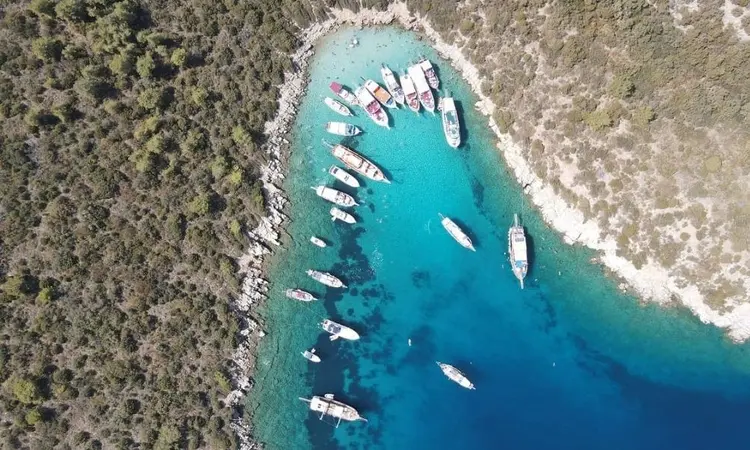
Orak Island, named for its sickle-shaped tip (“orak” means sickle), guards the entrance to the Gulf of Gökova, about an hour and a half by boat from Bodrum. The dive centers on the slim cape at the island’s south end, where a wall starts around 25 m and plunges far below recreational limits. Caves at 32 to 34 m hide purple sponges. Life is thin, even by Mediterranean standards, and the divers who rate Orak highly tend to be the ones who came for the wall. Small fish gather in the shallows, schools of amberjack patrol the open water, and groupers, rays and moray eels turn up along the wall.
4. Canyon, Kaş
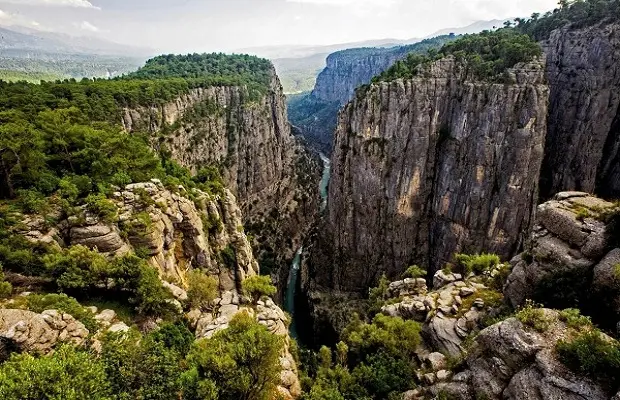
Kaş, a small harbor town on Türkiye’s Turquoise Coast, is a dive-travel favorite, and Canyon is its classic. Two steep walls drop to about 20 m to form a gorge with a cave tunnel inside, and the site reaches around 35 m at its deepest—expect a current at the shallow entrance and a fragile rock face. Put simply, good buoyancy is not optional here. The exit follows the wall to the wreck of the Dimitri, a steel cargo ship that ran aground in 1968. Anyone hoping for a fish-packed aquarium will be disappointed; the scenery is the draw.
Mediterranean monk seals are known to hunt in the area.
5. Flying Fish, Kaş
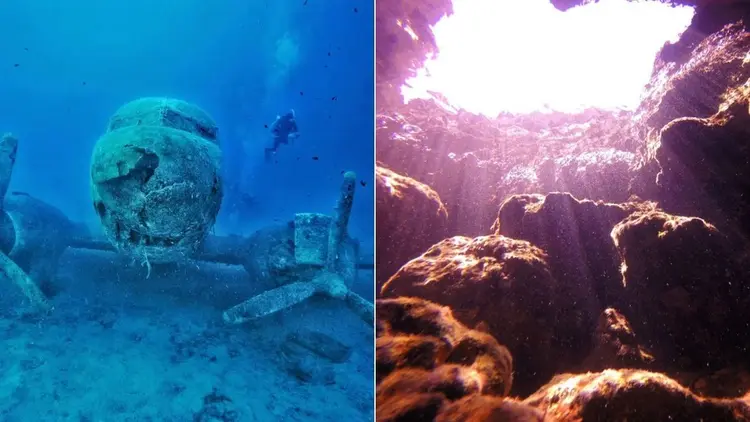
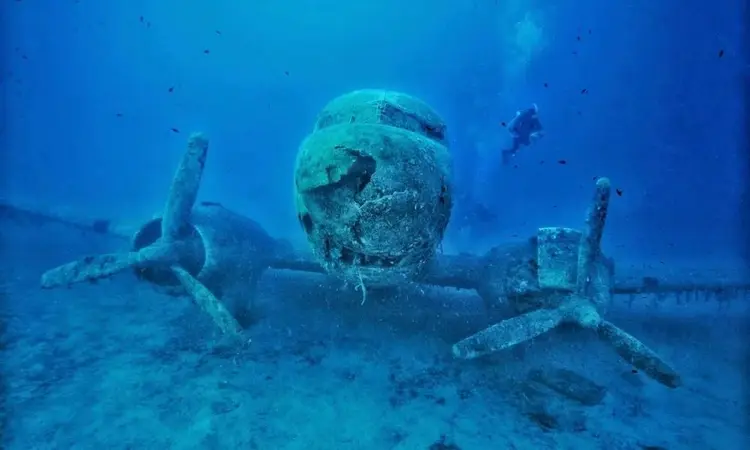
Flying Fish takes its name from the wreck of an Italian Savoia-Marchetti SM.79 bomber, shot down by anti-aircraft fire during World War II near Meis (Kastellorizo) island. Honestly, nobody agrees on where it rests. Reports range from about 33 m to well past 55 m, so this is a site for experienced, deep-certified divers with a guide who knows the currents. Visibility is often good. Large groupers, sea bream and amberjack are regular sightings.
6. Aquarium Bay, Fethiye
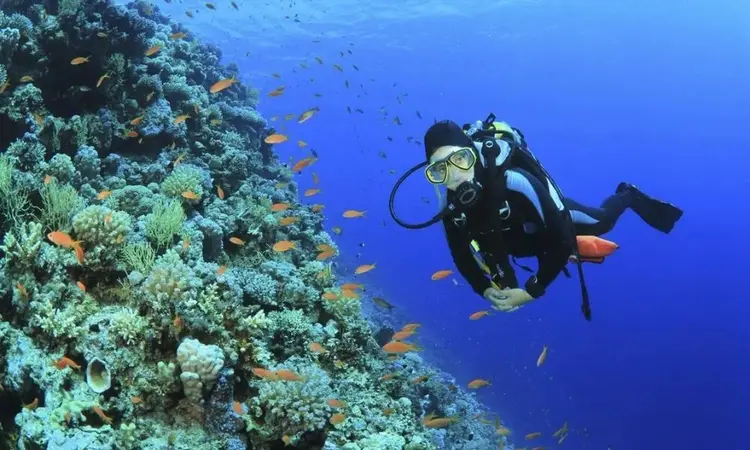
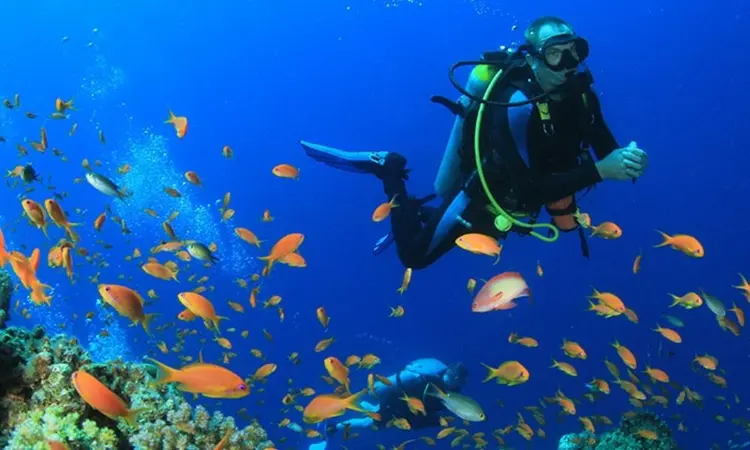
Orak Island and Flying Fish ask for deep experience; Aquarium Bay (Akvaryum Koyu) asks for almost none. It works for nearly everyone, from first-time “discover scuba” dives to advanced courses. Beginners can start at around 18 to 20 m. Experienced divers go longer and deeper. Dives often begin on the left side of the bay, about 150 m out, and cover the rocky ledges and the Aquarium Reef, where seahorses, octopus, orange sponges, sand-dwelling fish, wrasse and groupers live among the stones.
7. Afkule, Fethiye
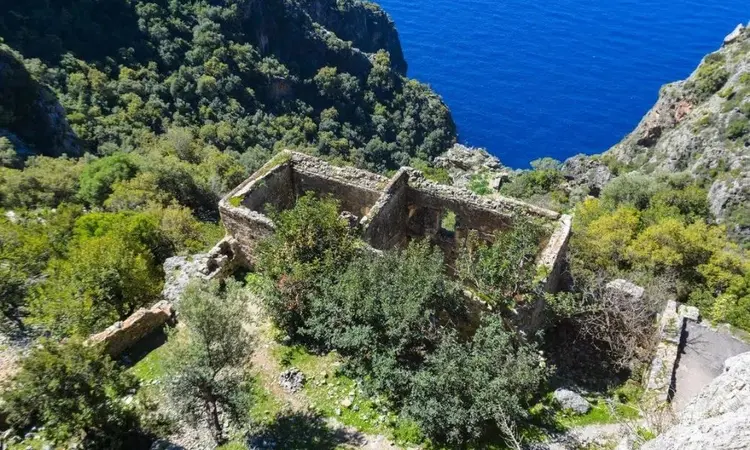
Afkule, a cliff-lined cove near Fethiye, is popular with advanced divers and is described locally as one of the area’s safer and more striking sites. It holds two caves. The first rises about 7 m. Groupers and shoals of fish shelter there, and a swim-through hole leads on to the second, nicknamed the “Turkish Bath” (Türk Hamamı), where shafts of daylight fall through an opening in the ceiling much as they do in a traditional hammam dome.
8. Fener Island, Çeşme
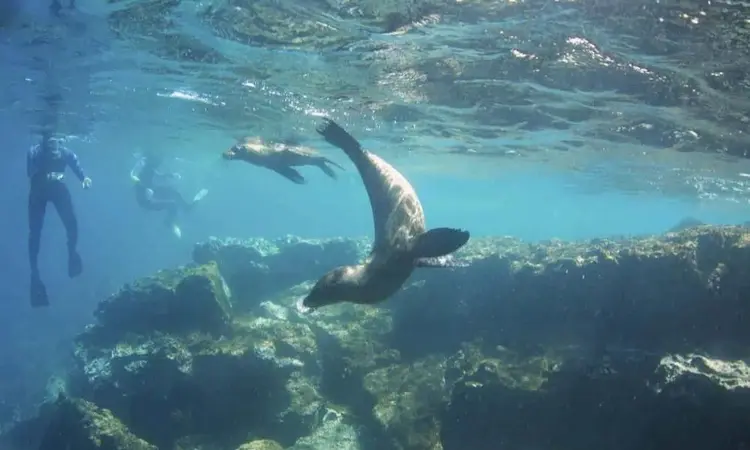
Fener Island sits just off Ildır village on the Çeşme peninsula west of İzmir, and with an average depth of about 18 m it suits divers of most levels. Sea bream and other schooling fish swim past yellow tube sponges and flower-like corals. The rock hides old seal caves.
Monk seals aren’t only a Kaş story. With luck, one may appear.
9. Deli Mehmet, Ayvalık
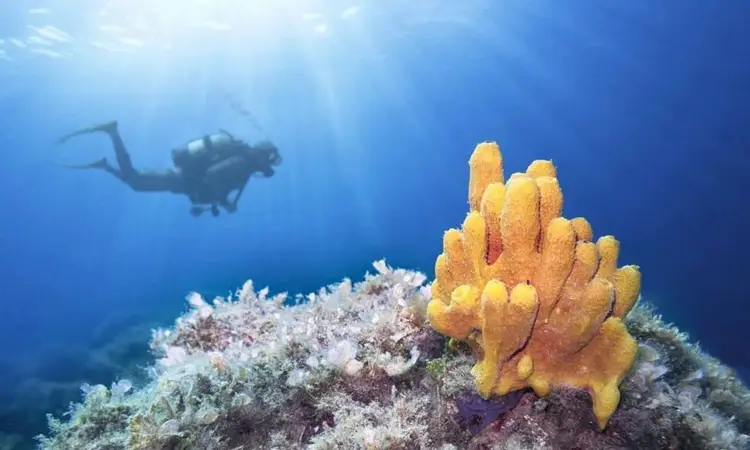
Deli Mehmet (“Crazy Mehmet”) is really two underwater islets off Ayvalık, on the northern Aegean coast. Deli Mehmet 1 starts around 18 m and suits less experienced divers, while Deli Mehmet 2 begins around 27 m and belongs to more confident ones, though both share coral-covered rock and gorgonian “trees” in red and yellow. Moray eels hide in the gaps. So do bright reef fish.
10. İlyosta Island, Ayvalık
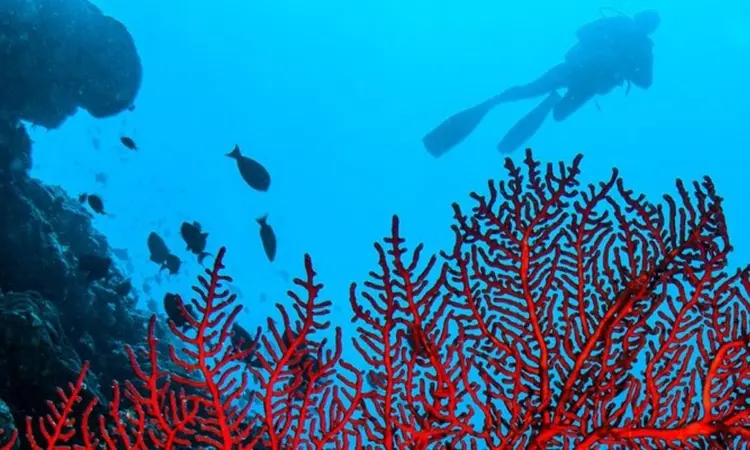
Ayvalık draws divers from Türkiye and abroad, and İlyosta Island adds a gentler option to Deli Mehmet’s deeper dives. Its best-known site is Gavur Limanı (“Infidels’ Harbor,” an old local place name), where depths run from about 3 to 35 m and accommodate most levels. Moray eels are common. Divers sometimes find sea hares, a slug-like creature that rarely shows itself, so count it as a bonus.
11. Saros Bay, Çanakkale
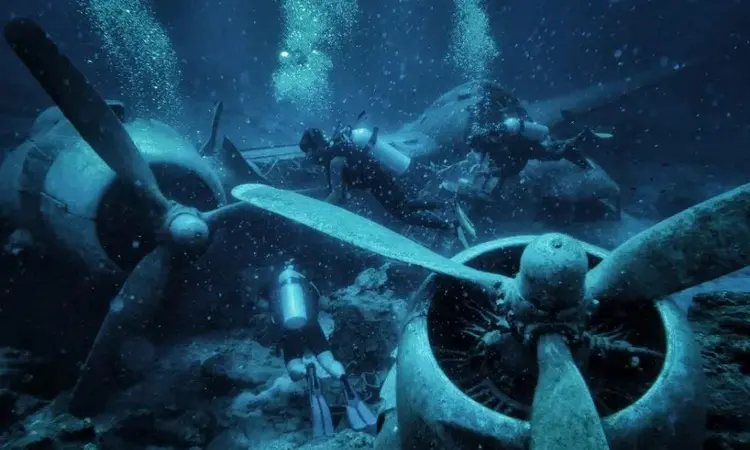
Saros Bay, in the far northwest of the Aegean, is known for its clear water and strong currents. Why so clear? No big towns or heavy industry surround the bay, which helps keep the water clean for the more than 200 marine species reported here, from starfish and sea snails to baby lobsters.
Named dive spots include İbrice Harbor, Cennet (“Heaven”), Cehennem (“Hell”), Toplar Burnu, Asker Taşı, Üç Adalar, Kömür Limanı and Bebek and Minnoş reefs.
Sources: Go Türkiye, Mediterranean diving, PADI, Kaş Kanyon dive site



Bir yanıt yazın