
What Is Museum Fatigue? Why Everything Blurs Together


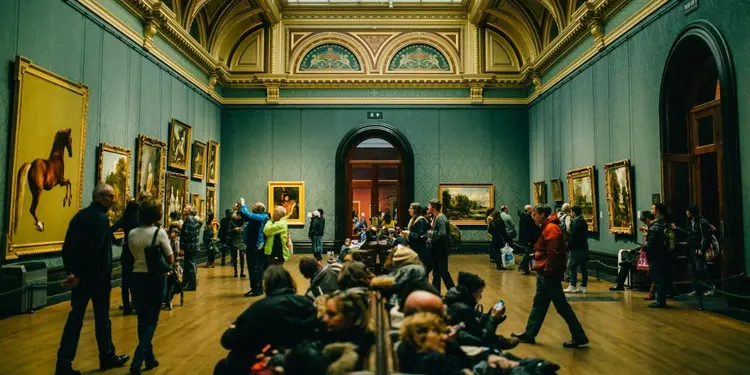
At first you study every painting. Then the rooms start to blur, your attention drifts and you catch yourself scanning for the exit sign. If that sounds familiar, you are in good company: it is called museum fatigue.
1. Is museum fatigue a real thing?
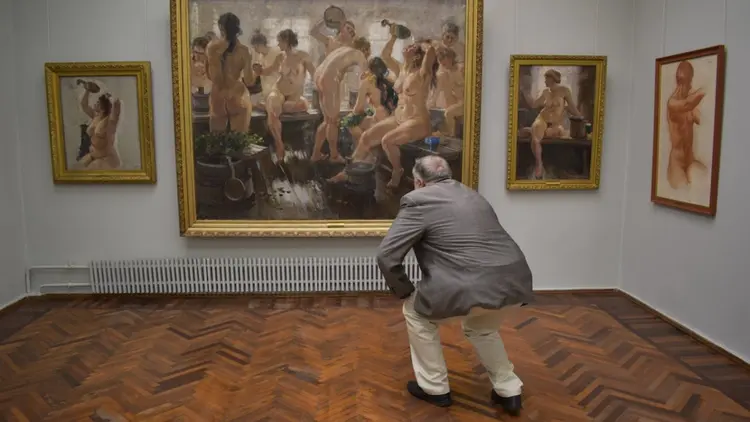
Yes, and it is surprisingly old. The term goes back more than a century, to Benjamin Ives Gilman’s 1916 paper “Museum Fatigue” in The Scientific Monthly, and it has been studied ever since by psychologists, designers and visitor-experience researchers. After long exposure to artworks, wall text and crowds, attention drops and a new object stops feeling exciting. It starts to feel like work.
In large museums, visitors often linger in the first galleries and then speed up toward the end. The cause is simple. The brain tires of processing new information at the same pace.
2. It is mental, not only physical
Contrary to popular belief, museum fatigue is not just about sore feet.
A bigger part is the constant, quiet decision-making: should you look at this piece for a while, read the label, take a photo or move on to the next room? Museums & Galleries NSW points out that finding your way, concentrating on labels and objects, and absorbing information all take considerable mental effort. It adds up. Past a certain point, artworks begin to look alike. Facts do not stick. Plenty of visitors only notice when a whole gallery has gone by and not a single object comes to mind. Attention spans shrink, and the café or the phone screen starts to look more appealing than the art.
3. Why many visitors rush to the famous painting and leave
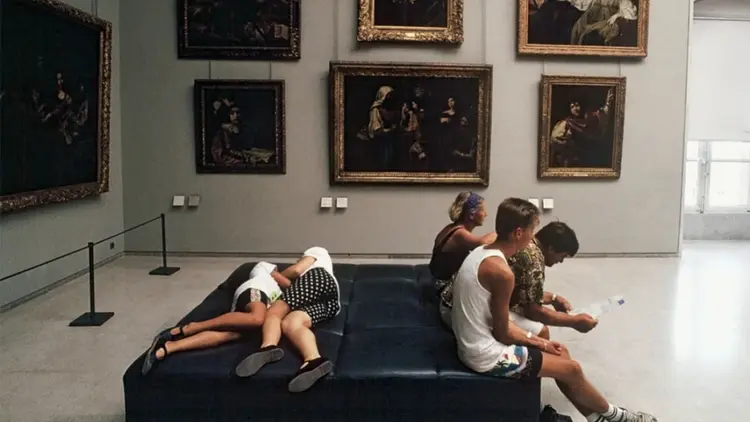
In the biggest museums, lots of people see only a few headline works and hurry through the rest. Take the Louvre. A steady stream of visitors heads straight for the Mona Lisa. The honest explanation is not very flattering: human brains are not built to give hundreds of objects the same level of attention, and crowds, long queues, stuffy air and a flood of information make it worse.
Exact thresholds are hard to pin down, but researchers have long linked fatigue to object density: one early finding was that interest fell as the number of displays rose.
Many museums have responded. They now add seating, quiet corners and cafés, and design simpler routes through the galleries. A good visit is sometimes less about showing more and more about wearing the visitor out less.
4. How to avoid museum fatigue
So what actually helps? Forget finishing the building. Pick a few sections that really interest you instead. Visitor studies from the 1980s and 1990s suggest interest begins to fall after roughly 30 minutes, and sometimes sooner, so short breaks make a real difference, and so does skipping the urge to read every panel and deciding in advance which works you want to see. It also helps not to treat the visit as a chore. Wear comfortable shoes—obvious, yes, but often ignored. Do not arrive hungry, avoid peak hours and plan something pleasant for afterwards. What matters is not how many works you tick off in a day, but which ones you actually connect with.
5. The takeaway: sometimes the brain says “enough”
Museums can be inspiring. But attention has limits. Museum fatigue is what happens when too much stimulation, room after room, turns into a kind of aesthetic burnout, so if you find yourself wandering through the last galleries on autopilot, the problem is probably not the art. Your brain may just want a rest.
Sources: Benjamin Ives Gilman (1916), “Museum Fatigue,” The Scientific Monthly (Internet Archive), Museums & Galleries NSW: museum fatigue, Museum fatigue overview, covering Gilman, Robinson and later visitor studies




















Bir yanıt yazın