
13 Black Sand Beaches Around the World


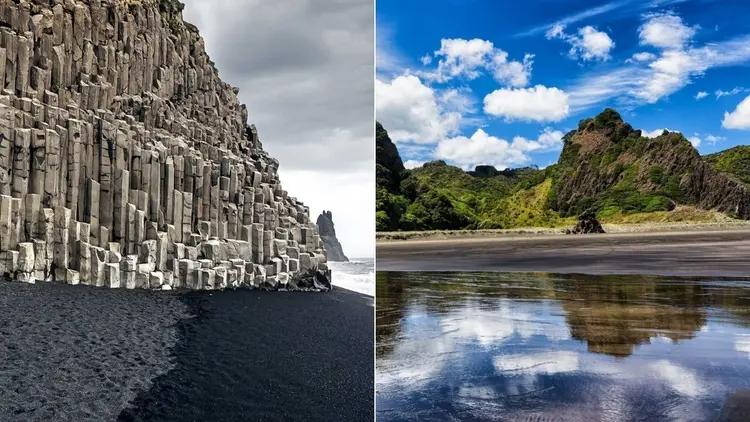
Few sights on any coastline match a black sand beach. The recipe: volcanic eruptions plus centuries of erosion. The results cluster in places like Iceland, Hawaii and the Canary Islands, where dark, glittering shores set against green palms and blue water make for a landscape that suits nature lovers and adventure seekers alike.
1. Perivolos Beach, Santorini, Greece
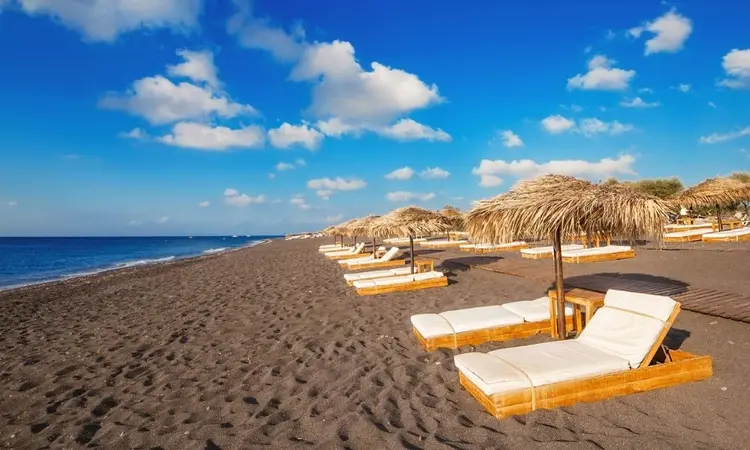
Volcanic Santorini is ringed by dark beaches. Perivolos, on the south coast, is the longest. Behind the sand lie thatched umbrellas, watersports and beachfront tavernas serving fresh seafood at lunch.
2. Taharuu Beach, Papara, Tahiti
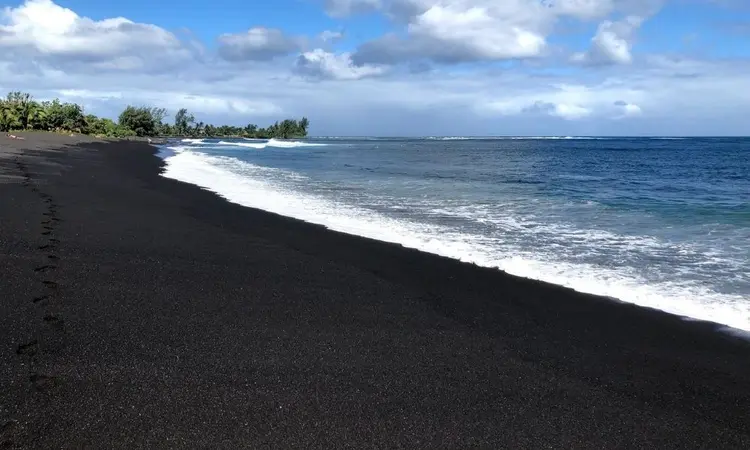
In Papara, about 40 km from Papeete, Taharuu Beach pairs wide black sand with bright green palms and a blue lagoon.
Swimming is safe. Surfing is another matter: the waves can be strong, so it suits experienced surfers only.
3. Reynisfjara Beach, Iceland
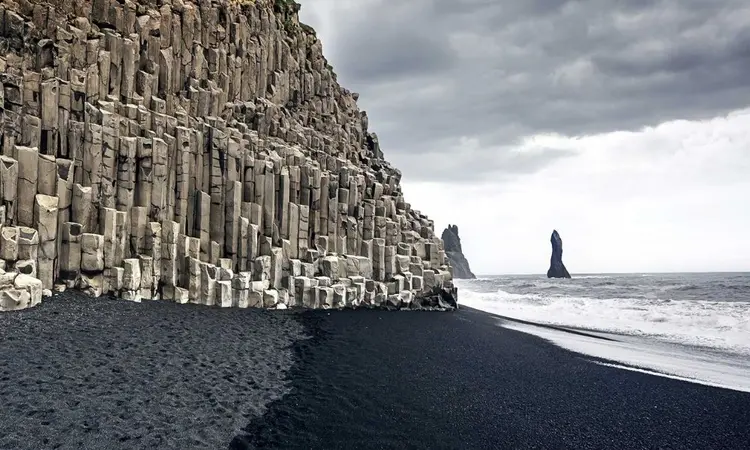
Reynisfjara sits near the village of Vík in southern Iceland, about a two-hour drive from Reykjavik across a bare landscape of black lava fields. Spiky basalt sea stacks rise from the water. Local lore says they are trolls turned to stone at dawn. With a wide band of glittering black sand, a whistling wind and crashing waves, the beach can feel eerie. It is also genuinely dangerous: unpredictable sneaker waves have caused deaths here, so stay well back from the water and obey the warning signs.
4. Playa Jardín, Tenerife, Spain
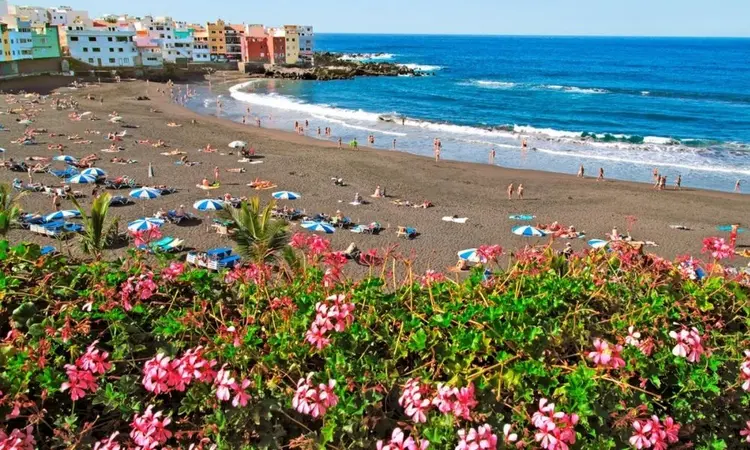
Playa Jardín in Puerto de la Cruz belongs to a stylish complex of black sand beaches and gardens that the Spanish architect César Manrique designed in the 1990s. It is an artificial beach. It never feels like one. Children’s play areas, cafes and subtropical gardens fill the scene, with the peak of Mount Teide, Spain’s highest mountain, rising behind.
5. Punalu’u Beach, Hawaii
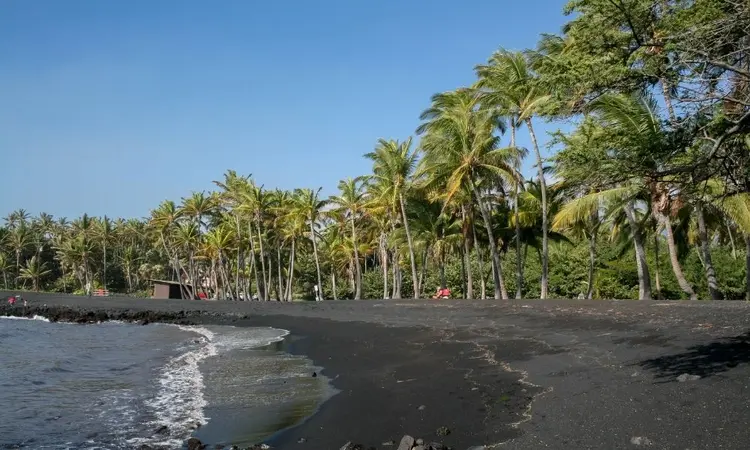
On the southeastern coast of Hawaii’s Big Island, Punalu’u is one of the most dramatic black sand beaches in the state. Coconut palms arc over the dark sand, where green sea turtles, a protected species, come ashore to rest. Keep at least 6 m (20 ft) away from them. Swimming is less inviting. Strong currents and a rocky swimming area make this a beach for picnics and views, and cold freshwater springs flowing into the sea can turn the water from warm to chilly within a few strokes. Taking sand away is not allowed, because Hawaii’s black sand beaches are protected.
6. Mero Beach, Dominica
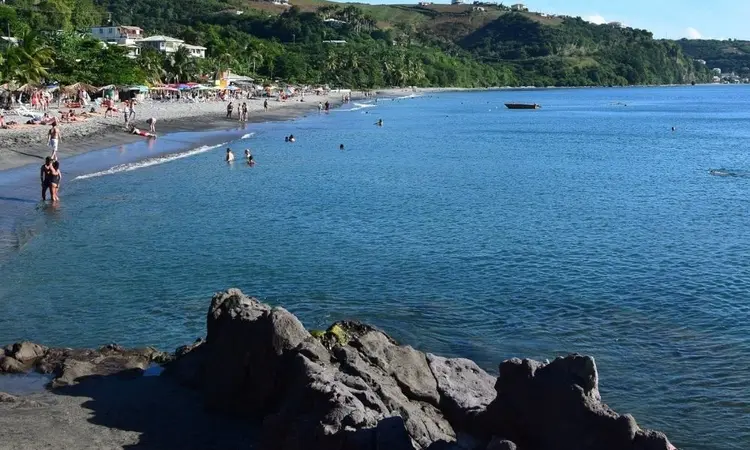
Dominica is wild. Its “black” sand is not always jet black, either: mountainous, forested and volcanic, the island is fringed with glittering silver-gray beaches, and Mero, about half an hour from the capital, Roseau, is a favorite for weekend barbecues and swims in warm, shallow water.
7. Senggigi Beach, Lombok, Indonesia
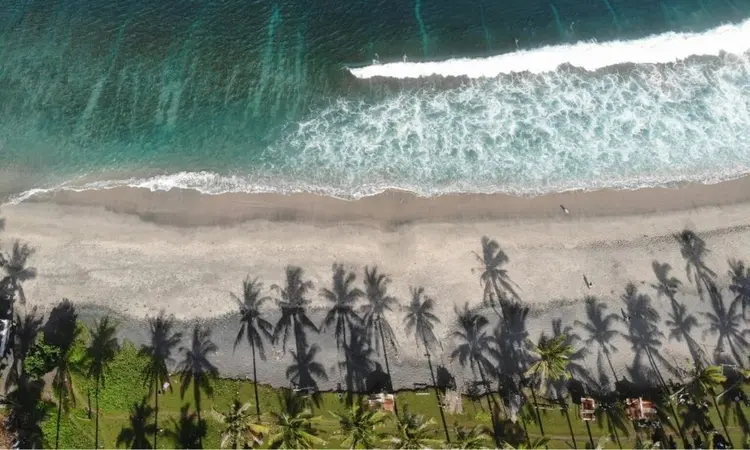
Senggigi hugs the hilly northwest coast of Lombok, and its black and golden sand is linked to eruptions of Mount Rinjani, which looms in the distance. Hotels and restaurants line the strip. Inland, there is plenty more to explore. The clear water is ideal for snorkeling, with stand-up paddleboarding and sea kayaking also on offer.
8. Miho-no-Matsubara, Shizuoka, Japan
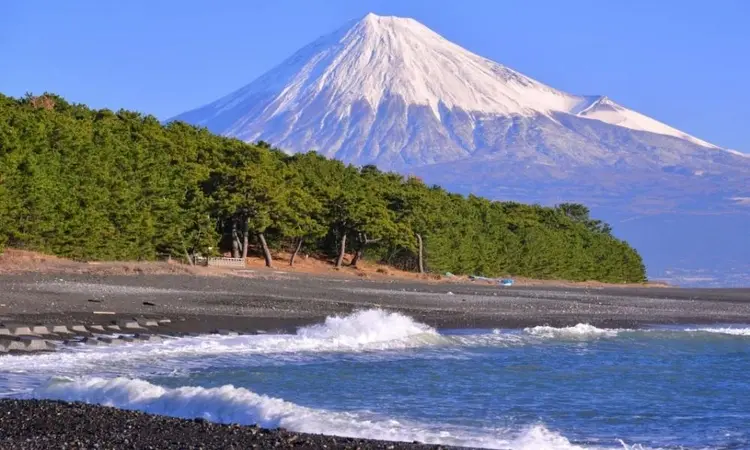
Picture 7 km of black sand, a dense pine grove behind it and the snowcapped cone of Mount Fuji in the background: that is Miho-no-Matsubara. In 2013 the grove joined the World Heritage List as part of the Fujisan cultural site. From Tokyo, the Miho peninsula is an easy train ride. Summer brings windsurfers, divers, anglers and swimmers; others rent a bike or stroll under the fragrant pines.
9. El Golfo, Lanzarote, Canary Islands
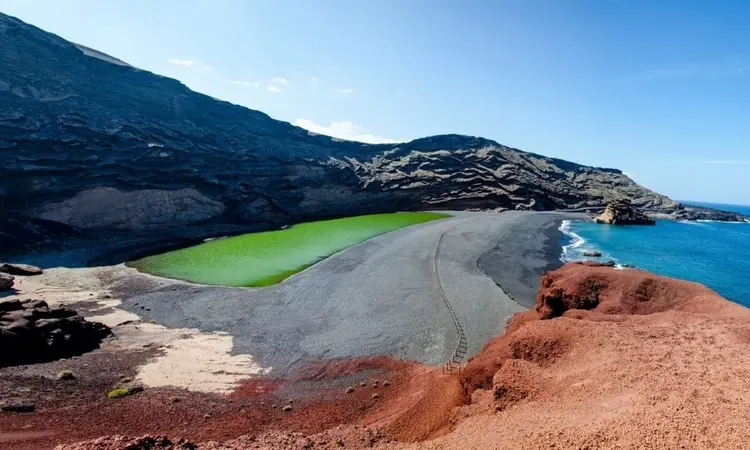
If one place sums up Lanzarote’s otherworldly volcanic scenery, it is this black beach inside the eroded rim of an ancient volcano. Right next door sits Lago Verde, a lagoon colored emerald by algae. Swimming? Neither the lagoon nor the rough Atlantic waves are good for it. As a photo stop, though, El Golfo is one of the most photogenic spots on the island.
Many films and commercials have been shot here.
10. Kamari Beach, Santorini, Greece
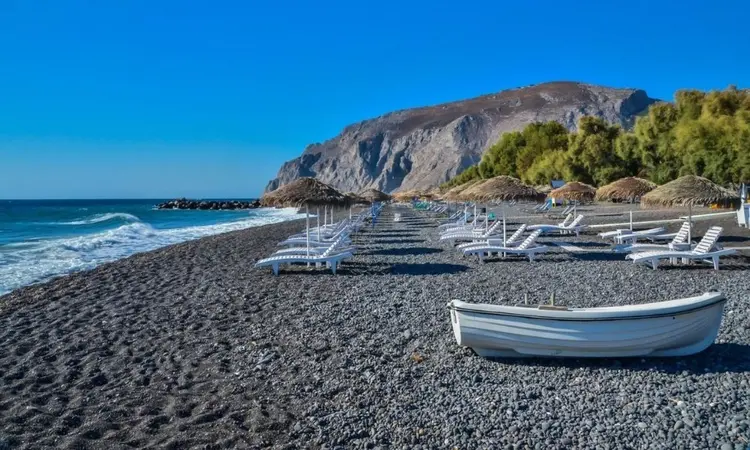
Kamari stretches along Santorini’s east coast. Perivolos, back on the south coast, wins on length; Kamari’s black sand is the pebblier of the two. Like the island’s other dark beaches, it traces back largely to the catastrophic Bronze Age eruption of the 17th century BCE, the one that reshaped Santorini.
By day it is a family beach. At sunset, the DJs come out.
11. Anse Couleuvre, Martinique
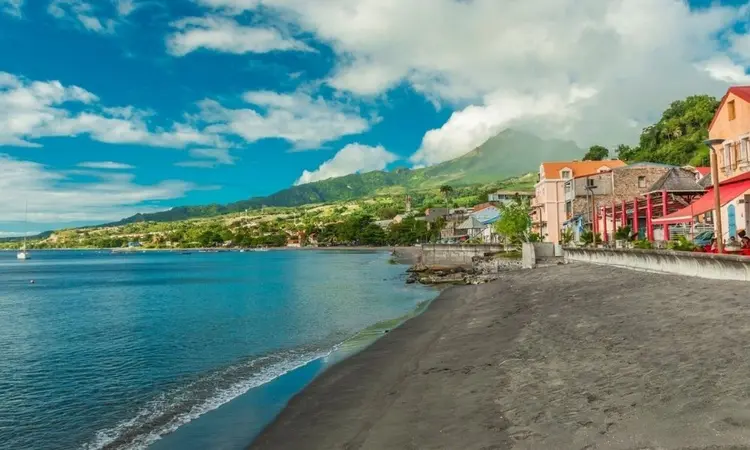
Mont Pelée, an active volcano, rises to roughly 1,400 m on Martinique. That is why so many of the island’s beaches are black. In 1902 a huge eruption of Mont Pelée destroyed the town of Saint-Pierre, and the rebuilt town now has a black sand beach of its own. Farther north lies Anse Couleuvre, a crescent beach shaded by coconut palms and one of the prettiest on the island. The road ends before the shore, so the last stretch is on foot, and thick vegetation reaches right down to the water’s edge.
12. Karekare Beach, Auckland, New Zealand
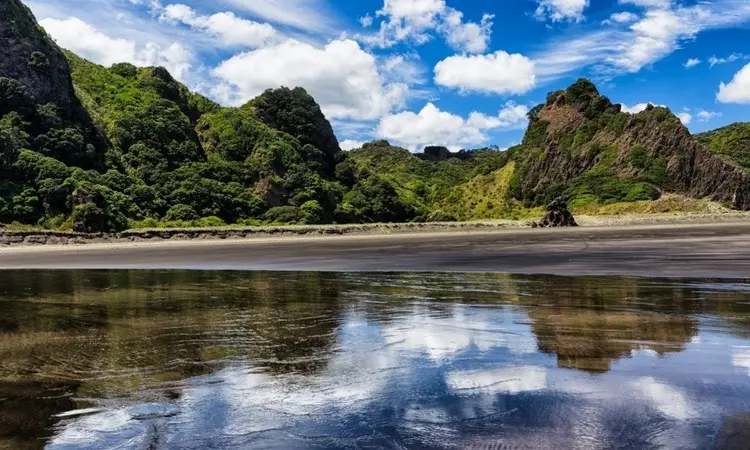
Only about 50 minutes by car from Auckland, Karekare has glittering black sand and, a short walk away, a waterfall with a pool at its base where hikers can cool off.
There are no facilities. Simple rule, then: bring food and drinks.
13. Black Sands Beach, Marin Headlands, California
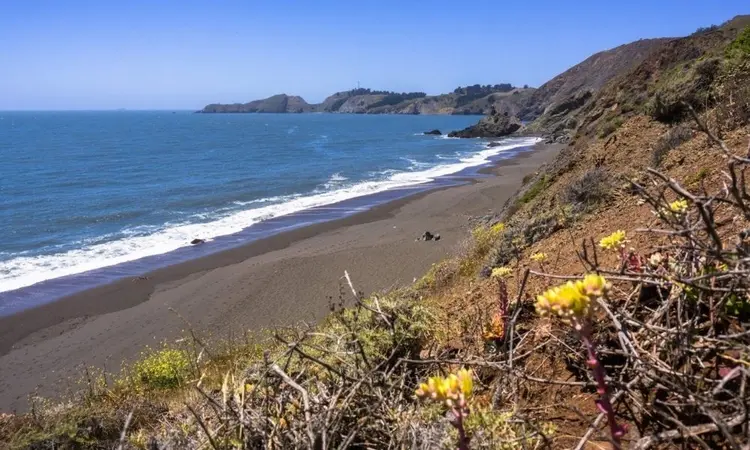
Across the Golden Gate Bridge from San Francisco, below the Marin Headlands, lies one of the few black sand beaches in the continental United States. It is a narrow strip at the foot of steep cliffs. At high tide it shrinks, so check the tide tables before setting off. A narrow beach at low tide can be a much narrower one an hour later.
Swimming is dangerous: the currents are strong and the surf is rough.
Sources: Celebrity Cruises, Wikipedia: Reynisfjara, Wikipedia: Miho no Matsubara



Bir yanıt yazın